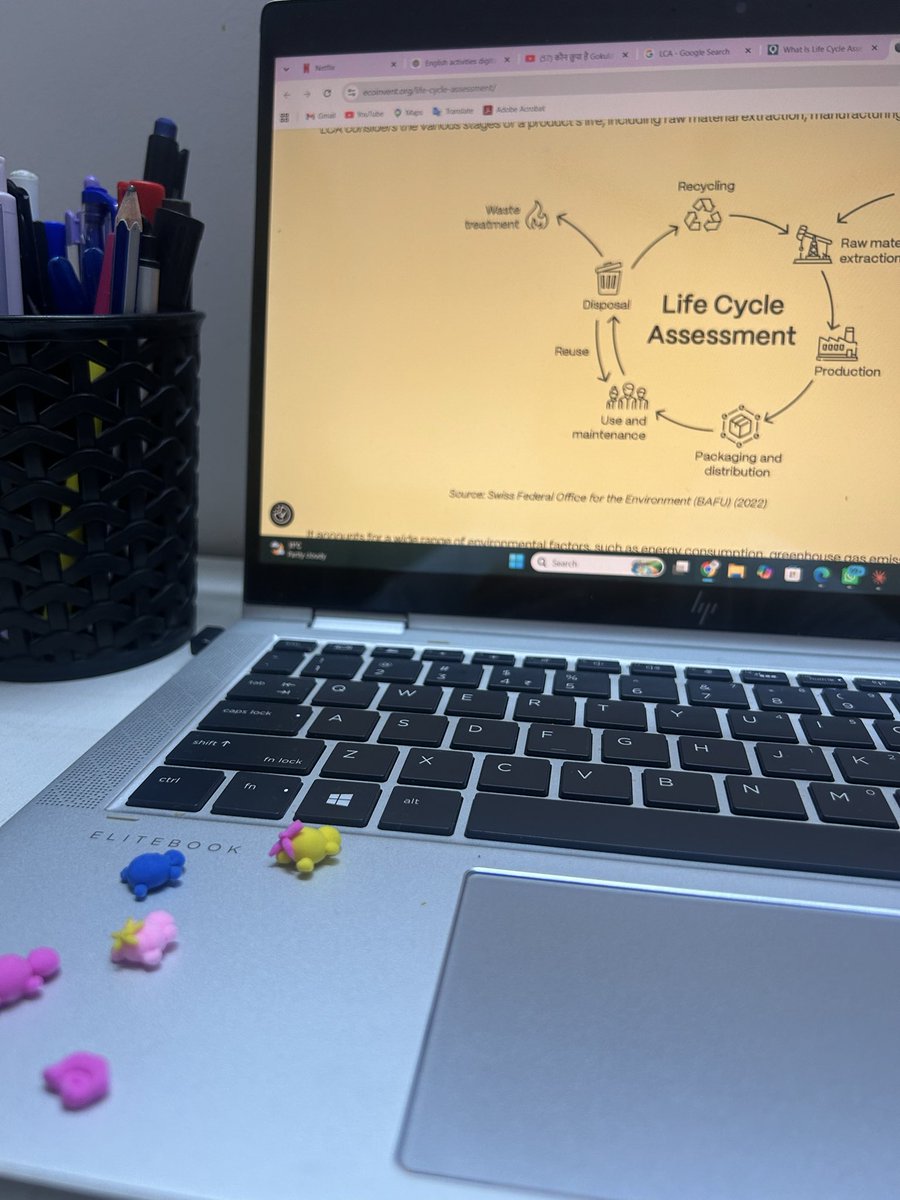
my laptop was made in 2019.
i bought it refurbished in 2023.
which means by the time it reached me, a lot of its environmental impact had already happened.
now i’m curious how much buying refurbished actually changes the math.
plot twist: my 3 year old laptop is actually older than i thought.
manufactured in 2019 → refurbished → bought by me in 2023.
so now calculating its footprint gets weird.
do i count the manufacturing emissions as “mine” if i wasn’t the first owner?
i assumed most of my laptop’s footprint came from charging it for 3 years.
turns out a lot happens before you even open the box: materials, manufacturing, shipping.
kinda changes what “using a laptop sustainably” means.
my laptop is almost 3 years old.
no repairs, doesn’t overheat, battery still lasts 5–7 hours, and I probably won’t replace it for another year.
which made me wonder: what has actually been the environmental cost of owning this thing?
going down the rabbit hole.
@devfrom_hyd natural cooling makes so much sense, but I wonder where the trade-off flips once you factor in power availability, connectivity and infrastructure.
building lune has taught me that the menstrual cycle would be much easier to design for if bodies agreed to follow the neat little 4-phase diagram
unfortunately they do not
so cycle phase ≠ instructions
how you actually feel that day gets a vote too
minor issue with building an app that gives health recommendations:
apparently “this sounds right” is not a valid evidence base
so now the AI side quest has turned into me reading papers about menstrual health
excellent
frontend always made sense to me - it's the stuff the user sees
backend, on the other hand, sounded like some forbidden pile of code only real programmers could understand
learning it now and realizing I may have been scared of a word