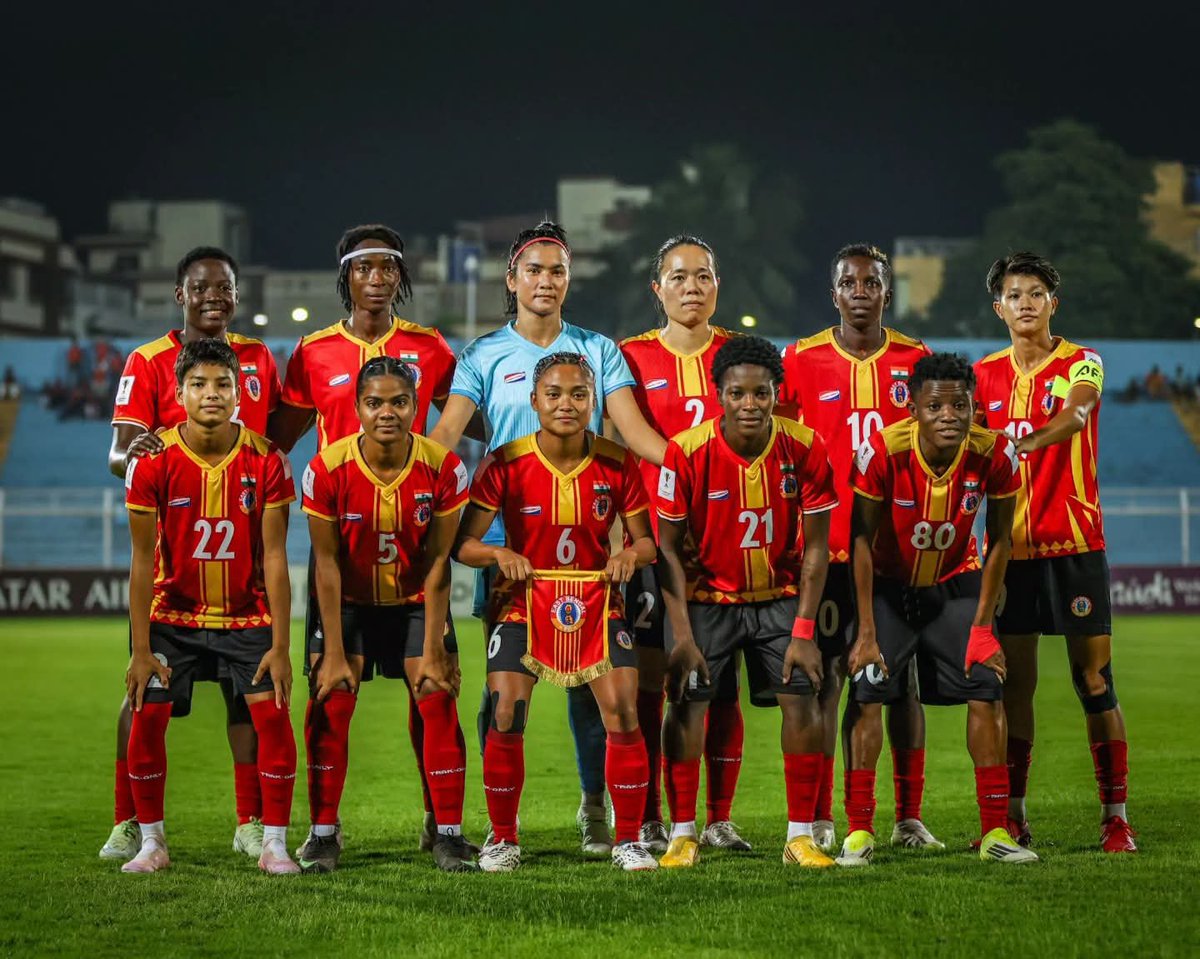
Congratulations to East Bengal on their qualification to the knockout stage of the AFC Women’s Champions League. Despite defeat in the final group-stage game, East Bengal qualified as one of the two best third-placed finishers.
#IndianFootball#AsianFootball
Sad news from Italy as Franco Baresi has passed away this morning at 66 years old.
An absolute legend of the game with AC Milan and Italy, marking an era for different generations.
Thoughts and prayers with the family and the friends.
Rest in peace, Franco. ❤️🕊️
₹67 lakh to restore a Delhi wall. ₹0 for a shelter that would've saved an ancient Bihar mound.
ASI continues excavation without sheds.
A basic temporary shelter for an active dig site: ₹50,000–₹1 lakh.
Last month, ASI announced ₹67 lakh for Shahjahanabad's Daryaganj wall restoration in Delhi. Three months. Full tender process.
Madhubani's mound? Likely older than Shahjahanabad by centuries may be Shunga to Pala. Currently being excavated. Currently collapsing. Zero protection.
Monsoon in Bihar isn't a surprise. It arrives every July. ASI knows this. They planned the excavation. They released the funds. They deployed the team.
They didn't budget for a roof. 🏛️💧
This isn't about lack of resources. It's about allocation.
₹67 lakh flows to restore a 17th-century wall in the capital.
₹0 to shelter an active excavation of something potentially far older in Bihar.
Same institution. Same month. Same monsoon season. Different priorities.
The mound doesn't collapse because rain is unpredictable. It collapses because protection is considered optional.
We don't lack money for archaeology. We lack commitment to what gets protected and what gets documented while it disappears.
Who decides which centuries get sheltered?
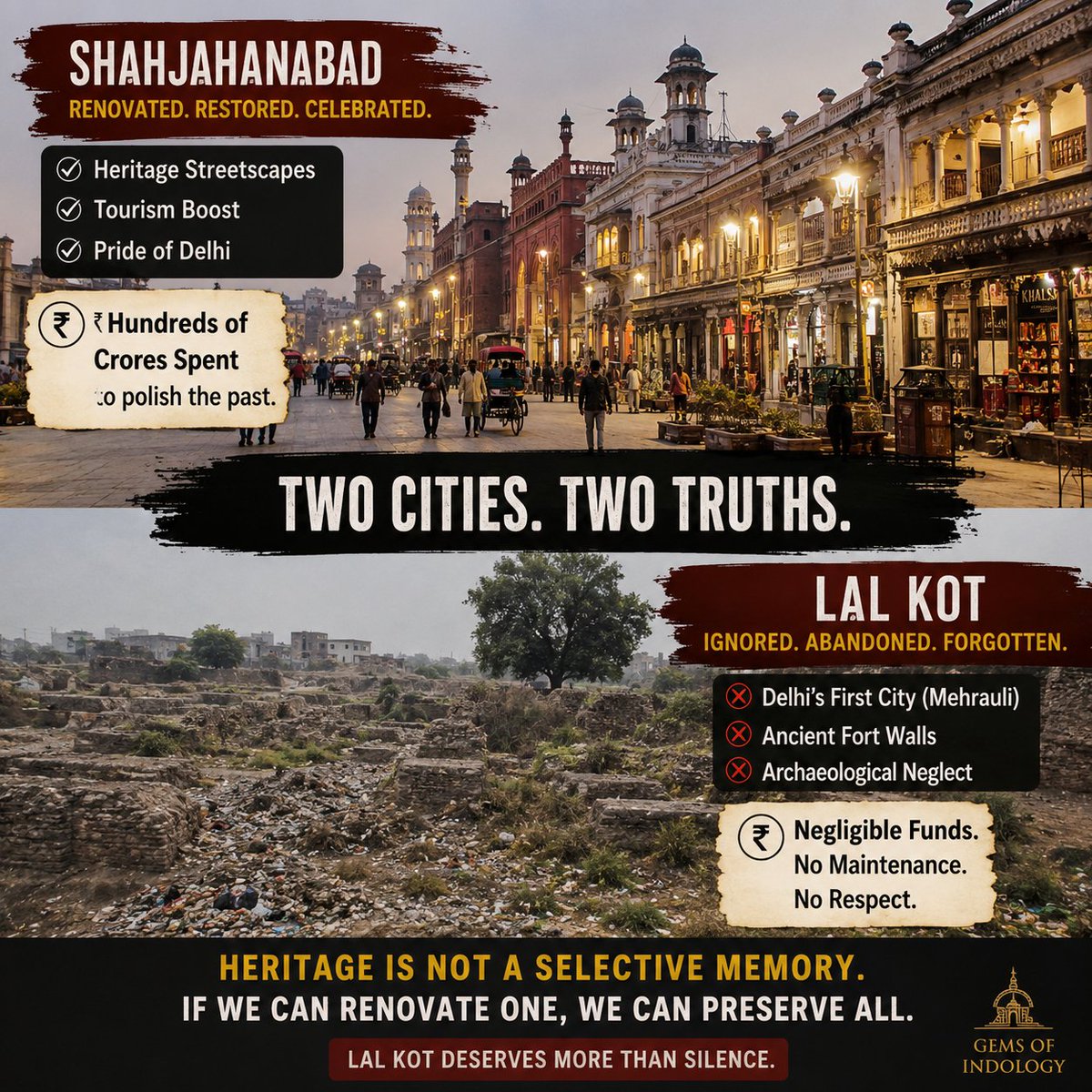
ASI announces ₹67 lakh restoration for Shahjahanabad's Daryaganj wall. Three months. Tenders out. Deadline: July 23.
Meanwhile, Lal Kot — the foundation beneath Qutub Minar, older than Shahjahanabad by 500 years — continues crumbling. Despite court orders. Despite archaeological evidence. Despite everything. 🏛️
We repair the 1600s palace wall.
We ignore the 1100s fortress that preceded it.
₹67 lakh flows to Mughal memory.
Zero to what stood before.
The ASI doesn't refuse preservation.
It just chooses which centuries deserve it.
Same agency. Same city. Different priorities.
Who decides which ruins get rescued?
7,000 years before Egypt attempted it, Bharat reconciled 13 lunar months with the solar year. The evidence is carved into Ratnagiri Petroglyph — 13 grooves, horizon line, astronomical precision.
It sits exposed. Endangered. Documented but unprotected.
If this stone survives monsoon and vandalism, it's the earliest solar-lunar calendar reconciliation on record. Globally.
We fund ₹4,000 crore annual ASI budgets. We cannot afford a roof.
The oldest astronomical knowledge crumbles under open sky while we debate which colonial monument needs another coat of paint. 🪨☀️🌙
Who decided 7,000 years wasn't old enough to matter?
Rock-cut temple! What comes to your mind?
Most of us would immediately think of the magnificent Kailasa Temple near Ellora. And rightly so - it's one of the greatest architectural wonders ever created. 🤩
But look at the video below. 👇
This is the Dharmrajeshwar Rock-cut Temple in Madhya Pradesh, a little-known monolithic temple dating to around the 6th–8th century CE.
Like Kailasa, it wasn't built by assembling stones. It was carved out of a single rock.
Just imagine the vision this required. Before the very first strike of the chisel, the craftsmen had to "see" the entire temple within the rock.
What amazes me even more is how rarely we hear about places like this. These architectural marvels deserve to be far better known for the engineering brilliance, craftsmanship, and artistic vision of our ancestors.
Perhaps "hidden gem" is the perfect description - not just because it's tucked away, but because so few of us even know it exists.
The more I discover such places, the more I marvel at the ingenuity, patience, and spiritual vision of our ancestors.
#ThroughMyLens
vc : instagram/ministryofculturegoi
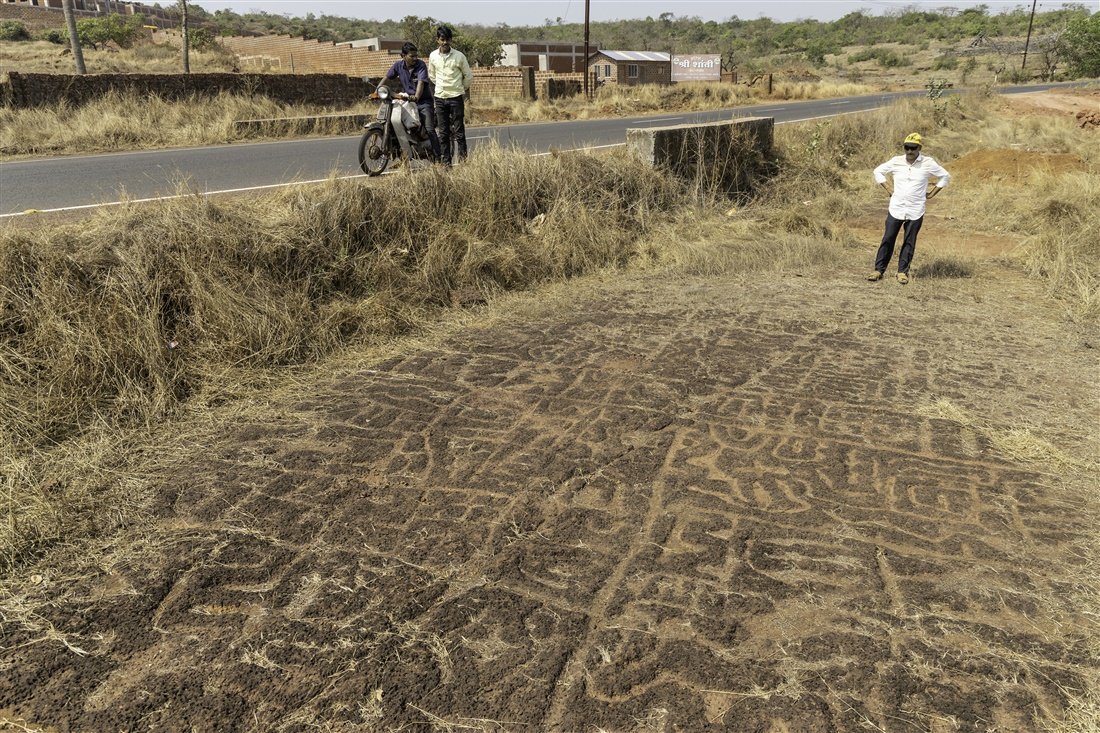
1990. Road widening work uncovers petroglyphs at Nivli Fata, Ratnagiri.
Officials from the Directorate of Archaeology AND Archaeological Survey of India are immediately notified.
This becomes the first reported petroglyph site in Konkan.
Scholars rush in. Books are published. Comparisons drawn to Harappan civilization. An entire academic field of Konkan petroglyph studies is born from this one discovery.
The site itself?
Still half-buried under road construction. 36 years later.
Not neglected by accident.
Not lost to time.
Not awaiting discovery.
Reported to two official bodies in 1990.
Documented in RTI responses.
Still under asphalt.
We widened the road. ✅
We triggered an academic renaissance. ✅
We preserved the site that started it all. ❌
The first petroglyph that launched a thousand studies remains buried under the road we chose to finish.
Who decided tarmac matters more than the stone that rewrote Konkan's prehistory? 🛣️🪨