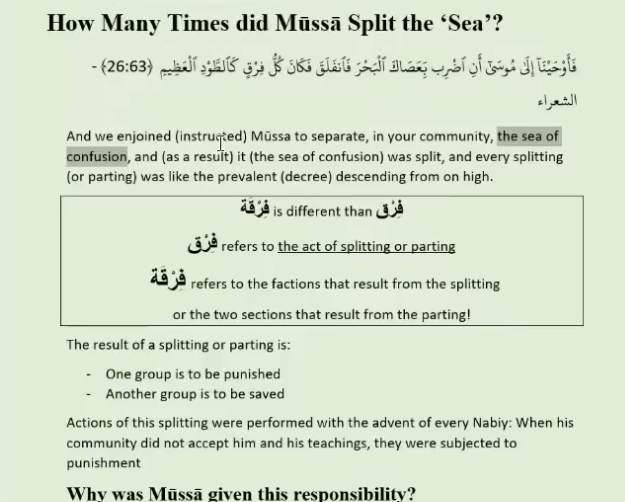
*موسیٰ* نے پانی نہیں پھاڑا۔
*بَحْر* = الجھن کا سمندر
*عَصَا* = تعلیم اور اتھارٹی
*فَرْق* = پھاڑنے کا عمل
*فِرْقَة* = پھاڑ کے بعد بننے والے دو گروہ
ایک تعلیم، دو نتیجے۔
ایک گروہ انکار کر کے سزا پاتا ہے۔
دوسرا قبول کر کے بچ جاتا ہے۔
*مُوسَى* did not split water.
*بَحْر* = sea of confusion
*عَصَا* = teaching, authority
*فَرْق* = the act of splitting
*فِرْقَة* = the two factions after the split
One teaching, two results.
One group rejects and is punished.
One group accepts and is saved.
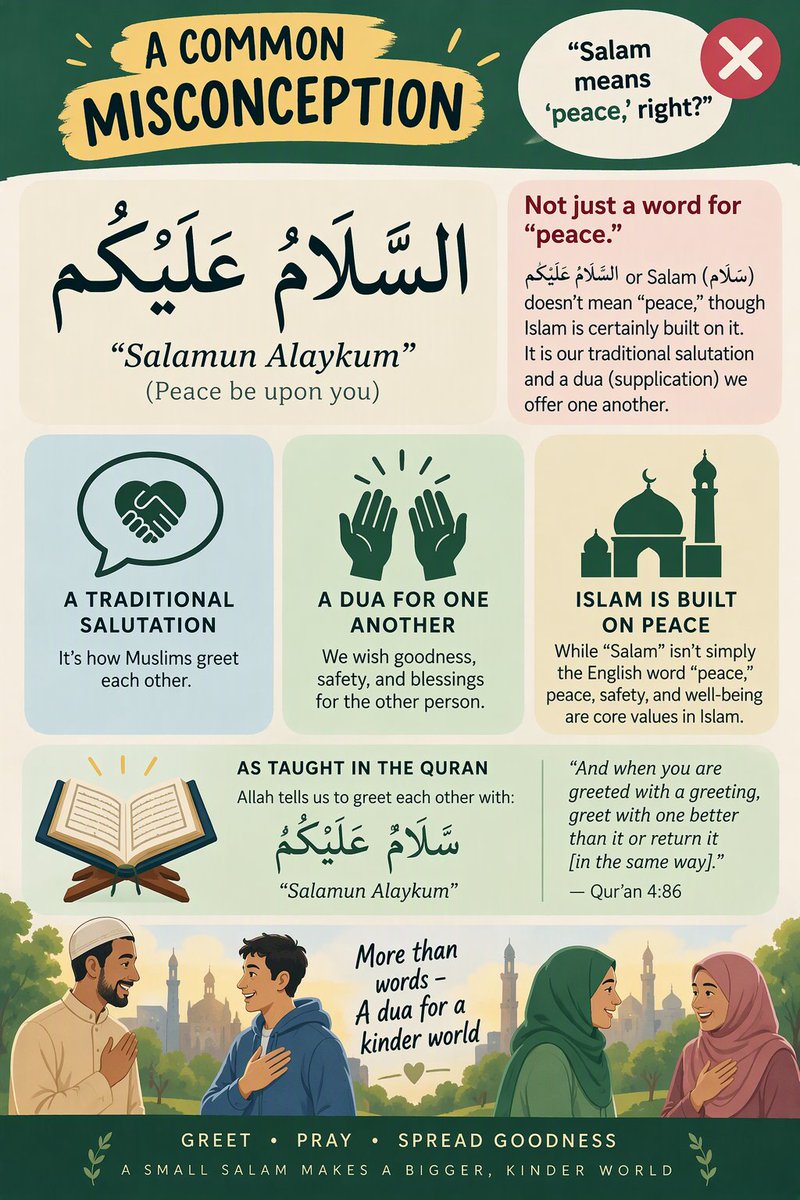
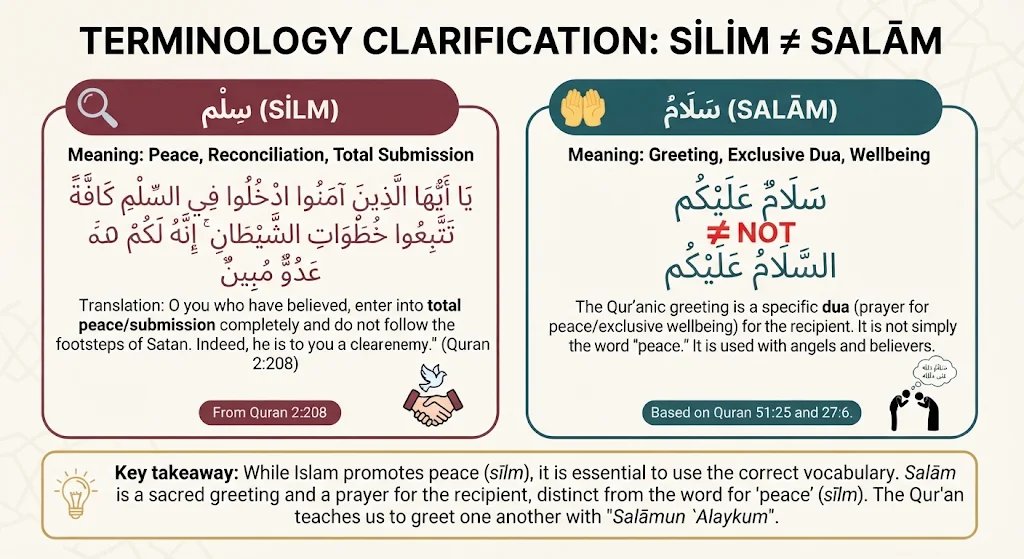
A Common Misconception:
Salam (سَلَام) is often assumed to mean "peace." While Islam is built upon peace, the Qur'anic greeting is a dua, not merely a statement. The Qur'an teaches believers to greet one another with سَلَامٌ عَلَيْكُم not السَّلَامُ عَلَيْكُم.
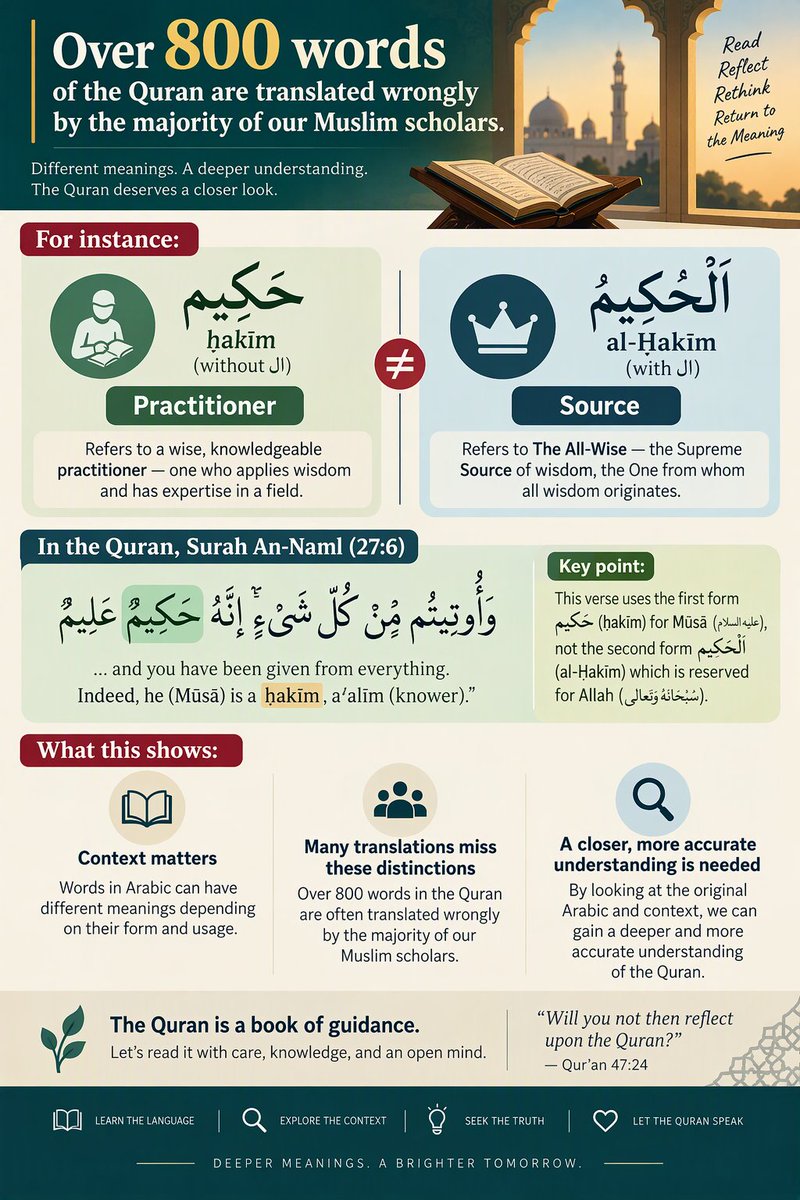
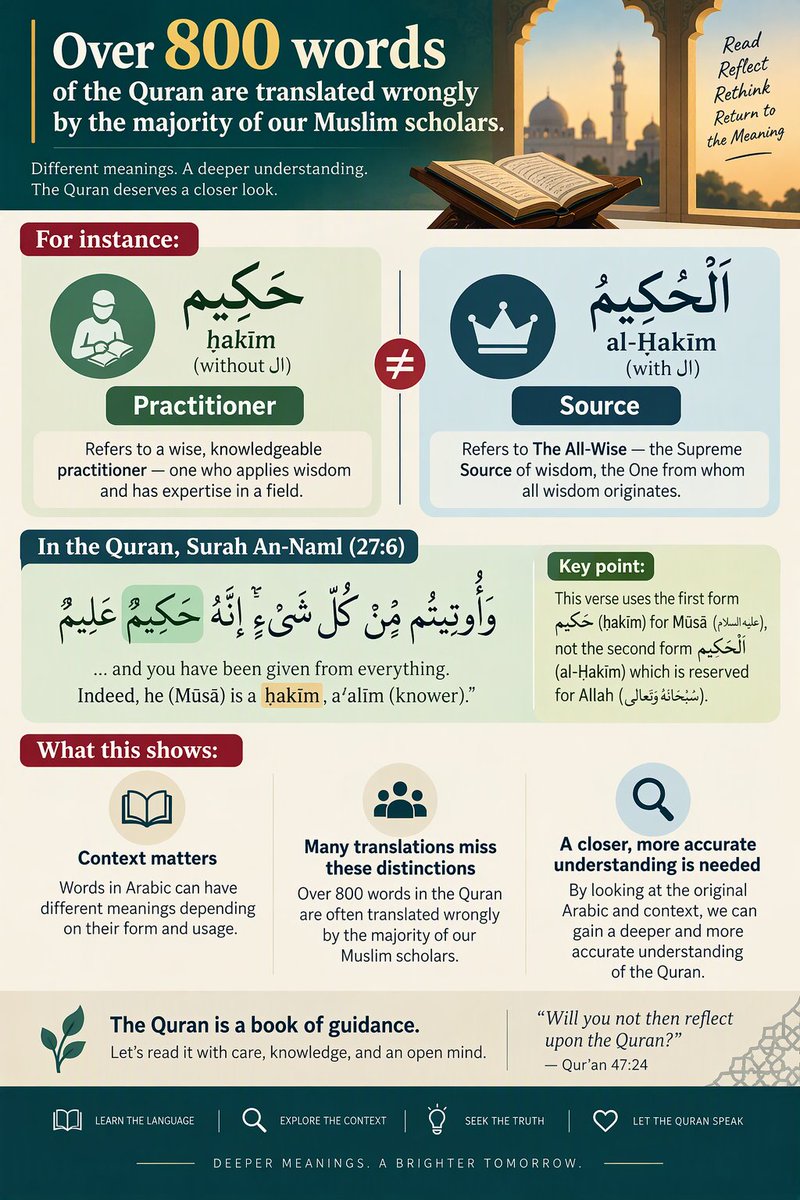
Over 800 words of the Quran are translated wrongly by majority of our Muslim scholars, for example: حَك��يم without ال = practitioner. الْحَكِيم with ال = Source. قُرْآن in 27:6 uses the first form for مُوسَى, not the second form for الله.
Over 800 words of the Quran are translated wrongly by majority of our Muslim scholars, for example: حَكِيم without ال = practitioner. الْحَكِيم with ال = Source. قُرْآن in 27:6 uses the first form for مُوسَى, not the second form for الله.
Salam (سَلَام) and/or السَّلَامُ عَلَيْكُم, doesn't mean "peace"—it’s a divine salutation and a dua for one another. And as the Quran teaches, it's Salamun Alaykum (سَلَامٌ عَلَيْكُم).
A common misconception: السَّلَامُ عَلَيْكُم or Salam (سَلَام) doesn't mean "peace," though Islam is certainly built on it. It is our traditional salutation and a dua we offer one another. As taught in the Quran, we greet each other with Salamun Alaykum (سَلَامٌ عَلَيْكُم).
A common misconception: السَّلَامُ عَلَيْكُم or Salam (سَلَام) doesn't mean "peace," though Islam is certainly built on it. It is our traditional salutation and a dua we offer one another. As taught in the Quran, we greet each other with Salamun Alaykum (سَلَامٌ عَلَيْكُم).
- *ایک جملے میں:*
- یہ کھانا چھوڑنے کے بارے میں نہیں ہے۔
- یہ بگڑی ہوئی سمجھ کو درست کرنے، گنتی کو مکمل کرنے، اور *مِسْكِينٍ* کو صحیح لغت سے *طَعَام* دینے کے بارے میں ہے، تاکہ اسے *سَكِينَة* مل جائے۔
*2:184 کا اردو ترجمہ / آسان وضاحت:
- *أَيَّامًا مَّعْدُودَاتٍ* — چند *أَيَّام*۔
- جو دعویٰ کرتے ہیں کہ آخرت کی سزا صرف چند دنوں تک محدود ہے۔
- وہی دعویٰ جو 3:24 میں آیا تھا۔
اچھی سمجھ،
- تو یہ اس کے لیے الله کے احکامات کی بہتر سمجھ بن جائے گی۔
- *کیا بہتر ہے؟*
- *وَأَن تَصُومُوا خَيْرٌ لَّكُمْ إِن كُنتُمْ تَعْلَمُونَ*
- اور آخرت میں 'روزہ' نہ رکھنا تمہارے لیے بہتر ہے،
- اگر تمہارے پاس ثبوت پر مبنی علم ہے۔