After a certain age, your parents slowly become your children. They ask simple questions, repeat stories, and depend on your patience the way you once depended on theirs. Very few understand this role reversal. What looks like innocence or inconvenience is really time coming full circle. Don't correct them harshly. Don't rush them. Care for them the way they once protected you. This is not a burden. It is repayment.
So Russia is banned from FIFA because of their invasion of Ukraine, but America is allowed to HOST THE FIFA GAMES WHILE BOMBING IRAN???
HOW DOES THAT WORK?????
Jadi sebenere boleh kritik government ga ini?
Soale tiap kritik dicounter, seolah2 yg kritik tu “ga nasionalis” bahkan dijawab “nyenyenyenye”
Ditanya “trus solusimu apa!”
Banyak juga yg udah kasi solusi. Ttp aja dibales dengan narasi offensive.
Negara mana yang nekad pakai anggaran segini banyak buat makan2 doang?
Itu dibagi ke infra sama pendidikan lebih layak. Lu gabisa bantah gua bahwa kesalahan terbesar MBG itu harusnya di 3T bukan merata satu negara.
Saya dapat info bhw ada 17 calon Dubes asing yg sudah tiba di Jakarta tapi sampai sekarang masih MENUNGGU waktu utk memberikan surat kepercayaan kpd Presiden. Dari mereka ada yg sudah menunggu 8 bulan. Ada juga Dubes dari negara ASEAN yg menunggu 6 bulan. Karenanya, mereka belum bisa bekerja secara resmi.
Ini memberikan kesan buruk bagi negara2 sahabat yg mengirim Duta Besarnya ke 🇮🇩, apalagi Dubes 🇮🇩 di luar negeri selalu dgn cepat menyerahkan surat kepercayaan kpd host country. Tanpa menyalahkan siapapun, Mohon masalah ini dapat segera dituntaskan Istana krn menyangkut reputasi diplomatik kita.
Tidak perlu dibuat menggunakan AI, cukup unduh (download) lambang Garuda Pancasila di Wikimedia Commons melalui pranala berikut.
Mudah, cepat, dan gratis.
https://t.co/64PPKO639n
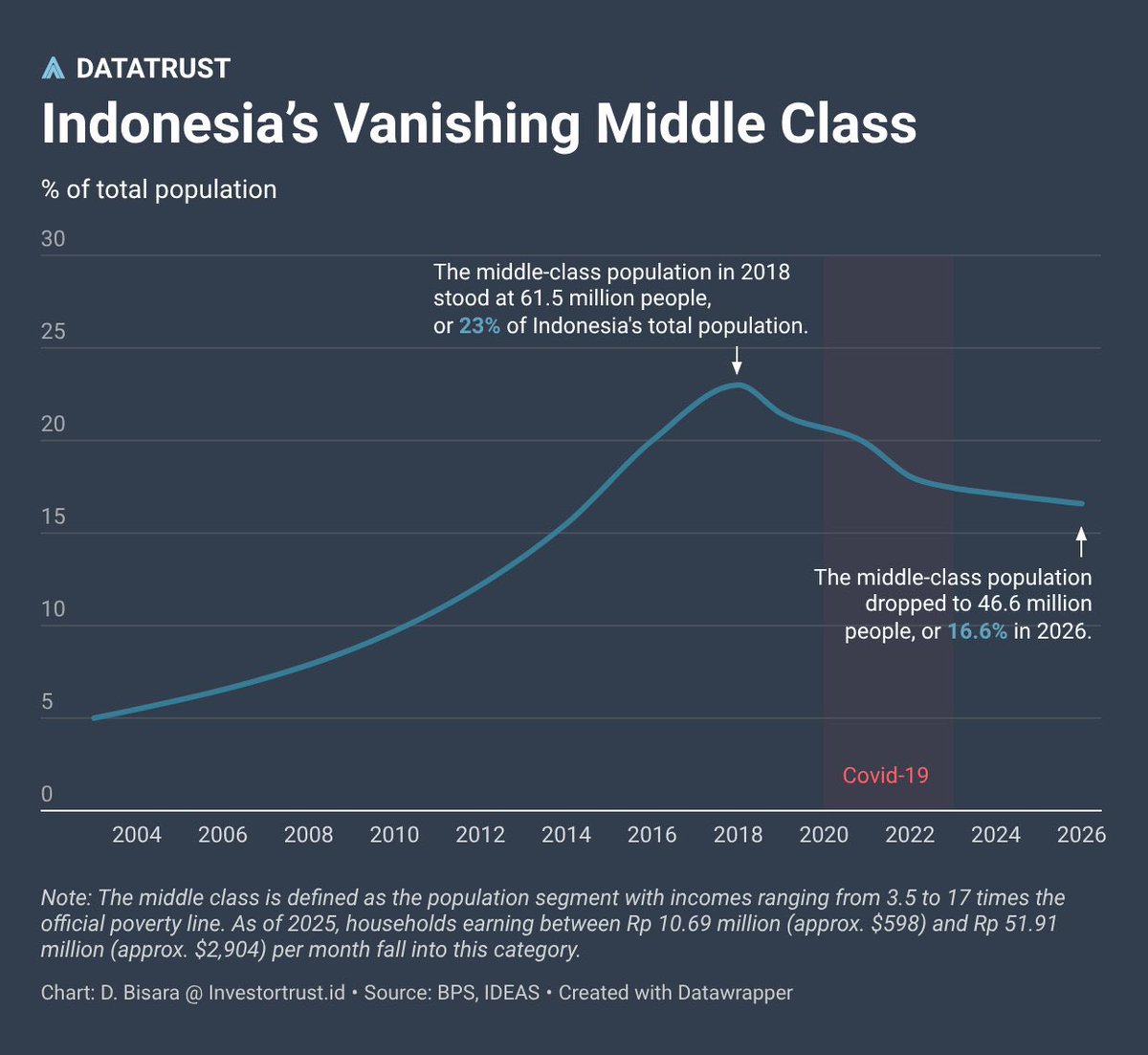
This chart should terrify policymakers. Indonesia’s middle class did not merely slow down. It went into reverse.
After two decades of expansion, the middle-class population peaked at 61.5 million people in 2018, representing 23% of the population. By 2026, that figure had fallen to just 46.6 million people, or 16.6%. That is not a cyclical slowdown. That is structural deterioration.
For years, policymakers celebrated GDP growth, infrastructure projects, commodity booms, and headline investment numbers. But the ultimate scorecard of an economy is whether ordinary people become wealthier over time. This chart suggests millions of Indonesians are moving in the opposite direction.
The middle class is the economic engine of every successful country. They buy homes, cars, insurance, consumer goods, education, travel, financial products, and healthcare. They generate tax revenue. They create small businesses. They drive domestic demand. When the middle class shrinks, the economy loses its most important customer.
The uncomfortable question is simple: where did the gains go? If GDP is growing, if conglomerates continue expanding, if commodity exports remain large, then why are fewer Indonesians qualifying as middle class than eight years ago?
More importantly, if you are born poor in Indonesia today, what ladder exactly are you supposed to climb?
If you are exceptionally good looking, perhaps you can monetize attention through social media. If you are academically gifted, perhaps you can break into an ultra-competitive institution like MBB, survive years of brutal expectations, and eventually use that platform to do something bigger. If you are entrepreneurial, maybe you build a business against overwhelming odds. If you are lucky, perhaps you benefit from family connections, inheritance, or access to opportunities unavailable to most people.
But an economy cannot rely on exceptionalism. A healthy economy creates millions of pathways upward, not a handful of lottery tickets.
The situation becomes even more concerning when you consider that well-paying white-collar jobs are becoming increasingly scarce. Many multinational companies that once established regional operations, technology centers, shared-service hubs, and professional offices in Indonesia have either downsized, relocated, or shifted future expansion elsewhere.
Those jobs were not valuable merely because of the salaries they paid. They were valuable because they transferred knowledge, management expertise, technical skills, global best practices, and professional networks into the local workforce. Over time, they helped develop intellectual capital that could later be recycled into entrepreneurship, leadership positions, startups, and domestic businesses.
When those opportunities disappear, the loss is not limited to employment. The country also loses a training ground for future managers, engineers, consultants, analysts, and business leaders. Human capital compounds just like financial capital. Once that pipeline weakens, rebuilding it can take years or even decades.
The bigger risk is that social mobility slows. When people stop believing hard work leads to a better life, trust in institutions weakens. Aspirations decline. Consumption slows. Talent leaves. The country’s most productive people increasingly look elsewhere for opportunity.
This is why Indonesia’s biggest economic challenge is no longer growth. It is upward mobility. A country cannot thrive without a growing middle class, a steady pipeline of high-quality jobs, and a clear path for ordinary people to join it. And right now, all three appear to be moving in the wrong direction.
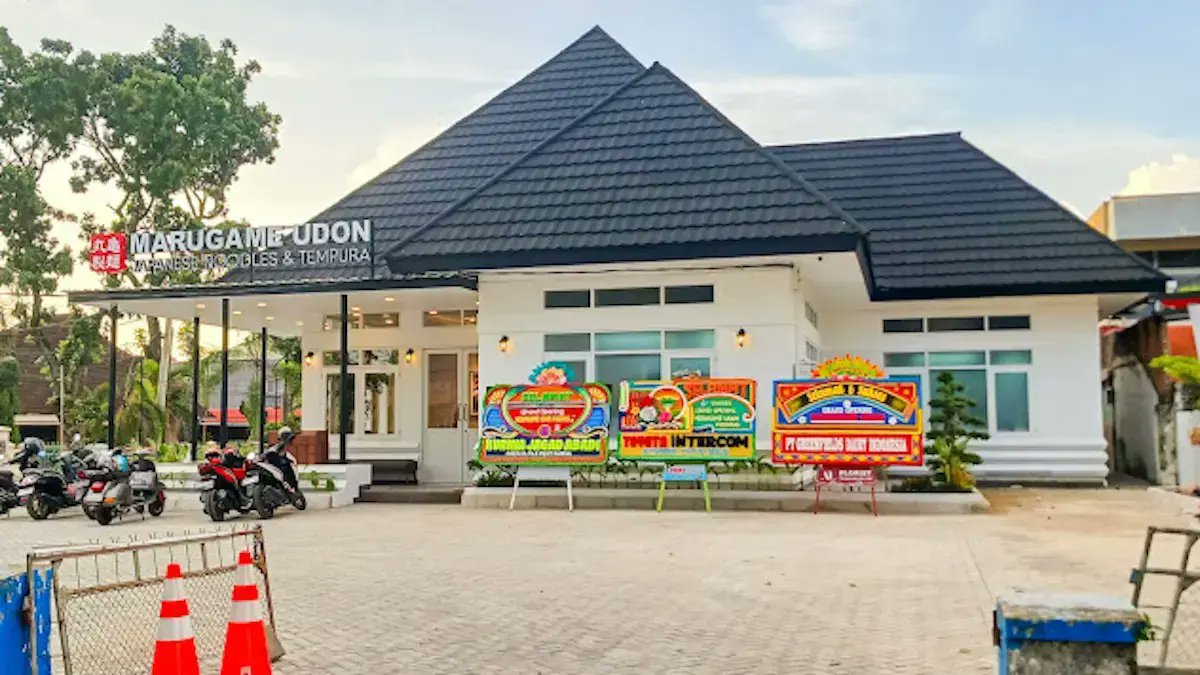
The house where Indonesia's first president staunchly hid for months to avoid collaborating with the Japanese in early WW2, is now a Japanese Udon restaurant.
Salah satu alasan saya menyukai konsep ibadah Islam adalah siapa pun (laki-laki) boleh menjadi imam (asal bacaan dan hafalannya bagus) dan bisa berdiri di baris mana pun.
Tidak ada kasta hirarkis profesi. Pedagang cilok bisa sejajar dengan bupati sekalipun jika sudah shalat jamaah.
Bahkan pedagang tersebut bisa saja mengimami seorang presiden.
Tidak ada istilah “tempat ini khusus untuk bapak/ibu A, B, C (donatur utama, pejabat, orang penting) seperti di agama sebelah.
Seorang muslim ketika shalat juga melepaskan semua harta bendanya di lantai (hape, tas, dompet dll).
Tidak ada yang dibawa dan dipegang lagi kecuali iman dan takwa.
Nicko Widjaja (Founding CEO BRI Ventures) baru saja dituntut 11 tahun penjara + denda Rp1 miliar karena menyetujui investasi US$5 juta (~Rp73 miliar) ke startup agritech TaniHub.
Dia dianggap merugikan negara karena startup Tanihub yg diinvest gagal.
Ngeri banget ya? Di dunia VC, risiko itu bagian dari pekerjaan. Ada yang 10x, ada yang gagal total. Itu hukum alam inovasi.
Kalau setiap keputusan investasi yang rugi dianggap “merugikan negara” dan dipenjarakan, siapa lagi yang berani ambil risiko?
Menurut kalian vonisnya fair atau ini termasuk kriminalisasi?
BREAKING: media Jepang menyebut pemerintah Indonesia memakai buzzer untuk membungkam publik dengan cara menuduh warga yang kritis sebagai "antek-antek asing"
---
Antek-antek asing mendunia guys.
Lee Kuan Yew when asked what enabled Singapore’s success:
“Air conditioning. … It changed the nature of civilization by making development possible in the tropics. Without air conditioning you can work only in the cool early-morning hours or at dusk. The first thing I did upon becoming prime minister was to install air conditioners in buildings where the civil service worked. This was key to public efficiency.”
https://t.co/8vbXAt6SAJ
In 1993, Michael Jackson made a song about Palestine called "Palestine, Don't Cry." Sony refused to release the song. Then in that same year, 1993, in the month of August the first accusations against him emerged.
Nah, that ain’t a coincidence.