Neuroscientist🧠 solving the Superior Colliculus @LabPluta | Occasional poet and painter 🎨 | Love for nature 🌿 | Previously @NCBS_Bangalore, @bitspilaniindia
While searching for objects, our brain uses internal (self-generated) and external cues to pinpoint its target. Where in the brain does the confluence of self-motion and stimulus space arise?
I'm happy to share the latest manuscript from my lab, where we reveal how behavioral context transforms the somatotopic map in sensory cortex into a value-based map in the midbrain SC that encodes stimulus priority. 1/n https://t.co/1tKTfA305W
The lab's first paper, "Probing multiplexed basal dendritic computations using two-photon 3D holographic uncaging," is now online at CellReports (https://t.co/t2jWbgp3hd). Congrats to @ShulanX and @Somit_sam on an outstanding and exquisite effort 👏. @PurdueBME @Research_Purdue
Our brain has two sides, yet how neurons bind stimulus features across the hemispheres to create a unified perceptual experience remains unknown. Check out our preprint, where we reveal the state-dependent logic underlying bilateral integration in S1. https://t.co/F2i88QBAQL
🐭🧠
While searching for objects, our brain uses internal (self-generated) and external cues to pinpoint its target. Where in the brain does the confluence of self-motion and stimulus space arise?
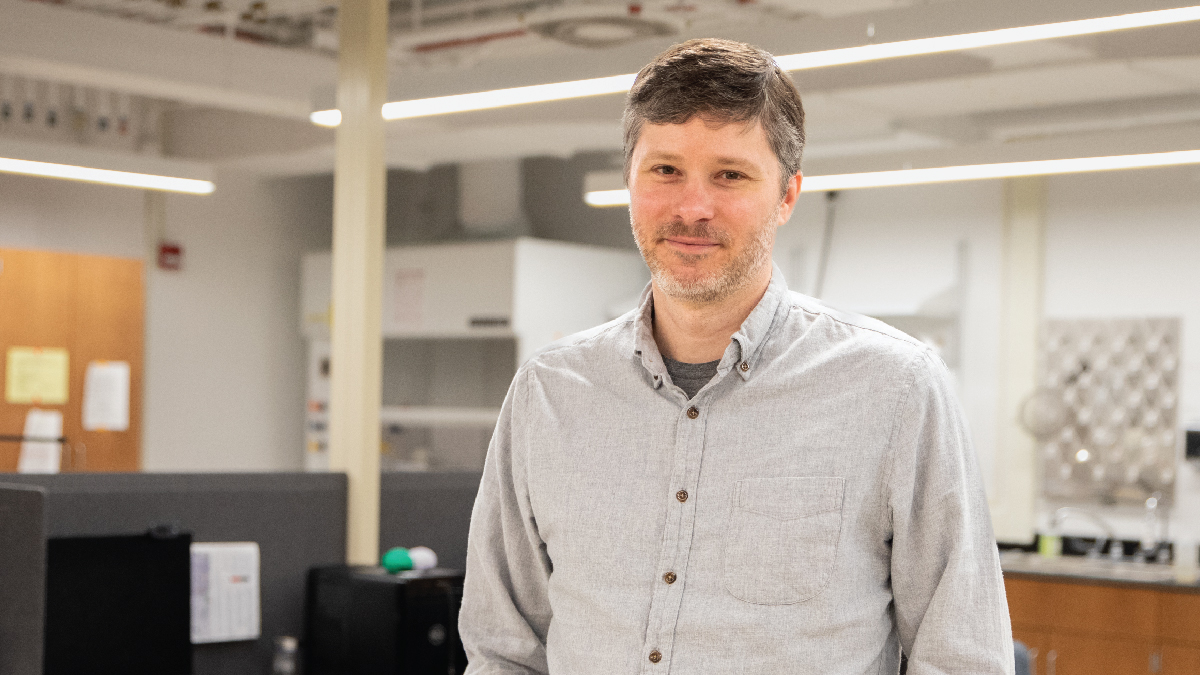
Scott Pluta, Assistant Prof of Biological Sciences, immerses himself in the complexities of neural integration. In a world marked by uncertainty, his research offers boundless potential for scientific exploration. @LabPluta@Purduescience
Article:
https://t.co/cXO861FU2K