TIL that original creator of multitouch (invented it before @apple did), Bran Ferren, has a podcast that gets sub-1000 views on YouTube and has episodes with: - @RobertDowneyJr
- Jamie Hyneman
- Former Disney CEO @Michael_Eisner
- Alan Kay (the creator of the first GUI)
- Ashton Kutcher @aplusk
- Father of the internet Len Kleinrock
…and about a hundred others. Genuinely some of the most interesting conversations I’ve listened to. Feel like I’ve stumbled upon a previously unearthed treasure of information.
Please do yourself a favour and go check it out.
I don’t plan to dig into this, but I love that you’re going in this direction. Computers have gotten so much faster and memories have gotten so much larger, that language implementations can serve the programmer way better than in the days of C on the PDP-11, or Smalltalk on the Dorado.
And those were in my time. Before my time there was the first Fortran compiler, and you wouldn’t believe how little memory was on the computer it ran on.
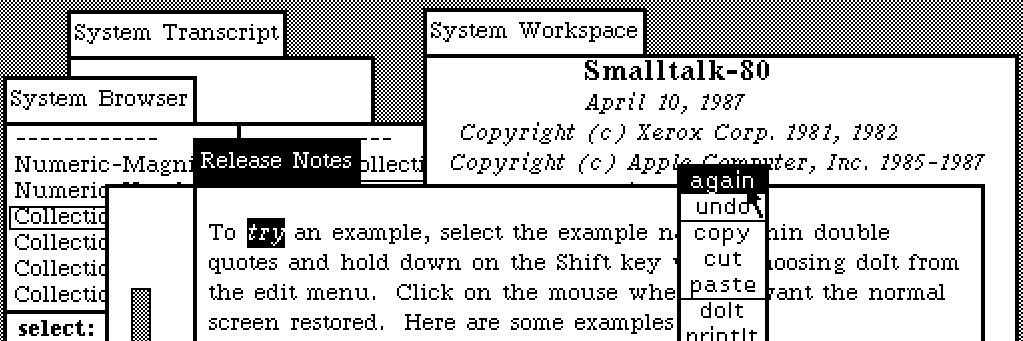
@LewisCTech Your idea reminds me of Alan Kay's insight that even assignment needn't be an operator at all. He realized that `a[55] := 0` could be viewed as `a(55, ':=', 0)`, treating `a` like a function, with the index, assignment symbol, and value all supplied as arguments.
Yesterday I made a “plaything” for Igarashi et al.’s excellent SIGGRAPH 2005 paper, As-Rigid-As-Possible Shape Manipulation!
Works with a mouse, but it’s much more fun with multi-touch on an iPad.
Link below 👇
Just released "Fed" (Forked Execution Delegate), a multi-process execution framework for Pharo.
Fed provides worker-pool and one-shot multitasking using OS process spawning and the Clap CLI framework to delegate tasks with native parallelism.
https://t.co/kOcfCJG2xj
#pharo
The full series, in order — “A Guided Tour of Sketchpad”:
https://t.co/82j9t33Kjm
Coming soon: the bridge demos and the “dismember” operation, then a few demos of my own.
Everyone’s seen the Sketchpad demo. Few understand how it actually works.
I reimplemented Sketchpad from scratch, and I’m making short videos that recreate Sutherland’s demos and explain how they work. The first 8 are up — from drawing a line to the famous rivet.
Link below 👇
Have glimmer of an idea - take it out 30 years.
How to incrementally get there from present, forget it!
Don't worry about now! Present is least interesting time to live in. - Alan Kay
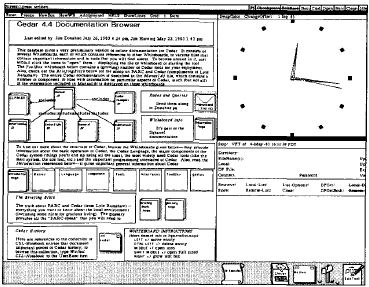
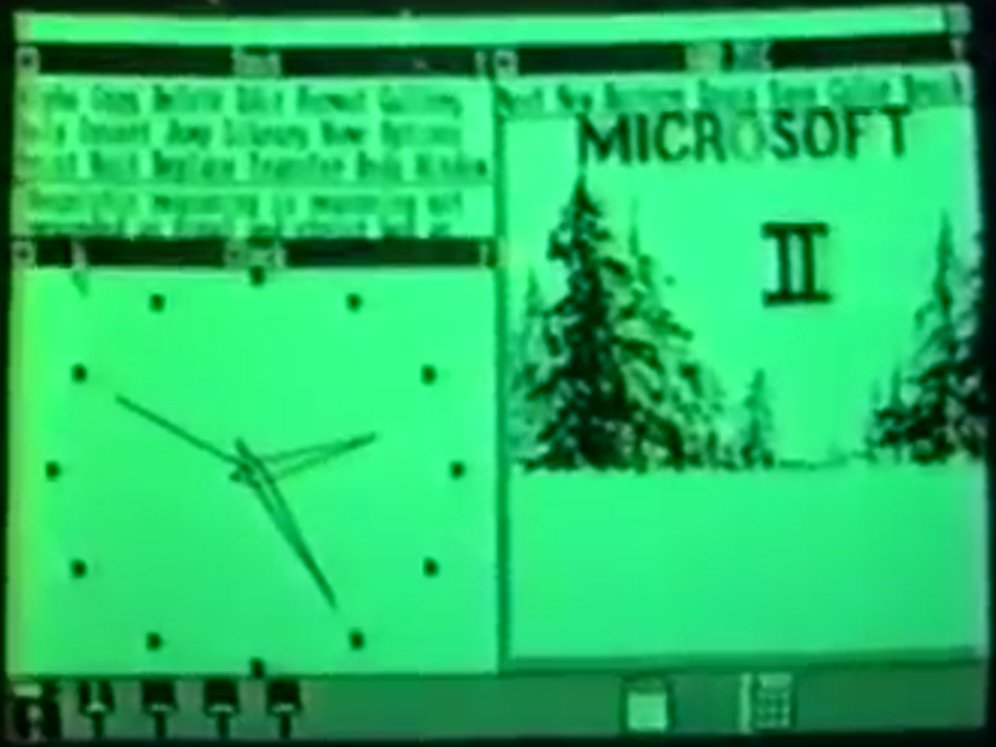
実は Windows は開発初期から 1.0 まで、オーバーラップ出来なかったのではなく、あえて「しない」選択をした Xerox Cedar というGUIを手本にしていたのです^^;
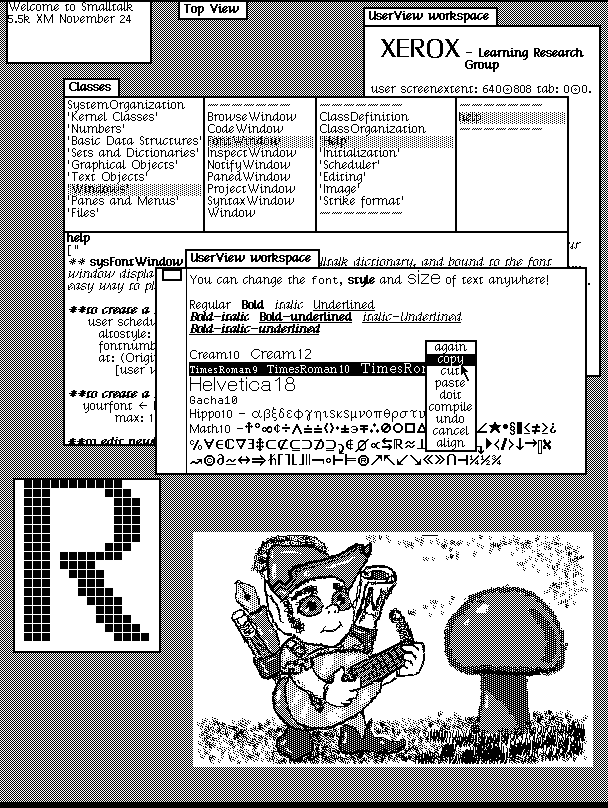
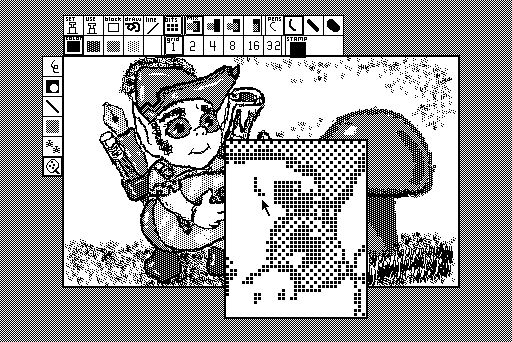
対してLisaやMacは、当初からアラン・ケイらのSmalltalk-76という、こちらはオーバーラップが“ウリ”の別のサブシステムを手本にしました









![sumim's tweet photo. @LewisCTech Your idea reminds me of Alan Kay's insight that even assignment needn't be an operator at all. He realized that `a[55] := 0` could be viewed as `a(55, ':=', 0)`, treating `a` like a function, with the index, assignment symbol, and value all supplied as arguments. https://t.co/a4z6s3q5p2](https://pbs.twimg.com/media/HVXcJSDaQAAW39V.jpg)