In the 1971 war, India lost a warship at sea. Its sonar had not been able to find the submarine that sank it.
India then tried to buy better sonar. The countries that made it would not sell.
So the Navy told one of its own officers to build it himself.
His name is Arogyaswami Paulraj.
He was born in Pollachi, a small town in Tamil Nadu. He joined the Indian Navy as a teenager and stayed for about 30 years.
The Navy spotted him early and sent him to the Indian Institute of Technology in Delhi for a master's degree. His professors told the Navy not to stop there. He finished a doctorate.
After the 1971 war he was given the sonar problem.
He had no foreign help, no foreign equipment and no permission to buy either. His team built the system from the ground up. It was called APSOH. It went into the fleet in 1983.
It was not a compromise. It is still considered one of the best sonars in the world.
He went on to set up 3 national research laboratories in India, in computing, artificial intelligence and military electronics. India gave him the Padma Bhushan.
Then he left the Navy and joined Stanford University in America as a postdoctoral researcher, starting again at the bottom.
While running wireless experiments there, he noticed something odd in his results about how signals could be separated from one another. He followed it.
What came out of it is called MIMO. In simple terms, instead of one antenna sending and one antenna receiving, you use several at both ends at once, and the signals stop fighting each other and start carrying far more data.
That is the foundation of every WiFi connection and every 4G and 5G phone on the planet.
The chairman of the Marconi Society put it plainly. Every WiFi router and 4G phone today uses MIMO technology pioneered by him.
He founded a company on it, which Intel bought. He founded another, which Broadcom bought. He holds around 80 patents.
He has the Marconi Prize, the IEEE Alexander Graham Bell Medal, the Faraday Medal, and a place in the United States National Inventors Hall of Fame.
The internet in your house is running on his idea right now, and almost nobody in this country knows his name.
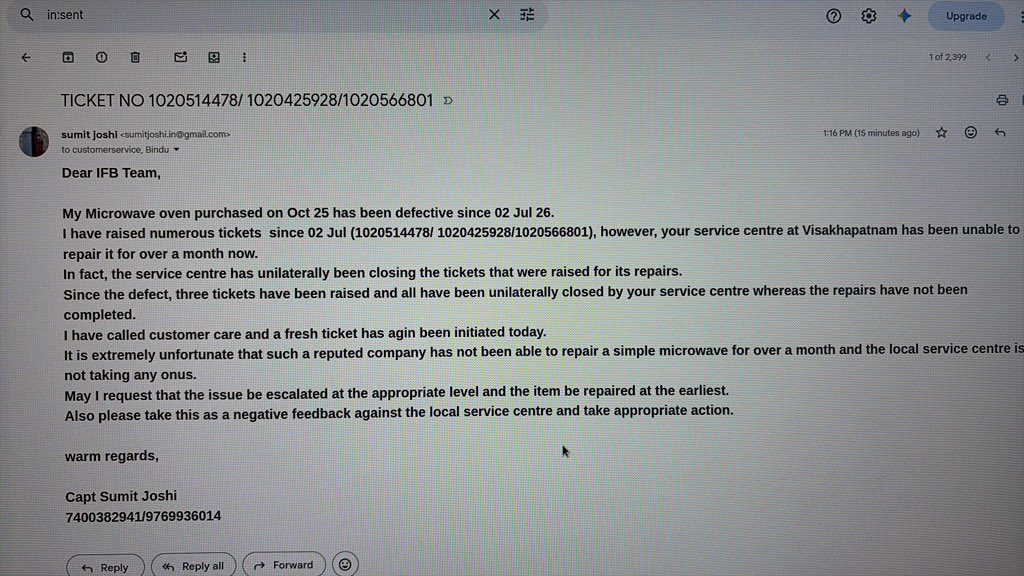
Buying IFB was 1 of the worst decisions of my life. Life was good with LG. Please save urself some time and money and avoid IFB. A simple warranty repairs of Microwave haven’t been completed for over a month. SC keeps closing tickets unilaterally #IFBINDIA#IFBAppliances
This not what the world expects from Bharat !!
India created history by winning its first-ever gold medal at the World Rowing Cup in Lucerne, Switzerland.
Indian Army rowers Lakshay and Ujjwal Kumar Singh achieved the historic feat in the lightweight men’s double sculls final.
The Indian duo clocked 6:26.09 to finish ahead of Hong Kong and the Netherlands, clinching the gold medal.
HISTORIC NIGHT FOR INDIAN VOLLEYBALL 🇮🇳🏐
- Qualified for Semi Finals of AVC Men's Volleyball Cup for First time ever in History with 5/5 wins 🥹
JUST LOOK AT THE CROWD REACTION! 🤩🔥
Heartiest congratulations to @satwiksairaj and @Shettychirag04 on becoming the first Indian men’s doubles pair to win the Singapore Open. Fighting back from a game down and ending a two-year wait for a title, the duo once again demonstrated the resilience, belief and class that make them among the very best in the world.
Congratulations, boys. The nation celebrates this special triumph with you.
@DealsDhamaka Iphone 17 was always cheaper for people with highly rewarding cards in India. I bought it in Oct using infinia through smartbuy for an effective price of 69k. The real difference is in pro models wherein US is cheaper
The Pakistanis are back on Sunday and what a glorious decision made for the good of cricket and mankind! We knew they were bluffing. Unforfeiture confirmed!
Simply outstanding!
The Naval Band’s performances included ‘Namaste’, ‘Sagar Pawan’, ‘Matribhumi’, ‘Tejasvi’ and ‘Jai Bharati.’
The Matsya Yantra formation was flawless.
#BREAKING: India’s IT Minister Ashwini Vaishnaw at Davos strongly counters IMF Chief for calling India a second-tier AI power:
“I don't know what the IMF criteria is but Stanford places India at 3rd in the world for AI preparedness. I don't think your classification is correct.”
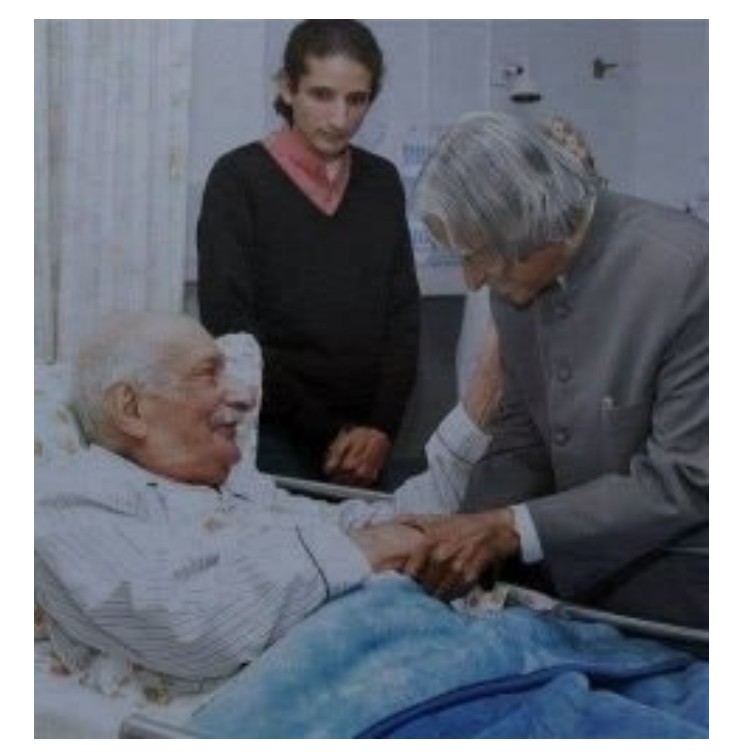
"When Dr. Abdul Kalam was the President, he once visited Coonoor. Upon arrival, he learned that Field Marshal Sam Manekshaw Sir was being treated at the military hospital there.
Dr. Kalam went to the hospital to meet Sam Manekshaw Sir. He inquired about Sam's health. Before leaving, Dr. Kalam asked Sam, 'Are you facing any difficulties here? Is there anything I can do to help you feel more comfortable? Do you have any complaints?'
Sam replied, 'Yes... I have one complaint.'
A concerned Dr. Kalam asked in a worried tone, 'What is your complaint?'
Sam said, 'Sir, my complaint is that the most respected President of my beloved country is standing here, but I am unable to salute him.'
Hearing this, Dr. Kalam held Sam's hand... For a moment, tears welled up in both their eyes.
As he was leaving, Manekshaw told the President one thing. He had not received the increased pension for the rank of Field Marshal.
The government had decided that living Field Marshals should receive the full pension equivalent to the Chiefs of Staff, as officers of the rank of Field Marshal never truly retire.
Upon reaching Delhi,Dr. Kalam arranged for the full payment, including all arrears of his pension, within just one week. The Defence Secretary arrived in Wellington, Ooty, by a special flight with a cheque for approximately ₹1.30 Crore.
One great man respected the work of another great man.
But... as soon as he received the cheque, Sam Manekshaw donated the entire amount to the Army Relief Fund!!
Now, who will you salute? ? ?
Truly, they were the real heroes of our country 🥲🥲."
On the night of May 20, 2025, a little girl in a faded pink frock fell asleep on her mother’s lap at Chhatrapati Shivaji Maharaj Terminus. Her parents, simple people from Solapur, had come to Mumbai for her father’s treatment. They were exhausted. Just for a moment, the mother closed her eyes.
When she opened them, her daughter was gone.
Six months.
Six months of walking from police station to police station.
Six months of showing the same crumpled photograph to strangers on trains, in slums, in orphanages.
Six months of the father not sleeping, the mother not eating, both of them growing hollow-eyed, whispering the same name into the dark: “Aarohi… Aarohi…”
In Varanasi, a thousand kilometres away, a tiny girl with no memory of her real name was learning to call herself “Kashi.” She had been found crying near the railway tracks in June, barefoot and terrified. The orphanage gave her food, a bed, and a new name. She smiled easily, because children always do, but sometimes at night she clutched the edge of her blanket and asked for “Aai” — Marathi for mother — and no one understood.
Back in Mumbai, the police refused to close the file. They printed posters with Aarohi’s face, stuck them on every platform from Lokmanya Tilak Terminus to Bhusawal to Varanasi Cantt. They ran newspaper ads, knocked on doors, begged journalists for help. Six months is a long time for hope to stay alive, but some officers carried her photograph in their shirt pockets like it was their own child.
Then, on November 13, a local reporter in Varanasi saw the poster. Something clicked. He had seen a girl who spoke Marathi words in her sleep. He made a phone call.
The next morning, a Mumbai Police inspector sat in front of a laptop in Varanasi and opened a video call. On the screen appeared a little girl in a pink frock — the same colour she was wearing the day she vanished. The mother, standing behind the officer in Mumbai, saw her daughter and collapsed without a sound. The father just kept repeating, “That’s my Aarohi… that’s my baby…”
They flew her back on Children’s Day — November 14.
When the plane landed, the entire Mumbai Crime Branch was waiting. They had bought her balloons and a new frock, sky blue this time. But the moment the little girl stepped out and saw the sea of khaki uniforms, she did something no one expected.
She ran.
Not away — toward them.
Tiny legs pumping, arms outstretched, she threw herself at the nearest officer and laughed — the purest, clearest laugh that had been missing from the world for half a year. The officer, a tough man who had seen everything, felt his eyes burn. He lifted her high, and she wrapped her arms around his neck like he was family.
Her parents were crying too hard to walk. So the policemen carried their daughter to them.
The mother touched her face again and again, as if checking she was real. The father fell to his knees and pressed his forehead to his child’s tiny feet, sobbing words no one could understand except God.
And the little girl? She just kept smiling, looking from her parents to the officers and back again, completely unaware that she had turned an entire police station into a sobbing, laughing, praying family.
Six months of darkness ended in one hug.
Aarohi is home now.
The kidnapper is still out there, but that is tomorrow’s fight.
Today, a mother is singing lullabies again.
Today, a father is smiling in his sleep.
And somewhere in Mumbai, there are policemen who will never forget the weight of a four-year-old girl in their arms — the weight of an entire life returned.
Sometimes the uniform doesn’t just catch thieves.
Sometimes it carries lost children all the way back to their mothers’ hearts.