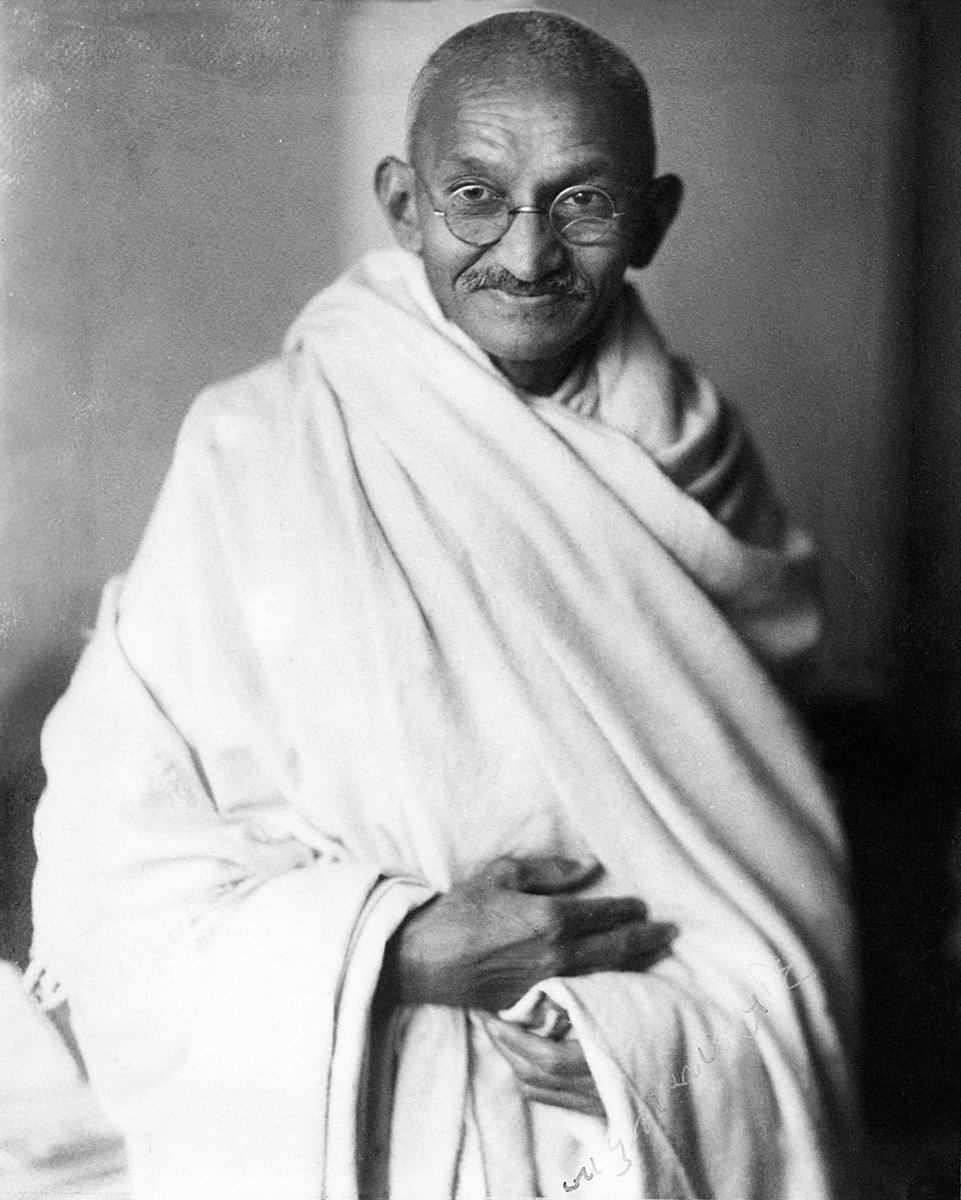
The Mahatma would have definitely won the Nobel Prize in 1948. But he was assassinated, and the Nobel Prize could not be given posthumously.
Instead, the Nobel Committee honoured perhaps the greatest human of the 20th century by declaring that they would be no peace award that year on the grounds that “there was no suitable living candidate.”
"There are many causes that I am prepared to die for but no causes that I am prepared to kill for."
Remembering Mahatma Gandhi on the 157th anniversary of his birthday. Gandhi was nominated for the #NobelPeacePrize on 12 occasions.
Read more: https://t.co/wguSgNHzJP
@CleansedTweets Yes! Can totally relate to this... On our last trip to Chongqing zoo, everyone was staring at us. It seemed, we were the exhibits. People were posing in front of us, clicking photos, something that we understand but are not used up.
Why do we use "The" when speaking about US (The United States) or The Great Britain but not for any other country? (unless it's The Republic of... For any country) Linguistic experts, what's the logic?
@CleansedTweets Love your honest posts and your so many replies to comments. Refreshing from usual X stuff! In this tweet though, maybe it's cos you've a British passport, that's why?
A bobby pin costs two cents. The labor to find it in a garment, bag it, write a bilingual note, and deliver it to your room costs maybe $4-5 in staff time.
That math looks insane until you zoom out.
Japan's hospitality philosophy has a name: omotenashi. It originates from the tea ceremony tradition of Sen no Rikyū in the 1500s. The core idea is anticipating a guest's needs without any expectation of return. No tipping culture. No service charge. The bobby pin gets returned because returning it is the standard, and the standard exists because every interaction is treated as a once-in-a-lifetime encounter.
The Japanese phrase is ichigo ichie: one time, one meeting. You will never serve this exact guest in this exact moment again. So the bobby pin matters.
Here's what that philosophy produces at national scale. Japan hit 42.7 million international visitors in 2025, up from 31.9 million pre-pandemic. Tourism spending reached $60 billion. The country ranked 3rd globally in travel competitiveness, highest in Asia. Repeat visit rates are so high that many travelers return within 1-3 years.
No marketing budget generates that kind of loyalty. A country where a hotel laundry worker bags a two-cent hair pin and writes you a thank-you note in two languages does.
Western hospitality optimizes for service metrics, tip incentives, and loyalty point programs. Japanese hospitality optimizes for the feeling you can't quite articulate when you get home, the one that makes you book the return flight six months later.
The bobby pin is the product.
@raagulanpathy Curious to know why didn't HK make the final cut? Because Singapore made the cut & both are similar and no point having both in the list?