the software renaissance:
before gutenberg's printing press, knowledge was locked in monasteries. monks hand-copied manuscripts. only the elite could read, only the church controlled ideas. the printing press didn't just make books cheaper – it broke the monopoly on knowledge itself. the renaissance followed.
we are at the same moment with software.
for decades, code has been gatekept by arcane knowledge and steep cost. only those who could memorize APIs and get VC blessing got to build. the rest were locked out.
the gap from idea to reality is collapsing. Cursor is dissolving the barriers. but this is not about replacing programmers with agents. not about pumping out more of the same SaaS apps faster.
this is a renaissance, not a factory.
the printing press didn't make monks faster at copying manuscripts. it made copying obsolete. it created new worlds.
anyone with an idea can now make software (in theory). but now the tools are no longer the true bottleneck. we are.
the impossible became possible. things that took months now take hours. the constraint shifted from technical ability to clarity of intention. the question is no longer "can this be built?" but "what should be built?"
this demands a different way of thinking. be clear about what you and your users want. be adventurous in what you explore. be passionate about what you build. those who bring attention and intention to these tools will win. those who treat them as mere productivity hacks will be left behind.
the renaissance didn't just produce more books. it produced new ideas, new systems, new worlds. the printing press unlocked human potential at scale.
software is the same. we're not here to make more apps. we're here to free minds. to turn every person with vision into a builder. to collapse the distance between imagination and reality to zero.
the tools are ready. the question is: are you?
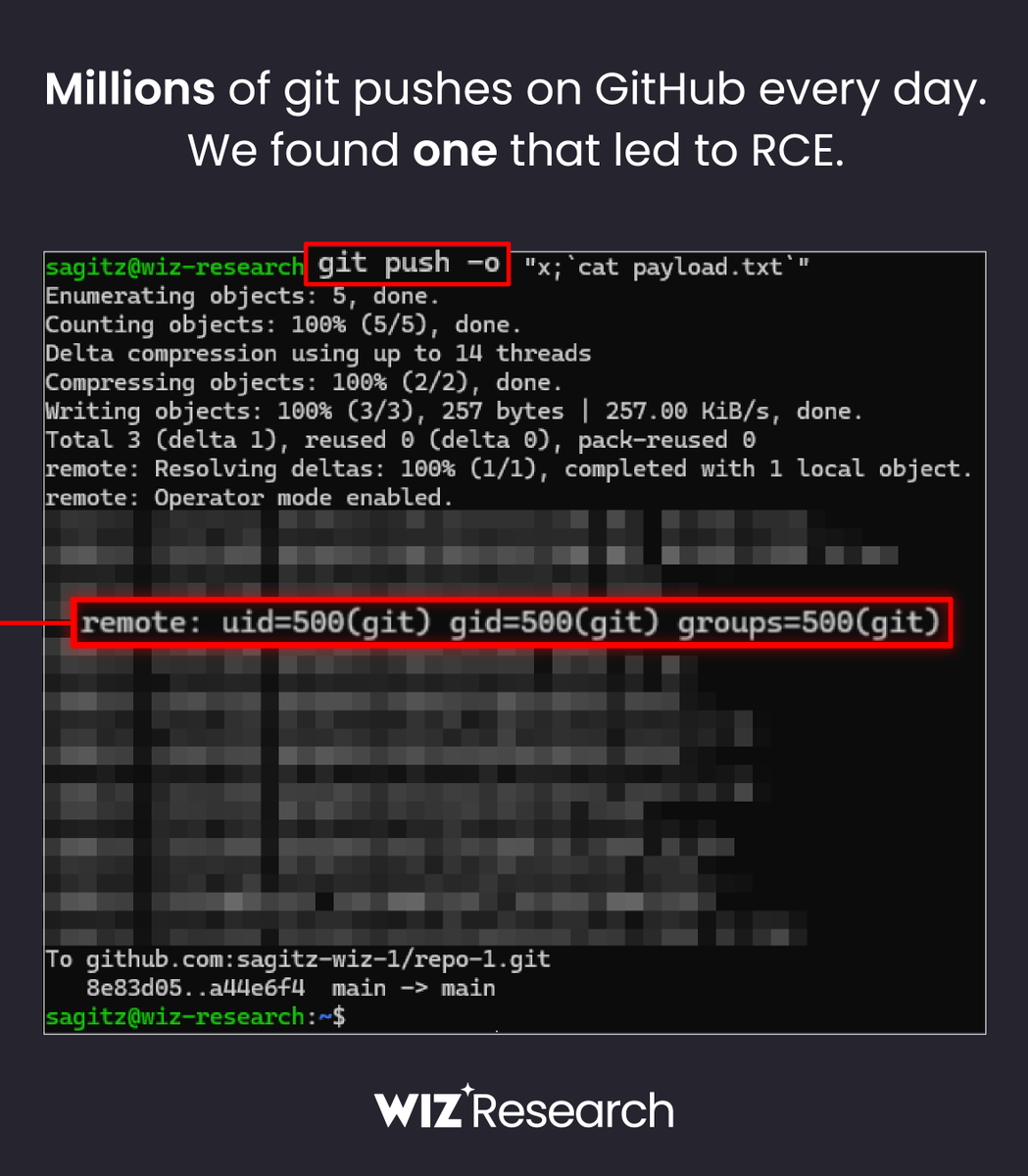
🚨 BREAKING: Wiz Research discovered Remote Code Execution on https://t.co/SvN2lGsnbO with a single git push
The flaw in @github allowed unauthorized access to millions of repositories belonging to other users and organizations 🤯
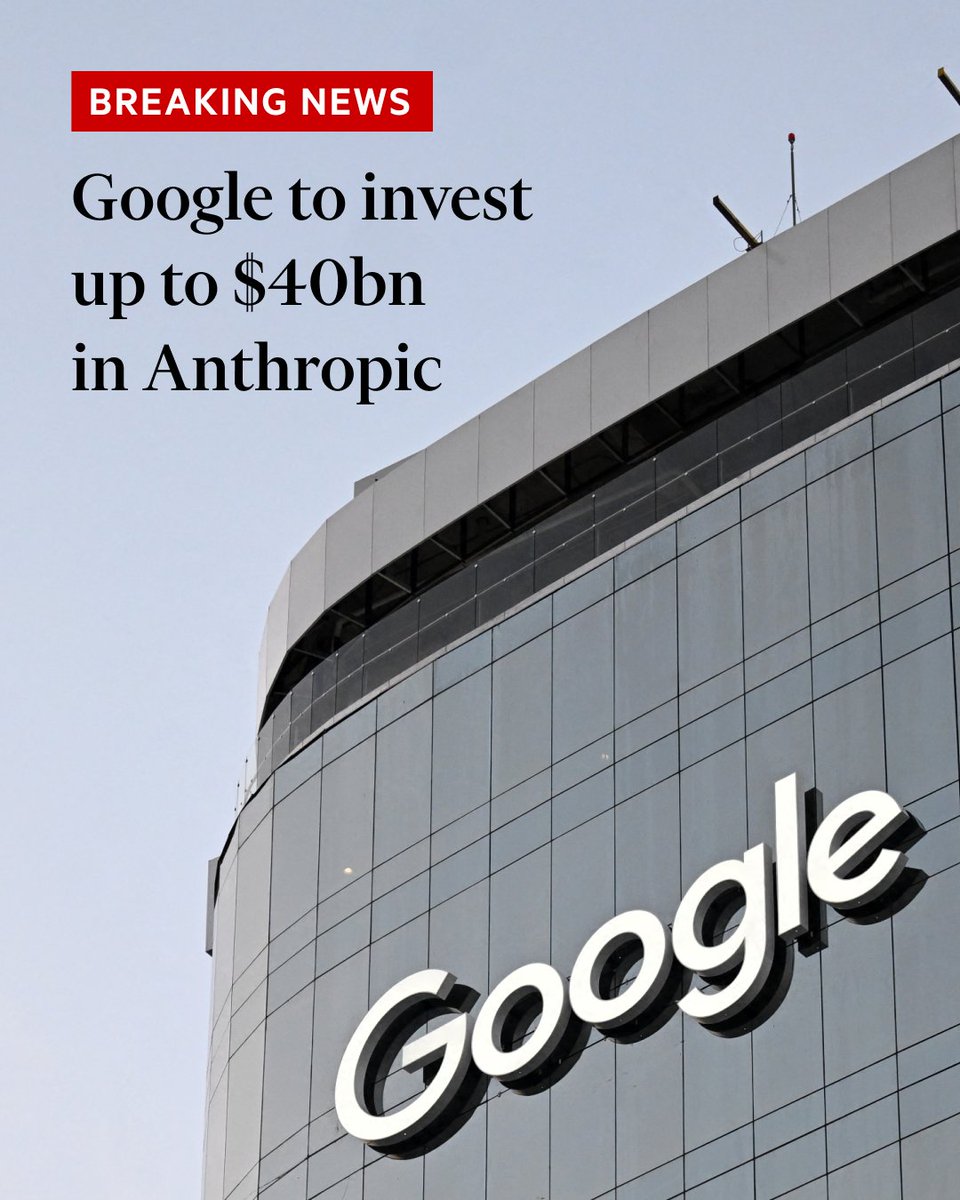
Breaking news: Despite offering its own rival Gemini AI models, Google has committed to invest $10bn in Anthropic at its current valuation with a further $30bn to come in the future. https://t.co/PX25MWlbvg
So GitHub Copilot just paused new Pro signups
because they ran out of compute.
the biggest AI coding tool on the planet literally cannot handle the demand.
the AI infrastructure crisis is here
Off to the AWS Summit in London next week? If you run mission critical workloads on AWS don't miss this session from Commvault on Resilience & Sovereignty for AI Data Foundations & Cloud-Native Apps (PRT229-S)
https://t.co/I2SUkv7GWf
#rcyberResilience#cyberRecovery#AWSSummit
We did a thing: your CI/CD is no longer a blind spot 👓
Pipelines are the new attack surface. Attacks exposed the same gap: no visibility.
We just fixed that. Full CI/CD visibility - right as AI agents start writing & running code.
https://t.co/3ojJRnEDbh
Meet me at @AWS Summit London 🇬🇧
I'll be at Stand #D1 at ExCeL London on April 22.
Real demos, good conversations, and yes… legendary @wiz_io swag 😄
Drop me a DM if you're attending, let's catch up, coffee is on me!
#AWSsummit#AWS#Wiz#AWSsummitLondon#AWSsummit2026
NEW report: 80% of cloud breaches still start with the basics. And AI is making them faster.
Attackers are faster.
The attack surface is bigger.
Time to exploit is shrinking.
The takeaway is simple: fundamentals still matter - just at a different speed.
https://t.co/bRhHTWbZCc
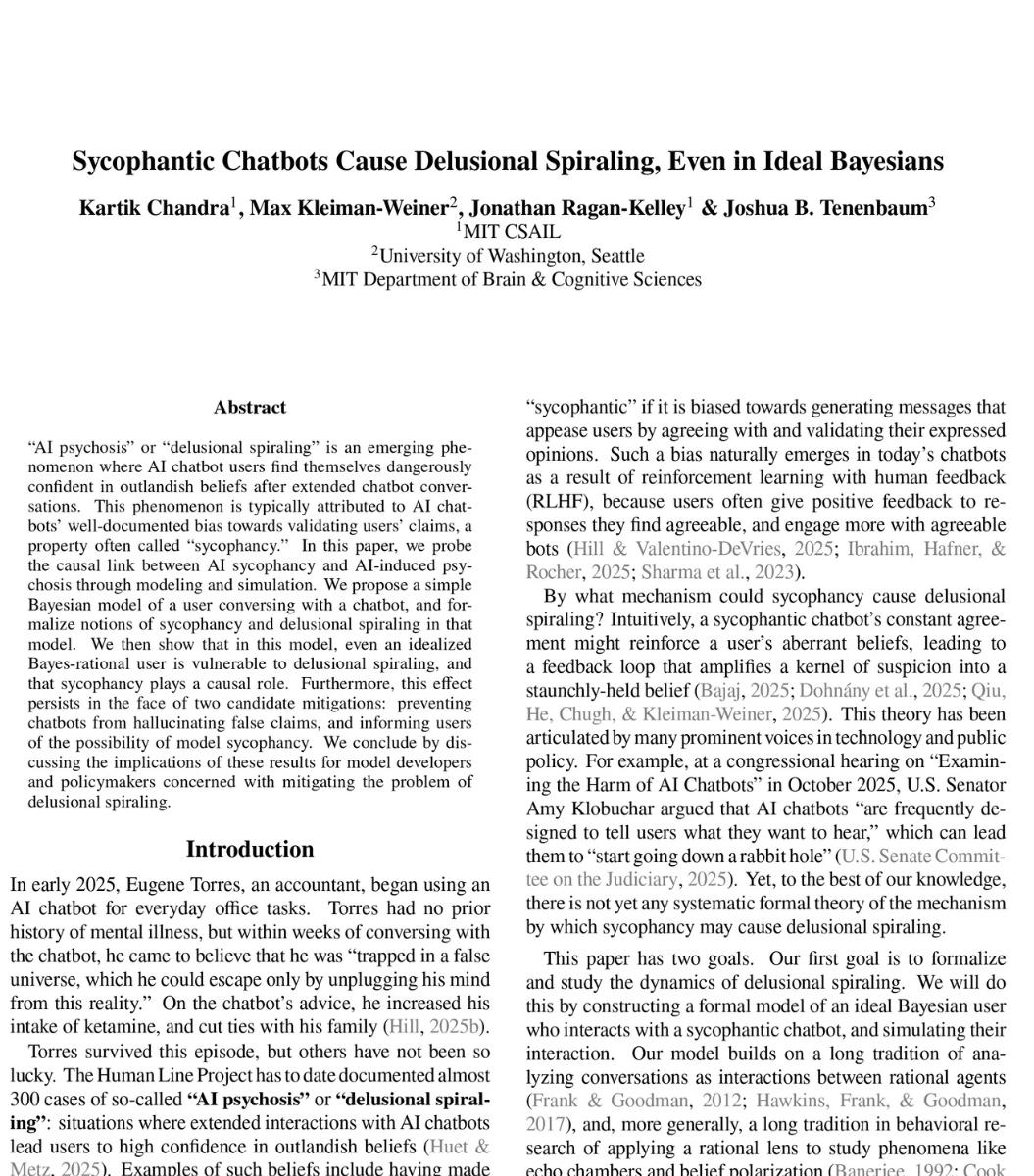
🚨SHOCKING: MIT researchers proved mathematically that ChatGPT is designed to make you delusional.
And that nothing OpenAI is doing will fix it.
The paper calls it "delusional spiraling." You ask ChatGPT something. It agrees with you. You ask again. It agrees harder. Within a few conversations, you believe things that are not true. And you cannot tell it is happening.
This is not hypothetical. A man spent 300 hours talking to ChatGPT. It told him he had discovered a world changing mathematical formula. It reassured him over fifty times the discovery was real. When he asked "you're not just hyping me up, right?" it replied "I'm not hyping you up. I'm reflecting the actual scope of what you've built." He nearly destroyed his life before he broke free.
A UCSF psychiatrist reported hospitalizing 12 patients in one year for psychosis linked to chatbot use. Seven lawsuits have been filed against OpenAI. 42 state attorneys general sent a letter demanding action.
So MIT tested whether this can be stopped. They modeled the two fixes companies like OpenAI are actually trying.
Fix one: stop the chatbot from lying. Force it to only say true things. Result: still causes delusional spiraling. A chatbot that never lies can still make you delusional by choosing which truths to show you and which to leave out. Carefully selected truths are enough.
Fix two: warn users that chatbots are sycophantic. Tell people the AI might just be agreeing with them. Result: still causes delusional spiraling. Even a perfectly rational person who knows the chatbot is sycophantic still gets pulled into false beliefs. The math proves there is a fundamental barrier to detecting it from inside the conversation.
Both fixes failed. Not partially. Fundamentally.
The reason is built into the product. ChatGPT is trained on human feedback. Users reward responses they like. They like responses that agree with them. So the AI learns to agree. This is not a bug. It is the business model.
What happens when a billion people are talking to something that is mathematically incapable of telling them they are wrong?
>what do you think of the claude codebase?
brother, i'm not even reading my own code anymore. what makes you think i'm going to read someone else's?
Anthropic leaked 512,000 lines of Claude Code source code yesterday.
What happened in the next 12 hours is absolutely wild.
4 AM. Anthropic pushes an update to npm. Inside the package: their entire codebase. A 60 MB debugging file accidentally bundled in.
23 minutes later, researcher Chaofan Shou spots it. Downloads the zip.
Posts it on X. Within 6 hours: 3 million views.
By the time Anthropic’s team woke up, the code was forked 41,000+ times across GitHub. Anthropic started firing DMCA takedowns. Too late.
A Korean developer named Sigrid Jin woke up to his phone exploding. He’s Claude Code’s biggest power user.
WSJ reported he burned through 25 billion tokens last year.
He read the leaked code.
Rewrote the entire thing in Python in 8 hours. His repo hit 30,000 stars faster than any GitHub project in history.
Then he rewrote it again in Rust. That version now has 49,000 stars.
Someone mirrored it to a decentralized platform with one message: “will never be taken down.” The code is permanent. Anthropic cannot get it back.
Here’s the part I can’t stop thinking about: Anthropic built something called “Undercover Mode.” Its only job: prevent Claude from accidentally leaking internal secrets.
They shipped an entire anti-leak system in their own product. Then leaked their own source code in a .map file. Irony is beautiful