"Autism and most mental health disorders present differently in Black women…Because autism is looked at through such a White and male lens, people don’t recognize similar behaviors with traditionally feminine or Black interests." https://t.co/mtLVpuhMX2
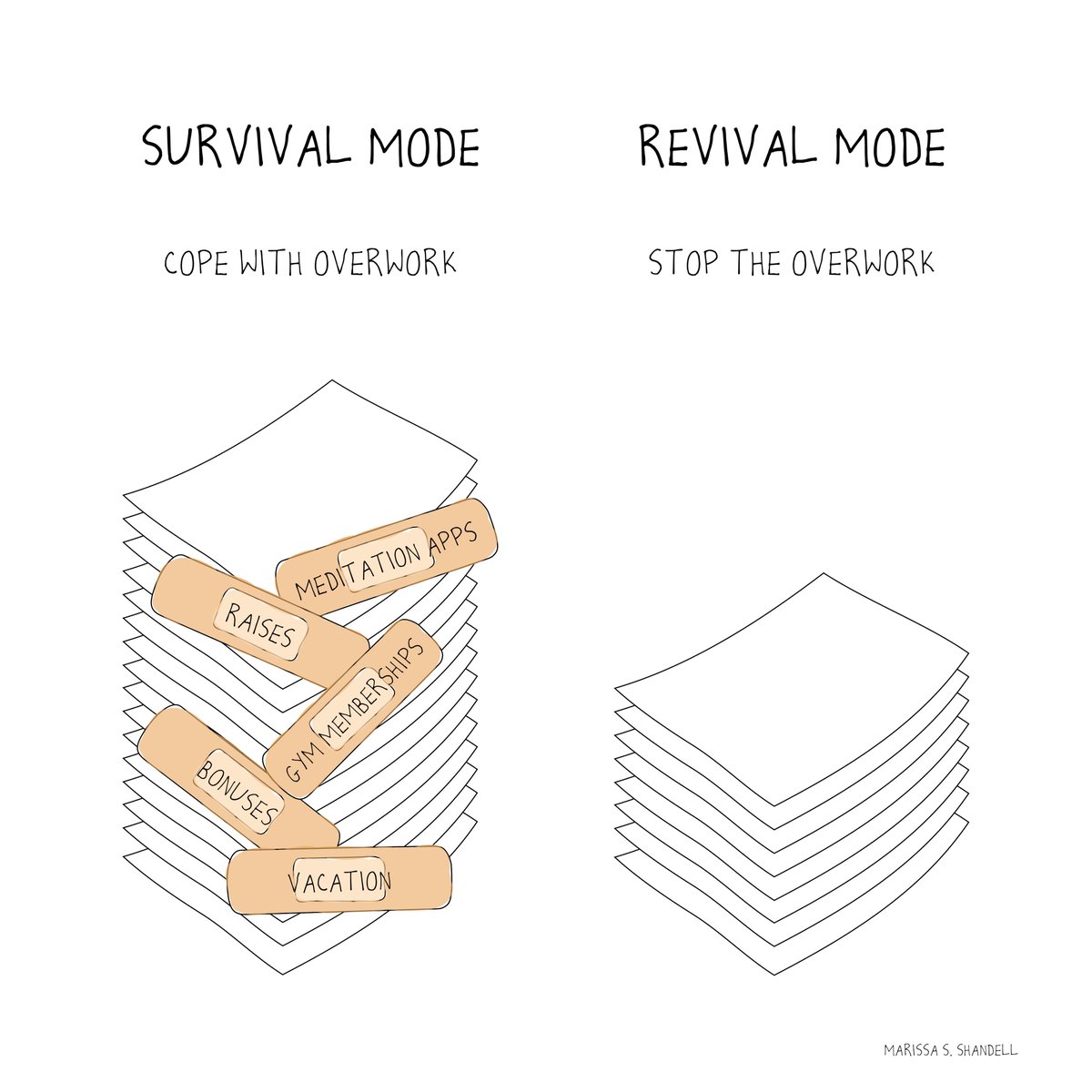
When you burn people out, you push them out. Stars are the first to leave—they have the most opportunities.
The solution is not to pile on the perks. It’s to pinpoint the root causes of overload and design more manageable jobs.
If you want to keep people, stop exhausting them.
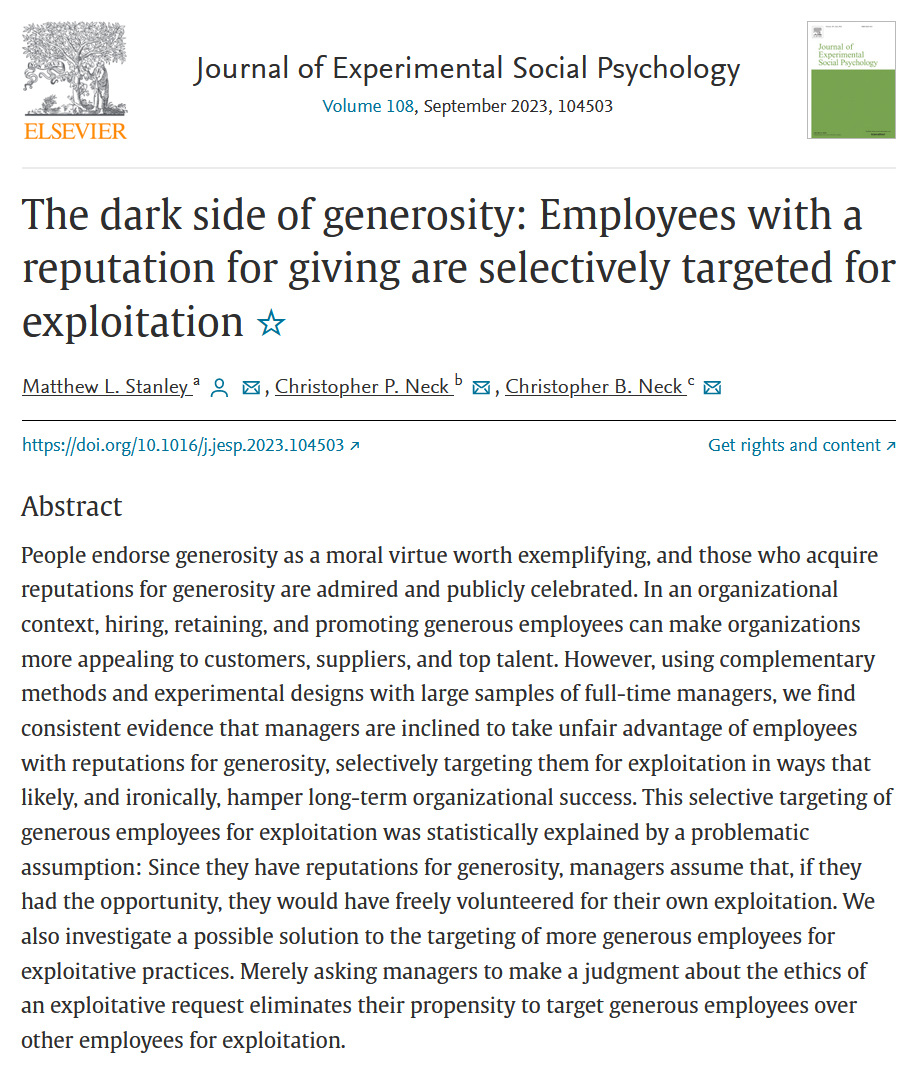
Toxic cultures exploit generosity. Takers impose extra work on givers, and no good deed goes unpunished.
Healthy cultures reward generosity. People protect givers from takers, and cream rises to the top.
Helpfulness is not a weakness to target. It's a strength to safeguard.
Great to see this article, co-authored with the wonderful @t_kalandadze, @DrHannahHobson and Audrey Linden (@CRAE_IOE), published in RASD!
Towards reproducible and respectful autism research: Combining open and participatory research practices.
https://t.co/eycIO0uX27
Weekends shouldn’t be time to recover. They should be time to rejoice.
Burnout cultures exhaust us through the week and force us to recharge on the weekends. Healthy cultures provide daily space to refuel.
Places that continually deplete our energy don’t serve our well-being.
"PMDD disproportionately affects people with ADHD and Autism, with up to 92% of Autistic women and 46% of women with ADHD experiencing PMDD, though estimates vary."
Imagine what that means for AuDHD folks who menstruate! 😵
Dear Colleagues:
A group of behavior analysts working in the assessment and treatment of severe destructive behavior met to discuss ABAI’s Task Force Report on Contingent Electric Skin Shock and the position statements concerning its use.
Please consider prior to your vote.
"Instead of focusing on perceived social deficits and normative remediation, [double empathy] suggests a position of humility in the face of difference, the need to build rapport and understanding and not assume a lack of capacity for understanding" https://t.co/FIOJjvt9hb
The purpose is to see how you feel about different terms that are commonly used. The survey will take about 10 - 20 minutes of your time to complete and is completely anonymous. If you are interested in participating, please click the link below.
https://t.co/tws60DHEWI
We are SUPER excited to announce a secret project we have been working on for a while, a community Padlet Board so everyone can see and contribute to a one stop shop of autism resources, research, infographics and websites!
https://t.co/4E6MT8FZk3
Here’s what you can do:
1/5
Repeat after me - we cannot assume employees want or enjoy pizza as a replacement for challenging unappreciated work conditions https://t.co/RnxHtvnfIi
A year ago, a non-academic friend listened to a talk I gave. I thought it went great. My friend disagreed.
She said that academics are experts at making interesting stuff boring—and that we should all take a speech class.
So I did. And here are 6 most useful things I learned.
Numeracy bias: believing you can't make a difference b/c so many people in need. Study: those who faced adversity in life are resistant to this bias and more likely to help, b/c they remember how much #kindness mattered in their time of need! @daviddesteno
https://t.co/6HdvV9Qj7a