No GMOs. Just a foot soldier for justice. Natural medicine will save us all. Actually have a sense of humour, notwithstanding our world crises. #nature#gardens
Just heard that The Littlest Hobo is being rebooted for the 2026-27 season.
Please don't change the song. Just use the original Maybe Tomorrow written by Terry Bush and John Crossen.
Learn more about The Littlest Hobo in my episode about it 👇
https://t.co/lkLUBb5McS
Follow cryptic clues, discover a #levidrome (creates a new word, when spelled backward), i.e., Tip > Pit.
🔎 located in, or relating to the ilium; uppermost bone of the human pelvis > Betrothal gifts or bride price
Hmm... 🤔
Quote (not reply) w/ your solution & #levidrome tag
Follow cryptic clues, discover a #levidrome (creates a new word, when spelled backward), i.e., Tip > Pit.
🔎 located in, or relating to the ilium; uppermost bone of the human pelvis > Betrothal gifts or bride price
Hmm... 🤔
Quote (not reply) w/ your solution & #levidrome tag
The oak forests of eastern North America moved north after the last ice age in the beaks of blue jays.
When the last glaciers retreated about 10,000 years ago, the trees of eastern North America had to migrate north to recolonize the deglaciated land. Most tree seeds (maples, pines) are wind-dispersed and can travel widely.
Acorns are heavy. They fall straight down. By every reasonable model, oaks should have moved north at a rate of a few meters per year.
The fossil pollen record shows they moved closer to 350 meters per year. Faster than wind-dispersed species. Almost impossibly fast for a heavy-seeded tree.
The 1989 Johnson and Webb paper in the Journal of Biogeography identified the mechanism. Blue jays carry acorns much farther than squirrels, preferentially bury them in disturbed open ground at the right depth for germination, and forget enough of them to keep the species moving. A single 50-jay flock in Virginia was documented caching 133,000 acorns in one autumn.
The eastern oak forest, the largest deciduous forest ecosystem in North America, exists in its current form in part because of a bird most people consider a nuisance at the feeder.
The debate over Billy Bishop Airport isn't just about jets vs. noise, it's about future of Toronto’s waterfront. For many, the harbour is cottage country. Do we take that away for increased flights? Or continue to restore the connection to Lake Ontario? https://t.co/uqOx1oVRsR
Widely acclaimed as one of the greatest duets of all time, this 1987 archival footage from Ibiza captures the iconic song "Barcelona." It stands as a vivid testament to the perfect fusion of Montserrat Caballé’s sublime operatic vocals and Freddie Mercury’s captivating stage presence—a masterpiece that left an indelible mark on music history and went on to become the official and defining anthem of the 1992 Summer Olympics in Barcelona.
The new wildlife overpass south of Radium is already helping protect one of the region’s last viable bighorn sheep herds while making the highway safer for everyone travelling through the area. @TranBC
Read More: https://t.co/YsQEdzoDsa
Wow. Scott Pelley just got fired from 60 Minutes for standing up to the right wing grifters who are trying to destroy it. Thank you to Pelley, Anderson Cooper, Sharyn Alfonsi, and Cecilia Vega (all people who left or were fired) for doing the right thing. Crazy stuff.
Here is a #levidrome cryptic clue 😄 The answer is a #levidrome pair (i.e.; tip-pit)!
Clue: all the actors will collaborate, break a limb on opening night!
🤔 Hmm...
Quote post (not reply) your answer and #levidrome PLEASE!
Play this game too!: https://t.co/H2E15ycEq3
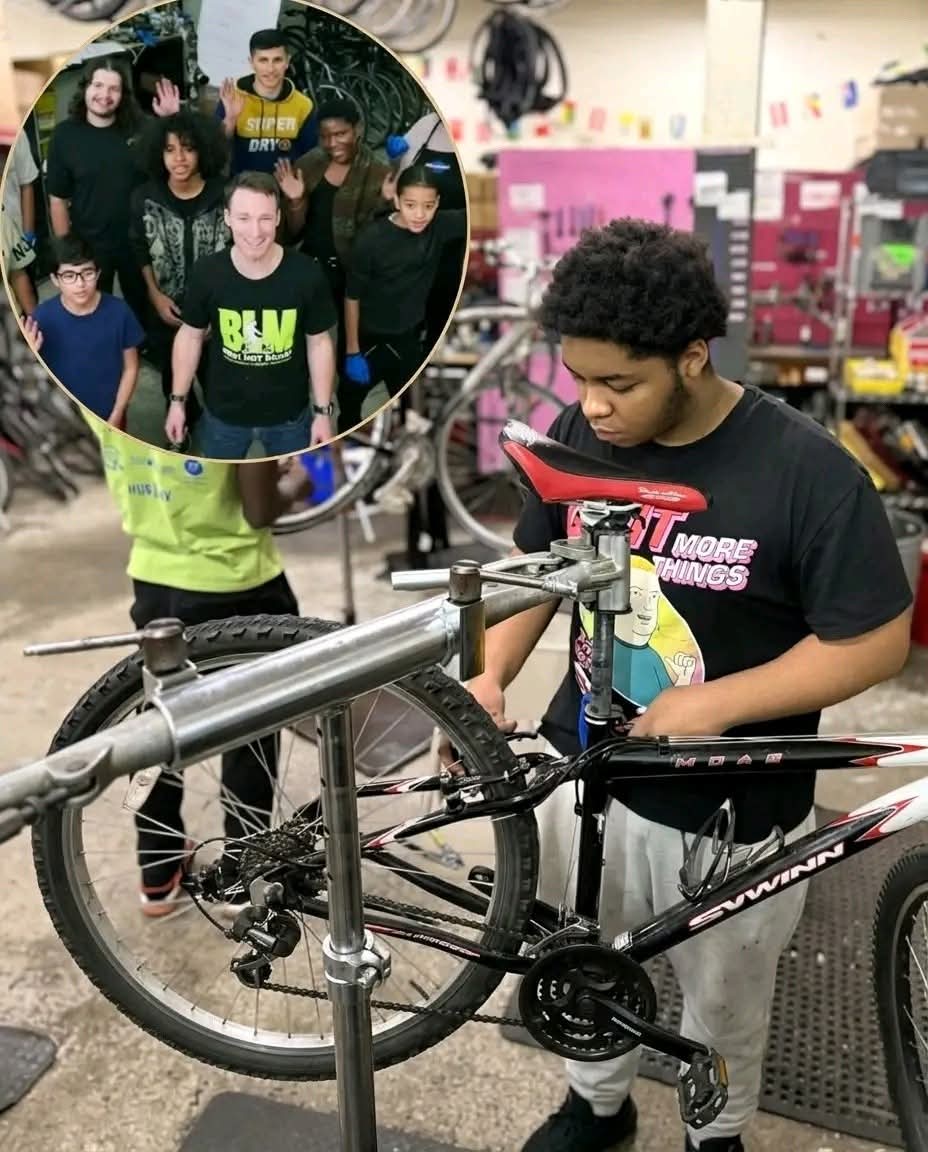
He fixed 200 bikes he'll never ride. Then he found out why.
Last winter, a 16-year-old named Marcus walked into a beat-up workshop in Boston with nothing but a court-ordered community service form and what he later called "a serious attitude problem."
He wasn't there to learn. He was there to clock hours and leave.
The place was Bikes Not Bombs — a small nonprofit that's been collecting donated bicycles since 1984, fixing them up, and sending them to communities around the world. Over 80,000 bikes have rolled out of programs like theirs. Most of the people doing the fixing? Teenagers who started out just like Marcus.
A mentor handed him a wrench. Didn't say much. Just pointed at a rusted-out mountain bike in the corner and said, "See what you can do."
Marcus didn't leave after his hours were done that first day.
He came back the next Saturday. And the one after that. Through a Boston winter that hit the teens, he'd show up before the shop opened, hands shoved in his pockets, waiting by the door.
Over eight months, he repaired more than 200 bicycles. Stripped frames, rebuilt gear systems, replaced brake cables so worn they snapped in his hands. Bikes that arrived as junk left looking like they just came off a showroom floor. He never asked what happened to them after they left the shop.
Then one afternoon, a program coordinator pulled up a photo on her phone. It was a little girl — maybe seven years old — in a bright yellow dress, standing in a village in Ghana. She was beaming. Both hands gripped the handlebars of a blue bike. A blue bike with a very specific scratch on the fork that Marcus recognized immediately.
He had fixed that bike in November. He remembered it because the chain had been completely seized and it took him three hours. He almost gave up on it.
He didn't say anything for a long time. Then he asked if he could see more photos.
There were dozens. Kids in countries Marcus had barely heard of, riding bikes he had quietly fixed in a cold Boston workshop — alone, early, with no one watching, for no reward he could see at the time.
"I used to think I was nobody doing nothing in a shop nobody cared about. But somebody's riding what I fixed right now. I don't even know their name. That's the craziest thing I've ever felt."
— Marcus, 16, Boston
He still works in that shop. He brought two friends from his neighborhood last month.
He handed them each a wrench and pointed at the bikes in the corner.
The Trump administration is sending ships to rip 900 ocean sensors out of the Atlantic and Pacific — and Congress already told them twice they couldn't do it.**
They're doing it anyway.
Across Britain, neighbors are cutting small holes in the bottoms of their fences on purpose, and you should too.
The holes are for hedgehogs. A hedgehog can cover a mile or more in a single night hunting for food and mates, and a solid fence turns every backyard into a dead end. So conservation groups made it a movement: a gap about five inches square, cut at ground level, linking yard to yard into what they call a hedgehog highway.
The US doesn't have wild hedgehogs, but we have all the animals that hit the same wall. Toads, salamanders, box turtles, chipmunks, young rabbits: each one small enough to be stopped cold by a privacy fence, and each one needing more ground than a single lot to live a normal life. To a box turtle, a solid fence can be the edge of the reachable world.
The fix is the one the Brits landed on. A palm-sized gap at the bottom, down where the small things travel. Your fence still does its job, the neighborhood stops being a series of wildlife prisons, and your yard stitches itself back into the larger map.
🇺🇸🇵🇸 La cantante country de Nashville, ganadora de un Grammy, detuvo su concierto y gritó con fuerza.
“Free Palestine!”En pleno corazón de Estados Unidos, una artista con gran talento y reconocimiento se atrevió a decir lo que muchos famosos callan por miedo.
Mientras Gaza y Líbano son destruidos, voces como la de Sierra Ferrell demuestran que la solidaridad con Palestina está llegando incluso a los escenarios más inesperados.
Here is a #levidrome cryptic clue 😄 The answer is a #levidrome pair (i.e.; tip-pit)!
Clue: all the actors will collaborate, break a limb on opening night!
🤔 Hmm...
Quote post (not reply) your answer and #levidrome PLEASE!
Play this game too!: https://t.co/H2E15ycEq3