The Omar Ortez Connecticut is a hand-rolled, long-filler cigar produced by the Ortez family’s own factory in Nicaragua. It features an Ecuadorian Connecticut wrapper (specifically a light, blonde Cuban-seed shade-grown leaf from Ecuador) over a Nicaraguan binder and Nicaraguan fillers sourced from the family’s farms in the prime growing regions of Estelí (for strength), Condega (for aroma), and Jalapa (for sweetness).
How and Where It’s Made
The cigar is entirely made in Nicaragua at Agroindustrial Nicaraguense de Tabacos S.A. (Agrotabacos), the Ortez family’s vertically integrated factory in the Condega region (north of Estelí). The Ortez family handles everything from seed to finished cigar: they grow their own tobacco, age it carefully, and roll the cigars by hand at the factory.
This line launched in 2022 as a milder, more approachable counterpart to the brand’s stronger Nicaraguan puro and Maduro offerings. It comes in three main vitolas:
Robusto (5 × 54)
Toro (6 × 54)
Magnum/Gordo (6 × 60)
It’s sold in 20-count boxes or larger 60-count value crates, and it’s positioned as a wallet-friendly daily smoke (typically $7–$9 per stick retail, often cheaper in boxes).
Company Background
Omar Ortez and his family are multi-generational Nicaraguan tobacco experts. The story begins in 1967 when Omar’s father, Ramon Ortez, started working tobacco farms. Omar joined the fields at age 10, eventually ran farms, and in the early 1990s founded tobacco supply companies. In 1995 he established Agrotabacos as a family-run cigar factory. Today the operation is fully integrated: they cultivate, ferment, age, and roll their own cigars using tobaccos from Nicaragua’s top regions. The brand Omar Ortez launched around 2006 and is distributed in the U.S. by Altadis USA. Omar’s daughter Indiana Ortez is also active in the business (quality control, marketing, and even her own side projects). The family is known for producing solid, high-value Nicaraguan cigars that consistently earn strong consumer ratings.
Strength: Medium (starts mild-medium and builds gently to a solid medium). Body: Creamy and smooth — very approachable, not harsh or overwhelming.
Flavor Profile:
First third: Light peppery spice and earthy notes with a clean, grassy/cedar undertone. It has a pleasant “bite” that keeps it interesting without being sharp.
Middle third: Transitions into creamy leather, subtle sweetness, cinnamon, and more earth. The Ecuadorian Connecticut wrapper adds silkiness and a classic mild Connecticut character (think hay, cream, and faint nuttiness) while the Nicaraguan core brings depth and balance.
Final third: Leather and earth dominate with a crisp, clean finish. Hints of cedar and a touch of pepper linger pleasantly. No bitterness or harshness even when smoked down.
Construction & Burn: Excellent across the board — flawless, even burn, solid ash, and a smooth draw with good smoke production. The yellow foot band and clean presentation give it a classy, approachable look.
Overall Experience: A 90-rated cigar in detailed reviews (e.g., CigarPlace’s Toro review). It’s creamy, complex enough to hold interest for 60–90 minutes (depending on size), yet forgiving and beginner-friendly. Think of it as a “Connecticut-style” smoke that still shows off Nicaragua’s signature earth and spice without the full power of a puro. Great morning or lunchtime cigar — smooth, flavorful, and never boring. Consumers and reviewers praise it as an outstanding value daily smoker that punches above its price point.
In short: excellent construction, balanced creamy Nicaraguan flavors under a silky Ecuadorian Connecticut wrapper, made entirely by the Ortez family at their own Nicaraguan factory. A standout value cigar that delivers smooth, refined smoking without breaking the bank. If you enjoy approachable medium-bodied sticks with good complexity, this one is highly recommended.
My message for the Irish:
We support you and we are so proud of you!
Stay strong. Stay focused. Stay together and most importantly, know that God stands with you!
💚❤️🇮🇪🇨🇦
Christopher Duffy, one of the organisers of the Fuel Protests, provides an update on the current state of events as of Friday morning.
Everything hinges on a meeting scheduled for this afternoon....
The 'Omar Ortez Connecticut Robusto' is a budget-friendly, Nicaraguan-made cigar (5" x 54) featuring an Ecuadorian Connecticut wrapper over a Nicaraguan binder and filler.
It's positioned as a milder, smoother take on the Omar Ortez line, which is known for value-oriented Nicaraguan tobaccos. Launched around 2006 (with the Connecticut variant emphasizing approachability), it's often described as wallet-friendly and beginner-friendly.
- Flavor Profile and Smoking Experience:
Reviewers consistently note a medium-bodied smoke that's smooth and balanced, with:
- Initial notes: Light spice, earth, and sometimes a peppery kick.
- Mid to finish: Leather, cedar, cream, hints of sweetness or cinnamon, and woody/earthy tones. The smoke is often creamy with a clean finish.
- Strength: Generally medium (not overpowering), making it approachable without much intensity. Some describe it as milder than the brand's bolder originals.
Construction and burn get high marks—flawless or consistent in professional reviews—with good draw and no major issues reported. A Toro version (similar blend) earned a 90 rating for its complexity, smoothness with a slight bite (distinguishing it from blander Connecticuts), and overall enjoyment.
The Robusto size delivers a solid 30-45 minute smoke, ideal for shorter sessions. Reddit users call it "good" for starters or those seeking something non-intense, though some note it lacks deep complexity or character compared to more premium options.
- Price and Value:
- Single sticks or small packs typically run $5–8 depending on retailer and promotions.
- Boxes of 20 often land in the $75–110 range (sometimes lower on sale, equating to ~$4–6 per stick). Box of 60 deals can drop even further per unit.
It's frequently praised as a strong value play: solid Nicaraguan core at an everyday affordable price, without the premium markup.
- Comparison to Premium Brands:
Premium Connecticut-wrapped cigars (often $10–25+ per stick) tend to use higher-grade, more selectively aged tobaccos, finer construction consistency, and more nuanced layering. The Omar Ortez holds up well as a daily smoker or entry-level option but trades some refinement for cost savings.
- Vs. high-end Connecticuts (e.g., Davidoff, Macanudo, Fuente Fuente OpusX milder lines, or boutique like Caldwell or CLE Connecticut offerings): Premiums deliver silkier texture, subtler transitions (more cream, nuts, citrus, or floral notes), longer complexity, and flawless consistency across boxes. The Omar Ortez has a "slight bite" and earthy/Nicaraguan backbone that makes it bolder/less purely mild than classic shade-grown Connecticut profiles. It won't match the elegance or aging depth of a top-shelf Davidoff, but it provides similar creamy-smooth vibes at 1/3–1/2 the price.
- Vs. mid-tier value premiums (e.g., Rocky Patel Entry-level lines, Romeo y Julieta, or My Father milder blends): It's competitive—similar medium body and construction reliability, but premiums often edge it in balance and flavor depth. Omar Ortez shines for budget-conscious smokers wanting Nicaraguan punch without full strength.
- Strengths as a value cigar: Excellent burn/draw, no bitterness, and approachable for new or casual smokers. Weaknesses noted in forums: Can feel "meh" or one-dimensional if you're chasing layered, evolving profiles from boutique makers.
Overall, it's a solid 8/10 value cigar—reliable, enjoyable medium smoke with classic Connecticut appeal—but not a substitute for ultra-premium experiences. If you like smooth, earthy-leathery Connecticuts without spending a lot, it's worth trying (especially on sale). Pair it with a light coffee or rum for best results. For upgrades, look toward established premium Connecticut lines if you want more finesse.
Retailers like JR Cigars, often carry it with frequent discounts. Enjoy responsibly!
Dear X Family, PLEASE SHARE for the beagles still trapped inside Ridglan Farms!❤️
In this clip from the Ridglan Farms open rescue on March 15, 2026, a sheriff’s deputy appears to gesture toward her firearm while confronting rescuers carrying a beagle. What follows is even more disturbing.
This terrified puppy was dragged from the back of a rescue van by police and returned to Ridglan Farms, despite a judicial order indicating this beagle was a victim of criminal abuse. At any moment, they could face further suffering in an experiment or surgical procedure.
These actions raise serious legal and ethical concerns. Even if authorities considered this beagle “property” in a theft case, law enforcement is required to preserve potential evidence of a crime. Returning this beagle to the very place where abuse is alleged to have occurred raises urgent questions that demand accountability.
As difficult as it is to watch this moment, there is another side to the story. While attention was focused here, other rescuers were able to leave the property with beagles who made it to safety.
This unnamed beagle’s moment became a turning point. In a very real way, their apprehension created a critical distraction, allowing other vans carrying beagles to reach freedom.
We need public pressure now.
Contact the Dane County District Attorney and Sheriff and urge them to return this beagle and the other seven who were apprehended to rescuers or an appropriate rescue organization.
You can say:
“Dogs facing criminal abuse at Ridglan Farms were illegally seized by police from rescuers and returned to their abusers. Do the right thing and rescue the dogs!”
Dane County District Attorney
Ismael Ozanne
(608) 266-4211
[email protected][email protected]
Dane County Sheriff
Kalvin Barrett
(608) 284-6800 (Press 8 for complaints)
[email protected]
Please Follow our biggest advocates for these beagles and all animals on our planet❤️
@InvestigateEar1@The_BarbiTwins@KatieHeigl@mirandalambert@Sia@JaneGoodallInst@jes_chastain@kcorvo2@Lady_Astor@DeannaHershber3@PhaedraXTeddy@amazingraceart@lisachristinect@CaribbeanRythms@venetianblonde
One of the UK’s versions of #Ridglan, MBR Acres in Huntingdon, Cambridgeshire, where over 2,000+ beagles are bred into an existence of suffering annually — shipped off to laboratories to be tormented to their very last breaths and discarded.
Pls, all, do your part to end this!
‘All people in Serbia, regardless of their origin or status, become free, whether they are slaves or under any other form of servitude or state authority.’ – The Sretenje Constitution of 1835
Happy Statehood Day, Serbia! 🇷🇸
The veneration (often called the "cult" in historical and theological contexts, meaning devoted honor or reverence, not worship in the sense reserved for God) of Mary—known as Our Lady, the Virgin Mary, Mother of God (Theotokos in Greek), or similar titles—has deep roots in Christianity but developed gradually over centuries.
Early Beginnings (1st–3rd Centuries)
Mary appears in the New Testament Gospels as the mother of Jesus, with key moments like the Annunciation, Visitation (where Elizabeth calls her "blessed among women"), and her presence at the Cross. Early Christians honored her role in the Incarnation, viewing her as the "New Eve" (e.g., in writings of Irenaeus around 180 AD, contrasting her obedience with Eve's disobedience). Evidence of direct devotion is sparse in the first two centuries, with no widespread prayers or feasts dedicated solely to her. However, some indirect signs exist, such as early catacomb art depicting her and possible liturgical mentions by the 3rd century. The earliest known prayer asking for her intercession, the Sub Tuum Praesidium ("Under your protection..."), dates to around the mid-3rd century (possibly as early as ~250 AD), showing emerging invocation of her as a protector.
Key Milestone: Council of Ephesus (431 AD)
The formal recognition and major surge in Marian devotion came with the Council of Ephesus in 431 AD. This ecumenical council addressed the Nestorian controversy (Nestorius preferred titles like "Christ-bearer" for Mary to avoid implying she gave birth to divinity). The council affirmed Mary as Theotokos ("God-bearer" or Mother of God), emphasizing that she bore the one person of Jesus Christ, who is fully God and fully man. This was primarily a Christological decision to protect the doctrine of the Incarnation, but it greatly elevated Mary's status. The title "Mother of God" was officially sanctioned, and devotion to her as such spread more widely in both Eastern (Byzantine) and Western churches. Churches were dedicated to her, and images/icons of the Virgin and Child proliferated.
Growth and Peak in the Middle Ages (5th–13th Centuries)
After Ephesus, Marian devotion expanded significantly:
By the 4th–5th centuries, feasts like the "Memory of the Mother of God" appeared (~380 AD in some regions).
In the Byzantine East, she became a central protector (e.g., of Constantinople), with hymns like the Akathistos.
In the West, the 12th–13th centuries saw an "extraordinary growth" of the cult, influenced by theologians like Bernard of Clairvaux. Mary was seen as Queen of Heaven, Intercessor, Bride of Christ, and compassionate mother (e.g., sharing in Christ's suffering). Many cathedrals were dedicated to "Our Lady" (Notre Dame), and popular piety exploded with pilgrimages, rosaries, and art.
Later Developments
Doctrines like the Immaculate Conception (Mary conceived without original sin, defined 1854) and Assumption (her bodily assumption into heaven, defined 1950) built on earlier traditions but came much later. Marian apparitions (e.g., Lourdes, Fatima) further fueled devotion in modern times.
In Catholic and Orthodox traditions, this veneration honors Mary's unique role in salvation history while distinguishing it from adoration (latria) owed only to God. Protestant traditions generally do not practice such devotion, viewing it as a later development not essential to early Christianity.
Overall, while roots trace to the apostolic era through her biblical role, the organized "cult" or widespread devotional practices began emerging in the 3rd–4th centuries and crystallized dramatically after 431 AD at Ephesus. It wasn't an abrupt invention but an organic growth tied to Christology.
In war-torn Serbia, one coach spotted a kid with an unbreakable spirit and a dream of playing tennis. 🥹
She became his ‘tennis mother’ and molded him into a champion.
That kid? Novak Djokovic.
Watch him return in 2011 to thank her. ❤️
https://t.co/28SToYoHp9
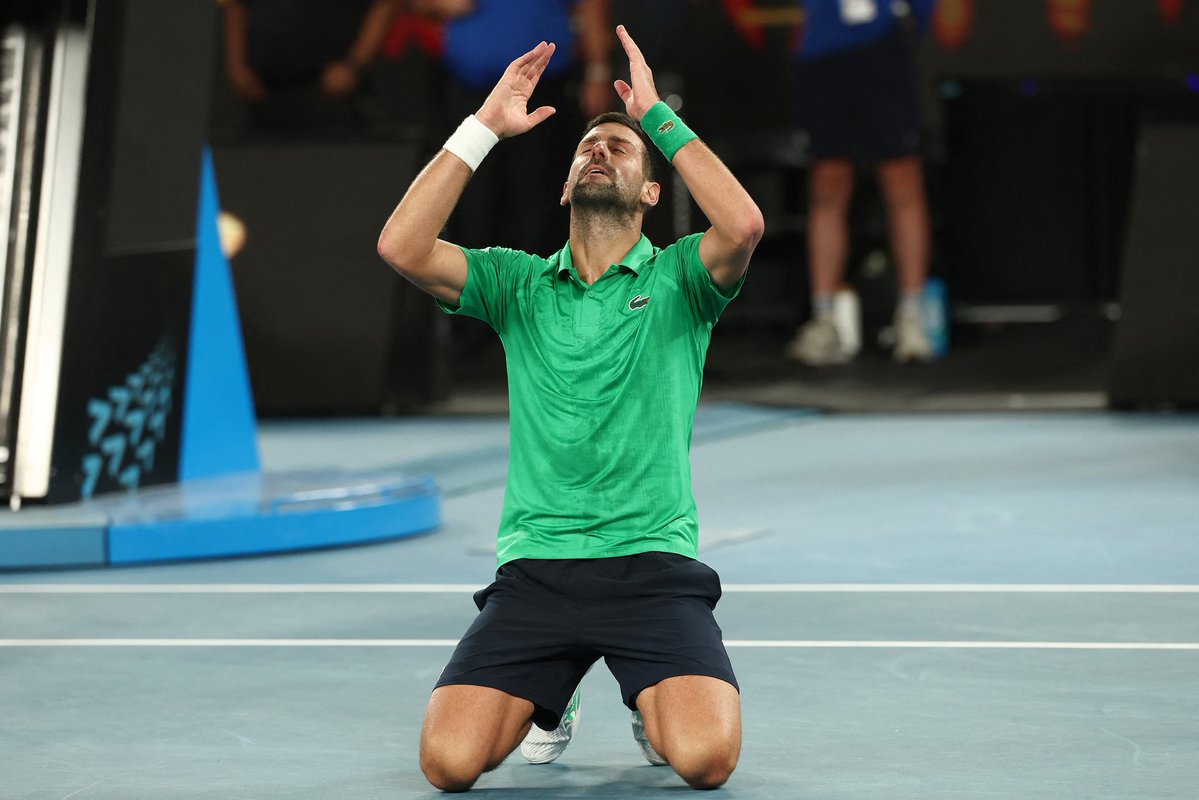
The crowd is chanting Novak Djokovic’s name as he speaks. Amazing scenes.
Novak Djokovic: “I’m at a loss for words. Thank you for the support. You have all been incredible. Thank you from the bottom of my heart. I love you all.” ❤️