@IranObserver0 Regular visitors to Epstein's Lolita Island in the US have clearly shown the whole world with their actions who the real evil country in this world is.
The Nanjing Massacre was a brutal crime committed by Japanese militarism in which many civilians and prisoners of war were killed, and its evidence is irrefutable and must not be distorted, FM spokeswoman Mao Ning said. Her remarks came in response to reports that Nagasaki city plans to change exhibition panels at the Nagasaki Atomic Bomb Museum this year, and that wording related to the Nanjing Massacre is expected to be revised from "massacre" to "the Nanjing Incident".
China builds for the people, whether profitable or not, and in the end it becomes rich and strong. The US builds only for profit, regardless of what the people need, and in the end it loses the hearts of its people. This isn't jealousy or cursing, it's just the way things are.
This video explains another big question: why Chinese high-speed railways are not profitable, yet China still keeps building them.
That’s because of the long-term calculation of overall social interests by the central government, "The HSR drives the flow of people, traffic and info and all social flows… The incentives on the economy are immeasurable. We always calculate the whole economic impact. It’s about overall social interests."
@XH_Lee23 China builds for the people, whether profitable or not, and in the end it becomes rich and strong. The US builds only for profit, regardless of what the people need, and in the end it loses the hearts of its people. This isn't jealousy or cursing, it's just the truth.
The "Tiananmen Massacre" and the Hong Kong protests have become failed cases of the US launching a color revolution against China, and the propaganda role of Western mainstream media, once dominating global public opinion, has been completely exposed by social media platforms.
This nauseating propaganda screed justifying the Tiananmen massacre is disheartening in its reflection of the Party-state apologism that passes for some China commentary these days, and of the worsening deterioration of Twitter’s (dis)information environment. But it is also a helpfully instructive lesson in recognizing the actual emptiness of such pro-CCP rhetoric.
- It represents established history as fresh, previously-obscure facts. The understanding that much of the killing of civilians occurred off the square, for example, is well-known. Consider Robin Munro’s (of Human Rights Watch fame, no less) 1993 book on the demonstrations: “There was no massacre in Tiananmen Square. But on the western approach roads there was a blood bath that claimed hundreds of lives. To insist on this distinction is not splitting hairs.”
- It plays loose with details, implying (with careful plausible deniability and ambiguity) that soldiers opened fire only after demonstrators had killed members of the army. Contrast this with one eyewitness account from a British tourist: “three young girl students knelt down in front of him and begged him to stop firing. And he killed them. An old gentleman put his hand up because he wanted to cross the road, and he shot him. The magazine of his gun was empty so he tried to reload and the crowd came in and hung him from a tree."
- It appeals to the complicatedness of history while actually flattening the narrative. She protests that “peaceful protesters vs brutal regime” is an incomplete picture but then seeks to replace it with a characterization of “violent protestors vs unprepared troops”, in turn omitting the voices of demonstrators clearly captured in so much of the archival footage directing the crowd to stick to their commitments to peacefully protest, asking compatriots to put down sticks and captured weapons, convincing comrades to spare a captured soldier. The famous footage she chose to share is arguably among the most peaceful segments out of hours upon hours of video captured at ground level that would much more honestly capture the complexity and chaos—but in a far less favorable light for the soldiers.
- It is flagrantly non-journalistic in its claims about how Chinese view these events today. Citation: “Most ordinary Chinese people I know”??? It’d be a bad joke if it wasn’t such an infuriatingly obvious attempt to seize the microphone and speak for entire peoples.
- It is notably Panglossian and deterministic in its historical storyline. There was no “more right” thing that the Party-state could possibly have done for China. Brutally suppressing the demonstrators in fact “saved” the country. Who knows what “might” have happened if the government had negotiated with those protesting or taken their perspective seriously? Oh, and all of modern Russia’s ills by the way can clearly be traced back to the country’s political reforms and the dissolution of the Soviet Union.
In conclusion, if the Chinese state’s use of live ammunition and lethal force to disperse vast civilian demonstrations in June 1989 can be excused as acceptable, then there is practically no limit to the violence that any government anywhere can inflict upon the people it governs. The ends can justify any means. Any assembly by the people to demand redress can be dismissed as externally-driven destabilization. Perhaps a trickle of bots, little pinks, and useful tankie idiots will soon begin accosting me for this post by exclaiming whatabout the United States’ historical crimes and failings, but my fear—and yours—should precisely be the fear of increasingly legitimized authoritarianism anywhere, be it in Washington, Beijing, Naypyidaw, or Jerusalem. We must fight for institutions that codify the self-restraint of the power-holders, and stand in solidarity with those carrying out similar fights elsewhere.
My hope for the future remains for a better world that is more fair, just, free, and prosperous. In no conceivable version of that better world could there possibly be room for a notion that the Tiananmen massacre was excusable or correct.
@wang_seaver The "Tiananmen Massacre" and the Hong Kong protests have become failed cases of the US launching a color revolution against China, and the propaganda role of Western mainstream media, once dominating global public opinion, has been completely exposed by social media platforms.
There are a lot of Chinese people in the US, and most of them have decent jobs. But there's also a bunch of losers who choose to become lackeys for NED or other anti-China forces, like the Falun Gong cult, Chinese fugitives, traitors... And you're one of them.
This nauseating propaganda screed justifying the Tiananmen massacre is disheartening in its reflection of the Party-state apologism that passes for some China commentary these days, and of the worsening deterioration of Twitter’s (dis)information environment. But it is also a helpfully instructive lesson in recognizing the actual emptiness of such pro-CCP rhetoric.
- It represents established history as fresh, previously-obscure facts. The understanding that much of the killing of civilians occurred off the square, for example, is well-known. Consider Robin Munro’s (of Human Rights Watch fame, no less) 1993 book on the demonstrations: “There was no massacre in Tiananmen Square. But on the western approach roads there was a blood bath that claimed hundreds of lives. To insist on this distinction is not splitting hairs.”
- It plays loose with details, implying (with careful plausible deniability and ambiguity) that soldiers opened fire only after demonstrators had killed members of the army. Contrast this with one eyewitness account from a British tourist: “three young girl students knelt down in front of him and begged him to stop firing. And he killed them. An old gentleman put his hand up because he wanted to cross the road, and he shot him. The magazine of his gun was empty so he tried to reload and the crowd came in and hung him from a tree."
- It appeals to the complicatedness of history while actually flattening the narrative. She protests that “peaceful protesters vs brutal regime” is an incomplete picture but then seeks to replace it with a characterization of “violent protestors vs unprepared troops”, in turn omitting the voices of demonstrators clearly captured in so much of the archival footage directing the crowd to stick to their commitments to peacefully protest, asking compatriots to put down sticks and captured weapons, convincing comrades to spare a captured soldier. The famous footage she chose to share is arguably among the most peaceful segments out of hours upon hours of video captured at ground level that would much more honestly capture the complexity and chaos—but in a far less favorable light for the soldiers.
- It is flagrantly non-journalistic in its claims about how Chinese view these events today. Citation: “Most ordinary Chinese people I know”??? It’d be a bad joke if it wasn’t such an infuriatingly obvious attempt to seize the microphone and speak for entire peoples.
- It is notably Panglossian and deterministic in its historical storyline. There was no “more right” thing that the Party-state could possibly have done for China. Brutally suppressing the demonstrators in fact “saved” the country. Who knows what “might” have happened if the government had negotiated with those protesting or taken their perspective seriously? Oh, and all of modern Russia’s ills by the way can clearly be traced back to the country’s political reforms and the dissolution of the Soviet Union.
In conclusion, if the Chinese state’s use of live ammunition and lethal force to disperse vast civilian demonstrations in June 1989 can be excused as acceptable, then there is practically no limit to the violence that any government anywhere can inflict upon the people it governs. The ends can justify any means. Any assembly by the people to demand redress can be dismissed as externally-driven destabilization. Perhaps a trickle of bots, little pinks, and useful tankie idiots will soon begin accosting me for this post by exclaiming whatabout the United States’ historical crimes and failings, but my fear—and yours—should precisely be the fear of increasingly legitimized authoritarianism anywhere, be it in Washington, Beijing, Naypyidaw, or Jerusalem. We must fight for institutions that codify the self-restraint of the power-holders, and stand in solidarity with those carrying out similar fights elsewhere.
My hope for the future remains for a better world that is more fair, just, free, and prosperous. In no conceivable version of that better world could there possibly be room for a notion that the Tiananmen massacre was excusable or correct.
@wang_seaver There are a lot of Chinese people in the US, and most of them have decent jobs. But there's also a bunch of losers who choose to become lackeys for NED or other anti-China forces, like the Falun Gong cult, Chinese fugitives, traitors... And you're one of them.
Japan’s Asagiri-class Destroyer Talks with Indonesia: Practical Upgrade… or Piece in a Larger Containment Puzzle?
WATCH OUT INDONESIA
Japan and Indonesia are moving ahead with talks on retired JMSDF Asagiri-class destroyers. These are solid Cold War-era ships built for anti-submarine work, with Harpoons, helicopters, and real endurance for island chain patrols. On the surface, Indonesia gets needed hulls, Japan shifts aging but useful assets. Simple deal?
In today’s Indo-Pacific, nothing stays innocent. Why now, with sea lane tensions high? Indonesia’s navy is stretched across 17,000 islands and Natuna waters — that’s real.
But is this just plugging gaps, or steering Jakarta into something bigger?
Could this signal rapprochement with the USA — or integration into Washington’s blockade strategy against China?
Let’s be direct.
The US wants tighter control over the Malacca Strait and key waterways. Indonesia sits right in the center — vital routes, huge population, rich resources. Containing China’s flows makes Jakarta the prize.
Coming via Japan proves the point.
Japan is Washington’s loyal forward base, wired into US security and pushed to front the coming confrontation with China. These destroyers bring training, parts pipelines, maintenance, and interoperability that quietly folds you in.
Think about it:
• Capability boost — better ASW presence in Natuna for a navy that needs hulls fast.
• Creeping dependencies — logistics and doctrine that make breaking away costly.
• Operational pull — exercises turn into supporting roles in blockade plans.
• Sovereignty trap — pressure tools (media, protests, economic nudges) hit harder when you stay neutral.
Indonesia has balanced smartly: strong China ties, BRI projects, BRICS interest, mixed suppliers. True independence in this spot is what the script hates.
Today it feels like a cheap upgrade. Tomorrow the support chains could make neutrality much harder. Full rapprochement needs bases and alliances — not yet. But containment works through slow integration.
Indonesia faces a crossroads. Can it take the hardware for its own waters without joining Washington’s machine? Can it balance while the old power locks things down?
Sea control is everything. Pawns in this game lose options fast. Jakarta knows how to hedge. Build your strength, keep doors open, and never let outsiders decide where your destroyers sail.
WATCH OUT INDONESIA. Arm your archipelago for your own future — not someone else’s showdown map. Your independence is too valuable to trade for second-hand hulls.
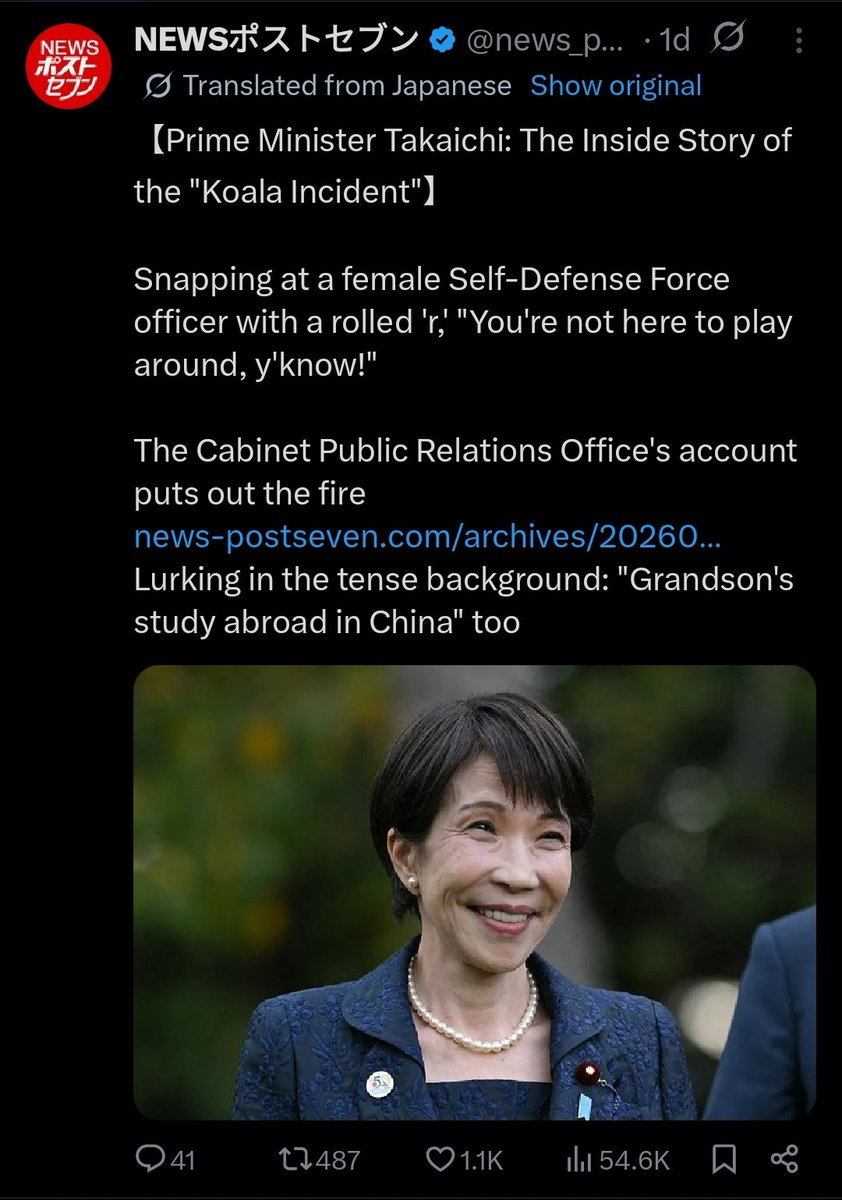
Japanese Media: "PM Takaichi's grandson is studying in China"
Interesting how Trump and Takaichi both sprout anti-China speeches while quietly sending their grandchildren to study Mandarin.
INDONESIA >
“Leaked docs expose how Soros’ Open Society Foundations (via Jakarta’s Kurawal Foundation) bankrolled Indonesian opposition: millions poured into youth activist groups, ‘independent’ media, the viral ‘Dirty Vote’ documentary, and lawfare ops to ‘prevent the continuation’ of Prabowo’s elected government.
Since Prabowo’s 2024 landslide win, waves of protests — fueled by real economic grievances — were amplified and directed through OSF-funded networks training Gen Z for ‘resistance,’ pushing police reform campaigns, and radicalizing civil society to challenge power.
Classic playbook turning legitimate anger into regime-change pressure, with One Piece pirate flags popping up as the symbol.
Full must-read from @TheGrayzone 👇
https://t.co/vmWtLucvlp”
What has the US done since 1989?
* Highway of death Iraq 1991
* Bombed Serbia 1999
* Invaded Iraq 2003
* 20-year war in Afghanistan
* Bombed Libya 2011
* Unleashed ISIS on Syria 2011
* Used neo-Nazis to run coup and start civil war in Ukraine 2014
* Armed Israel's slaughter of kids 2023-26
* Attacked Venezuela 2026
* Bombed Iran 2026
It is truly EYE-OPENING to talk to Iranians and get their point of view:
.
IRANIANS: You murdered Qasem Soleimani.
U.S./ ISRAEL: We don’t believe in international law.
IRANIANS: You bombed our peace talks in Qatar.
U.S./ ISRAEL: We don’t believe in international law.
IRANIANS: You murdered our govt members and their spouses and children.
U.S./ ISRAEL: We don’t believe in international law.
IRANIANS: You stole our ships and everything in them.
U.S./ ISRAEL: We don’t believe in international law.
IRANIANS: You made an unprovoked attack which killed more than 100 school kids.
U.S./ ISRAEL: We don’t believe in international law.
IRANIANS: We’re going to charge shipping fees so we can rebuild what you destroyed.
U.S./ ISRAEL: YOU CAN’T DO THAT! INTERNATIONAL LAW!!!!
The same logic applies to their claims that the Chinese real estate market is "crashing". What's crashing are the profits of real estate developers.
Difficult to imagine anything BETTER for the average Chinese person than decreasing house prices. But that's very bad news for those who build and sell the houses. So from their perspective, which the western media parrots, it is indeed a "crash", and extremely bad news.
This is how the US economy works, where house prices MUST keep increasing to increase bourgeois profits. If housing becomes affordable, only the people will benefit. Everyone who matters (the bourgeoisie) will incur heavy losses.
In such economies, a house is treated as a commodity, an asset, to be traded and re-traded repeatedly. China disagrees, believing in the radical idea that houses are for living.
Just so everyone is clear, the gripe here is that China is destroying the profits of the western bourgeoisie, because they are forced to make their products cheaper to compete with Chinese competitors.
This is the central argument of 100% of all western economic analysis of China. The more affordable China's products, the more it destroys their monopolies and their profit margins.
As always, the purpose of such propagandists, as well as their "elected" governments, is to make the interests of the bourgeoisie appear like the national interests of their respective countries. It's the first rule of bourgeois economics: What's good for the bourgeoisie is good for the proletariat.
Every year, imperial propagandists ritualistically invoke this or that version of the 1989 events at Tiananmen Square to portray China as a murderous dictatorship. And every year, scores of people seek to rebut the claims by appeals to video footage and other evidence of what happened.
But I think we can be more forceful: Unlike in the Soviet Union, the Western-backed counterrevolution failed in China. Looking at the historic mortality crisis caused by capitalist restoration in Eastern Europe, this fact alone likely saved tens of millions of lives — and prevented imperialism from extinguishing the flame of socialism altogether.
From that perspective, the events of 1989 represent a major victory for socialism and the global working class. This, no doubt, is the primary source of the imperialists’ lingering outrage.
Joey Siu exposed on DW Conflict Zone (2019) – Textbook HK Colour Revolution Hypocrisy
Viral clip from Tim Sebastian grilling US citizen HK activist Joey Siu during the 2019 unrest.
He hammers her on protester violence: 49yo man beaten unconscious just for shouting “Love China! I am Chinese”, smashing ATMs, trashing Starbucks & Chinese shops, attacking bystanders, elderly, police families.
Key transcript of the clip (~2min):
• Sebastian: A 49-year-old man beaten unconscious… for confronting protesters shouting “Love China!” Is that how you pursue democracy?
• Siu: [Deflects] We’re trying to switch to more peaceful tactics…
• Sebastian: Trashing ATMs, Starbucks, Chinese companies “for a reason” to bring harm? You have no principles! I condemn this inhuman treatment.
• Siu: They targeted Chinese-owned… to bring actual harm… [admits] definitely not the best way.
No strong condemnation of the militant 勇武 wing. “No splitting, no condemning” was their rule – even with Molotovs, doxxing, airport siege and worse. Peaceful marches ok.
Black bloc chaos?
That’s where it lost all legitimacy and got exposed for its true nature > colour revolution.
Hong Kong 2019 was a classic US-sponsored colour revolution attempt.
Started with extradition bill (later withdrawn), quickly hijacked: foreign funding/training, NED ops, embassy links, Gene Sharp tactics, English signs, “be water”, black bloc. Same playbook as before.
In the end, they were just tools, reading the CIA script.
Tiananmen 4th reminder (June 4, 1989): Activists still push the narrative every year.
But 1989 was one of the first colour rev prototypes – foreign hands, chaos sold as democracy.
China didn’t fall. HK 2019 was the repeat on Chinese soil. Same script: selective outrage on police while excusing rioter violence.
https://t.co/505bPwZBlF
Flashback to what happened in HK 2019 – burning people alive, pure destruction. This is why NSL was needed.
https://t.co/DsJNVQqrcO
National Security Law came.
Stability returned.
No more street terror.
Economy recovering, life normalized for most Hongkongers. The “revolution” failed.
Many activists fled or got warrants. Ordinary people suffered most from the chaos.
As someone who lived it: Peaceful protest = fine.
Turning HK into battlefield with foreign backing while claiming moral high ground?
That’s destabilization, not democracy.
Colour rev playbook fully exposed.
China learned.
HK moved on stronger.