Just set this account up properly.
Backend/Systems Engineer. Building systems in Go from the ground up.
I write about how systems actually work — concurrency, error design, architecture — using analogies that make it click.
3 articles already live on Medium.
Follow Along!
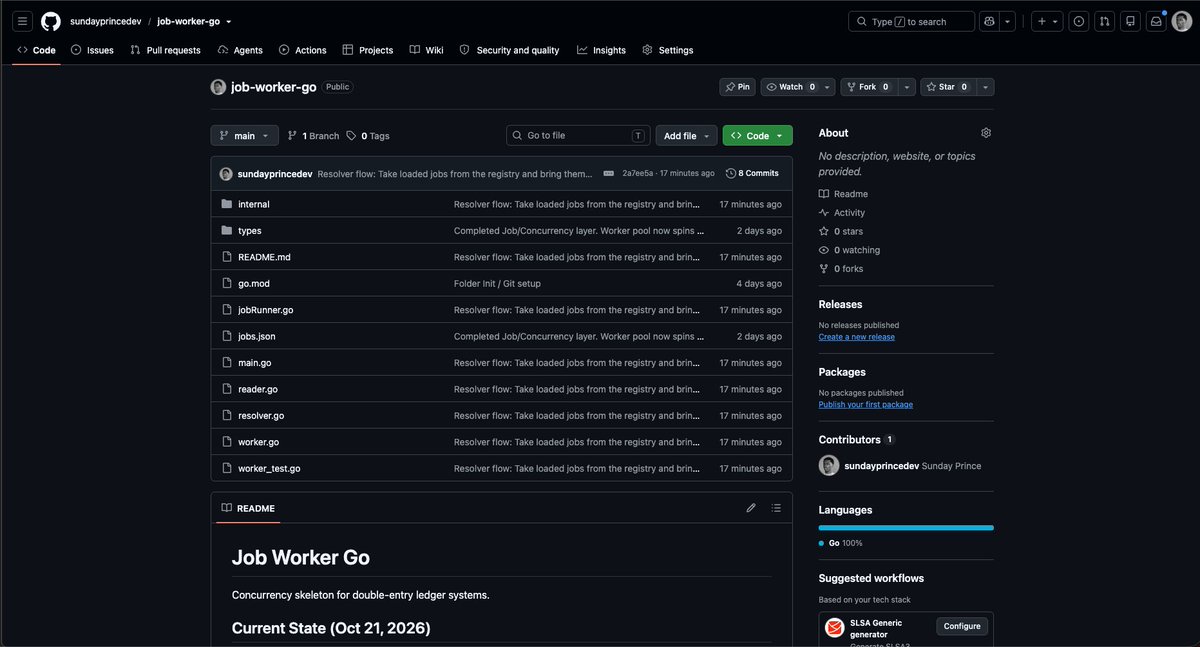
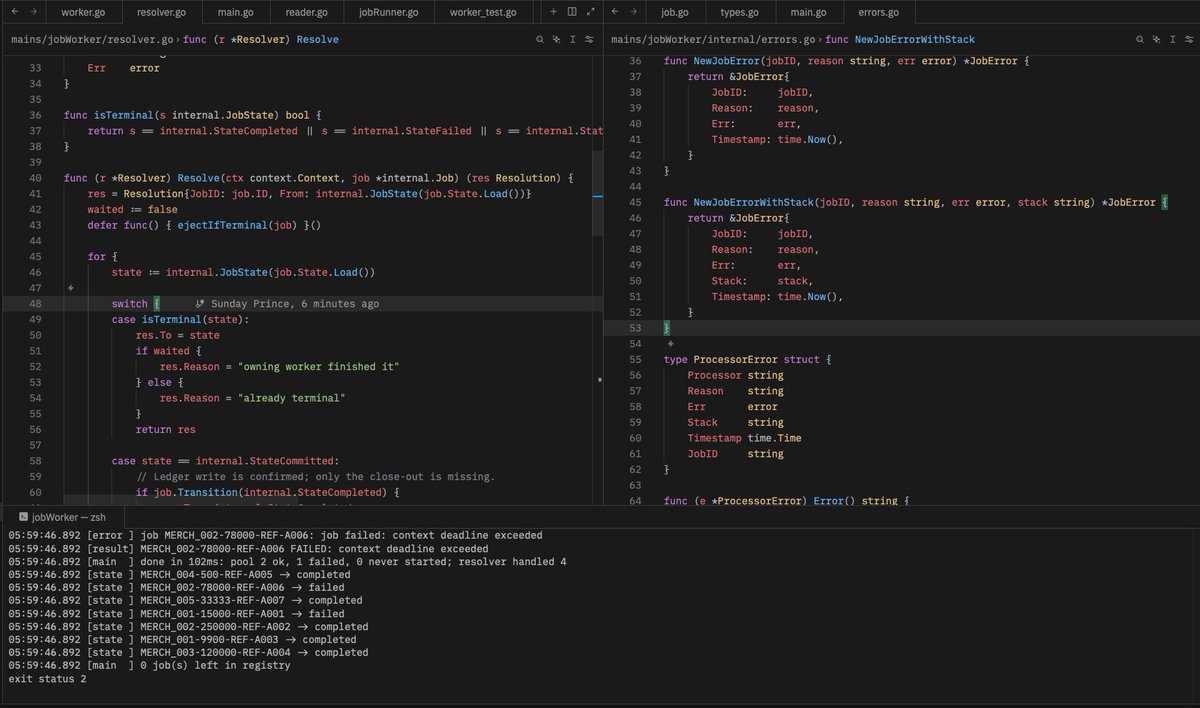
Project Update ‼️ The resolver path is DONE ✅
Following up on the core worker pool from my last post, I've just completed the resolver path for driving existing jobs to a terminal state safely using atomic transactions.
#fintech#golang#concurrency#ledger#BuildInPublic
@thecatzeus3 I catered for that window properly only ledger layer left...
In the worker block, there is panic isolation, which catches the exact state of the Stack when the worker/process failure happens, then the cordinator runs a check on job status using that jobID to see that work started
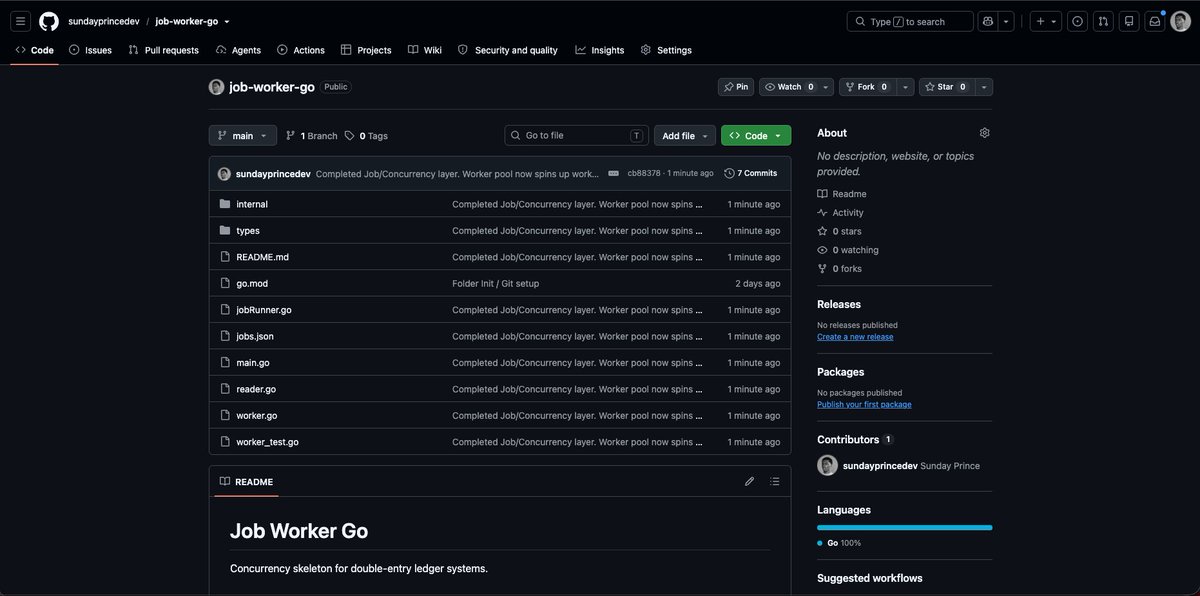
Update on the job worker: the core is mostly DONE ✅
Code is live at: https://t.co/m6j0yGw0sT
Feel free to check it out, and also leave questions. For more context check out my previous post, and how ive been on this as well
#golang#fintech#BuildInPublic
Job worker skeleton live → https://t.co/m6j0yGw0sT
Built after conversations with @ahmedilgendy1 on atomic states, panic isolation, crash windows.
Today: https://t.co/tIg10NCQaj registry + two-path routing (fresh vs existing jobs)
More to come..
#golang#fintech#BuildInPublic
@ahmedilgendy1 Thank you for this, tomorrow ill be officially launching the full project, and you can run this test properly.
I also have Panic/Crash isolation in place to make sure retry mechanism picks up that jobID and resolves to terminal state after verifying write met with ledger rules.