@soilysound@britishfuture The report is based on qualitative groups, and its conclusion is that, despite scepticism about Brexit, there is no consensus on a future destination: that both sides struggle for a majority when refighting the 10 years ago argument
https://t.co/AQERRLiRpf
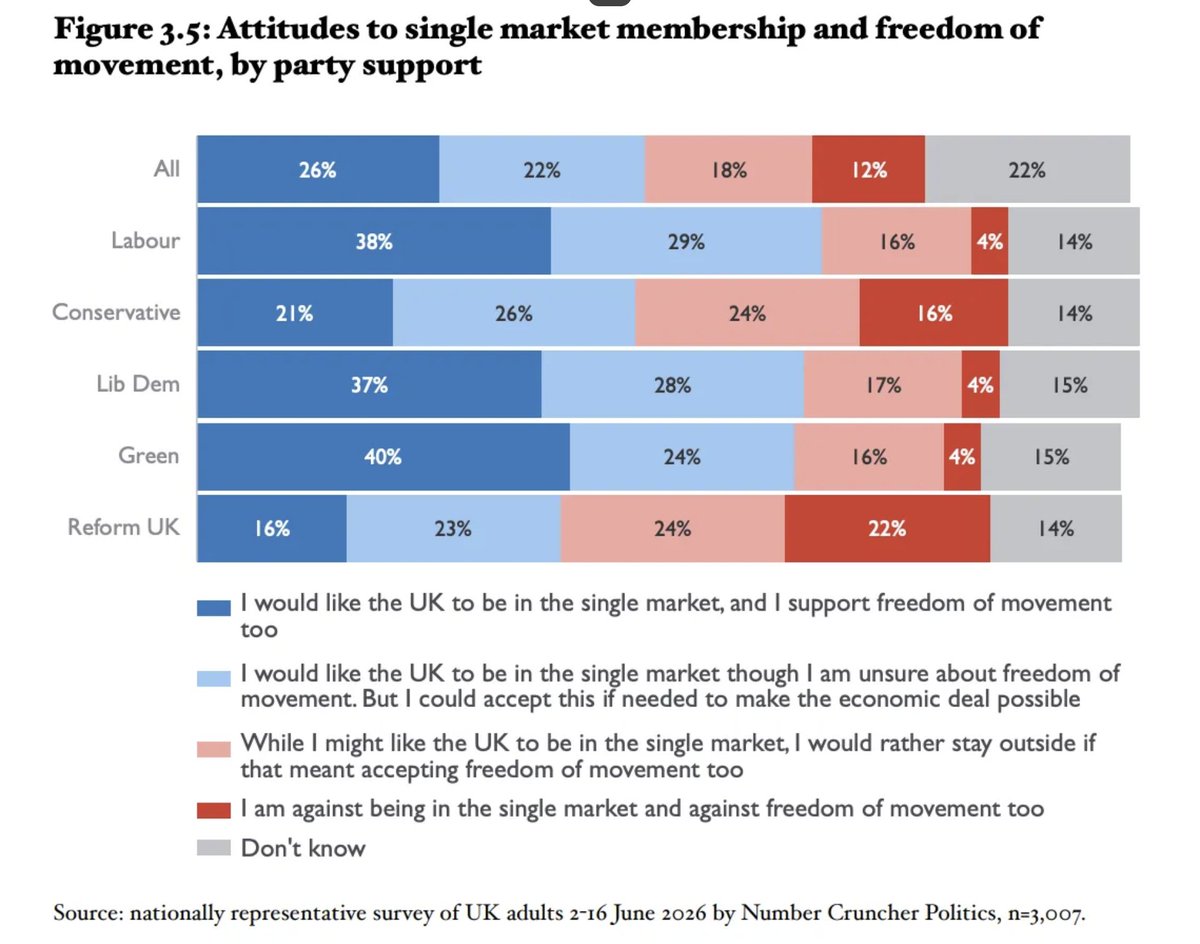
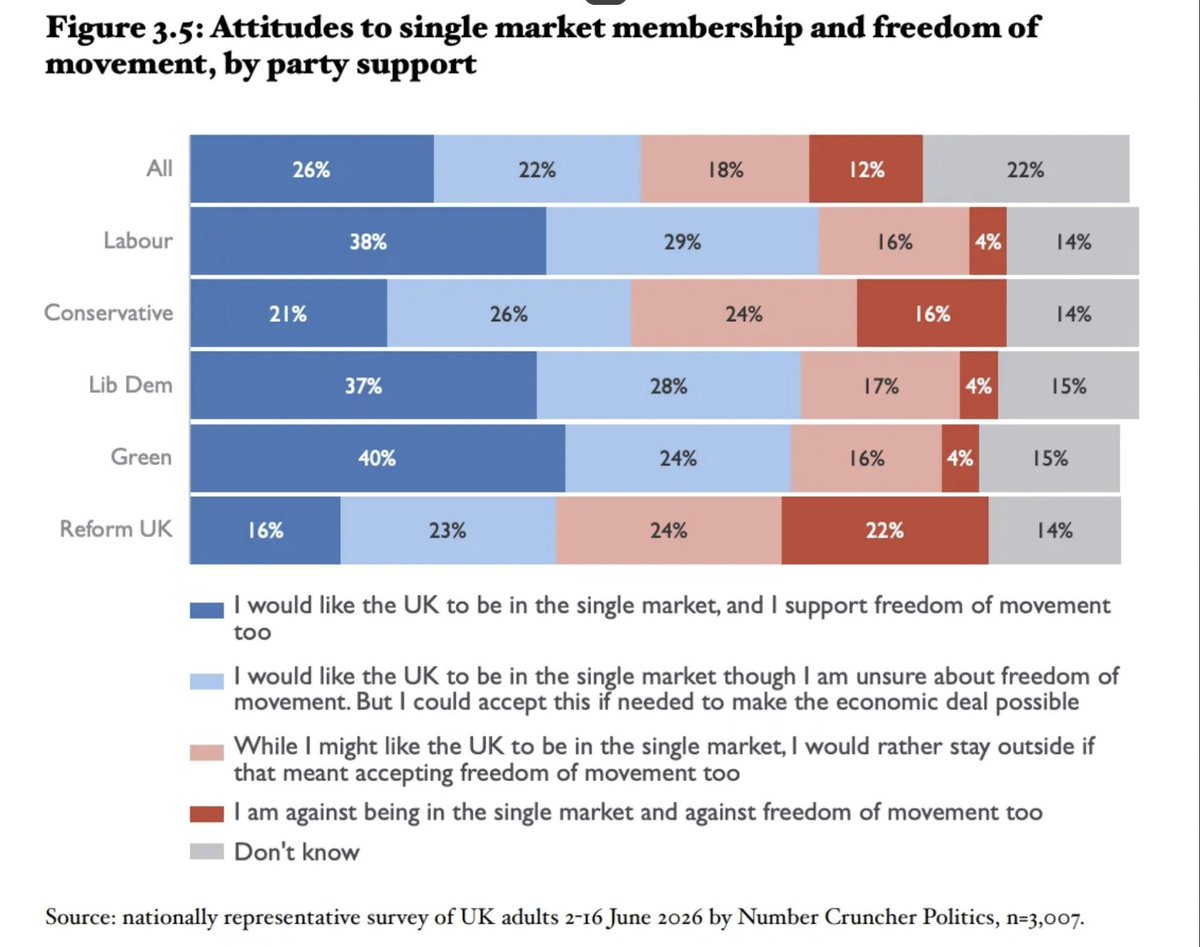
The Prime Minister says he would like an open conversation about whether to return to EU free movement in order to join single market or EU. @britishfuture research found the public divided on this question - with a plurality in favour for contingent reasons of single market
@bbclaurak Public views more sceptical of Brexit + for exploring closer links - but uncertain and mixed on how far to go. @britishfuture 2026 research found mixed views of free movement: sceptical, leaning in favour for market access. Less binary than assumed on different pros/cons.
@soilysound@britishfuture Voter views are often more mixed, incoherent than the views of the politically engaged, party members and party activists. All of Reform, the Greens + the LibDems always have small minorities of fairly random voters with views that don't match those of the party they vote for
@soilysound@britishfuture A sixth of 14% is 2% of electorate, and a fifth of 20% is 4%.
From 2016 for UKIP and in 2026 for Reform, about 75% of their vote have strong anti-migration views (half are v strongly against all of it). About a sixth are liberal on immigration + support them for other reasons
@SomersetWasBlue It seems q unfair tor you to suggest this research was superficial, esp if you are doing so without having read it. It involved a dozen qual groups to explore what people knew + didn't know + asked quant questions in different ways to illuminate views
https://t.co/psqldr8Jyq
@SomersetWasBlue The end of free movement is also seen as something we did in the UK. Public here not driven by the segment who want to live + work in Europe. It is more those who think it would be better to be in single market for the economy in general (rather than for specific firms)
@hanesyddiaeth@britishfuture He can't join the EU without (i) getting re-elected in Makerfield again, giving his position for the next parliament' and (ii) nationally on a different Labour manifesto than 2024 and (iii) having a national UK referendum if he did propose 'join' rather than something softer
@tomhfh It would probably be more illuminating to say that the Conservatives + Reform are invariably within the margin of error of each other than to tot up the number of 1-2 point leads for each
@hanesyddiaeth@britishfuture I have written that his positions reflect some of the cross-pressures in the public debate. Makerfield was 66-34% Leave - and is among the most evenly split places now. (More in Common report it had a 52-48 join plurality in the by-election, so other issues have broader appeal).
@SomersetWasBlue Most people are sketchy beyond headline points. That European nationals now need a visa + permission to come after Brexit, and that British people can't automatically work in Spain or Germany either are reasonably widely known. Under 30s least informed
https://t.co/psqldr8bIS
@TiceRichard Burnham interview in Sunday Times after 3 months as PM: “I am positive about closer ties with Europe and I’m not hiding that. I think it will add to British GDP. I think it will give us stronger control of migration. I want to make those arguments"
https://t.co/yHxUWCjtGY
@TiceRichard There are different views of Brexit, and of freedom of movement too.
Research shows Labour voters strongly prefer his position to yours.
General public more split.
Reform voters are more with you but a surprisingly large minority regret losing single market, even with FoM
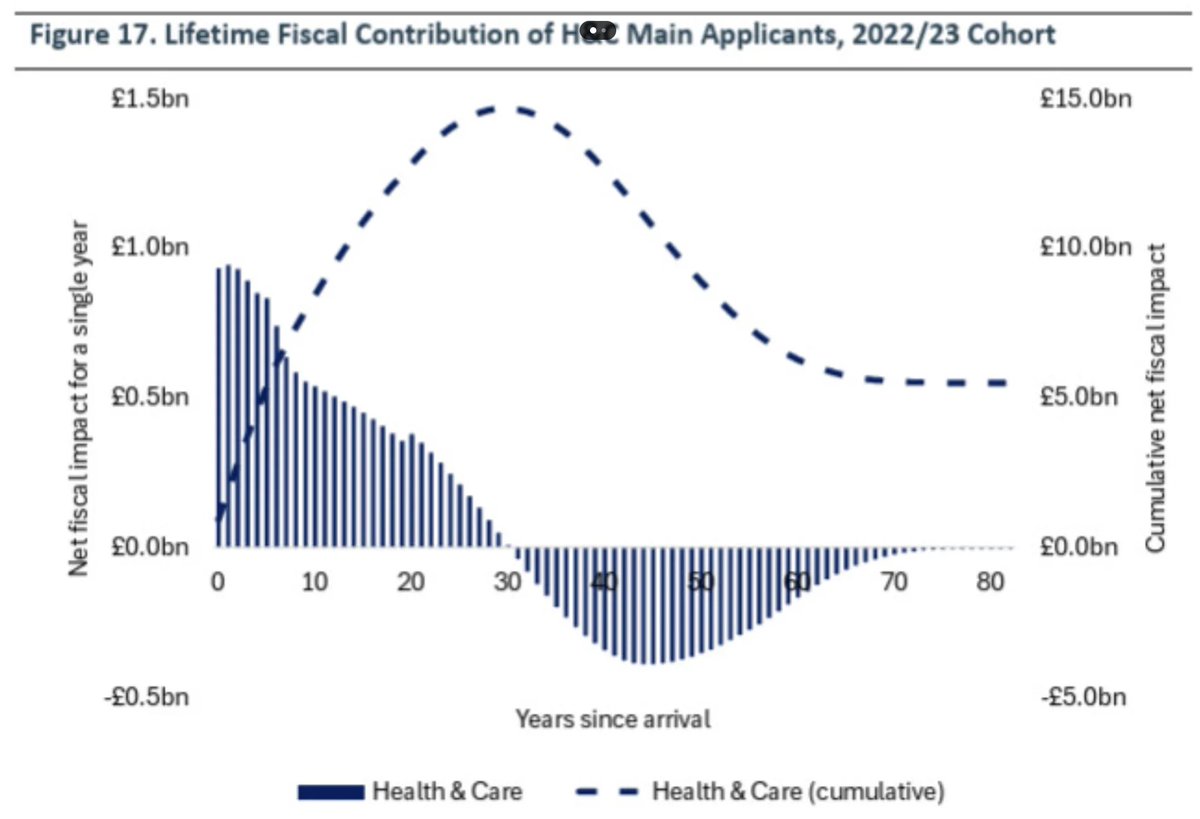
@FraserNelson There might be a £600m to £1bn saving, rather than a £10 bn saving, but the government has refused to answer any parliamentary questions on how much of the lifetime cost their proposals would save, or the overall net impact they can model
https://t.co/hV4RaWfnLJ
@FraserNelson A proposal that people settle 5-10 years later, it makes no difference to the 90% of the lifetime costs incurred 3 decades later, so Home Sec's number was irrelevant to her own proposals. Forcing people to leave now offsets by sacrificing 3 decades of contributions beforehand
@LukeTryl The u-turn may take them back to the White Paper proposal (a 5-10 year window) so political mistakes include making the unsustainable 15 year proposal + the rows over it. Portrayed to "the public" as climbdown on control imagines a more monolithic "public" than this data supports
@LukeTryl Your polling shows ditching 15 years to 10 years more popular.
'Tweaks' is odd language for "do up to a million people have to leave or stay" (Nobody offered 15 years could stay after 2030)
Did you/other pollsters ask the foundational question of let stay/send home?