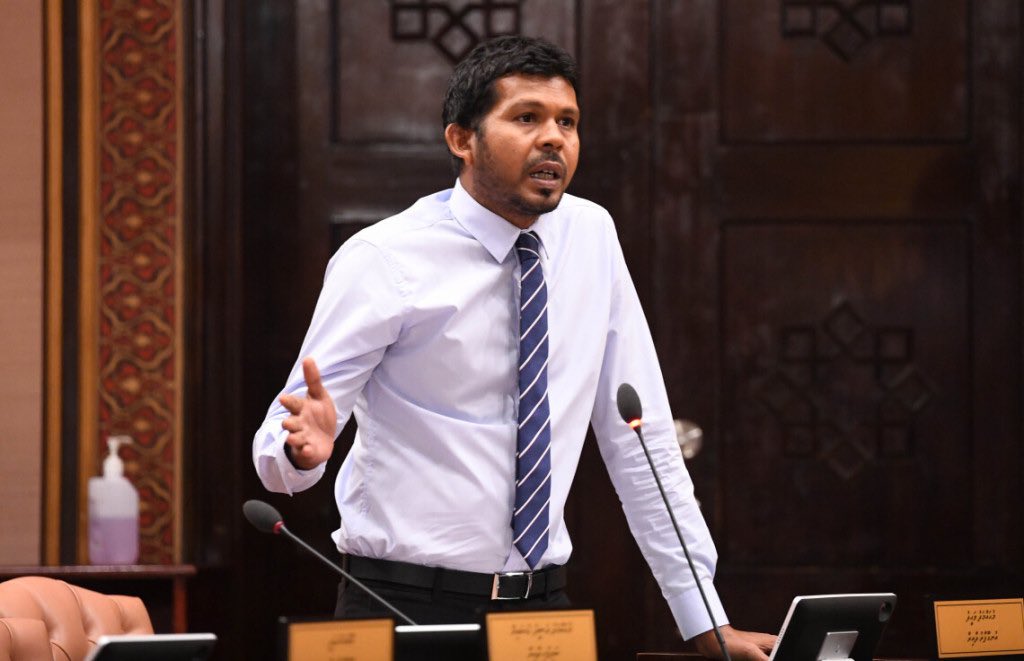
I have submitted a letter to @MDPSecretariat chairperson raees @MohamedNasheed , expressing concern over @MaleCitymv 's MDP councillors position endorsing the destruction of ViliMale' FunaVaa & housing project which will increase centralization and congestion to Male', which will further weaken the atolls and decentralization mechanisms MDP champions.
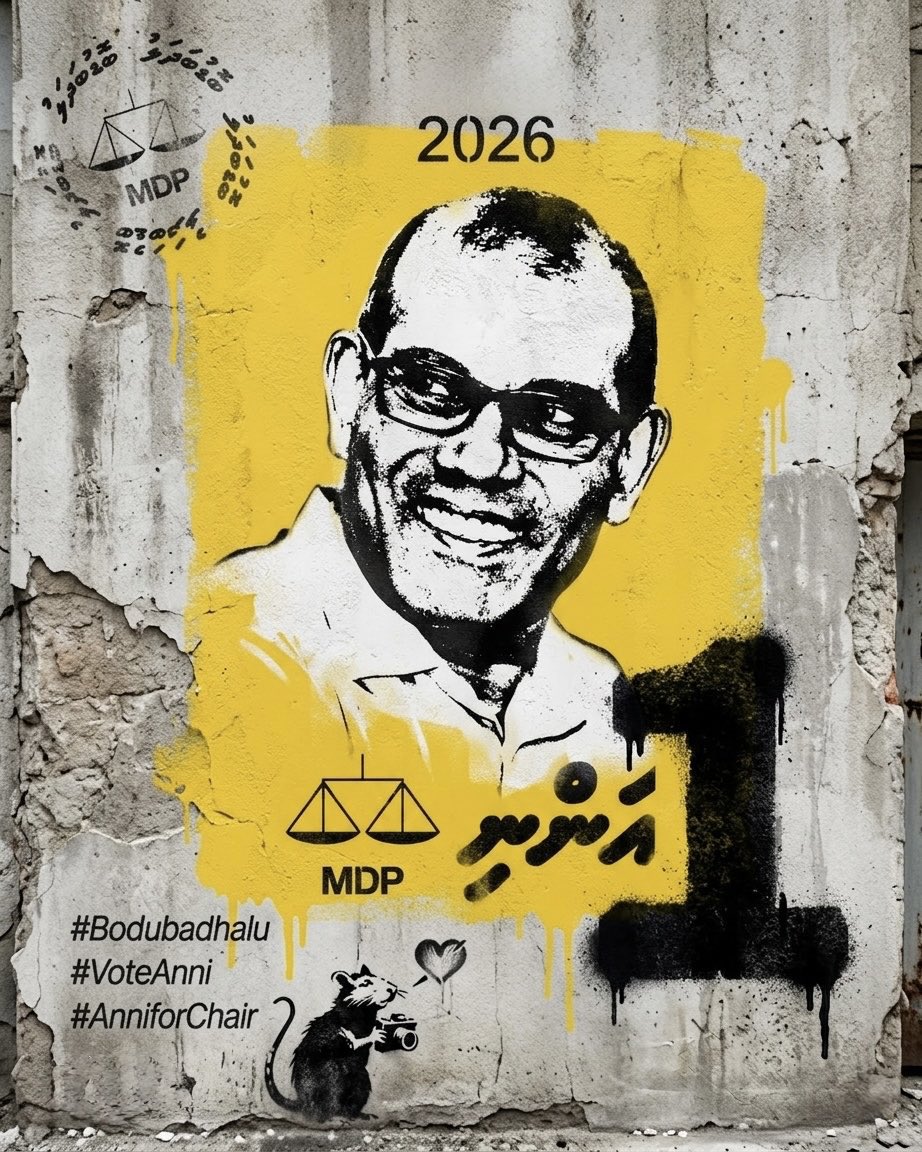
Lava nimijje video eh hadhanee… RN number one ☝🏽… no one else deserves this… RN is my political hero. He did the best for us. Why can’t we give him the best from us?… 💛💛💛
Maldivian politicians must stand beside @mohamednasheed. Anni is the very person who can bring us to @anedhivehirajje. I doubt we’ll get anywhere without listening to him! 🇲🇻
An attack on this man is an attack on many of us, including myself. He is one of the most principled men in the opposition and Maldives. His message has been consistent.
We respect this man. @waddey_
President Nasheed is a system architect and engineer. He builds systems.
Leaders don't abolish the systems he introduces like Gazette, Aasandha, GST, guesthouse industry, retirement pension and many others.
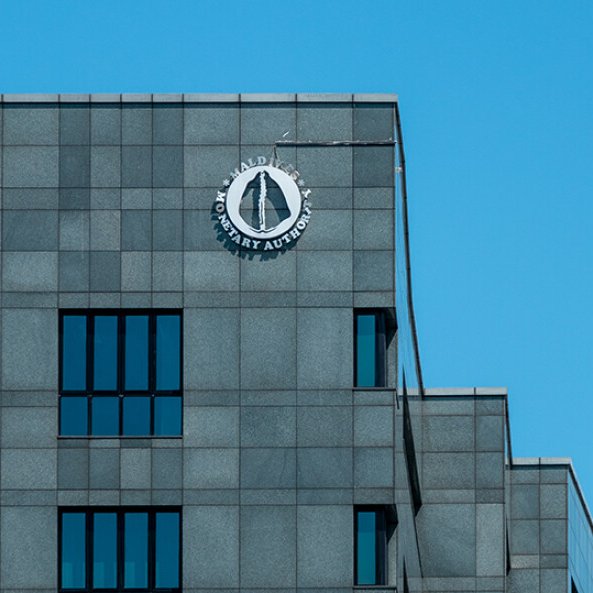
He's also the founding father of modern banking in Maldives, something many people might not know cause it is quite technical.
After introducing Gazette website, Anni wanted to digitalise the banking system too. This was also essential for MIRA, the tax authority he established to properly collect taxes. At that time, too many people were carrying large amounts of cash everywhere and banks took far too long to clear cheques and money transfers, especially to the atolls.
So, in 2009, he requested a $7.7 million (118.73 million MVR) loan from World Bank to turn that vision into reality. His gov, working hand in hand with MMA, developed the project. This became a truly game changing national initiative, the first time Maldives was building a modern, fully interoperable digital payment backbone from scratch.
The technology provider selected for the job was Montran Corporation, a specialised US based company experienced in building payment systems for central banks around the world. They still have the contract with MMA. Before this system existed, domestic interbank transfers and large value payments were handled mostly through physical cheques and manual instructions. MMA managed settlements through simple book entry adjustments. There was no real time settlement and no automated clearing.
In 2010, the project moved forward rapidly.
🔹April 2010: The project’s initial report and framework were signed off. It identified the scope of work to be delivered by Montran Corporation for the core national payment infrastructure.
🔹June 2010: Montran completed the full delivery of all system hardware and software. By the end of June, the application software for the RTGS, ACH and EFT Switch was successfully installed at MMA.
🔹Sep 2010: Hardware installation continued across the country. Rigorous User Acceptance Testing for the RTGS and ACH systems began. A full disaster recovery backup site was established at Iskandaru Koshi (Police Building) to ensure the systems would never go down. Secure connections were established to all licenced commercial banks, Ministry of Finance and the necessary links for full interoperability.
Technical experts and a legal consultant were brought in. Bank staff and MMA officials received intensive hands on training and operational teams were sent on study tours to Sri Lanka and Malaysia to learn best practices. Payment system regulations for the new RTGS and ACH were drafted and finalised, along with the Financial Transaction Regulation and Consumer Protection rules. These were circulated to all banks for feedback.
By the end of 2010, Maldives Banking Act was passed by Parliament and came into effect on 12 December 2010, giving the entire digital payment ecosystem the strong legal foundation it needed.
The systems built and delivered by Montran that year became the permanent foundation of Maldives’ national payments infrastructure. The real lasting legacy lies in the three core foundational systems that officially went live in 2011.
🔹MRTGS (Maldives Real Time Gross Settlement): the instant VIP lane for large, urgent inter-bank transfers (anything over 100,000 MVR). This became the high value settlement engine that keeps the entire banking system safe and stable.
🔹ACH (Automated Clearing House): the bulk postman that clears salaries, pensions, gov payments, bills and routine transactions in efficient daily batches.
🔹EFT Switch: the smart traffic controller that connects every bank and every mobile operator so money can flow seamlessly between any two accounts in the country.
More than 15 years later, these foundational systems are still running strong, exactly as Anni built them and continue to form the core backbone of MMA’s payment operations. No subsequent leader has ever abolished or replaced this core infrastructure, cause it works well and delivers real value to the people every single day.
Later govs added more layers on top of this strong foundation. For example, Favara instant payment system was introduced during Ibu's gov. But the original core systems built under Anni remain untouched and continue to serve as the reliable engine room of the entire national payment system. That’s what Anni does. He builds systems that actually serve the people and they last.
Remember, back in 2008, there was no artificial intelligence available to us for research. Projects like these relied entirely on real brain power, highly educated professionals, experienced experts, thorough research and a lot of negotiations. There was no laziness or corner cutting. Every aspect was carefully planned and executed with dedication and high standards. That is precisely why the system remains robust and high quality even today, more than 15 years later. The procurement process was also handled with great care, resulting in a properly executed project delivered by competent, high calibre people, something we sadly see far less of in 2026.
I sometimes wonder, had a different corporation been selected such as the much larger global players like ACI Worldwide, FIS or Fiserv, the outcome might have been very different. These companies come with significantly higher costs, more complex and expensive maintenance contracts and solutions designed primarily for large economies. I think if Muizzu was the president then, he would have gone for something like that and a few years down the line, it would have to be terminated.
For a small island nation like Maldives, such systems would have become unsustainable in the long run due to high running costs and over engineering. It was the careful and strategic selection made by Anni's team that ensured the right partner was chosen. They opted for Montran Corporation’s focused, right sized solution instead of going for bigger names. This wise decision proved to be the perfect fit, affordable, reliable and built to last. This is something we don't see at all in Muizzu's gov. Everyday see fraud and scam companies being awarded mega projects, only for the projects to be terminated shortly after or to simply die out, leaving the gov too embarrassed to even share the details with the media.
The $7.7 million (118.73 million MVR) borrowed from World Bank was totally worth it. We Maldivians are okay with presidents borrowing money for such important national projects. No problem at all.
Thank you @MohamedNasheed@anedhivehirajje. I thought people should know about this.
Over 14 safari boats are currently in Addu in preparation for tomorrow’s UL119/UL120 arrival and departure. This level of activity clearly reflects the growing movement in the southern region and the importance of Gan as a gateway.
It’s encouraging to see operators aligning with flight schedules and building confidence in the destination. With better coordination and consistency, this can further strengthen tourism flows to Addu and nearby atolls.
I am sure there is always something positive taking shape step by step, we are moving in the right direction.@flysrilankan@flydubai@FlyAceFly_@vmc_md@visitmaldivesco