❗️Topline data show #rifamycin 1% topically acting gel @CosmoConfidence achieved clinical remission at 6 weeks in ~50% of patients with distal #UlcerativeColitis.
@IBDMD of @UChicagoMed said the idea behind a gel for this purpose "is just brilliant."
🔗 https://t.co/hwNsxqVUMI
🎥 NEW #GUTVideo! 🧬
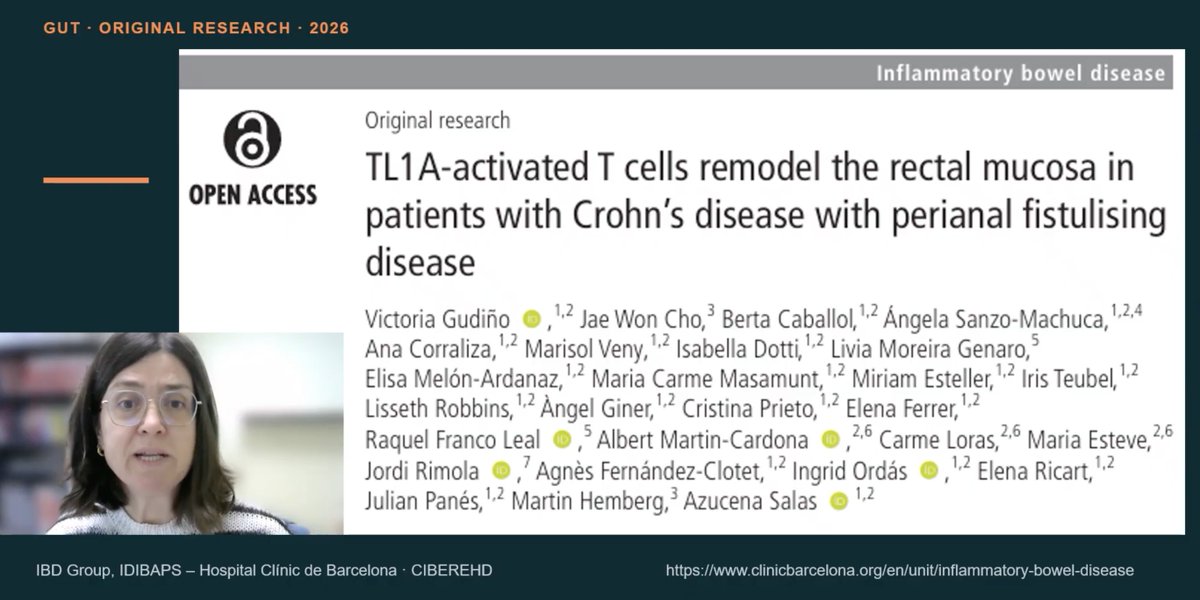
🔬 Could TL1A offer a new therapeutic target for perianal fistulising Crohn's disease?
📖 In their #GUT paper, "TL1A-activated T cells remodel the rectal mucosa in patients with Crohn’s disease with perianal fistulising disease", Gudiño et al. reveal how TL1A-activated T cells contribute to tissue remodelling, identifying a potential new therapeutic target.
🎙️ Professor Azucena Salas, senior author of the paper, discusses the findings and their implications in our latest #GUTVideo!
▶️ WATCH: https://t.co/E30TIIimua
📄 READ: https://t.co/uFbohFSHlE
#CrohnsDisease #IBD #Gastroenterology #TL1A
📝 #GUTBlog | Could screening help pave the way for Crohn’s disease prevention?
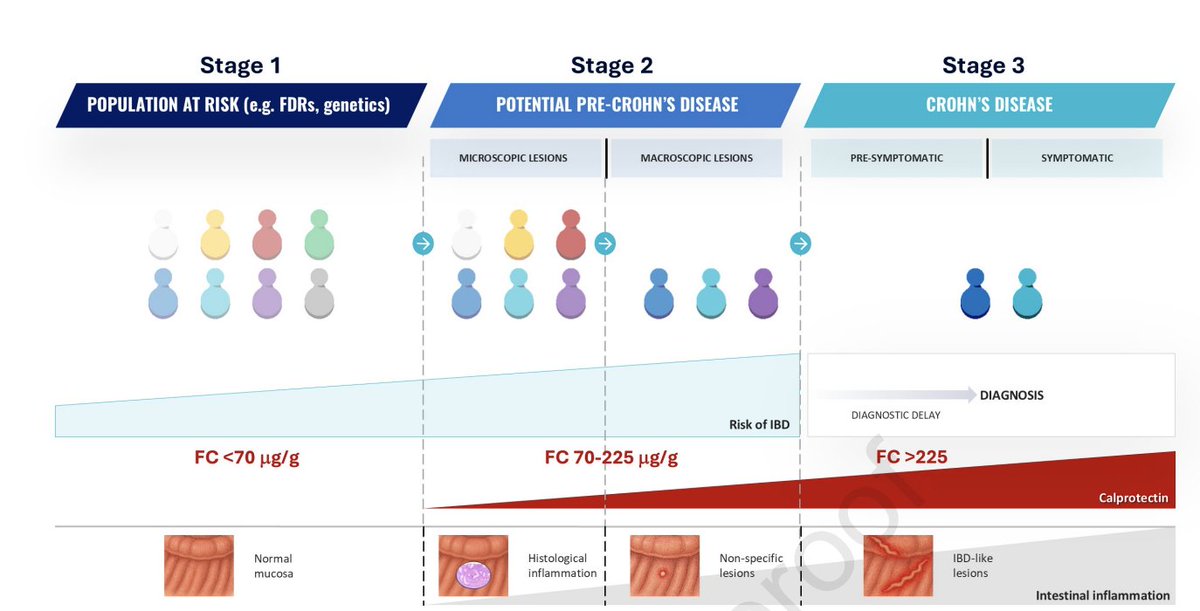
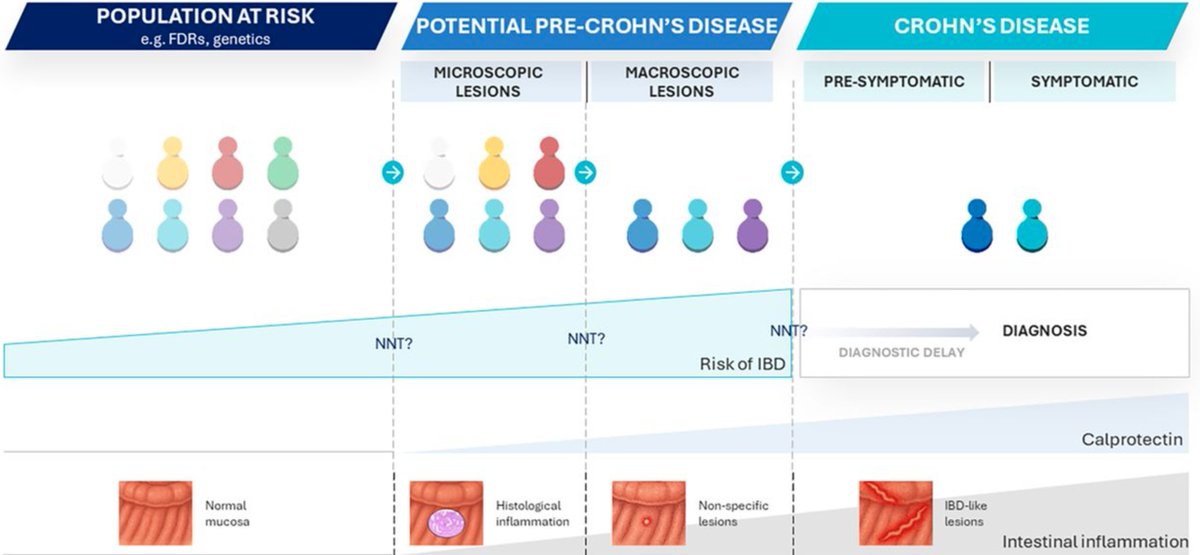
Turner et al explore how faecal calprotectin can help define preclinical stages of Crohn’s disease in asymptomatic first-degree relatives, proposing a screening framework to support future prevention trials.
📄 "Preclinical stages of Crohn’s disease defined by faecal calprotectin in asymptomatic first-degree relatives: screening framework for prevention trials"
📝 Read the #GUTBlog: https://t.co/ve1sdPPZrv
🔗 Read the paper in Gut: https://t.co/dIZXzCrFMn
#CrohnsDisease #IBD #FaecalCalprotectin #PreventionResearch
New research by Sinai Health’s Dr. Sun-Ho Lee in @Gut: Growing up with a sibling who has Crohn’s disease during childhood is linked to a 4x higher risk of developing it, compared with exposure as an adult.
Read the findings ➡️ https://t.co/dlEaJFiGWP
Why do some UC patients fail vedolizumab (VDZ)?
A landmark study in Nature Medicine by Schreiber et al. unpacks the biological mechanism of VDZ resistance: revealing an alternative vascular bypass that might be targetable with common medications
📝 #GUTBlog | Could screening help pave the way for Crohn’s disease prevention?
Turner et al explore how faecal calprotectin can help define preclinical stages of Crohn’s disease in asymptomatic first-degree relatives, proposing a screening framework to support future prevention trials.
📄 "Preclinical stages of Crohn’s disease defined by faecal calprotectin in asymptomatic first-degree relatives: screening framework for prevention trials"
📝 Read the #GUTBlog: https://t.co/ve1sdPPZrv
🔗 Read the paper in Gut: https://t.co/dIZXzCrFMn
#CrohnsDisease #IBD #FaecalCalprotectin #PreventionResearch
Congratulations to Dr. Ken Croitoru, clinician scientist at Sinai Health, on the renewal of his Canada Research Chair in Inflammatory Bowel Diseases (IBD). The honour recognizes his transformative work in IBD diagnosis, prevention and treatment.
Read more: https://t.co/iWsFdBoegB
Diet matters for healthy high-risk first-degree relatives with persistent fecal calprotectin elevation and without overt Crohn's disease
New findings from the PIONIR (Preventing IBD ONset in Individuals at Risk) randomized controlled trial showed:
✅ The Tasty&Healthy diet led to a significant reduction in fecal calprotectin:
🔸 from baseline (61% lower)
🔸 compared with the habitual diet (37% lower)
✅ Fecal calprotectin rapidly increased after participants returned to their habitual diet
👉 The anti-inflammatory effect depends on continued dietary exposure
✅ The Tasty&Healthy diet was characterized by:
👉 higher intakes of potassium and fiber
👉 lower saturated fat intake
👉 no consumption of ultra-processed foods
💡 A shift toward a healthier, minimally processed, plant-based dietary pattern that may be protective in IBD
Don't underestimate the power of a whole-food diet can have in decreasing objective inflammation in people at high risk of IBD
📚 Read the full research article in @AGA_Gastro : https://t.co/18d6Goa9ep
Is your doctor still telling you your diet isn’t important when you have IBD??
Congrats to @SunHoLee15@KenCroitoru@The_GEMProject for another important step on the journey to preventing IBD.
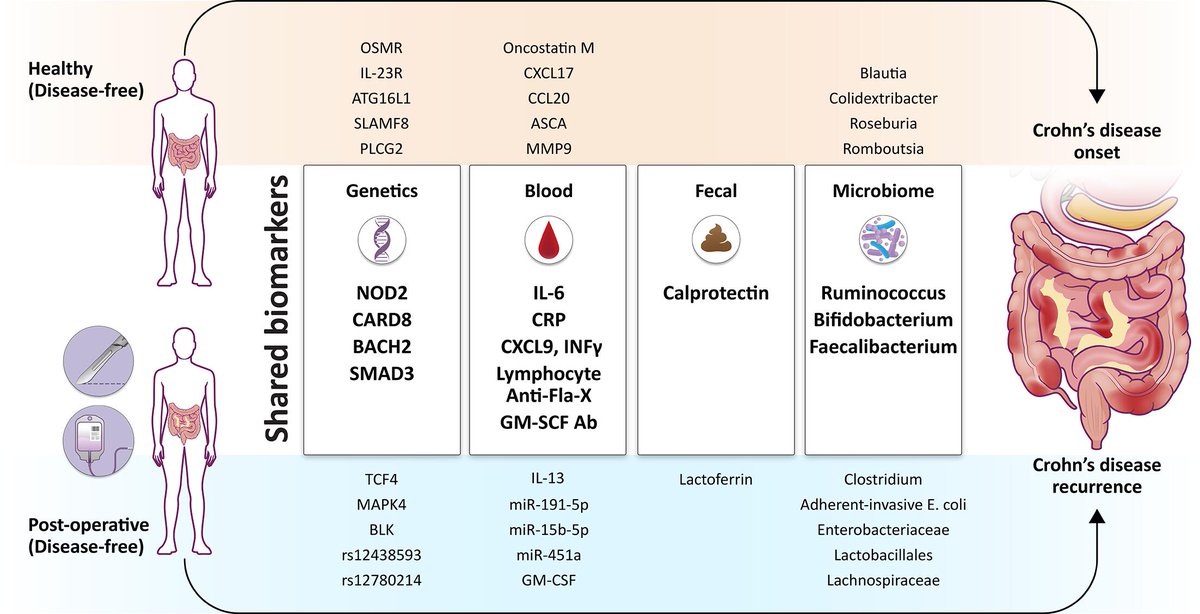
Could the biology that precedes Crohn’s disease also help explain why the disease returns after surgery?
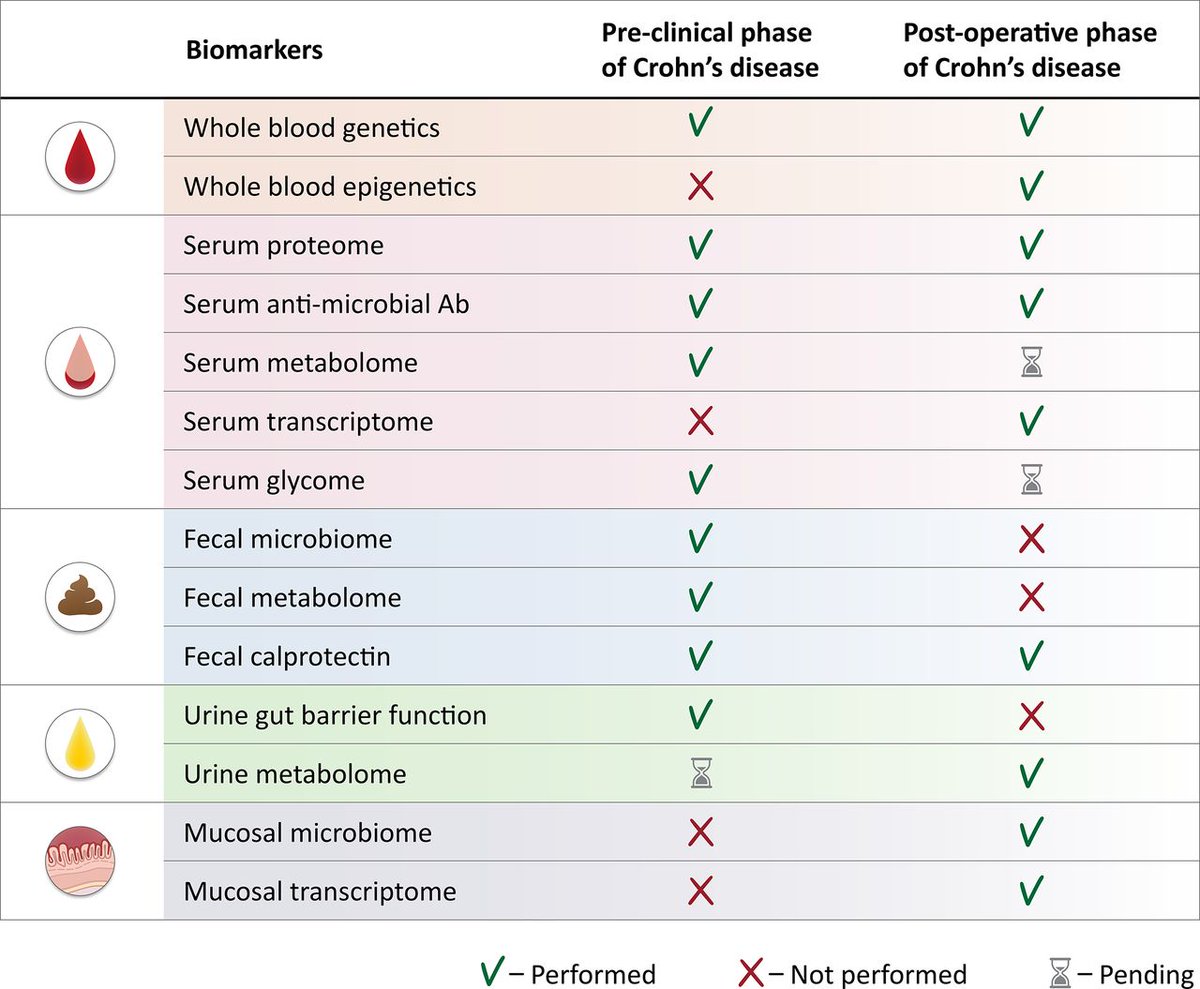
The #GUTRecentAdvancesInClinicalPractice paper by Chen et al. presents “From preclinical phase of Crohn’s disease to postoperative recurrence: shared mechanisms and potential interventions” via https://t.co/3tR24e9DK1
This review brings together emerging evidence from preclinical and postoperative Crohn’s disease cohorts, proposing that these apparently different stages of disease may share important biological mechanisms.
The authors highlight common predictive signatures involving genetic susceptibility, immune mediators such as CXCL9 and interleukin 6, microbial changes involving organisms including Faecalibacterium and Ruminococcus, gut-barrier dysfunction and systemic inflammation.
The review also explores emerging approaches including glycomics, urine metabolomics and high-dimensional immunophenotyping, which may help refine risk stratification and reveal the interactions between host, microbiome and immune system.
The postoperative setting may therefore provide a particularly useful human model for studying disease recurrence and testing biomarker-guided preventive strategies that could ultimately be relevant across the Crohn’s disease spectrum.
#CrohnsDisease #IBD #Genetics
Is proximal small bowel Crohn worse than distal bcs the Tx is less effective there?
Well, No...
In our @sheba_medical#capsule study now published in @AGA_CGH , biologics induced similar mucosal healing in proximal vs distal SB.
@OffirU@HelmsleyTrust
https://t.co/W0zSOfUBEy
Could the biology that precedes Crohn’s disease also help explain why the disease returns after surgery?
The #GUTRecentAdvancesInClinicalPractice paper by Chen et al. presents “From preclinical phase of Crohn’s disease to postoperative recurrence: shared mechanisms and potential interventions” via https://t.co/3tR24e9DK1
This review brings together emerging evidence from preclinical and postoperative Crohn’s disease cohorts, proposing that these apparently different stages of disease may share important biological mechanisms.
The authors highlight common predictive signatures involving genetic susceptibility, immune mediators such as CXCL9 and interleukin 6, microbial changes involving organisms including Faecalibacterium and Ruminococcus, gut-barrier dysfunction and systemic inflammation.
The review also explores emerging approaches including glycomics, urine metabolomics and high-dimensional immunophenotyping, which may help refine risk stratification and reveal the interactions between host, microbiome and immune system.
The postoperative setting may therefore provide a particularly useful human model for studying disease recurrence and testing biomarker-guided preventive strategies that could ultimately be relevant across the Crohn’s disease spectrum.
#CrohnsDisease #IBD #Genetics
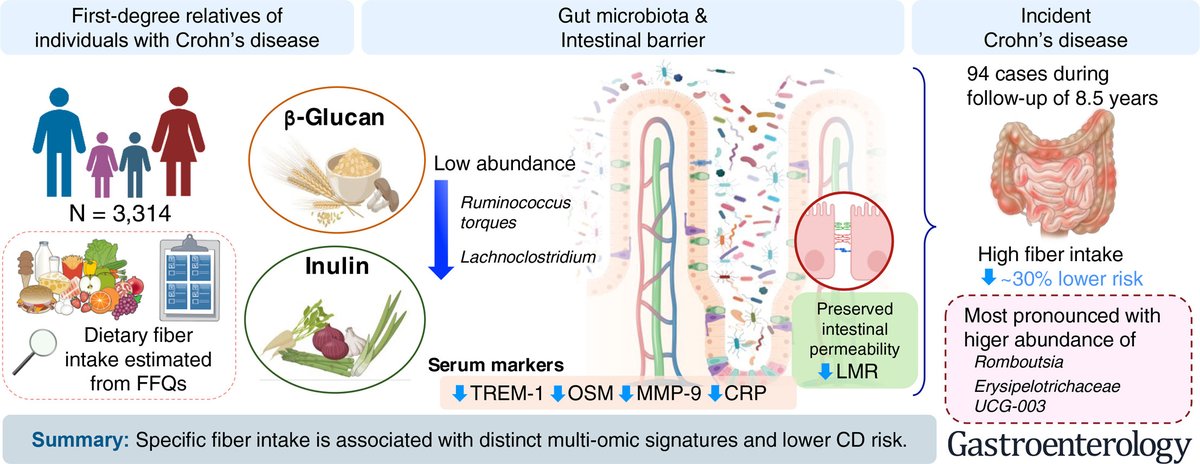
The October Editor's Essential Reading finds β-glucan and inulin estimated intake are associated with reduced risk of #CrohnsDisease, improved gut barrier and systemic inflammation markers, and multi-omic signatures in a high-risk cohort.
🔗 Read more at https://t.co/fNNzFd6RsP
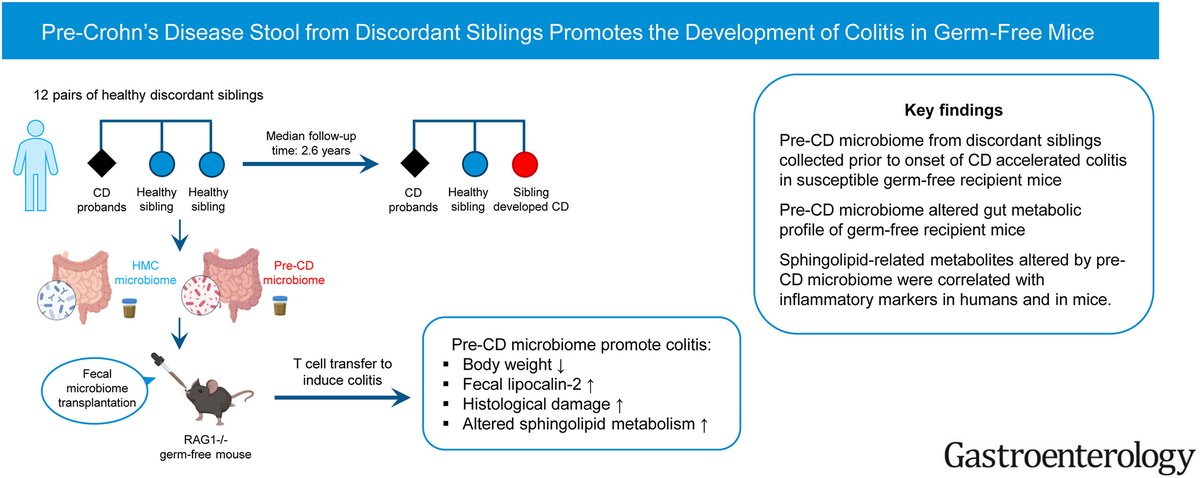
🐁 Years before #CrohnsDisease diagnosis, individuals' stool promotes more severe #colitis in germ-free mice. Shared metabolic signatures suggest that early microbiome changes may drive inflammation.
🔗 https://t.co/Y9H5PFilsA
📖 A nationwide cohort study compared #PsychiatricDisorders in IBD patients with reference-matched individuals and their IBD-free full siblings.
🔑 Takeaway: Psychiatric disorders were more common in #IBD patients, both before and after diagnosis https://t.co/j7xMzUV7KI
💡Adding a persistence feature to a probiotic enhances its efficacy for #colitis treatment, enhancing future human and veterinary therapeutic applications.
🔗 https://t.co/80nyDuY2rz