Drink your coffee black (no additives) if you want the full health benefits.
2-3 cups per day has been associated with a 25% reduction in all-cause mortality. That benefit goes away when cream and/or sugar are added.
I think this happens for a few reasons:
• Dairy proteins can bind to coffee’s antioxidants and polyphenols and slow their absorption.
• Heavy cream, butter, and MCT-heavy coffee don’t necessarily block coffee polyphenols, but they can add substantial saturated fat and calories. For someone watching ApoB or LDL-C, this can work against the very cardiovascular benefits they’re hoping to get from coffee.
📣 Join the upcoming @D_ECCO_IBD webinar on the role of diet in #IBD prevention
✅ Animal vs plant protein in IBD
✅ Lights and shadows of ultraprocessed foods in the onset of IBD
✅ To fiber or not to fiber in IBD
✅ Dietary patterns during early lige and IBD risk
📆 24 June
⏰ 18:00-19:20 (CEST)
🎓@VaioSvolos, @sarbagili, @Alice_APD, @vds_julie1 & Alicia Sandall
ECCO membership is needed for registration
👉🏻 Access the full program and register here: https://t.co/aij56vOAY3
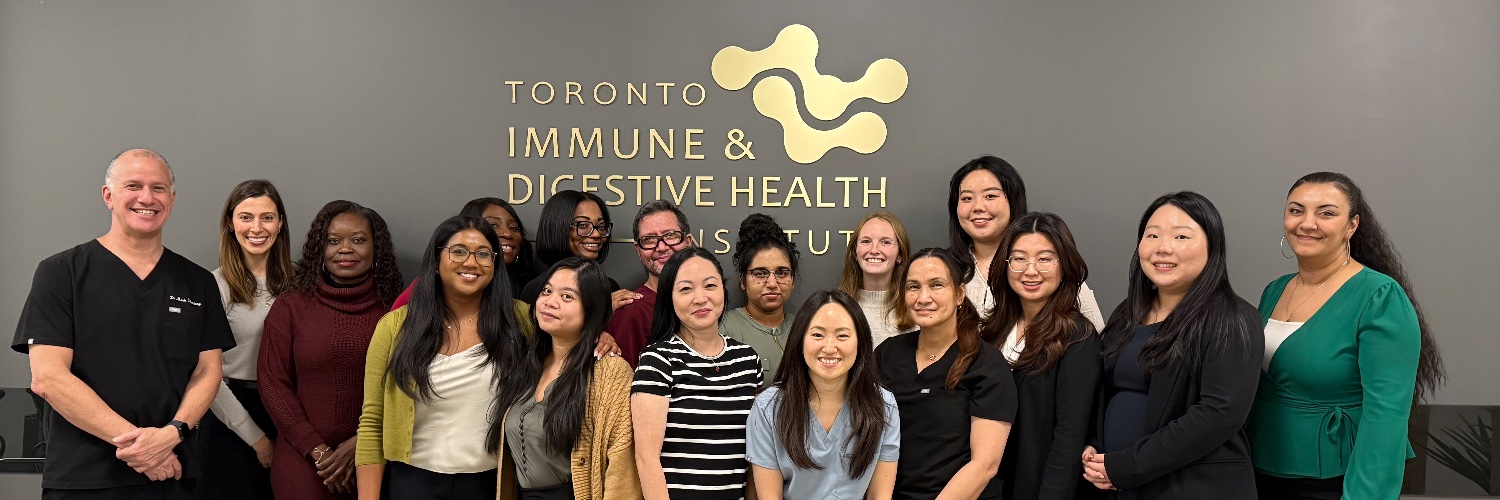
@TorDigHealthIns team is excited to join the Gutsy Walk 2026! 👏
We’re proud to support the IBD community through patient care, research, and advocacy. Every donation helps make a difference for those living with Crohn’s disease and ulcerative colitis 💜
https://t.co/7fKyvWFCHg
Ontario becomes the second province to change the colorectal cancer screening age from 50 to 45. Coming in effect on July 1st, it will now be possible for a wider reach of Ontarians to qualify and be provided with a colorectal cancer test kit and the possibility of colonoscopies.
𝗡𝗼 𝗼𝗻𝗲 𝗵𝗮𝘀 𝗱𝗼𝗻𝗲 𝗺𝗼𝗿𝗲 𝗚𝗜 𝗰𝗹𝗶𝗻𝗶𝗰𝗮𝗹 𝘁𝗿𝗶𝗮𝗹𝘀 𝘁𝗵𝗮𝗻 𝗔𝗹𝗶𝗺𝗲𝗻𝘁𝗶𝘃.
That experience is more than a number — it reflects decades of scientific leadership, deep therapeutic expertise, and longstanding partnerships across the global GI community.
While generalist CROs treat GI as part of a broader portfolio, Alimentiv brings full-spectrum, GI-exclusive expertise to every phase of clinical development. We bring unmatched GI expertise to every endpoint, every site, every phase. That is how we build exceptional outcomes.
Sponsors who partner with Alimentiv gain:
🔬 A specialized GI CRO with 30+ years of unmatched trial experience, having supported 𝗺𝗼𝗿𝗲 𝘁𝗵𝗮𝗻 𝟳𝟬% 𝗼𝗳 𝗜𝗕𝗗 𝗰𝗼𝗺𝗽𝗼𝘂𝗻𝗱𝘀 𝗶𝗻 𝗱𝗲𝘃𝗲𝗹𝗼𝗽𝗺𝗲𝗻𝘁
👥 Access to a global network of GI KOLs and investigators built over decades
🌏 End-to-end clinical services supported by 𝟱,𝟬𝟬𝟬+ 𝘀𝗶𝘁𝗲𝘀 𝗶𝗻 𝟲𝟬+ 𝗰𝗼𝘂𝗻𝘁𝗿𝗶𝗲𝘀
🎯 The scale, structure, and discipline required to deliver optimal trial outcomes
𝗪𝗵𝗲𝗻 𝗚𝗜 𝘀𝗰𝗶𝗲𝗻𝗰𝗲 𝗶𝘀 𝗰𝗼𝗺𝗽𝗹𝗲𝘅 𝗮𝗻𝗱 𝘁𝗵𝗲 𝘀𝘁𝗮𝗸𝗲𝘀 𝗮𝗿𝗲 𝗵𝗶𝗴𝗵, 𝘀𝗽𝗲𝗰𝗶𝗮𝗹𝗶𝘇𝗮𝘁𝗶𝗼𝗻 𝗺𝗮𝗸𝗲𝘀 𝘁𝗵𝗲 𝗱𝗶𝗳𝗳𝗲𝗿𝗲𝗻𝗰𝗲.
Connect with Alimentiv at #DDW2026, May 2–5 in Chicago.
#GIIsOurWhy #ClinicalResearch #CRO
“‘Based on current data, GLP-1s appear generally well tolerated in people with IBD, but we do not yet have large, long-term trials in people with UC, so I tell patients we should decide together, case by case, based on their disease activity, nutritional status, and other health conditions," says Alan Moss, MD, our Chief Scientific Officer, in an interview with @EverydayHealth. If you’re living with IBD and considering a GLP-1, talk with your care team about whether these medications are right for you, and read the full Everyday Health article to learn more about the current evidence and open questions: https://t.co/ZatamZnsZ6
One of the joys of academic medicine is seeing a group of Advanced IBD fellows from all over the world who come together to do great research together and make lifelong friendships. Reach out to our group @SinaiHealth to learn more! #DDW2026
#DDW2026 research preview! Colorectal cancer in young adults is on the rise — rectal cancer is a key driver. New research projects deaths in adults under 45 will keep climbing through 2035. "Colorectal cancer in young adults is no longer rare, and it needs earlier attention."– @menon_mythili #ColorectalCancer @UpstateNews
📈 #ColorectalCancer mortality in the U.S. is surging among adults younger than 45, per new #DDW2026 research
Who is getting hit hardest? Hispanic adults and residents of Western states are seeing the greatest risk and steepest gains 🫢 https://t.co/O8OxLsU9Qk
Losing visceral fat slowed brain atrophy and preserved cognitive function in adults more than a decade after a diet and exercise intervention.
I wrote about this new study (plus how to lose visceral fat) in last week's newsletter.
Read in our archive!
https://t.co/yVztvnxh7P
Interesting growing work off the back of our original study showing the implications of personalized microbiome and how the diet-host relationship changes when gut microbes are unable to ferment certain fibers
👇👇👇 check out new #celiac study from @VerduLab@AlbertoCaminer7
Do advanced therapies (biologics and small molecules) work equally well depending on where Crohn’s disease is located?
This study discovers
🌸 Advanced therapies are LESS effective in ileal Crohn’s disease compared to colonic disease
Why this could happen
⚡Ileal disease is biologically distinct
⚡Some biologics may have less effective tissue penetration in ileum
⚡Many trials enriched for colonic disease endpoints
🔴 Old thinking:
“Crohn’s is one disease → treat similarly”
🟢 New insight:
Crohn’s disease is location-dependent in treatment response
❗ Key limitations of the study:
Post-hoc subgroup analyses across trials
Heterogeneity in:
Definitions of remission
Patient populations
Not powered for head-to-head location comparisons
👉 Therefore: Do not over-interpret exact percentages
🔥 This study reinforces a paradigm shift:
Crohn’s disease should not be treated as a single entity
It behaves differently based on anatomic location
@DCharabaty@ShomronH@Bealoquebea@IBD_Afzali@UmaMahadevanIBD@DrMikeDolinger@IBD_Houston@P_DeepakIBDMD@IBD_FloMD@Badr_AlBawardy
https://t.co/7j0KNEaB61
One of the most important lessons in IBD care is that not all therapies behave the same over time.
Immunogenicity is often overlooked, but it plays a major role in why some treatments stop working.
Understanding these differences has changed how I think about durability, sequencing, and long-term strategy.
@CCYANetwork@CrohnsColitisUK@CrohnsColitisFn@YOGI_IBD@MondayNightIBD@DCharabaty@Bealoquebea@KamaniLubna
https://t.co/nja2fzH3Qt
New research from the @IcahnMountSinai is moving the field toward prediction and prevention of inflammatory bowel disease (IBD).
The INTERCEPT study aims to validate key biomarkers identified through the Helmsley-supported PROMISE Consortium — and could ultimately improve long-term outcomes for people with Crohn’s disease.
Read more: https://t.co/t9sOvQU6Kl
Colorectal cancer is common, deadly, and preventable.
It's the 3rd most common cancer in the US, and the second leading cause of cancer-related death. About 5% of us are going to get colorectal cancer during our lifetimes.
The best tool we have to detect cancer and pre-cancerous polyps is a colonoscopy. The USPSTF recommends that screening colonoscopy start at age 45 for average-risk people, and this is covered by your insurance. If you have a family history, you need to start even earlier.
Please please please get your colonoscopy. Then, you'll never have to discover first-hand if I'm any good at my job or not.
The life you save may be your own!
@unmc@NebraskaMed
#coloncancer