Live with love, extending compassion to all, trade with unwavering focus. A trader by profession and passion, building a life of purpose. Not Sebi Registered.
In trading, extreme skills demand deliberate effort—no book, course, or mentor hands you mastery.
Deep dive
Forward-test setups
Relentless review
1000s of hours on historical winners
No shortcuts. Earn it in unseen hours. Grind daily.  #Trading#DeliberatePractice
Tell me son, why is your head down, you used to laugh so openly before. Now you've gone quiet, suffocating inside — the world assumed you've been suppressed.
Get up. Step into the arena.
The one watching from outside, commenting, his hands are clean, not a single wound. Speak the truth and you'll get trials, rise up and you'll only get hate.
The one who came into the field — face full of dust — that guy counts, not the one standing in the gallery.
Fell? Get up. Fell again? Get up again. Didn't run, didn't flee. Every day brings new trials, every day brings hate — but the one who never stepped into the arena, he has no worth.
I'm still around, friend. Always lived on guts.
The one who fought — respect to him. The one who only watched — he means nothing.
Every day, try to develop greater clarity about setups. process, entries, exits, stops, sizing, timeframes, and catalysts.
The more you reorganize the knowledge and spend time understanding the setup, the easier it will be to implement.
This requires real dedication to repeatedly revisit a setup, reclarify, and reset your mind.
When you immerse yourself in this, one day it clicks, and then suddenly everything starts working.
Through more reflection and revisiting the same idea, the idea becomes part of you.
And whenever we engage in such purposeful mind-clarity efforts in any field, it always results in significant money.
Depth creates wealth.
2014:
🇮🇳 India — 1.80 trillion USD
🇹🇼 Taiwan — 0.80 trillion USD
2026:
🇮🇳 India — 4.92 trillion USD
🇹🇼 Taiwan — 4.95 trillion USD
Frankly speaking, the New India has become a Lost India.
UPDATE AND FOLLOW-UP:
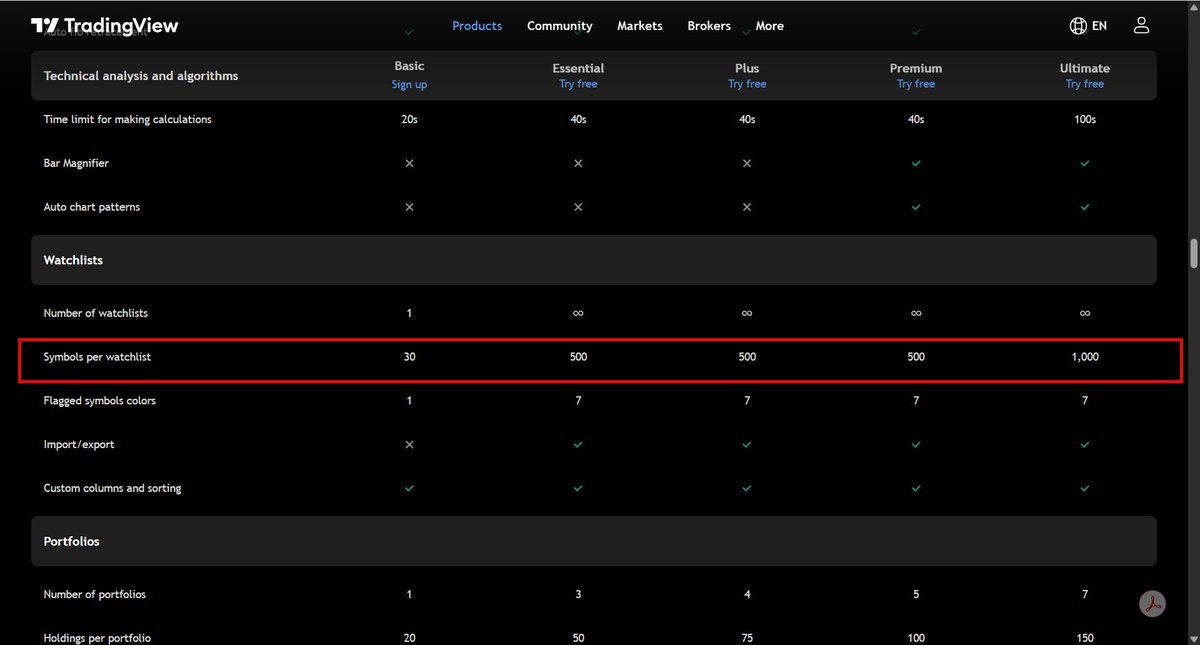
I sincerely thank @tradingview for revising the limits to something more workable for traders who can only afford the entry-level plans.
However, there is still a strong need for TradingView to restore the Premium plan limit to 1000 symbols. This is the highest tier plan that a common retail trader can realistically afford, and they should not be restricted simply for maintaining a larger watchlist while already paying for the best available option in their category.
As I mentioned in my earlier note, this limitation directly affects the usability of the scanner, especially powerful features like scanning on watchlists and watchlist-based alerts.
I have always been a strong admirer of your platform, along with your highly responsive and customer-friendly support. I genuinely believe you will address this as well and not limit your users over something as basic as the number of symbols they can add to a watchlist.
I request everyone to please support this cause. Our unity is our strength, and it will show how many traders are genuinely affected by this change.
Another instance of wrong-side driving — this one from 25 Dec 2025.
Sharing this older clip to highlight how frequent and normalised this reckless behaviour has become.
On the Western Peripheral Expressway, a six-lane road, a car speeding in the middle lane on the wrong side — as if rules don’t apply. In this case too, the correct side was clearly well-maintained with smooth traffic flow visible.
This isn’t ignorance. It’s a death wish.
No concern for their own life, none for others. And these aren’t isolated incidents anymore — it’s happening far too often.
Indian roads are turning into battlefields, where one reckless act can cost multiple lives.
We need strict enforcement, heavy penalties, and zero tolerance.
#RoadSafety #WrongSideDriving #Expressway #IndiaTraffic #DriveSafe @DriveSmart_IN@motordave2
@ed11162 DL permanently cancelled, banned to drive any kind of vehicle is must. It's now a criminal offence under section 281 of BNS will provision for FOR rather than just issuing challah. But enforcement is lacking.
In most of north-western India, stray dogs on highways are still a far more common sight than nilgai, even on elevated expressways. But nilgai crossings are reduced there because elevation, fencing/barriers, and underpasses limit animal access. Risk isn’t eliminated though.
The bigger issue is on normal NHs and SHs without continuous barricading. Drivers often have no way to know they are entering a frequent nilgai crossing zone, especially at night or near roadside vegetation. That’s what makes these crashes so dangerous — huge animal, sudden appearance, almost zero reaction time at highway speeds.
Road safety here isn’t just about speed or lanes — it’s about awareness.
In parts of North-West India, animals like the Nilgai can suddenly cross highways, often in herds, at high speed. I’ve experienced this firsthand — a sudden crossing led to an accident with almost no reaction time. These incidents are often fatal, so the fact that we all walked away unharmed was a big save.
We were within safe speed, everyone had seatbelts on — and that made the difference.
With risks like wrong-side driving, DUI, stray animals, and road design gaps, I focus on what I can control.
I drive with a simple approach:
• Stay observant
• Anticipate risks early
• Keep within safe speed limits
• Follow rules, even if others don’t
• Stay alert at all times
I also try to plan travel timing to avoid peak congestion and higher-risk hours.
It’s not about reaching fast — it’s about reaching safe, while keeping others safe too.
#RoadSafety #DriveSafe #StayAlert #DefensiveDriving #SafeDriving #IndiaRoads #HighwaySafety #AccidentPrevention #SeatbeltSavesLives #BeResponsible @DriveSmart_IN@motordave2
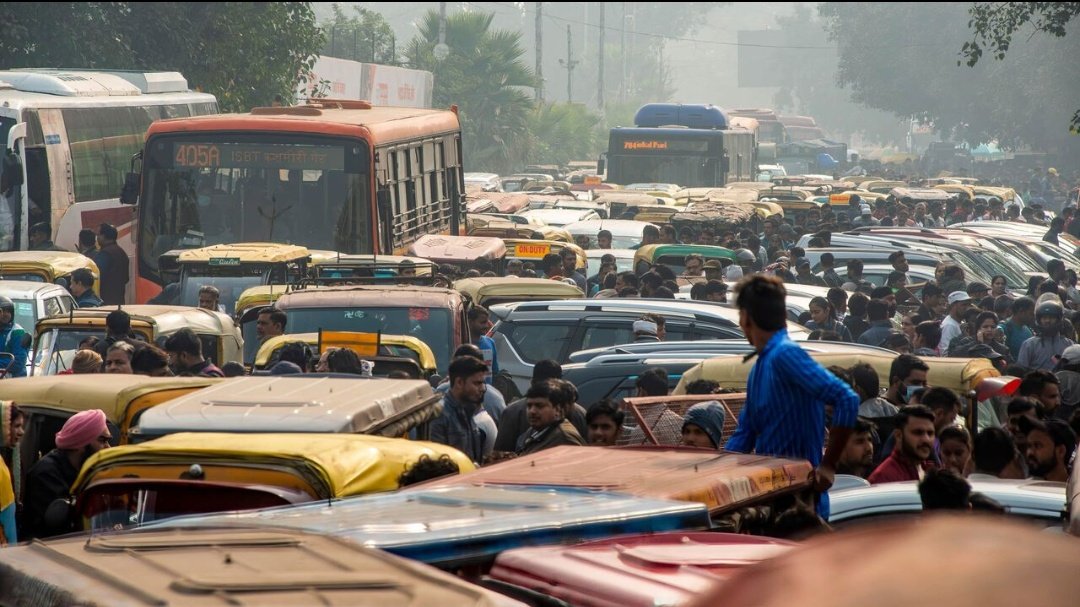
Why Indian Traffic Feels Cluttered 🤔😬
Anyone who has driven both in India and in many other countries immediately senses the difference.
Indian traffic feels dense, noisy, stressful, and visually chaotic even when the number of vehicles on the road is not unusually high.
In contrast, traffic in many other countries often appears calmer and more orderly, even at similar or higher volumes.
This difference is mainly due to violation of a basic, universal traffic principle and that is a lane position is meant to be occupied by only one vehicle at a time.
Most traffic laws around the world do not explicitly state, “Only one vehicle may occupy a lane position.” Instead, the rule is embedded indirectly through requirements such as lane discipline, maintaining following distance.
Drivers are expected to remain within a single lane, avoid straddling lanes, and change lanes only when sufficient space exists without interfering with another vehicle. Overtaking is allowed only when it can be done safely and without encroaching on another vehicle’s space.
This lane discipline is what creates predictability where drivers can use position,mirrors,and signals effectively.
When a driver occupies a lane position, others can reliably expect where that vehicle will be in the next moment. This predictability allows traffic to flow smoothly, even at higher speeds.
How Indian Traffic Breaks This Principle
In Indian traffic, this exclusivity is routinely violated out of habit and systemic normalization.
Instead of asking, “Is this lane position occupied?”, drivers often ask, “Is there a gap I can squeeze into?” This shift in thinking transforms lanes from exclusive spaces into shareable fragments.
As a result, multiple vehicles cars, motorcycles, autos etc attempt to occupy overlapping portions of the same lane at the same time. A single lane becomes two and then three informal lanes, none of which are clearly defined or respected.
Once this happens, the concept of a lane loses its meaning and when lane positions are no longer exclusive, traffic is not rule based any more and becomes negotiation based.
Drivers must constantly make micro adjustments in steering, braking, and acceleration to accommodate vehicles approaching from diagonal angles or blind spots. Safety gaps, which are meant to provide reaction time and braking margin, are instantly filled by other vehicles. Following distance collapses to near zero.
This leads to frequent braking, hesitation, and honking not because drivers are aggressive, but because predictability has vanished.
Even when traffic volume is moderate, this constant spatial conflict creates the perception and reality of congestion. And small disturbances propagate backward as shockwaves, slowing everyone down.
Once lane exclusivity is widely violated, following the rules becomes a disadvantage.
A driver who maintains proper lane discipline and following distance is quickly boxed in by others who squeeze into available gaps. Over time, even well intentioned drivers adapt to survive. What begins as occasional rule breaking becomes the dominant mode of driving. This is not simply bad driving but it is a coordination failure.
How it works in other countries
In many other countries, the same roads would look dramatically different not because drivers are morally superior, but because space ownership is respected and reinforced.
Cars stay within their lanes. Motorcycles and bicycles are either restricted to specific lanes or provided with protected infrastructure. Overtaking happens only where clear, unoccupied space exists. Gaps are treated as safety buffers, not invitations.
Because every vehicle knows where it belongs, fewer decisions need to be negotiated in real time. The result is traffic that looks calm, even when it is dense.
Why This Matters
Until lane positions are treated as exclusive rather than negotiable, Indian traffic will continue to feel cluttered, regardless of how wide the roads become.
@motordave2 True. I have also been fortunate to have near miss once earlier. This time poor animal had direct hit. No driving skill works in these cases. They are too fast. Barricades, dedicated underpasses, animal detection systems or other such methods can work best.
Even at 26 km/h the bike decided to do its own dance routine. Poor guy went down so casually, like the road just whispered "not today bro" No helmet, no drama, just vibes and a quick recovery. Glad he’s okay though! Next time maybe a helmet king? Traffic’s already chaotic enough without adding gravity’s plot twists
That’s exactly the risk most people underestimate. With an animal as large as a nilgai, higher speed wouldn’t just mean a harder impact—it could mean structural failure. The A-pillars can collapse, the windshield can give way, and the animal can intrude into the cabin. After the initial hit, it can crush front occupants—especially legs and chest. These accidents are frequently fatal, not just “close calls.”
This incident happened near Imlota village, Charkhi Dadri, on a highway stretch where sudden wildlife crossings are very real. Nilgai herds are common in this belt, and they often emerge abruptly from roadside vegetation—giving drivers virtually zero reaction time at highway speeds.
This isn’t an isolated issue either. Across Haryana, highways cutting through wildlife movement zones regularly see animal collisions, including nilgai and even larger predators, due to lack of safe crossings and high traffic speeds �. Authorities are already pushing for solutions like underpasses, fencing, and speed controls after repeated wildlife deaths on roads in the state.
Seatbelts did exactly what they’re designed to do here—prevent secondary impact and keep occupants positioned. That likely made the difference between survival and something much worse.
Scaling proper mitigation—underpasses, animal detection systems, and warning zones—before monsoon herd movement increases is critical.
@motordave2@DriveSmart_IN It's 120 kmph limit road. Imagine head on with relative velocity of 240ish. No 5 star rating car can save anyone. It's lethal speed for all vehicles. Hard to figure out what makes ppl be so reckless, drugs, alcohol, suicidal tendency..? Whatever it is, it's madness on road.