Another great post from @sunnyflunk1 detailing the research going into our future delta packages in the Serpent OS moss package manager.
Lots of low level juicy metrics =)
https://t.co/D9KbK49F7C
#zstd#delta#linux#opensource
We're still making considerable improvements before we start asking people to test the packages.
@sunnyflunk1 back again to document our latest format improvements: Faster installs + smaller packages!
https://t.co/f3pswuOpUL
#linux#opensource#YourNextDistro
What this doesn't show is, despite adding binary dependency tracking, the Analyse step now runs more than twice as fast on a large package. On my local slow machine, it was 5x faster on a small package (which had only one ELF file).
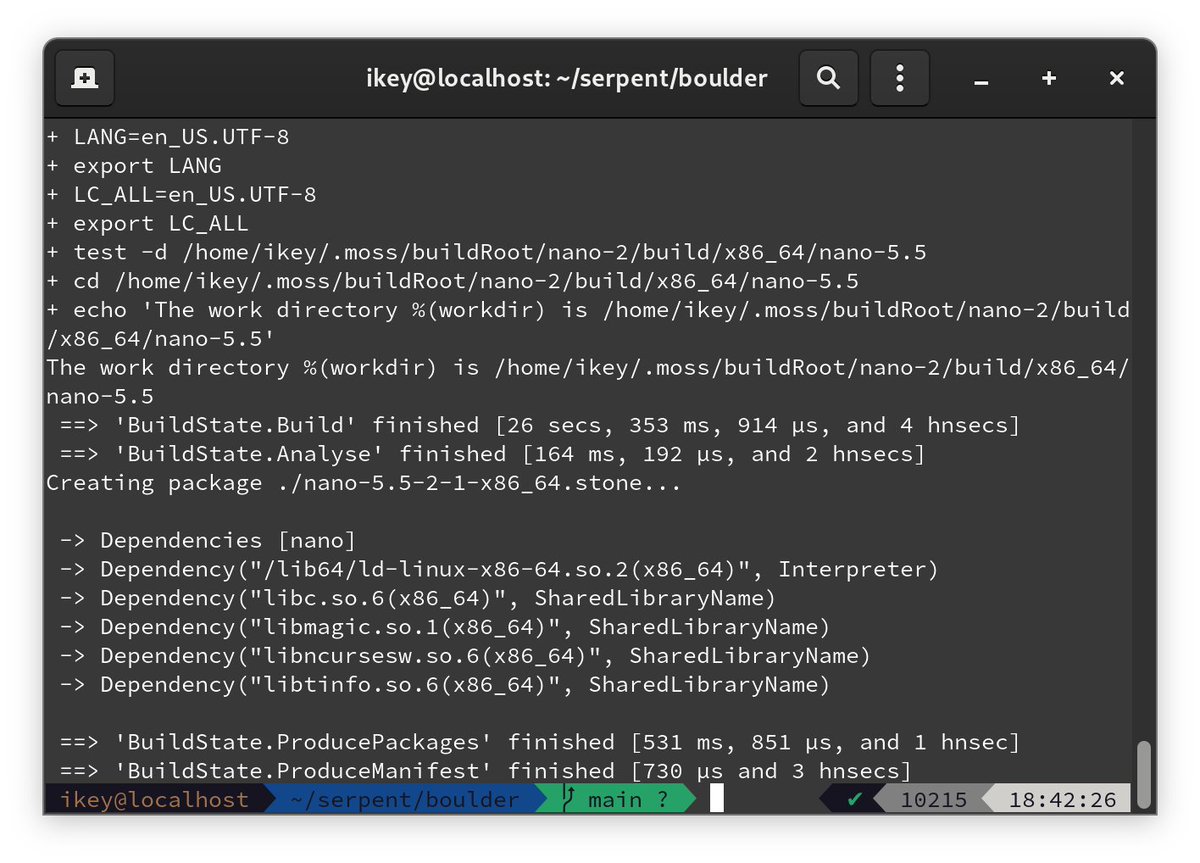
OK a whole bunch of work later, we've now got boulder automatically detecting shared library and interpreter dependencies. We'll refine this to more types as we go along, but now we can add a repository with real working dependencies and quickly exit bootstrap.
Winning.
Pushing the boundaries and testing weird cases is vital in getting the best results. A quick 1 liner has led to a reduction in Serpent OS package size, in one extreme case by 10%! Plus we can now extend this idea to push for further reductions in size.
Another blog post here from @sunnyflunk1 in the "Unpacking the Build Process" series. Interesting insights into how we build packages, and next steps for improvement! (boulder, our #dlang based package build tool)
https://t.co/IHUGKvp9kv
#opensource#linux
@darkdragon001@Serpent_OS Because of how moss works, we can actually avoid the overhead of overlayfs entirely while still enjoying RAM builds. It may get some discussion in part 4 or 5.
@Kyriusen@Serpent_OS@ikey_doherty The raw numbers are also in the table if you wish to calculate it from a different point of view (say relative to the host).
@Kyriusen@Serpent_OS@ikey_doherty How much slower is the host than Serpent OS. Or (host-serpent)/serpent : - means that the host was faster. 70% difference means the host took 1.7x as long as Serpent OS to complete the task.
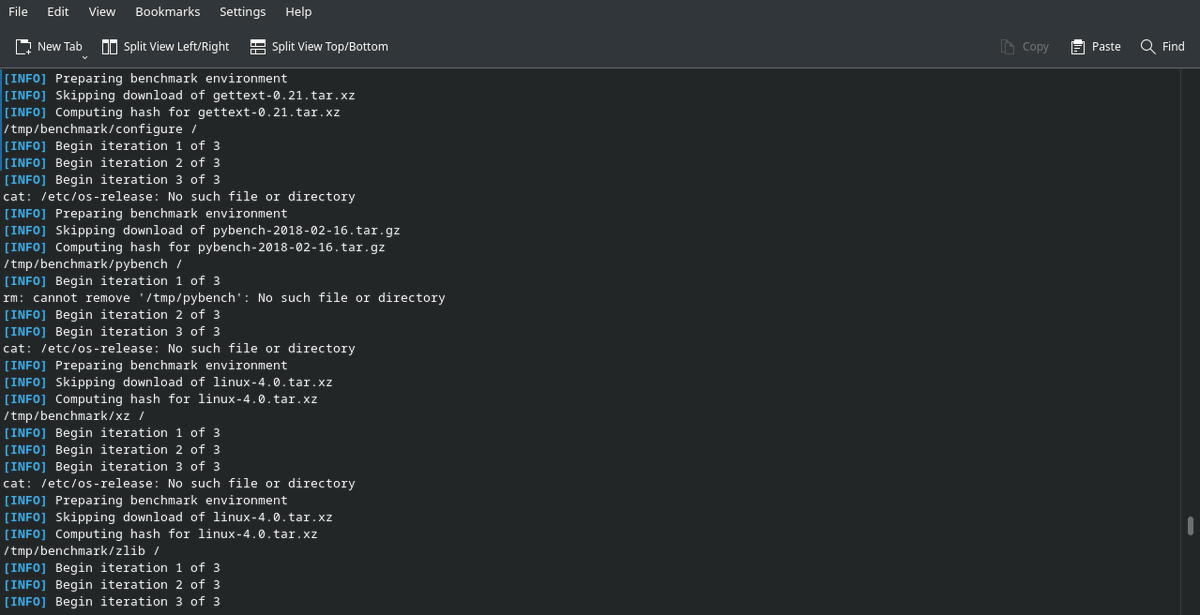
Testing out the performance of the current Serpent OS root (all built with boulder). Much to learn with #clang, many knobs to tune and tweaks to the build system.
Things are about to get interesting!
So not an entirely smooth process. There's a bug with some hardware combinations where the session crashes if the screen blanks or is turned off... So for now I've turned it off as the experience is significantly better (the odd menu oddity and flickering, but nothing breaking)