What follows: the bar for talent has changed, a $1M engineer with $1M of tokens will beat a $20M team, and OpenAI and Anthropic both have to sell to businesses.
Full essay: https://t.co/ynTmWWD2qb
I own OpenAI stock. Not investment advice.
A company pays about $1,800 a day for a software engineer.
It pays about $80 a day for that engineer's AI, and that's the top 5% of Claude Code users.
Tokens do the work of people, so compare them with payroll, not software. Against payroll, AI has barely started.
My essay on Anthropic's IPO: https://t.co/pdsMnMbRy5
on why the "Ads funds access" strategy won't work for OpenAI: https://t.co/L5M2tDa2V2
on the next breakthrough for AI agents being the file system: https://t.co/E4HYzriJ4c
AI's most characteristic failure isn't being wrong. It's being correct but not right.
Every item on the checklist passes, and you can tell at a glance that something essential is missing.
Chapter 12 of Feels Like Progress: https://t.co/E68zplwhzT
I believe the @nvidia board is not acting in the best interest of shareholders nor in a manner consistent with their fiduciary duties.
What we know is that the board fired Jensen or forced his resignation for violating company policy and/or in response to the accusation of an affair with a spy.
They did so without careful consideration of the impact on the company, its customers, its shareholders or other stakeholders.
They rushed to judgment without the benefit of careful due diligence or even with a basic understanding of the facts.
How do we know this?
We know this by how quickly Jensen was fired and how little was known at the time of his firing.
It takes time to convene a board meeting. There was time, maybe, for one Zoom.
And this is a decision that should have been made by a board sitting in person and carefully deliberating the facts once they are known.
And they should have slept on the decision and met again the day after to discuss the facts, the risks and the other implications of their decision.
The timing and lack of information did not allow for careful board deliberation.
While boards can fire a CEO for an inappropriate relationship with a subordinate, it should not be an automatic decision. That is why we have boards comprised of humans and not agents.
A board should consider whether or not such a relationship was consensual or whether it was an abuse of power dynamics. And a board has to consider what the impact of the firing is on all stakeholders.
If I were in this board, I would not have rushed to judgment based on articles in the media. I would have made sure the board had all of the facts so it could make a careful and informed decision.
Boards of Delaware companies have a duty of care which means they must make informed, prudent and good faith decisions. This clearly did not happen here.
What law firm is advising this board?
Or is the board even taken good legal advice?
It doesn’t look like it.
And now the board is compounding its failures by insisting that there is no possibility for Jensen’s return as CEO.
Why is it in the best interest of the company to foreclose the possibility of Jensen’s return and to do so before all of the facts are known? This is yet another breach of their duty of care.
Furthermore, the board has launched an investigation whose scope is unknown. Investigations can be extremely damaging to a company and should be carefully targeted to address whatever facts need to be known rather than be overly broad in scope.
In short, this looks like a series of major governance failures by directors that panicked due to headlines in the media. They likely felt compelled to do something because they were afraid of looking bad in the media, not because it was the right thing for them company.
They couldn’t stand the heat.
The board’s conduct here is shocking for a company of this scale and importance to our country and the world at large, particularly at this moment in history.
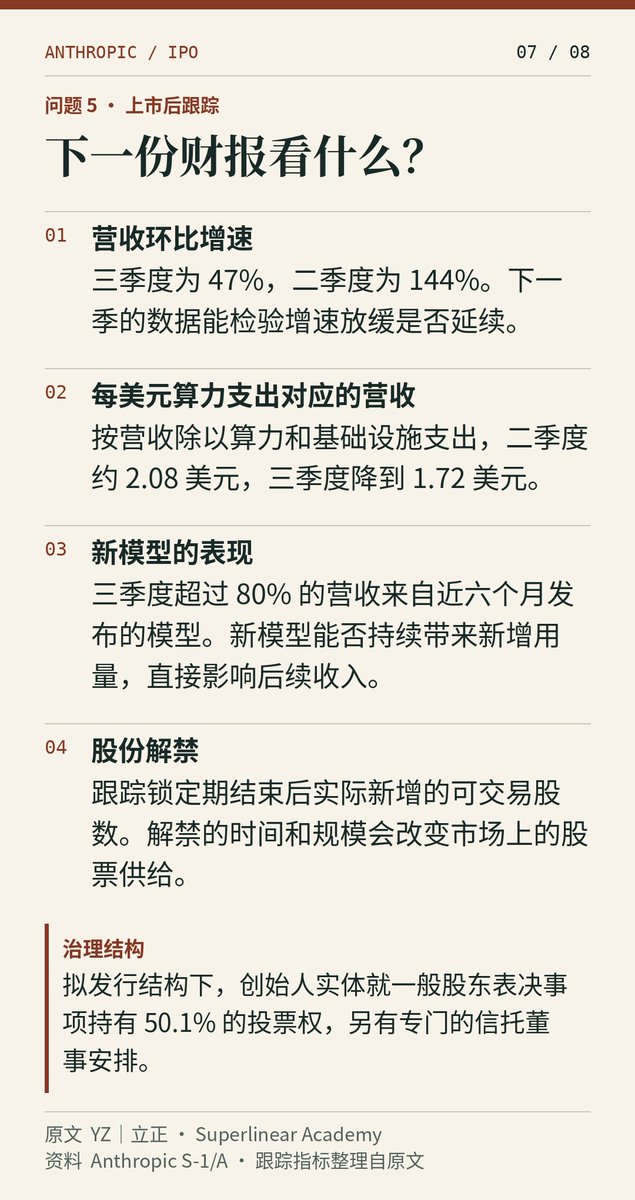
I read the prospectus and broke it into six questions, from "does it make money" to "what does this mean for your job."
The essay, with a 28-screen deck and a page number for every figure: https://t.co/aYbWAuoWiQ
I own OpenAI stock. Not investment advice.
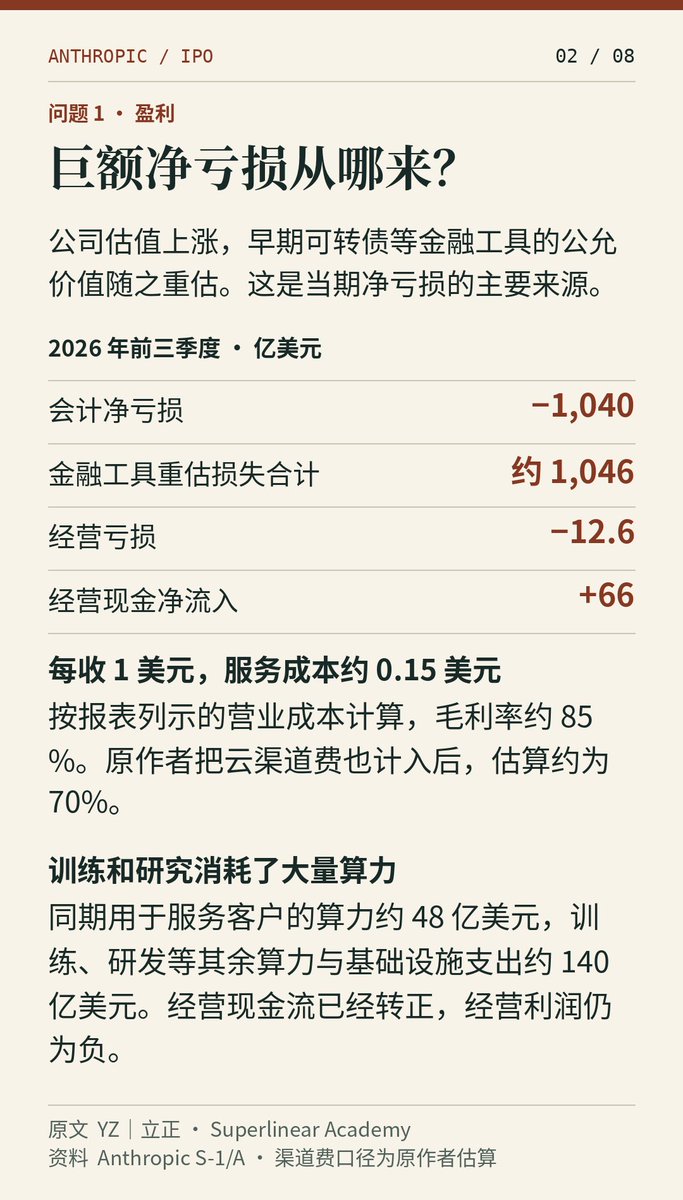
Anthropic's S-1 says it lost $104B in nine months.
$104.6B of that is non-cash, from its own rising valuation. The business generated $6.6B of cash.
The real number is $900.9B of signed compute contracts. That's why it's going public with $130B in the bank.
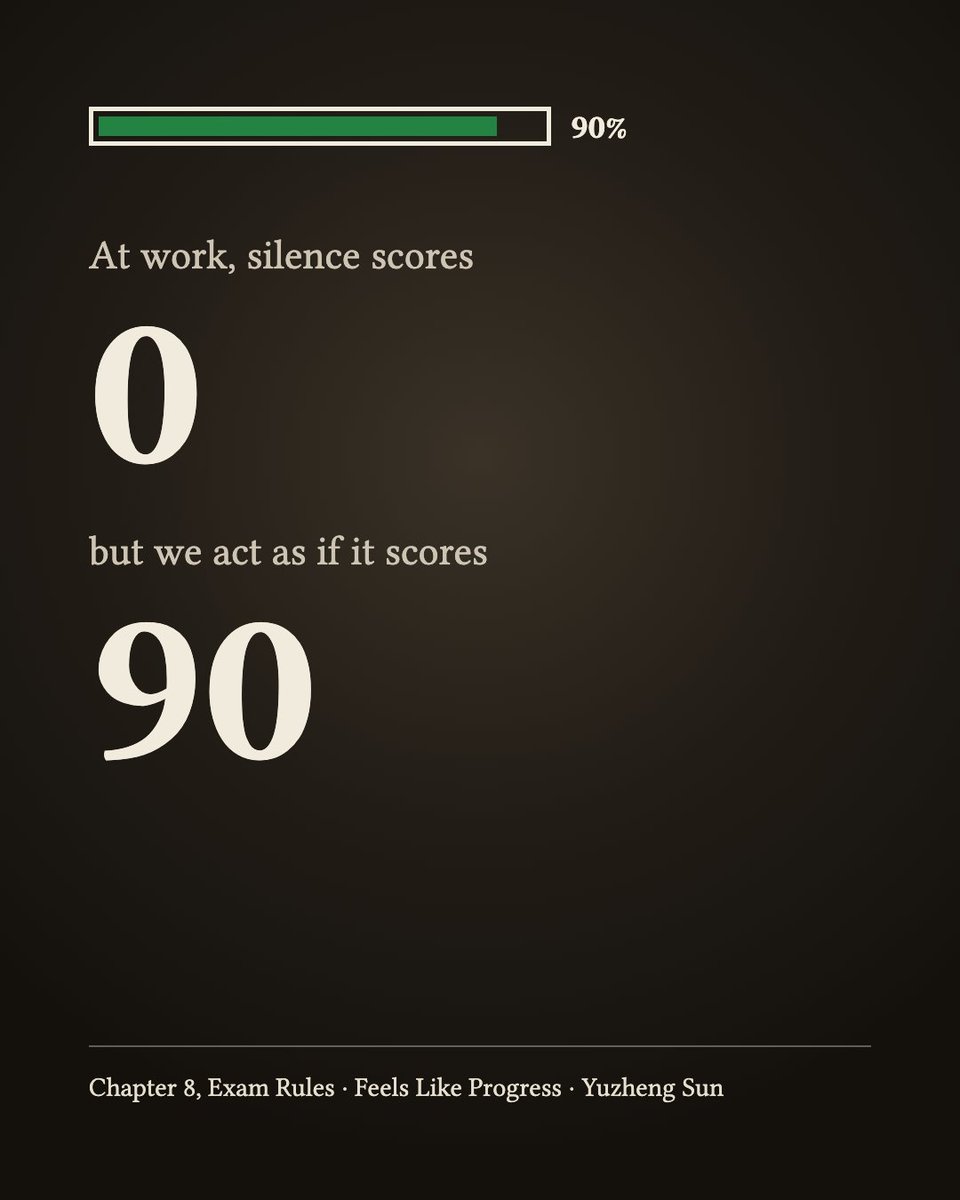
At work, silence scores zero, but we act as if it scores ninety.
I've never seen anyone fail because they were too visible. The people I've seen pushed out were almost always the invisible ones.
Chapter 8 of Feels Like Progress: https://t.co/vpiHeuRdf8
I still can't understand why NVIDIA's board let Jensen go. It destroys shareholder value, breaks employee trust, and weakens the company at the moment the AI race is being decided. It's a short-sighted and cowardly decision.
I studied corporate governance for my PhD in corporate finance. Last week I interviewed Jared Diamond (author of “Guns, Germs and Steel”), and Chapter 7 of his new book, “Profits, Prophets, Coaches, and Kings”, goes through the evidence on what happens when companies lose their CEO. It isn't pretty.
Boards exist to protect long-term value, not their own headlines. History would remember this.
@thsottiaux Give the option to make codex the default option for the ChatGPT app. Every time I have to click three buttons to get to my Codex session, and I’ve stopped using ChatGPT long time ago.
@thsottiaux Task management that shows CPU, GPU, and memory usage.
Stop spawning sub agents unnecessary! It took 300G on my hard drive unnecessarily, and probably made the task quality worse.
Jensen Huang helped build the foundation so many of us now build AI on. Decades of conviction, long bets, and turning a vision into something real. My respect for that hasn't changed. Thank you, Jensen. I'm rooting for you in whatever comes next.