The business of AI extends far beyond the models.
@Gartner_inc forecasts global AI spending to reach $4 trillion in 2027, with nearly $2.4 trillion going towards infrastructure.
Full forecast: https://t.co/rvCd26RBnt
@NIST has published a roadmap for transitioning to post-quantum cryptography, identifying vulnerable algorithms and outlining migration priorities.
The work of replacing today's cryptographic foundations is taking shape:
https://t.co/luxP3cKlfH
The expensive part of GenAI often starts after the demo.
@Gartner_inc predicts that by 2028, at least 50% of GenAI projects will exceed budgets due to poor architecture and lack of operational know-how.
Scaling is where the real test begins:
📊 By 2028, at least 50% of GenAI projects will overrun their budgeted costs due to poor architectural choices and lack of operational know-how.
Use Gartner's Hype Cycle for Generative AI to identify the technologies best suited for your organization: https://t.co/yM5R2i1FaM
The quantum race is being shaped long before quantum computers reach their full potential.
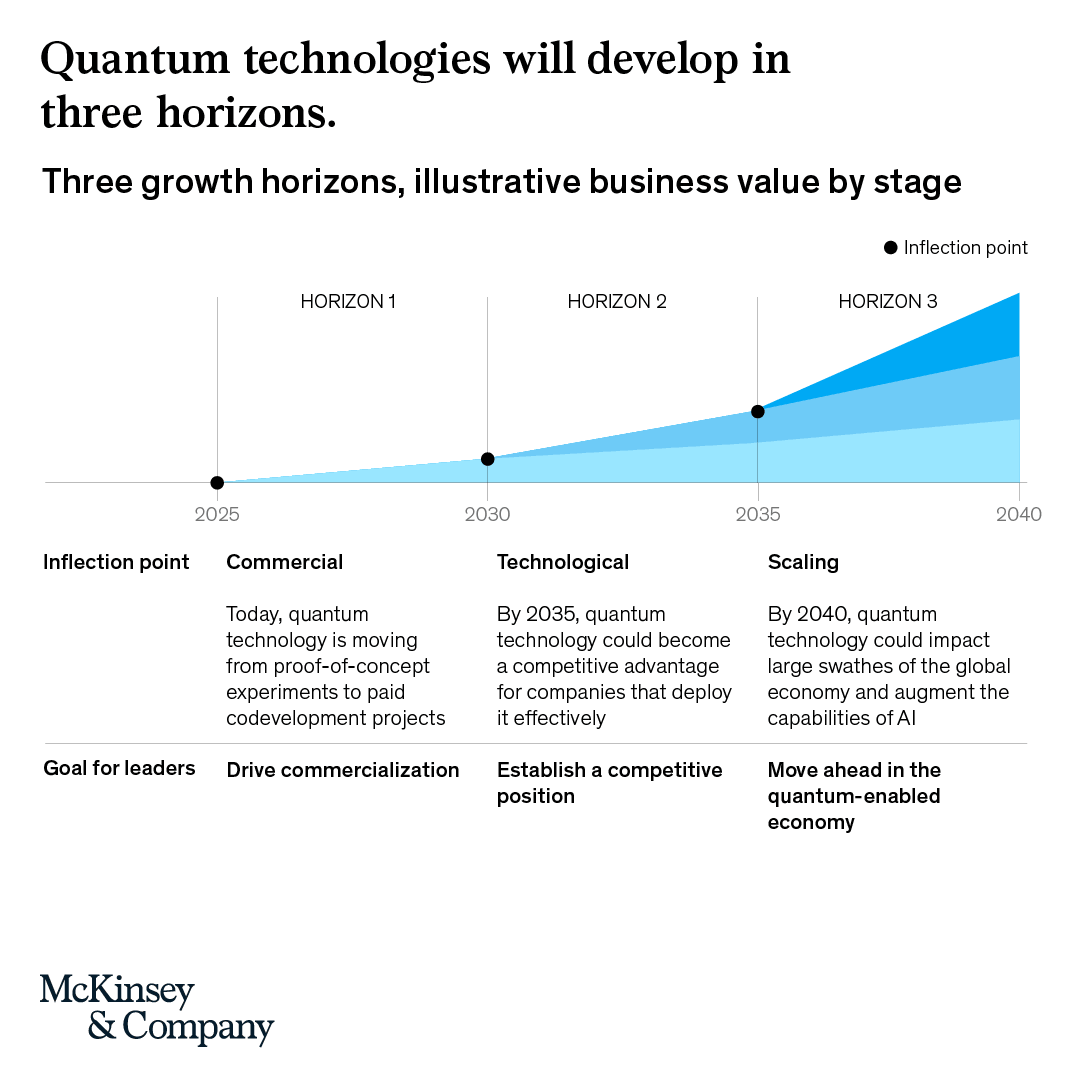
@McKinsey maps three horizons of development — from early commercialisation today to a quantum-enabled economy by 2040:
Quantum technology could unlock new possibilities in drug discovery, materials design, and robotics. As commercial applications advance, businesses have an opportunity to build capabilities and gain a competitive edge.
Explore the three horizons: https://t.co/SJ5yeT4Bpv
As AI takes on more decisions, the stakes go beyond efficiency.
Who remains accountable when things go wrong?
@MITSloan introduces a framework for deciding when AI should act, when humans should lead, and where oversight matters most ⬇️
What tasks should AI be trusted with, and when should humans remain involved? Designing those decision rights is one of the defining challenges of the AI era. Researchers at the MIT Center for Information Systems Research have developed a framework to help.
Learn more: https://t.co/NbTi0Vvd7Z
A calendar for the fintech ecosystem is here.
Fintech Global Hub brings events, planning, date coordination and collaboration into one place.
Baltic-led, global in scope.
Explore: https://t.co/2IRvVUe9fA
Empowered by @superhow_com
The AI boom is also a credit story.
As infrastructure spending scales, so does the role of debt - and the potential for financial spillovers.
The @BIS_org examines what this means for credit markets and financial stability:
AI infrastructure is increasingly being built on credit. Long-term debt and off-balance-sheet vehicles are financing the build-out but may also concentrate risks among a small number of firms and investors.
Read more: https://t.co/zcIrqXCy55
#BISBulletin
The @wef’s Next-Generation Computing Framework projects computing infrastructure investment to exceed $1.5 trillion by 2027.
More than 15 times the 2022 level.
What will this expansion demand from the systems built around it? ⬇️
https://t.co/XBfDIUAAvZ
Data centres are becoming too important to remain a black box.
The EU is introducing a common rating scheme to make their energy and water use more transparent.
Even digital infrastructure needs to show its footprint: https://t.co/fbq10N3Leu
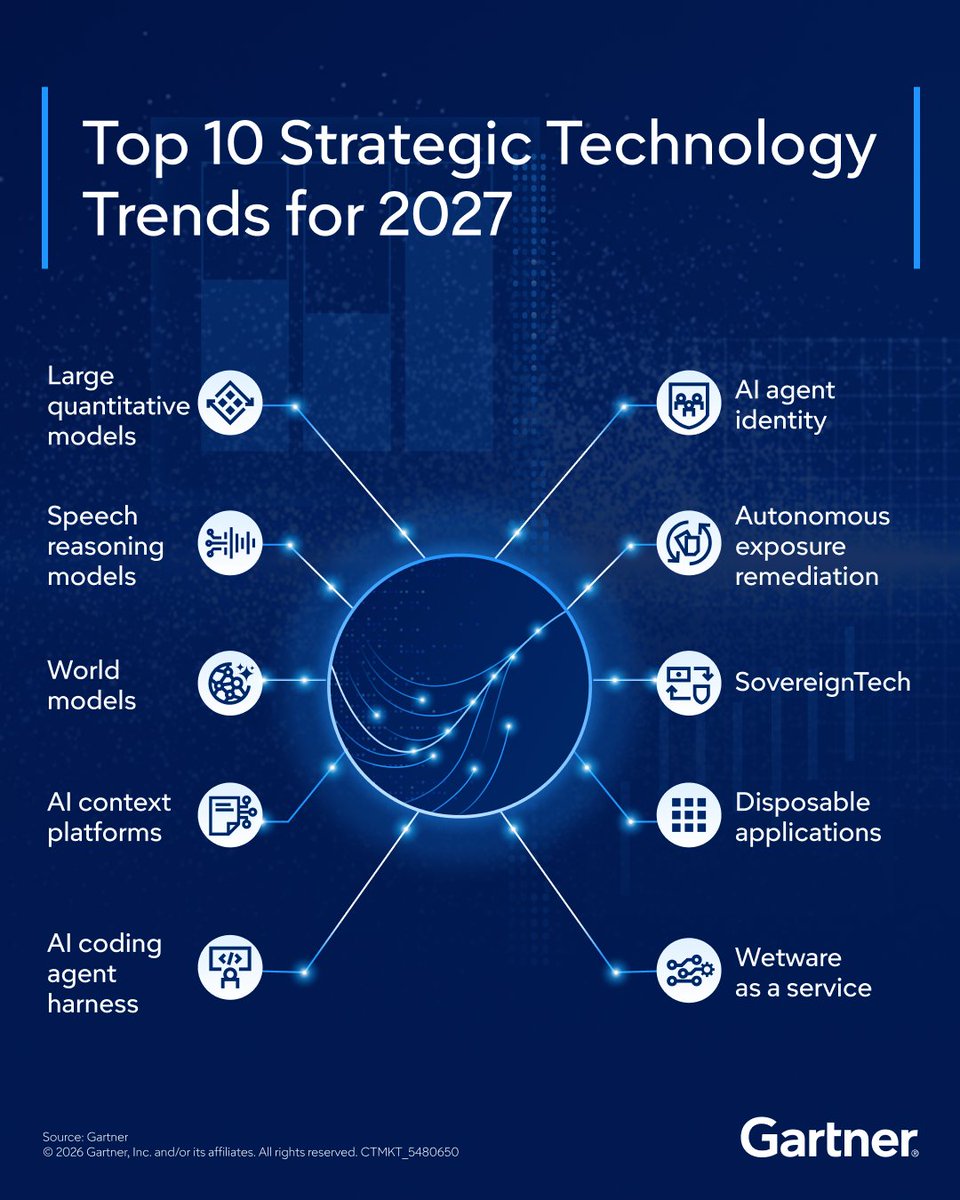
Unveiling the Top 10 Strategic Technology Trends for 2027 🌐
In 2027, the AI conversation will shift from adoption to governance. Gartner’s Top Strategic Technology Trends help CIOs navigate this transition and lead their organizations into the autonomous era: https://t.co/i5zCbJdvns
#GartnerSYM
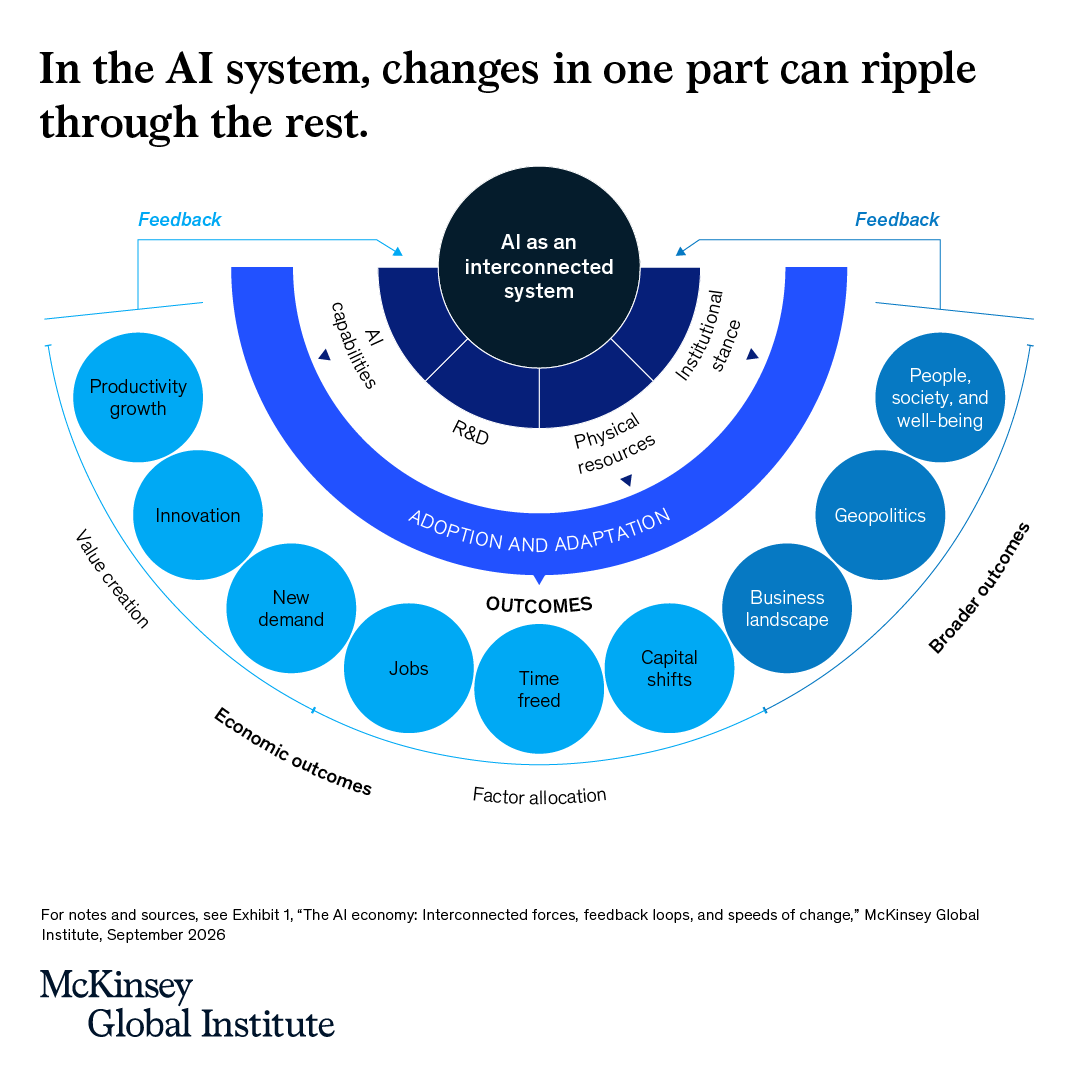
Faster chips. More capital. Better models. None guarantees better outcomes if the constraint lies elsewhere.
Our new framework looks at AI as an interconnected system – from capabilities and resources to adoption and outcomes. https://t.co/STm49x5Tw1
Giving AI more responsibility raises a very old question: who is accountable when things go wrong?
@Reuters reports that banking regulators are taking a closer look at how banks use increasingly autonomous AI:
https://t.co/pX8YV05MJS
AI is 30% technology and 70% something else 🧭
The organizations seeing the greatest return from AI are investing in more than technology.
Discover how to create an AI roadmap that turns ambition into sustainable business value: https://t.co/HcIUlrIPnD
How much of innovation depends on things we rarely call innovation?
Technology gets the attention. Execution often determines the outcome.
We explored why execution is becoming the new advantage ↓
https://t.co/aUQ3AIkivu
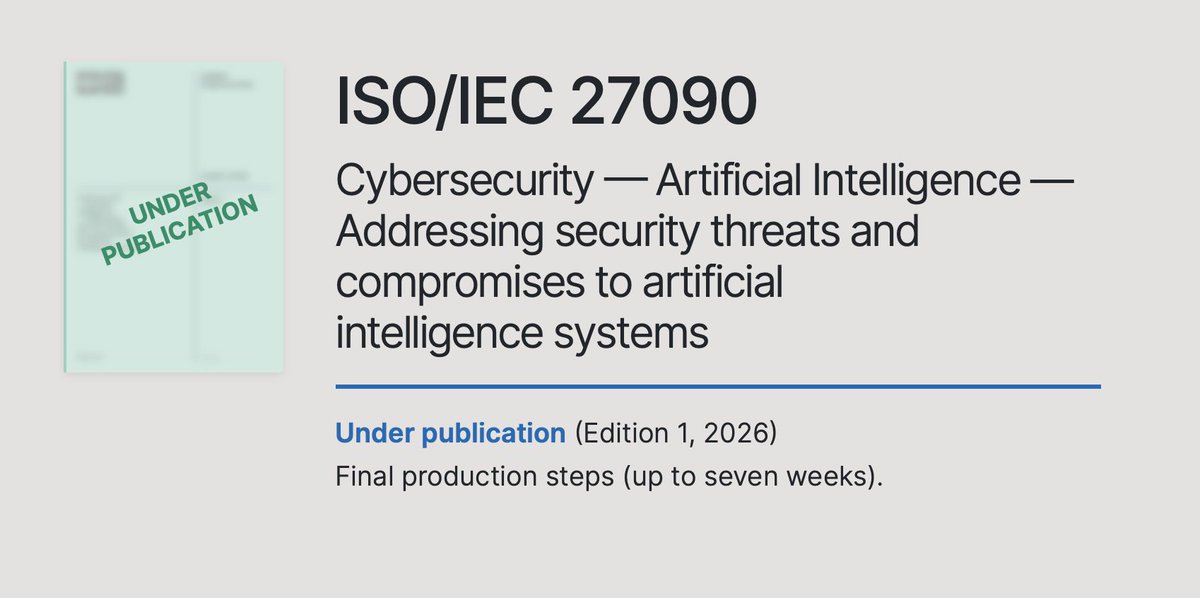
Every technological revolution eventually gets a standard.
ISO is finalizing a new standard addressing security threats to AI systems ⬇️
https://t.co/3dpws7yT57