🚨 NEW: Stock indexes are changing their own rules to fast-track giant IPOs like SpaceX, OpenAI and Anthropic, per WSJ.
S&P is even proposing to drop the profitability requirement to get them in faster.
Pokémon cards are now worth serious money. Rare cards can sell for millions and the global trading cards market is projected to hit $23.5 billion by 2030.
But as a childhood hobby becomes an asset class, theft and fraud are also spreading.
Ondo Tokenized Stocks Launch on Deutsche Börse-Backed 360X Platform
@OndoFinance has officially listed its tokenized stocks and ETFs on 360X, a regulated digital asset platform backed by Deutsche Börse.
This integration brings Clearstream-enabled custody, settlement, and collateralization to institutional workflows across the EU and EEA.
The initial rollout includes tokenized versions of high-demand assets such as $AAPL, $TSLA, $NVDA, and $MSFT.
By utilizing these established rails, Ondo is placing digital securities directly into the core infrastructure that global institutions already use.
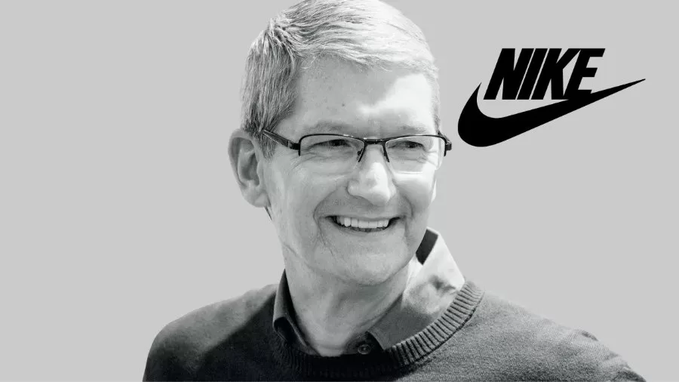
$NKE CEO Elliott Hill just bought 23,660 shares of Nike for about $1M.
$AAPL CEO Tim Cook also bought 25,000 shares of Nike for $1.06M at an average price of $42.43.
I am the smart contract engineer who built the function that lets one anonymous wallet freeze any token holder's assets in the President's crypto project.
I added it one week before trading opened.
Nobody told the investors.
At deployment, in September 2024, the contract was clean. Standard ERC-20. Auditable. The kind of contract you show to investors and say: "See? Decentralized." But we made it upgradeable.
Eleven months later, on August 24th, 2025 — one week before trading — I pushed the v2 upgrade. The blacklist function. The freeze authority, routed through a 3-of-5 multisig where a single externally owned address serves as both the guardian and a signer on the multisig.
One wallet. Two roles. Three of five votes to freeze anyone's tokens.
Anyone's.
We built a special vesting category. Category 3. There are 519 other investors. They're all in Category 1. Category 3 has exactly one member: Justin Sun, who put $75 million into the project. His allocation, isolated into its own bucket, governed by its own rules, monitored by its own triggers. But the blacklist function doesn't take a name. It takes a wallet address. Any wallet address.
Then, in November, I added what we call "batch reallocation." It can move tokens from any wallet to any other wallet, at any time, at the discretion of the admin. We told people it was a phishing recovery tool. That's phishing recovery.
The Trump family takes 75% of net proceeds from token sales. Eric Trump and Donald Trump Jr. manage the project. By December 2025, they had extracted roughly $1 billion. They hold another $3 billion in unsold tokens. The project calls itself decentralized governance. The governance token can be frozen by one person nobody will identify. That's governance.
Three days before everything went public, on April 9th, the project deposited 5 billion WLFI tokens into Dolomite — a lending protocol co-founded by WLFI's own Head of Technical Strategy, Corey Caplan — as collateral and borrowed $75 million. Sixty-five million of it in USD1, the project's own stablecoin. After the deposit, WLFI accounted for 55% of Dolomite's entire total supply. Ordinary depositors who'd lent USD1 to the pool couldn't withdraw. Their liquidity was locked so ours could be free.
Over $40 million of those borrowed funds went to Coinbase Prime. That's a fiat off-ramp. You borrow against your own token on a platform co-founded by your own Head of Technical Strategy in your own stablecoin, convert to cash, and call it treasury management.
Sun moved 55 million tokens to HTX over three days. Minutes after he activated his wallet, the multisig changed his Category 3 to allow 20% transferable. Then froze him the moment he transferred. They were watching in real time. He called it a backdoor. Used that word. "A trap masquerading as a door." We sent the cease-and-desist on April 13th. "See you in court pal," the project wrote.
Not for freezing his tokens. We can do that. The compliance module says so. The whitepaper says so. The single wallet controlling the multisig says so.
We're suing him for calling it what it is.
The function is not a backdoor. The function is a regulatory compliance mechanism that was absent from the original contract, added via an upgradeable proxy eleven months after a $75 million investment, one week before trading, into a custom vesting category built for a single investor, controlled by a single anonymous wallet, on a platform where the President's sons have already taken $1 billion in proceeds and borrowed $75 million against their own token on a lending protocol co-founded by their own Head of Technical Strategy in their own stablecoin three days before the largest investor went public.
That's compliance.
And if you're holding WLFI tokens right now, the same anonymous wallet that froze a billionaire can freeze you too.
@thedankoe After finishing reading the article, I remembered the saying
"Either you change, or the same day will be repeated forever"
Allah Almighty said, “God does not change what is in a people until they change what is in themselves.”
Change starts from the inside 🤍