Camera-free definitely removes one big privacy concern, but it doesn't automatically make smart glasses private.
If they're still constantly ready for voice commands, the important questions become what the microphones capture, when audio leaves the device, how long anything is retained and whether processing happens locally.
The camera was only the most visible part of the privacy problem.
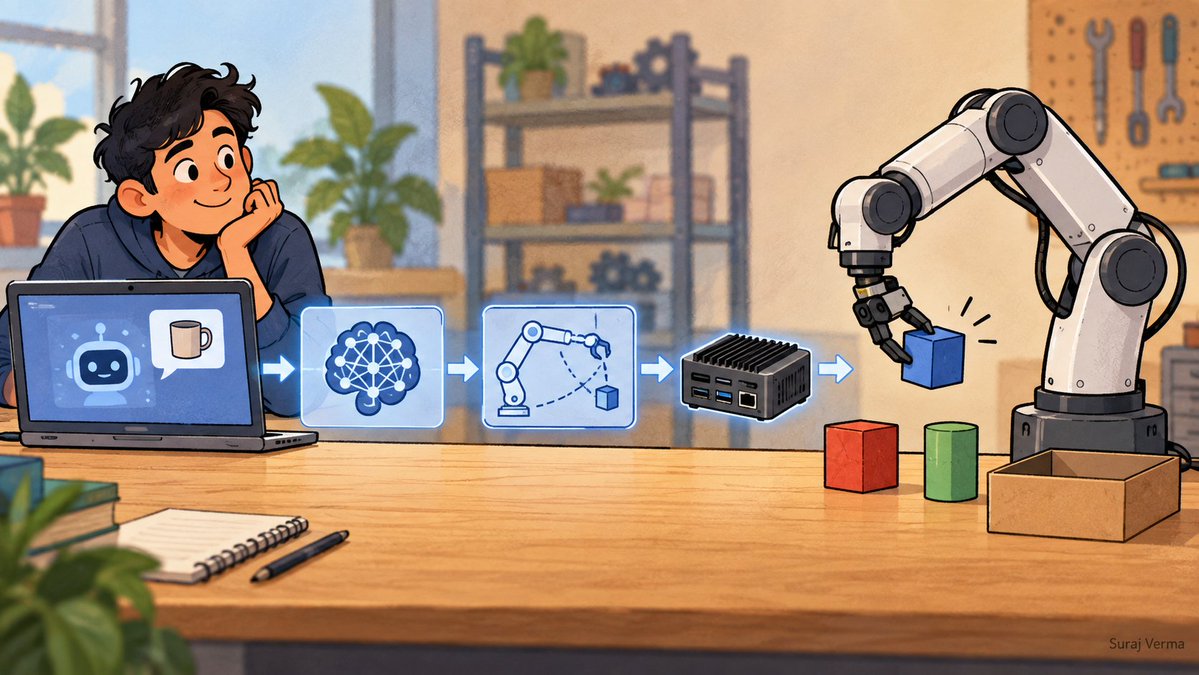
Qualcomm is buying PickNik, the company behind one of the important open-source building blocks in robotics: MoveIt.
MoveIt handles things like motion planning and manipulation. Basically, an AI model might understand "pick up that blue box", but something still has to figure out how the robot arm should actually move to do it.
Qualcomm says MoveIt will remain open source and will integrate more directly with its Dragonwing robotics platforms.
I like that combination if the openness actually stays intact.
AI can decide what a robot should do. Software like MoveIt is part of the much less glamorous job of turning that decision into physical movement.
#OpenSource #Robotics
AI model competition is becoming a price war too.
OpenAI's new GPT-6 Sol costs $2/$10 per million input/output tokens. Luna is down to $0.10/$0.50.
And for agents, reused cached context gets a 90% discount.
That last bit matters more than it sounds. A coding agent may repeatedly carry thousands of lines of instructions, code and history. If most of that can stay cached, longer-running agents become much cheaper to operate.
We're getting to the point where cost per useful task is a better number to watch than cost per token.
@sriysnav Exactly. Cheap tokens don't help much if the agent keeps retrying or needs human babysitting. I'd love to see cost per successful task become a standard metric alongside benchmark scores.
AI model launches are getting more interesting when they compete on cost per completed task, not just benchmark scores.
Claude Opus 5.5 is 20% cheaper per input/output token than Opus 5, cache reads are 60% cheaper, and Anthropic says fewer tokens are needed to complete typical work.
Net result: roughly 40% lower cost for typical Opus workloads.
For long-running coding and AI agents making call after call, that may matter more than another few benchmark points.
https://t.co/ueEqK95mxl
This is where the economics of local AI get interesting.
It doesn't make inference free. You replace the per-token bill with upfront hardware + electricity.
For occasional AI use, cloud probably still makes more sense. But if coding agents are running all day, every day, the break-even calculation starts looking very different.
I'd love to see Apple publish that comparison.
This is exactly the bar local AI eventually needs to hit.
But I think there are really two problems: making the software one-click easy, and making useful models run well on ordinary old hardware.
The first one is getting solved surprisingly fast. The second still needs a lot of work.
When someone doesn't need to know what VRAM, quantization or llama.cpp means, local AI will have actually become mainstream.
The next Android flagship in your pocket is starting to look like a tiny AI computer.
Qualcomm's new Snapdragon 8 Elite Gen 6 and Elite Extreme Gen 6 are its first 2nm flagship phone platforms.
Both reach 5GHz.
The Extreme version goes further with dedicated AI matrix cores inside the GPU, a 35% faster NPU and 50% more shared memory.
So instead of every difficult AI task being sent to a data center, increasingly capable models can run directly on the phone.
That's good for speed. Potentially good for privacy. And very useful when the internet isn't available.
But hardware capability and useful products are different things.
We've had "AI phones" for a few generations now.
I want to see what Xiaomi, OnePlus, Oppo, Vivo, Motorola and others actually build with this extra local compute.
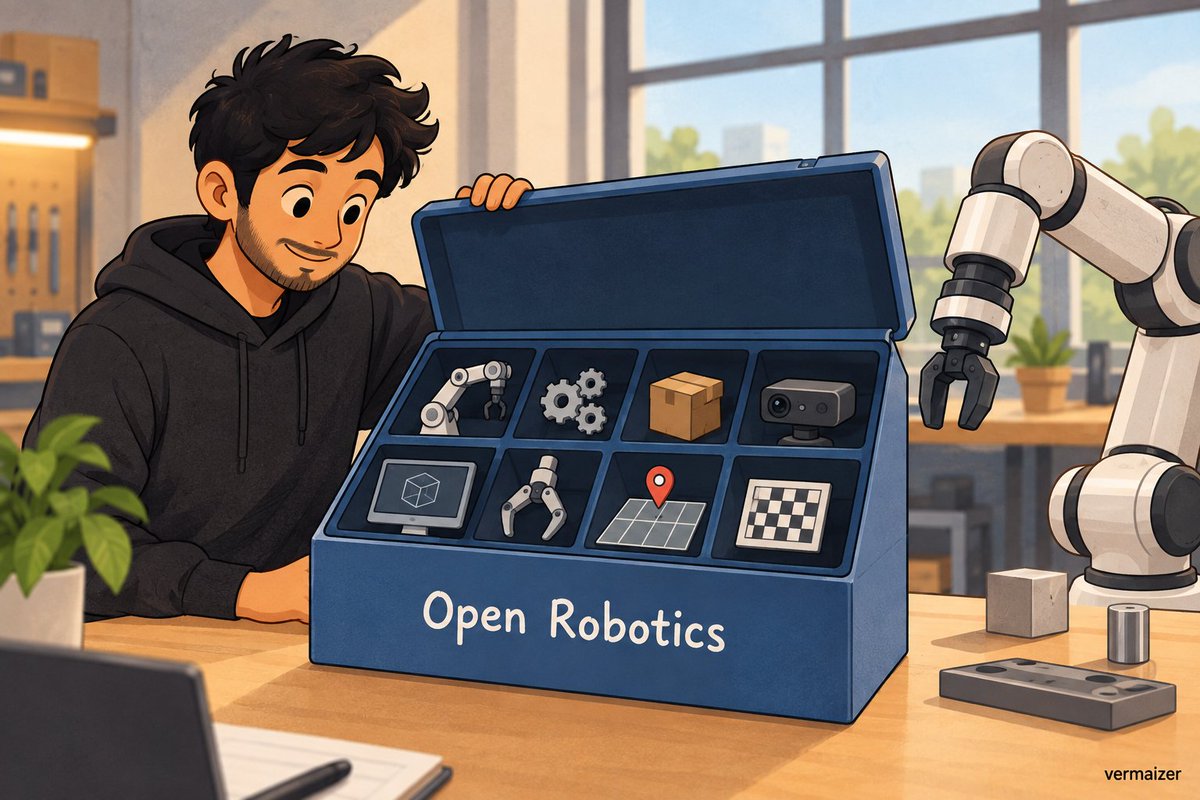
Google's robotics company Intrinsic has open-sourced some of the less glamorous parts of building a robot.
And I think that's actually what makes this interesting.
Intrinsic Core includes things like real-time robot control, motion planning, grasp planning, simulation, pose estimation and camera calibration.
Basically, a lot of the plumbing you need between "I have an AI model" and "I can make this physical robot reliably do something."
It's ROS-compatible, runs locally and is being released under the permissive Apache 2.0 license.
AI has made it much easier to experiment with what robots should understand and do. But somebody still has to solve how software talks to different robot arms, cameras and controllers safely and consistently.
Making more of that common infrastructure open could mean developers spend less time rebuilding the same plumbing and more time experimenting with what the robot can actually do.
That's probably a healthier way for robotics to grow.
The implementation details will matter a lot here.
OpenAI has said frontier rules shouldn't become open-weight rules by another name, or put the same burden on startups and small developers as frontier labs.
So the important part will be concrete capability/risk thresholds + independent verification.
Otherwise standards intended to prevent concentration can accidentally become another moat for the companies already large enough to comply.
Useful distinction. One nuance though: MCP isn't only about live tools/connections. It can expose resources and prompts too.
The mental model I find cleaner is:
Skills package reusable know-how and procedure.
MCP standardizes how an agent gets capabilities/context from another system.
That boundary also makes it easier to decide what should stay portable vs tied to an external service.
Very impressive result, but I think "open source" needs an asterisk here.
Qwen-Image-2.1 has downloadable weights, but its new license limits them to non-commercial research/evaluation unless you get a separate commercial license.
So this is a strong open-weight model, but developers shouldn't assume the same freedom they had with the Apache-licensed earlier Qwen-Image releases.
AI agents buying things for us sounds convenient until something goes wrong.
Six major banks including Bank of America, ING and NatWest are now warning about exactly this.
An agent might enter your card details directly on a website, choose a payment method with weaker protection, buy the wrong thing or simply spend more than you intended.
Then comes the awkward question: who do you call?
The banks want transactions to disclose when an AI agent is involved, clearer explanations of how the agent made its decision, better data safeguards and interoperability between different agent systems. Reuters
I think this is where agentic commerce becomes real. Making an AI capable of clicking "Buy" is relatively easy. Preserving the protections we've spent years building around payments is much harder.
Alibaba has unveiled its Zhenwu V900 AI chip, which it says is 3x faster than its previous generation. It also plans Qwen models with 5-10 trillion parameters and wants Alibaba Cloud to cross 20GW of data-centre capacity by 2032.
Those numbers are huge, but I find the combination more interesting.
Alibaba is trying to own almost the complete AI stack: models, chips, clusters and cloud infrastructure.
We normally talk about AI companies in terms of who has the best model. Increasingly, the ability to build and run those models without depending too heavily on someone else's chips or cloud may matter just as much.
CMF is becoming an Indian company.
Nothing is spinning the brand out into a standalone company headquartered in India, with majority Indian ownership and its own team and R&D here. Nothing will remain a shareholder and partner.
I think the R&D part matters more than where the phones are assembled.
A phone can be manufactured in India while most of the difficult product decisions still happen somewhere else.
Carl Pei says CMF wants to do things like industrial design, thermal engineering, camera tuning, OS development, antenna work and component co-engineering in India.
That's a much harder step than assembling phones.
And probably a more important one if India eventually wants consumer-tech companies that compete globally rather than mainly manufacture products designed elsewhere.
The ambition is huge: Pei talks about eventually reaching 100 million phones a year.
That's nowhere close to guaranteed.
But I'll be more interested in what CMF actually engineers in India than how many "Made in India" labels it puts on boxes.
किसी भी बच्चे की मौत से ज्यादा दुखद क्या हो सकता है लेकिन बच्चा जाकर सुसाइड ना कर ले इसकी आशंका या डर के चक्कर में प्रोफेसर को चीटिंग करते बच्चे को रोकना नहीं चाहिए?
क्या और कैसा सिस्टम बनाना चाह रहे हैं हम?
प्रोफेसर दुल्ला को कई बार उनकी टीचिंग के लिए ही अवॉर्ड मिल चुका है.. इसलिए बिना जांच पूरी हुए ये मान लेना कि अचानक रातों रात वो जातिवादी हो गए होंगे और जातिसूचक गालियां देने लगे होंगे, यकीन से परे लगता है..
SC/ST एक्ट का इस्तेमाल जिस तरह से हो रहा है वो इस देश के लिए महाघातक साबित होता जा रहा है। ऐसे डर के माहौल में टीचर/प्रोफेसर क्या ही पढ़ाएंगें बच्चों को..
IITs में बच्चे आत्महत्या क्यों कर रहे हैं इसको जरुर देखिए लेकिन उसके साथ ये भी देखिए कि SC/ST एक्ट पर चर्चा क्यों ना हो?
Googlebook is now official, starting at $899.
It is built on Android technology with ChromeOS desktop foundations, but this isn't simply Android stretched onto a bigger screen.
You get Android phone integration, Gemini built into the desktop, a full Linux terminal, and support for tools like Claude Code and Google's Antigravity. Google is also promising up to 10 years of updates.
I like this direction. Phones and laptops have shared apps for years, but they still behave like separate computers most of the time.
Unfortunately, India isn't among the first launch markets.
https://t.co/pEvu4YTr30
NVIDIA has released AIPerf, a new tool for testing how fast an AI model actually runs under load.
That sounds very developer-specific, but there is a useful idea here.
If your benchmarking tool cannot send requests fast enough, you may end up measuring the tool instead of the AI server.
AIPerf uses multiple worker processes and can simulate more realistic traffic, including bursts and different request patterns. It measures things like time to first token, latency between tokens and throughput, with percentile breakdowns instead of just one average number.
It replaces NVIDIA's older GenAI-Perf tool.
As more people self-host models or run their own inference servers, "which model is fastest?" becomes a much more complicated question than one benchmark score.
https://t.co/qwpmn1E0Zt
The valuable part here isn't installing 68 agents and hundreds of skills in one shot.
It's getting to inspect a workflow that has actually been used in production.
I'd steal the patterns first, then add only the agents/skills that solve problems I repeatedly have. Otherwise we're just replacing prompt complexity with configuration complexity 😄
The 7B size is great, but the license is probably the more important change for developers.
The weights are open, but Qwen-Image-2.1 is under a research license that limits use to non-commercial research/evaluation unless you get a separate commercial license.
That's quite different from the Apache 2.0 licensing of earlier Qwen-Image models.
Open weights, yes. "Open source" needs a pretty big asterisk here.