Thomas Sowell: "Here is a man [Obama] talking about five different industries and none of which he has the slightest experience.
But because he has these degrees from the places you mentioned, and people have told him how clever he is, he now thinks he can do this.
Intellectuals of the green/environmental movement see themselves as the wise and noble, forcing the rest of us poor dummies to do what's right.
They are driven to power due to their ego, pride, and vanity."
(This was pre-Solyndra.)
Thomas Sowell: “It is hard to imagine a more stupid or more dangerous way of making decisions than by putting those decisions in the hands of people who pay no price for being wrong.”
In 1992, a 32-year-old historian became Prime Minister of Estonia.
He had read exactly one book on economics: Milton Friedman's Free to Choose.
He used it as a policy manual. Western advisors and Estonian economists told him it would fail. 🧵
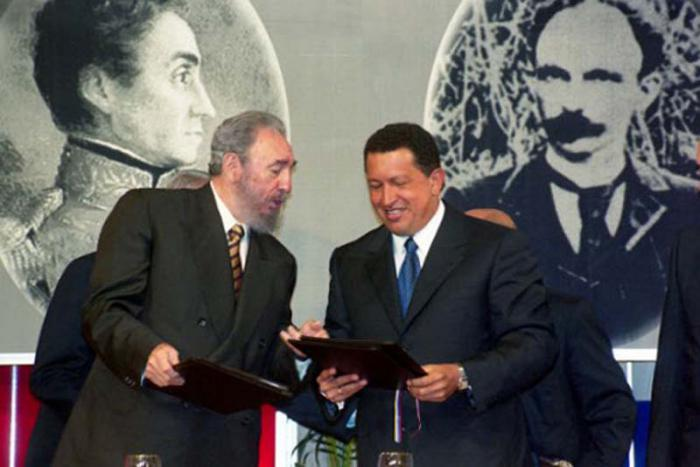
Venezuela suministró a Cuba entre 90 mil y 115 mil barriles diarios de petróleo crudo y derivados a precios fuertemente preferenciales bajo el Acuerdo de Cooperación Integral firmado por los esperpentos de Hugo Chávez y Fidel Castro en octubre de 2000.
Gran parte de estos envíos se financiaron a tasas irrisorias (1-2 % de interés y plazos de 15-25 años), con amplias condonaciones de deuda y pagos en especie mediante «servicios» cubanos (médicos, asesores y personal de inteligencia), cuyo valor real era muy inferior al del petróleo entregado.
El subsidio anual rondó los 2000-4000 millones de dólares en los años pico (dependiendo del precio internacional del barril), incluyendo no pagos, reexportaciones de productos refinados y sobrevaloración de los servicios cubanos. Las estimaciones históricas más documentadas sitúan el total transferido entre 40 mil y 63 800 millones de dólares (en dólares nominales y ajustados), según informes como el del Miranda Center for Democracy. Cuba pagó poco o nada en efectivo; parte importante del petróleo se reexportaba generando divisas frescas para el régimen castrista.
Este flujo descomunal de recursos venezolanos prolongó artificialmente la supervivencia del régimen cubano sin obligarlo a ninguna reforma estructural profunda, mientras Venezuela dilapidaba una renta petrolera histórica que pudo haber servido para diversificar su economía, reducir la pobreza o invertir en infraestructura productiva. En cambio, financió la exportación de un modelo represivo y fallido, consolidando la simbiosis entre castrismo y chavismo a costa del sufrimiento del pueblo venezolano.
Y ni te preguntes dónde estaban la izquierda internacional, las flotillas solidarias y los preocupados por el petróleo que ahora acusan a los Estados Unidos de querer robarse algo que ya tiene ladrones expertos desde hace décadas.
For 37 years, over 2,000 images taken by a Chinese state media photographer were hidden in a metal box, surviving brutal purges—until now.
These raw, powerful photos show the courage of the students, the scale of the protests, and the horror of what the Chinese Communist Party did.
Now, The @EpochTimes is making the photos public for the first time. [1/2]
The Bolivian Revolution of 1952 handed us a perfect laboratory for socialism's destructive power. The Movimiento Nacionalista Revolucionario seized the tin mines that generated 80% of Bolivia's export revenue and systematically destroyd them over twelve years.
Before nationalization, private mining companies like Patiño Mines employed 60,000 workers and produced 35,000 tons of tin annually. The MNR promised worker control and economic justice. Production collapsed to 16,000 tons by 1964 while employment bloated to 75,000. This is the predictable disaster that free market economists would have warned about.
The newly created COMIBOL (Bolivian Mining Corporation) eliminated profit incentives overnight. Mine managers became political appointees who knew nothing about extraction. Workers received guaranteed wages regardless of output, so productivity plummeted 40% within three years. The state couldn't fire anyone (votes matter more than efficiency), so they kept hiring. Mines that once generated foreign currency became permanent fiscal drains requiring subsidies that consumed 30% of government revenue.
You can observe the exact mechanism of destruction: remove private property rights, eliminate price signals, replace entrepreneurial decision-making with bureaucratic committees. The tin was still in the ground. The workers still had hands. But without market incentives coordinating production, the entire system collapsed into organized chaos.
By 1964, Bolivia went from South America's largest tin producer to an international beggar importing food while sitting on mineral wealth. The MNR redistributed poverty with revolutionary efficiency.
Argentina tiene una paradoja brutal: posee comida, energía, minerales, talento, cultura empresarial, universidades, creatividad y una diáspora que triunfa en todas partes. No le faltan recursos. Lo que le ha faltado durante décadas es una señal creíble de que producir, invertir y arriesgar no será castigado por el siguiente gobierno.
Por eso el fenómeno Milei no debe medirse solo por simpatía ideológica. Lo importante es el cambio de mensaje que Argentina le envía al mundo: el Estado no puede seguir siendo el socio que no pone capital, no trabaja, no innova, pero se queda con la mayor parte del resultado y encima cambia las reglas cuando algo sale bien.
El capital no se enamora de los países. El capital calcula. Mira si una norma sobrevive a una elección, si un juez respeta un contrato, si un funcionario puede bloquear un proyecto, si la inflación destruye el plan de negocios y si el empresario será tratado como creador de riqueza o como sospechoso permanente.
Argentina no necesita que el mundo le tenga lástima. Necesita que el mundo vuelva a creer que es posible planificar a diez años allí. Esa es la batalla central: pasar de ser un país de oportunidades obvias pero reglas imposibles a ser un país donde el talento pueda quedarse, el ahorro pueda invertirse y el éxito no pida perdón.
Si Argentina consigue sostener esa credibilidad, no estará “volviendo” a ningún pasado idealizado. Estará haciendo algo mucho más difícil: construyendo por primera vez en mucho tiempo un futuro donde sus ventajas naturales y humanas no sean anuladas por su propia política.
One of the worst Scott Pelley segments was when he featured Paul Ehrlich to warn that the planet was heading for extinction. This was in *2023.* Journalist Pelley never mentioned that Ehrlich had gone 0-for-30 in world-is-ending prediction racket over the previous 50 years.
🧵New Orleans just proved failing schools can be fixed at scale.
It became America’s first all-charter school district.
The results are staggering:
• 99th percentile nationally in reading growth
• 98th percentile in math growth
• The only state in America beating pre-pandemic levels in both subjects
This is what real reform looks like. THREAD 🧵
The right-wing, anti-left, pro-US takeover of Latin America is growing:
2023:
🇦🇷 Argentina: Javier Milei
🇵🇾 Paraguay: Santiago Peña
2024:
🇸🇻 El Salvador: Nayib Bukele
🇵🇦 Panama: José Mulino
2025:
🇪🇨 Ecuador: Daniel Noboa
🇧🇴 Bolivia: Rodrigo Paz
🇨🇱 Chile: José Kast
2026:
🇭🇳 Honduras: Nasry Asfura
🇨🇷 Costa Rica: Laura Fernández
🇨🇴 Colombia: Abelardo Espriella
(🇻🇪 Venezuela: Maduro captured)
"Two ideas that had developed in isolation came into contact. The flint knapper learned what the spear maker had figured out. The fisherman from the coast learned what the hunter from the forest had figured out. The two pieces of knowledge fused into something neither side could have produced alone. Ridley calls this ideas having sex. The phrase sounds frivolous and it is meant to. The point is that ideas, like genes, get better when they combine with other ideas from different lineages."
A British biologist looked at 200,000 years of human history and found that the entire reason humans broke out of poverty was not intelligence, not language, not even agriculture, but one mechanism so simple a 6-year-old could explain it.
His name is Matt Ridley.
He is a zoologist by training, an evolutionary biologist by career, and in 2010 he wrote a book called The Rational Optimist that quietly argued the most important fact about human progress had been hiding in plain sight for the entire history of economics.
Naval Ravikant has been telling people to read everything Ridley has ever written for the last 15 years. The reason is the argument inside this one book.
For 200,000 years, anatomically modern humans walked around with the same brain you have right now. Same skull size. Same neural architecture. Same raw capacity for language, planning, and abstract thought.
For roughly 190,000 of those years, almost nothing happened. Generation after generation lived and died inside the same Stone Age toolkit their great-great-grandparents had used. Then somewhere around 50,000 years ago, the line on the chart of human progress started to tick upward. Then it bent. Then it exploded.
The question Ridley spent years on was the only question that mattered. What changed.
It was not the brain. The brain had been the same for 190,000 years. It was not language, which had existed long before the takeoff. It was not even agriculture, which arrived only 10,000 years ago and was actually preceded by the upward bend, not the cause of it.
What changed was that humans started trading with strangers.
This sounds too small to be the answer. Ridley argues that it is the answer to almost everything. The moment one human exchanged a useful object with another human from a different group, something happened that no other species on earth had ever done.
Two ideas that had developed in isolation came into contact. The flint knapper learned what the spear maker had figured out. The fisherman from the coast learned what the hunter from the forest had figured out. The two pieces of knowledge fused into something neither side could have produced alone.
Ridley calls this ideas having sex. The phrase sounds frivolous and it is meant to. The point is that ideas, like genes, get better when they combine with other ideas from different lineages.
An idea sitting inside one head, no matter how brilliant the head, eventually hits a ceiling. The same idea exposed to ten thousand other ideas does something genes do under sexual reproduction. It mixes. It recombines. It produces offspring nobody planned.
The cleanest proof of this argument is the most uncomfortable case study in the book. Tasmania.
Around 10,000 years ago, rising sea levels cut Tasmania off from mainland Australia. A population of roughly 4,000 humans was now isolated on an island, with no possibility of contact with the rest of humanity. They had the same brains. The same language. The same starting toolkit as their cousins 150 kilometers north. The natural experiment was now running.
What happened next is something no economist or geneticist had ever predicted.
The mainland Australians kept inventing. Boomerangs. Spear-throwers. Fishing nets. Bone needles for sewing fitted clothes. Watercraft with paddles. Their technology compounded slowly across the centuries.
The Tasmanians went the other way. They did not just fail to invent the new tools their cousins were developing. They started losing the tools they already had. Fishing was abandoned within a few thousand years. Bone tools disappeared. Fitted clothing disappeared. They forgot how to make fire from scratch and started carrying lit firebrands from camp to camp instead, relighting their fires from a neighbor's whenever their own went out.
By the time European explorers arrived in the 17th century, the Tasmanians had the simplest toolkit of any human society ever recorded. Their material culture had gone backward for 8,000 years.
The archaeologist Rhys Jones called it a slow strangulation of the mind.
Joseph Henrich at Harvard later proved with formal mathematical models that there was nothing wrong with Tasmanian brains. There was something wrong with their network. A toolkit requires a critical mass of people exchanging skills to maintain itself.
The act of teaching a skill is imperfect. Every generation loses a small percentage of what the last generation knew. If your population is large enough and trading widely enough, those losses get caught and corrected by someone else who still remembers.
If your population shrinks below a certain threshold and stops mixing with outsiders, the small losses compound until entire technologies disappear.
This is the part that should haunt anyone reading this in 2026.
Intelligence is not a property of the individual brain. Intelligence is a property of the network the brain is connected to. A genius in isolation will produce less than a mediocre thinker inside a dense exchange of other mediocre thinkers.
The thing your ancestors needed in order to break out of 190,000 years of stagnation was not better brains. It was better connections between brains they already had.
The implication for any individual is direct and uncomfortable. If you are smart and isolated, you will be outproduced by people half as smart who are connected.
The most successful people in any field are almost never the smartest people in it. They are the ones positioned at the intersection of the most idea flows. They are reading more authors than their competitors. They are talking to more people from more disciplines. They are in the rooms where ideas from different lineages bump into each other.
Ridley ends the book on the line that sounds optimistic but is actually a warning its this "The future will be invented by people who connect ideas, not by people who guard them."
A British biologist looked at 200,000 years of human history and found that the entire reason humans broke out of poverty was not intelligence, not language, not even agriculture, but one mechanism so simple a 6-year-old could explain it.
His name is Matt Ridley.
He is a zoologist by training, an evolutionary biologist by career, and in 2010 he wrote a book called The Rational Optimist that quietly argued the most important fact about human progress had been hiding in plain sight for the entire history of economics.
Naval Ravikant has been telling people to read everything Ridley has ever written for the last 15 years. The reason is the argument inside this one book.
For 200,000 years, anatomically modern humans walked around with the same brain you have right now. Same skull size. Same neural architecture. Same raw capacity for language, planning, and abstract thought.
For roughly 190,000 of those years, almost nothing happened. Generation after generation lived and died inside the same Stone Age toolkit their great-great-grandparents had used. Then somewhere around 50,000 years ago, the line on the chart of human progress started to tick upward. Then it bent. Then it exploded.
The question Ridley spent years on was the only question that mattered. What changed.
It was not the brain. The brain had been the same for 190,000 years. It was not language, which had existed long before the takeoff. It was not even agriculture, which arrived only 10,000 years ago and was actually preceded by the upward bend, not the cause of it.
What changed was that humans started trading with strangers.
This sounds too small to be the answer. Ridley argues that it is the answer to almost everything. The moment one human exchanged a useful object with another human from a different group, something happened that no other species on earth had ever done.
Two ideas that had developed in isolation came into contact. The flint knapper learned what the spear maker had figured out. The fisherman from the coast learned what the hunter from the forest had figured out. The two pieces of knowledge fused into something neither side could have produced alone.
Ridley calls this ideas having sex. The phrase sounds frivolous and it is meant to. The point is that ideas, like genes, get better when they combine with other ideas from different lineages.
An idea sitting inside one head, no matter how brilliant the head, eventually hits a ceiling. The same idea exposed to ten thousand other ideas does something genes do under sexual reproduction. It mixes. It recombines. It produces offspring nobody planned.
The cleanest proof of this argument is the most uncomfortable case study in the book. Tasmania.
Around 10,000 years ago, rising sea levels cut Tasmania off from mainland Australia. A population of roughly 4,000 humans was now isolated on an island, with no possibility of contact with the rest of humanity. They had the same brains. The same language. The same starting toolkit as their cousins 150 kilometers north. The natural experiment was now running.
What happened next is something no economist or geneticist had ever predicted.
The mainland Australians kept inventing. Boomerangs. Spear-throwers. Fishing nets. Bone needles for sewing fitted clothes. Watercraft with paddles. Their technology compounded slowly across the centuries.
The Tasmanians went the other way. They did not just fail to invent the new tools their cousins were developing. They started losing the tools they already had. Fishing was abandoned within a few thousand years. Bone tools disappeared. Fitted clothing disappeared. They forgot how to make fire from scratch and started carrying lit firebrands from camp to camp instead, relighting their fires from a neighbor's whenever their own went out.
By the time European explorers arrived in the 17th century, the Tasmanians had the simplest toolkit of any human society ever recorded. Their material culture had gone backward for 8,000 years.
The archaeologist Rhys Jones called it a slow strangulation of the mind.
Joseph Henrich at Harvard later proved with formal mathematical models that there was nothing wrong with Tasmanian brains. There was something wrong with their network. A toolkit requires a critical mass of people exchanging skills to maintain itself.
The act of teaching a skill is imperfect. Every generation loses a small percentage of what the last generation knew. If your population is large enough and trading widely enough, those losses get caught and corrected by someone else who still remembers.
If your population shrinks below a certain threshold and stops mixing with outsiders, the small losses compound until entire technologies disappear.
This is the part that should haunt anyone reading this in 2026.
Intelligence is not a property of the individual brain. Intelligence is a property of the network the brain is connected to. A genius in isolation will produce less than a mediocre thinker inside a dense exchange of other mediocre thinkers.
The thing your ancestors needed in order to break out of 190,000 years of stagnation was not better brains. It was better connections between brains they already had.
The implication for any individual is direct and uncomfortable. If you are smart and isolated, you will be outproduced by people half as smart who are connected.
The most successful people in any field are almost never the smartest people in it. They are the ones positioned at the intersection of the most idea flows. They are reading more authors than their competitors. They are talking to more people from more disciplines. They are in the rooms where ideas from different lineages bump into each other.
Ridley ends the book on the line that sounds optimistic but is actually a warning its this "The future will be invented by people who connect ideas, not by people who guard them."
Ça fait un moment que je me pose des questions sur le bilan (provisoire) de Milei en Argentine. On lit tout et son contraire. Alors j'ai arrêté de lire les commentaires et j'ai regardé les chiffres bruts.
L'Argentine, c'est l'expérience grandeur nature que les économistes attendaient depuis 50 ans. Même pays. Même peuple. Même culture. On change UNE variable : la méthode économique.
Avant : des décennies de gestion étatiste et péroniste, "redistributive". Le résultat concret ? 211% d'inflation, 42% de pauvreté, un État en déficit permanent qui finance son train de vie en faisant tourner la planche à billets.
Puis arrive Milei. Méthode inverse, brutale, assumée : on coupe, on déréglemente, on arrête d'imprimer.
Deux ans plus tard (photo à son arrivée (fin 2023) vs aujourd'hui) :
Inflation annuelle : 211% → 31%
Inflation mensuelle : 25% → ~2%
Déficit public : −5% du PIB → +1,8% (excédent)
Croissance : −1,6% → +4,4%
Pauvreté : 42% → 28%
Sans débat. Jugez par vous-mêmes.
Et le point essentiel : ces gains ne vont pas "aux riches" ou "aux marchés". Ils vont d'abord aux plus pauvres.
L'inflation est l'impôt le plus injuste qui existe — elle frappe ceux qui n'ont aucun actif pour se protéger. La diviser par 7, c'est rendre du pouvoir d'achat à ceux d'en bas. Et 14 points de pauvreté en moins, ce sont des millions de gens, pas une ligne Excel.
Pendant un siècle, on a expliqué aux Argentins que l'État les protégerait en dépensant toujours plus. Résultat : un des pays les plus riches du monde en 1910, ruiné. On vient d'inverser la méthode. Regardez le résultat.
À un moment, il faut accepter ce que les faits racontent : sur le terrain économique, la méthode libérale a livré en deux ans ce que des décennies de socialisme avaient promis sans jamais tenir. Et ça profite d'abord aux plus modestes.
On peut détester le style de Milei — la tronçonneuse, l'outrance, les sorties improbables, il n'a rien d'un homme d'État classique. Mais on ne juge pas une politique économique au style de celui qui la mène. On la juge à ce qu'elle fait à la vie des gens.
Et les chiffres ont parlé.
A liberal reporter felt sorry for the prisoners in Bukele’s super prison CECOT in El Salvador so they made him watch a video of what the prisoners dis to end up there.
He quickly changed his mind…


![JanJekielek's tweet photo. For 37 years, over 2,000 images taken by a Chinese state media photographer were hidden in a metal box, surviving brutal purges—until now.
These raw, powerful photos show the courage of the students, the scale of the protests, and the horror of what the Chinese Communist Party did.
Now, The @EpochTimes is making the photos public for the first time. [1/2]](https://pbs.twimg.com/media/HJ91wfIX0AA7ZsO.jpg)
![JanJekielek's tweet photo. For 37 years, over 2,000 images taken by a Chinese state media photographer were hidden in a metal box, surviving brutal purges—until now.
These raw, powerful photos show the courage of the students, the scale of the protests, and the horror of what the Chinese Communist Party did.
Now, The @EpochTimes is making the photos public for the first time. [1/2]](https://pbs.twimg.com/media/HJ91RzVWkAAypoW.jpg)




![JanJekielek's tweet photo. For 37 years, over 2,000 images taken by a Chinese state media photographer were hidden in a metal box, surviving brutal purges—until now.
These raw, powerful photos show the courage of the students, the scale of the protests, and the horror of what the Chinese Communist Party did.
Now, The @EpochTimes is making the photos public for the first time. [1/2]](https://pbs.twimg.com/media/HJ93AneWwAA6d7L.jpg)