9 Sept 1956: #Elvis Presley appears on The Ed Sullivan Show for the first time. Sullivan was not hosting, however. Instead Charles Laughton substituted as the host of the show. Sullivan was recovering from #auto accident. #History#TheEdSullivanShow#OTD#ad https://t.co/Wm8zLC2PEW
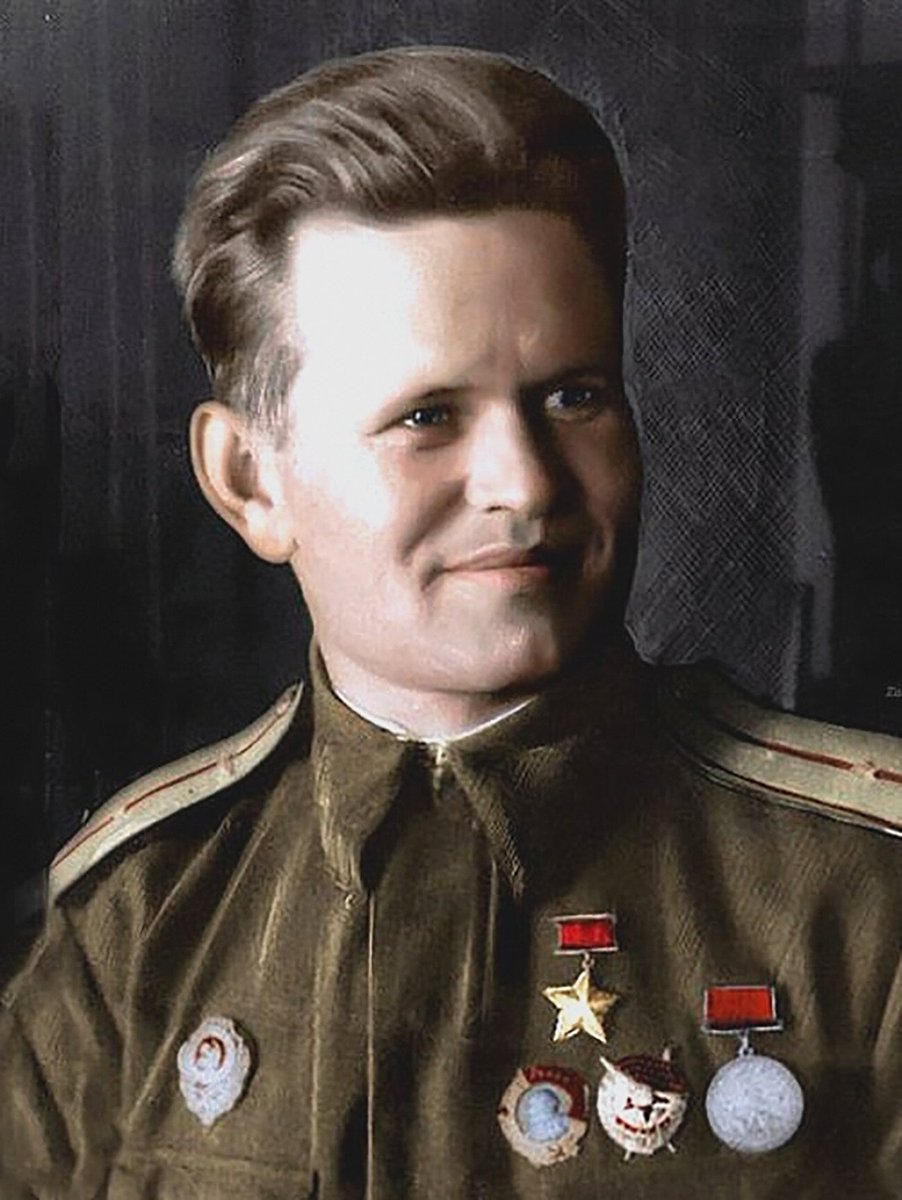
Vasily Zaitsev killed 225 enemy soldiers with a rifle in the ruins of Stalingrad in a little over a month, taught a whole generation of Soviet snipers his deadly craft, and became the most famous marksman of the war, though the legendary duel that made his name in the movies never actually happened. He was a shepherd from the Ural mountains who had learned to shoot hunting in the wilderness as a boy.
Zaitsev came to Stalingrad in the autumn of 1942, in the middle of that apocalyptic battle, and the shattered city turned out to be a sniper's hunting ground, a maze of rubble, ruined buildings, and craters where a patient man with a rifle and a scope could hide, wait, and kill. And Zaitsev was extraordinarily patient and extraordinarily good. Between early November and mid-December of 1942, in about five weeks, he killed 225 German and Axis soldiers, including eleven enemy snipers sent specifically to hunt him.
He became more than a killer; he became a teacher and a symbol. The Soviets set up a sniper school in the ruins, and Zaitsev trained a cadre of new snipers in his own methods, teaching them to lie motionless for hours, to read the way the enemy moved, to master the terrible discipline of the sniper's patience. His pupils fanned out and multiplied his effect many times over, and the sniper became one of the defining terrors of Stalingrad, where death could come silently from any window or pile of rubble.
His fame was enormous, and it was seized on by Soviet propaganda, which turned him into a legend. The most famous story about him, the extended duel against a German master sniper sent to kill him, immortalized in the film Enemy at the Gates, is largely fiction; there is no real record of the German super-sniper he supposedly dueled. But the real Zaitsev needed no embellishment. The shepherd boy who killed 225 men in the ruins and taught others to do the same was legend enough.
He was made a Hero of the Soviet Union, survived the war despite being wounded and temporarily blinded, and lived on until 1991, dying just days before the Soviet Union he had fought for ceased to exist. Years later his remains were reburied with full honors on the great memorial hill at Stalingrad, among the men he had fought beside in the rubble.
British Mark V "Hermaphrodite" tank supplied to the anti-Bolshevik Armed Forces of South Russia during the Russian Civil War in 1919 repurposed as an agricultural tractor in the interwar period
9 September 1942
The sounds from the city today were different from yesterday — more continuous, I think, though it is hard to be certain from this distance. Volkov said he heard that the Germans have taken the railway station in the city centre, or are fighting for it, or have been pushed out of it — the rumours change every few hours and none of them come with sources worth trusting.
What seems clear is that the situation across the river is desperate in a way that even the generals cannot dress up as anything else, and that the 13th Guards is here because the line must hold at all costs.
I think about Doronin again. He would have said something dry and accurate about all of this, something that made you laugh despite the dread.