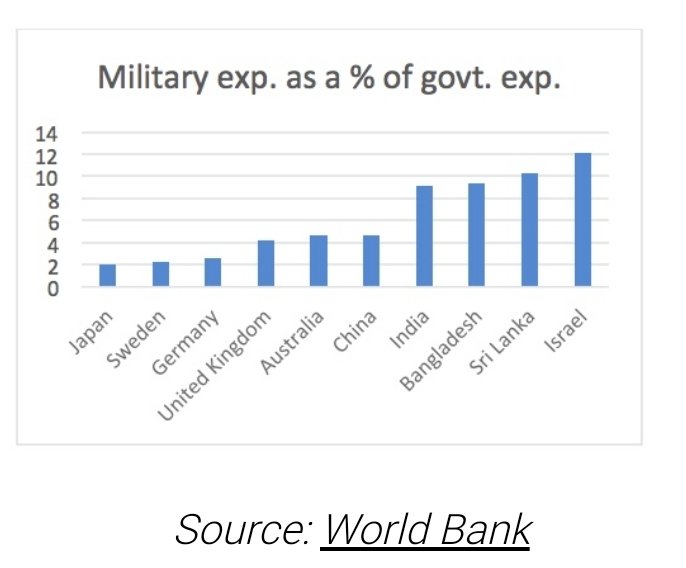
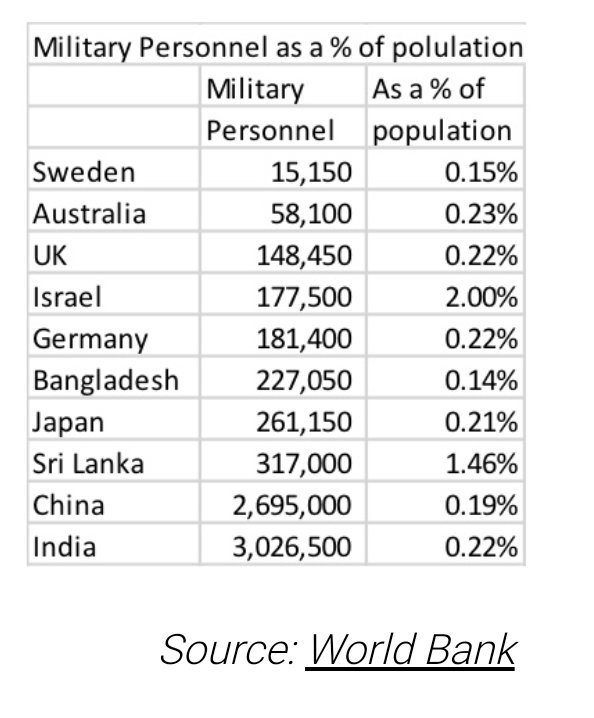
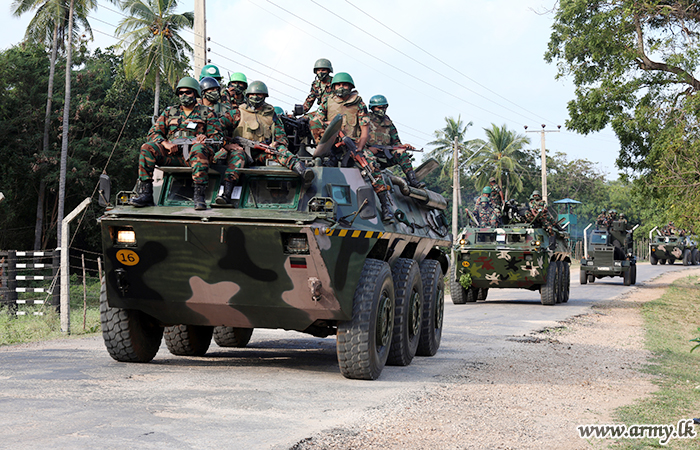
The size of #SriLanka's predominantly Sinhalese army is double the UK's. With 80% of that military deployed in traditional #Tamil homelands in the North-East of Sri Lanka. This region is one of the most militarised regions of the world. Some places more militarized than Kashmir.
Sri Lanka's expands military allocation to 12.3% of state budget
The budget announcement comes as Sri Lanka continues to struggle with an ongoing food crisis.
https://t.co/CySMACo7xd
🚨 ‘Jail for a song?’ Protest grows over Tamil rapper's PTA detention
Calls for the release of Tamil rapper HipHop Sangee continued to grow this week, with Tamil civil society organisations planning a protest in Kilinochchi and parliamentarians from both Tamil and Sinhala parties raising concerns over his detention under Sri Lanka's Prevention of Terrorism Act (PTA).
The artist, whose real name is Sangeethsan Ganeskumar, was arrested and remanded after Sri Lankan authorities alleged that videos he shared on social media contained material supportive of the Liberation Tigers of Tamil Eelam (LTTE).
As criticism of the arrest mounted, Jaffna and Kilinochchi District ITAK parliamentarian S. Shritharan shared a call for a public demonstration demanding the artist's release.
The protest, organised by the Kilinochchi District Union of Civil Organisations, is scheduled to take place on 6 June in front of the Old Kachcheri on the A9 Road in Kilinochchi.
Incredibly moving to be in Mullaitivu on the 17th anniversary of the end of the civil war between Sri Lankan forces and the LTTE. Tens of thousands of people were killed in the final months of the war. 17 years on, there has been no accountability for the war crimes committed.
#STATEMENT: Remembering the Tamil Genocide, and Reaffirming the Vaddukoddai Resolution 50 years on
Washington, D.C.; May 18, 2026 – On the 17th anniversary of the Mullivaikkal Genocide, commemorated globally as Tamil Genocide Remembrance Day, PEARL stands with the victims and survivors of the Sri Lankan government’s genocide against the Eelam Tamil people. This month also marks the 50th anniversary of the Vaddukoddai Resolution, a 1976 declaration spearheaded by Tamil political leaders, elected by Eelam Tamils, to assert the Eelam Tamil people’s right to self-determination and calling for the independent state of Tamil Eelam. These anniversaries are reminders that the struggles for justice and self-determination remain unresolved and as critical as ever.
In 2009, the Sri Lankan government carried out a military campaign in the Vanni that amounted to genocide, marked by the deliberate denial of food and medicine, the corralling of Tamil civilians into so-called “No Fire Zones” that were subsequently bombed, and the systematic targeting of hospitals and humanitarian sites. Credible sources indicate that between 70,000 and 169,796 Tamils remain unaccounted for and are presumed dead (see our report Justice for Genocide: Sri Lanka’s Responsibility for Genocide against the Tamil People in 2009). Every year at memorial events, kanji, a thin watery rice porridge, is served to commemorate the scarcity of food during this time and the resilience of the Tamils in Mullivaikkal, who were forced to survive on this inadequate meal. Braving heavy intimidation, harassment, and surveillance by Sri Lankan security forces that persist to this day, it is through these traditions that the Eelam Tamil people remember the genocide and those taken by it.
Eelam Tamil resilience dates back well before the genocide in 2009, as they have long faced decades of violence and systemic discrimination. The Sri Lankan government’s broken political promises for equality and the denial of Tamil political agency ultimately led to the adoption of the Vaddukoddai Resolution in 1976, which became a historic assertion of the Eelam Tamil people’s right to self-determination. The Eelam Tamil nation became the primary bulwark against the rising Sinhala-Buddhist majoritarian state. On the 50th anniversary of the Vaddukoddai Resolution, we are reminded of this pivotal moment for Eelam Tamil nationhood. Based on the Vaddukoddai Resolution, generations of Tamils have worked to build and protect the Eelam Tamil nation and fought for international recognition of the Tamil Eelam state. Sri Lanka's denial of Eelam Tamil nationhood has fuelled decades of mass atrocities and culminated in the destruction of the de-facto state of Tamil Eelam. The Sinhala-Buddhist majoritarian government's intention was not only to destroy Tamil bodies, but to extinguish any thoughts of liberation and self-determination from the Tamil people’s minds. It is clear that 17 years after the Mullivaikkal Genocide, and 50 years after the Vaddukoddai Resolution, Sri Lanka’s plan has completely failed.
Today, Eelam Tamil resilience endures in the face of ongoing structural repression by the Sri Lankan government and the absence of accountability for mass atrocity crimes. Tamils continue to reject failed domestic mechanisms, such as the Office on Missing Persons, instead sustaining their own persistent demands for truth and justice for the genocide. This tenacity persists amid ongoing militarization of the North-East, the Sinhalization of Tamil lands and livelihoods, and surveillance and violence from security forces. The NPP government still promotes a narrative of reconciliation throughout all of this, while also sidelining Tamil demands and retaining the draconian Prevention of Terrorism Act, which continues to disproportionately target Tamils and Muslims. Sinhala-Buddhist majoritarianism is still the primary ideology and protects and upholds the unitary state structure on the island.
🎙️ ‘Resolutions are not enough’ - Human Rights Watch Asia director calls for justice at Mullivaikkal
Human Rights Watch’s Asia Director Elaine Pearson (@PearsonElaine) called for renewed international efforts towards accountability and justice, whilst attending Mullivaikkal remembrance events in the Tamil homeland on Sunday.
Speaking to the Tamil Guardian from Mullivaikkal during the 17th anniversary commemorations of the genocide, Pearson said it was important for international human rights organisations to stand alongside Tamil victims and survivors.
“It's really important for @hrw to be here on this day to stand with the Tamil victims of these abuses to commemorate this moment,” she said.
“Obviously this is a very important place where many thousands of people were killed in the final stages of the war and there hasn't been any accountability 17 years later.”
https://t.co/Y1T0a7lYYm
The most moderate form of Sinhala politics is unable to call for a secular state.
The most 'extreme' form of Tamil politics, in a climate of militarisation and genocide - still managed to call for a secular state.
https://t.co/xQ4nHdLsaS
Sri Lankan 'liberals/progressives' always expose their hypocrisy in ignoring the fundamental reason why Sri Lanka is a failed state.
PEARL has released a new report and accompanying case study examining the Sri Lankan state’s ongoing project of Sinhalization in the North-East, as well as a detailed focus on land dispossession and violence against Tamil dairy farmers in Mayilaththamadu–Madhavanai.
The report forms part of PEARL’s Sinhalization series and builds on its 2022 publication, State-Sponsored Sinhalization in the North-East. It documents how Sinhalization operates as a form of ethno-national conquest, historically intertwined with ethnic cleansing and used by successive governments to obstruct Tamil demands for autonomy and self-rule.
Contrary to official narratives that frame these practices as “development,” PEARL’s analysis demonstrates that Sinhalization functions as an anti-development project. It actively destroys existing economic systems, prevents the emergence of new ones, and entrenches poverty in Tamil-speaking regions. The report finds that state-led irrigation, settlement, and land redistribution schemes associated with Sinhalization have failed to generate economic returns, and wasted public resources. The accompanying case study on Mayilaththamadu–Madhavanai illustrates these dynamics on the ground.
PEARL urges the international community, including UN member states, to recognize Sinhalization as a systematic state policy, take urgent action to halt state-sponsored land grabs, advance meaningful international accountability mechanisms in the face of repeated domestic failures, and support Tamil calls for self-determination.
Read our report and case study here: https://t.co/u0eFGaFNLj
A US Air Force humanitarian flight landed at Jaffna International Airport today with vital relief collected through SLAF centers. These supplies will support communities hit by the recent disaster.
#JIAsrilanka#Jaffnaairport
@Rat_na12 Multhi-ethnic Ceylonese army - 70% of the civil service were also Tamil at one point - country was doing well - english was the main language of governance.. then what happened.. oh yes.. Sri Lanka
OK -your take was the take of all progressives including Tamil nationalists before the independence referendum/vote of 1976 - Even in 2025 - the North-East votes for a secular multi-ethnic federal vision of the island. In 2025 all the Tamil nationalist parties campaign on the same vision of a pluralist secular multi ethnic SriLanka with federal devolution of powers to North-East that recognises the Tamil, Muslim and Sinhala peoples all as peoples with the right to self-determination.
'Let's hope' North -East - West- South all work togethor etc - is pure blind privilege.
In Sri Lanka it's not about whether we have neoliberal govts or democratic socialist govts . First the fundamental nature of the state has to be changed. Let's frame the problem clearly - repeatedly the barrier has been- 'entrenched Sinhala Buddhist ethno-nationalism' regardless of the 'type' of government.
Everyone knows you have to do the ground work to reframe what the country definition of Sri Lanka- is to the Sinhala electorate - otherwise you are always one election cycle away from a sinhala buddhist populist uprising. But it's easy for Sinhala 'progressives' to ignore that fact and stick to blind hope and lipservice and platitudes.
Just look objectively -
Did the recent election campaigns in the South reach out to the Sinhala masses and use the economic crisis to prioritize selling the idea of a secular multi ethnic state that needs federal devolution of powers (like most other countries) for long term stability and prosperity? - No
Are 'progressive Sinhala' forces prioritising resources to do the grassroots Sinhala work to make the argument that Sri Lanka is not a 'Sinhala Buddhist country,' and actually functions best as a multi-ethnic secular country. Or are they just at the level of simple progressive lipservice to an english speaking audience - because they now realise international donor community is acknowledging Sinhala- ethno-nationalism as the root cause of instability.
Is there real commitment/incentive to quickly do the work on the ground to the Sinhala masses - to sell the idea of de-militarisation, federal devolution of powers and justice for genocide. 82 years of state failure, genocide, multiple ethnic progroms & economic collapse hasn't created such incentive in the south. Be honest - Why would there suddenly be now?
Or are we going to go back to the mantra of - need more time for the new government to stabilize, 'don't rock the boat' and hope for the best. The Tamils will hope and always engage - but they will always seek avenues of resolution through international and institutional pressure. Because that's more realistic than 82 years of gaslighting.
So for succesive Sri Lankan governments across the political spectrum- what has been the main barrier to implement meaningful devolution? When most nations across the world have managed to implement federal power devolution. I.e India - a close neighbour within the first 20 years of existence? Everyone had to deal with opposition from elements of the majority to meaningfully devolve powers - but why is Sri Lanka still unable to overcome this even in 2025?
@sutharsh_ 1) Federal state as something similar to what CBK proposed - a united Sri Lanka with strong power devolution to regional or provincial governments, yes.
2) 💯 yes. I’ve spoken about it before too 👇🏼
As a democratic socialist - 1)do you accept/support the Tamil people's right to self determination in the North-East? Something that they have democratically voted for at every voting opportunity. Whether it be through an independent state or through later calls for a federal state due to the state criminalization of calling for an independent state.
2) support calls for the full de-militarisation of the North-East, and withdrawal of military involvement in civilian activities in the North-East.
That’s a bit ironic - you’re calling out racism while being one yourself. Labeling “Sinhalese liberals” as a group is just another form of racial profiling. Selective outrage isn’t ethnic - it’s ideological, often shaped by exposure and awareness.
If your goal is to call out hypocrisy, do that. But don’t racialize it.
And I hope, just as I’ve learned to confront and feel ashamed of my government’s actions, you’ll also reflect on the atrocities committed in the North and East - like the LTTE’s expulsions of Muslims.
Muting because there is no constructive conversation to be had with someone already speaking from bias.
Side note: I would prefer to be called a democratic socialist than a liberal. Thanks.
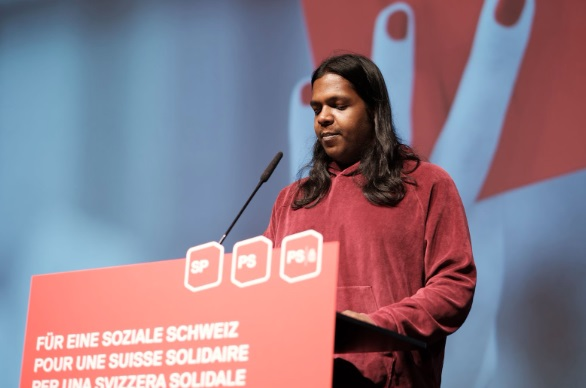
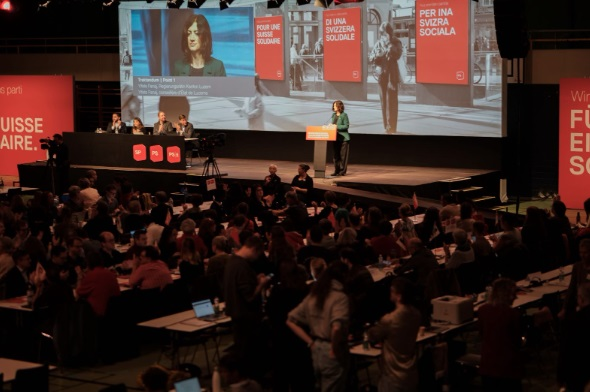
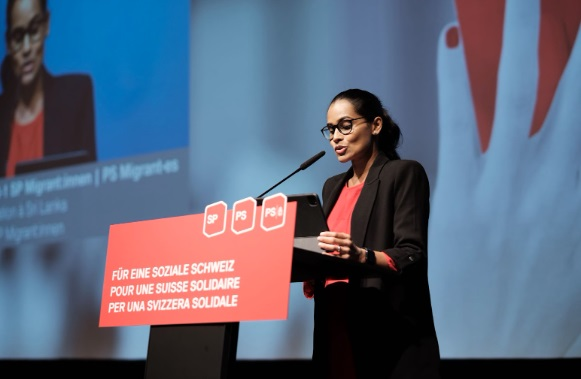
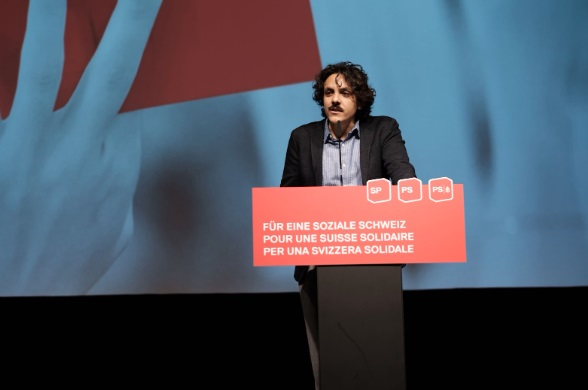
🚨 LEAD - Swiss Social Democratic Party calls for international genocide investigation into Sri Lanka
The Social Democratic Party of Switzerland (SP Switzerland) has unanimously passed a resolution on the situation in Sri Lanka, calling for an international genocide investigation at their party congress on the 25th of October 2025 in Sursee, Canton of Lucerne.
Read more ⬇️
https://t.co/AS36TJ2Pnp
Awareness is single, luminous, and self-knowing; love is its natural expression. In this recognition, duality dissolves—there is no seeker and sought, no giver and receiver, only one current of being flowing as all. To live from this truth is to meet every face, every breath, as the presence of the Divine itself.
A Spiritual seeker must Understand that Silence is the Fire…
…in which thoughts must willingly burn themselves out…
Your will to Silently Observe mind’s busyness must be greater…than Your mind’s fear of Silence.