I’m spending more time over on Bluesky these days.
If you’re interested in the work we’re doing at the Centre for the Sciences of Place and Memory — research, events, conversations — that’s where it’s properly alive.
funded by @LeverhulmeTrust
Follow: @memoryplace.bsky.social
Maria Fusco’s experimental opera-film History of the Present explores how built environments shape voice, movement and lived experience in Belfast.
Screening and discussion
Wed 25 March · 11:00–12:20
Pathfoot Lecture Theatre @StirUni
In-person event · no registration required
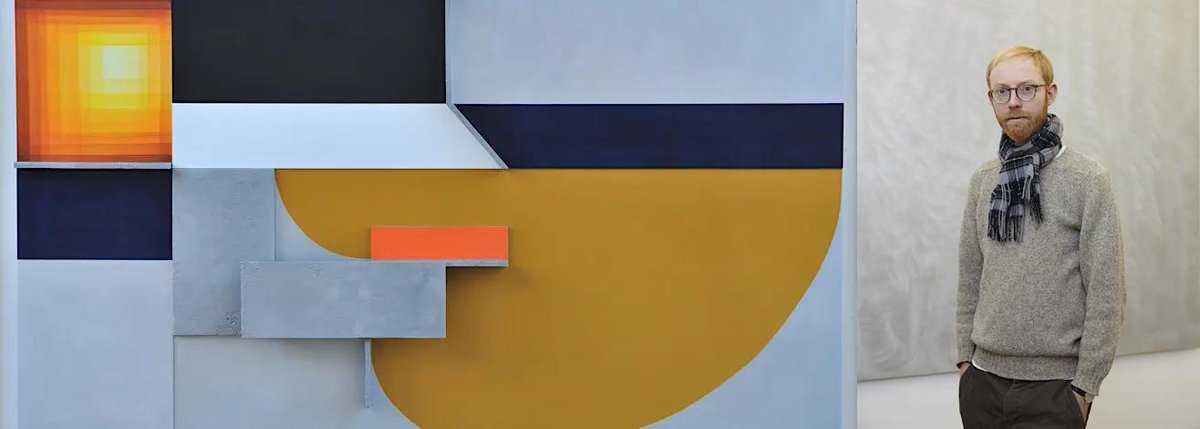
Artist talk: Toby Paterson RSA
A rare chance to hear Paterson on art, architecture and urban history — followed by a guided walk through Pathfoot to view his works in situ
University of Stirling
Hybrid event 27 Mar 13:00 (UK)
Book: https://t.co/mlAnf2W1j4
How can oral history engage with Northern Ireland’s difficult past without forcing agreement? Historian Chris Reynolds reflects on agonistic memory and the value of keeping contested perspectives in dialogue - enlivening the academy and public impact. https://t.co/dHQ6cfGUyw
Curious about the researchers we host at the Centre?
@CPeristianis Dr Christakis Peristianis (University of Cyprus) reflects on Cyprus’s contested past — and the questions shaping his research on memory, oral history, and farming in the Buffer Zone. https://t.co/Mi01788jCh
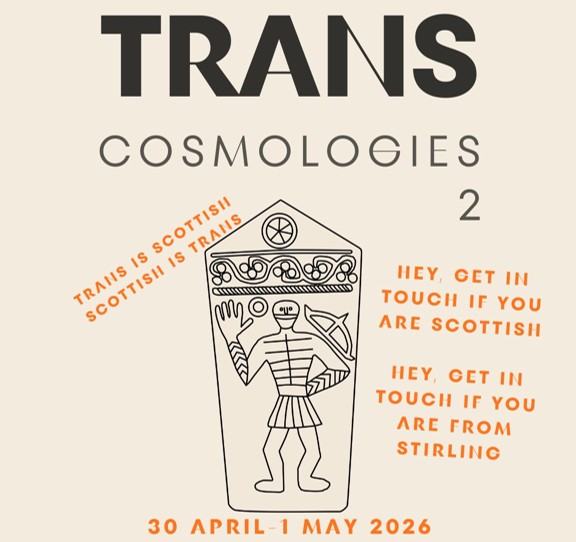
Call for expressions of interest — Trans Cosmologies 2: Art, Ritual & Memory - 30 Apr–1 May
Scottish artists, researchers & activists are invited to contribute to this two-day multimedia gathering exploring memory, ritual, cosmology, resistance.
CONTACT [email protected]
Trans Cosmologies 2: Art, Ritual & Memory
30 Apr–1 May · University of Stirling
A two-day gathering of trans, gender-nonconforming and queer artists and thinkers exploring memory, ritual and cosmology through performance, scholarship and dialogue. Registration soon.
Curious about the researchers we host at the Centre?
@CPeristianis Dr Christakis Peristianis (University of Cyprus) reflects on Cyprus’s contested past — and the questions shaping his research on memory, oral history, and farming in the Buffer Zone. https://t.co/Mi01788jCh
Tues March 10 online panel: memory, writing, & reading. Is remembering distributed across books, screens, characters, fictional places, drafts, notes, fellow readers? I'm in with a short provocation, with colleagues from Oslo & Aarhus, 3-5pm UK, 4-6pm CET: https://t.co/iAm1GccmTj
Place is not passive. Memory is not settled.
We work across cognitive science, social science & the arts to examine how people find their way. Understanding place and memory underpins how we locate ourselves—intellectually, socially and historically
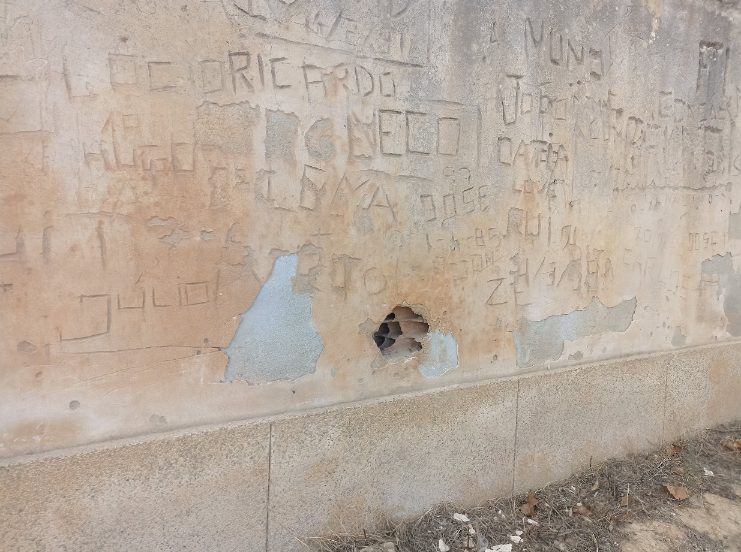
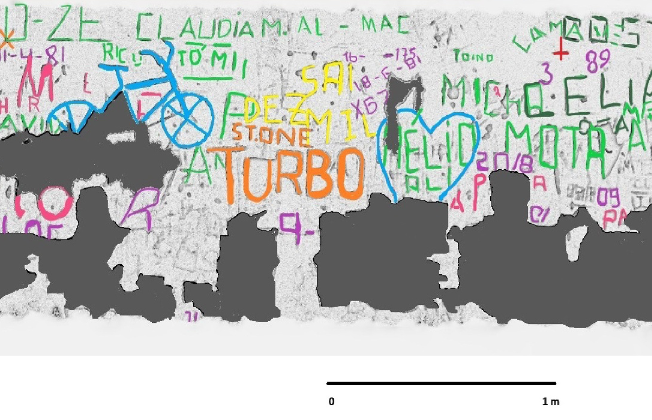
Great work by @TaniaMCasimiro1 & colleagues: contemporary archaeology of a densely reworked palimpsest of graffiti and other marks from the 70s & 80s on a surveilled military boundary wall, analysis layered with testimony from locals who were young then @StirUni@LeverhulmeTrust
A new paper on a carved cement wall at Ponta dos Corvos, Portugal — co-authored by @TaniaMCasimiro1 — reads 60 years of names, dates and symbols as contemporary rock art and a layered record of collective memory.
How should we study sites like this?
https://t.co/KPqe6QTEBW
Curious about the researchers we host at the Centre?
Visiting Speakers — In Brief brings together short introductions where speakers outline who they are, the questions guiding their work, and how they approach it.
Have a look:
https://t.co/F6sp5KylcN
How can we engage contested pasts without forcing agreement? SEMINAR - Voices of ’68 and ’74: Oral history and agonistic memory in Northern Ireland 11 March | 16:00–17:30 (UK) University of Stirling | Hybrid Register https://t.co/38IsChD4qO
How do farmers, Turkish forces and UN peacekeepers navigate land shaped by division since 1974? What does cultivation look like in a frozen conflict? Join
@CPeristianis - Wed 4 Mar 2026, 16:00–17:30 (UK) Hybrid | Stream opens 15:50 Register https://t.co/RX9KA0VHJD
Affective Atmospheres is drawing to a close.
Thank you to everyone who joined us, contributed, presented, volunteered and stayed in the room for the conversations.
We’re especially grateful to the @RIPhilo for supporting the conference.
On Tuesday we hosted No Future: Punk in the UK, 1976–84 with Prof. Matthew Worley.
Here, he explains his research on British punk, politics and popular memory.
Thank you to everyone who joined us, and to Collective Architecture for hosting.
Today — No Future: Punk in the UK, 1976–84 Prof. Matthew Worley + reading by Paul Max Morin, 17:30 refreshments | 18:00 start Collective Architecture, Glasgow Hybrid — in person & online https://t.co/ttb4ENXPvP