Enabling ML engineers to use state-of-the-art research methods, get results in seconds and build high quality models is what truly excites me about the future powered by AI!
The larger the model, the better... right? Wrong! Robustness behaves non-linearly as we show in this comparison between YOLOv8_n (3.2M params), YOLOv8_m (25.9M params) and YOLOv8_x (68.2M params). Very large or very small models are more vulnerable compared to medium sized ones.
Can you break #YOLO8? Tweak the image and see what the model says. Explore the vulnerabilities of this incredible model and share your highest score!
https://t.co/YfeDqVTREI
We were at Webit last week, met some great people and discussed the future of AI safety with @quaesita! Not only do we need to test everything in order to build trustworthy machine learning systems, but we also must not allow for human negligence at scale. 🚀
It's high time to talk about testing!
Svet Penkov of @Efemarai joined us on our Coffee Sessions to talk about why ML testing is hard. What can we do about it and what place should #ML QA take in the future?
Let's catch the great conversation here https://t.co/NaQdsCvQ19!
Working in Computer Vision? We will help you improve the robustness and generalization capabilities of your models by discovering edge cases before deploying!
It takes 2 minutes to submit a test request!
https://t.co/Bd78ewUeH5
Making sure #MachineLearning algorithms are robust and trustworthy is not an activity for the final straight on the MLOps lifecycle, it's about thinking deeply about the problem and having an automatic process to guide you along the way.This is what we can help with @efemarai 🚀
⚠️ 🚀 Release alert for efemarai v1.3! 🚀 🥳
Now you can save, load and share your favorite models! Asking for help debugging has never been easier!
Have a look at the VAE here 👉 https://t.co/Jar8bjc0DD
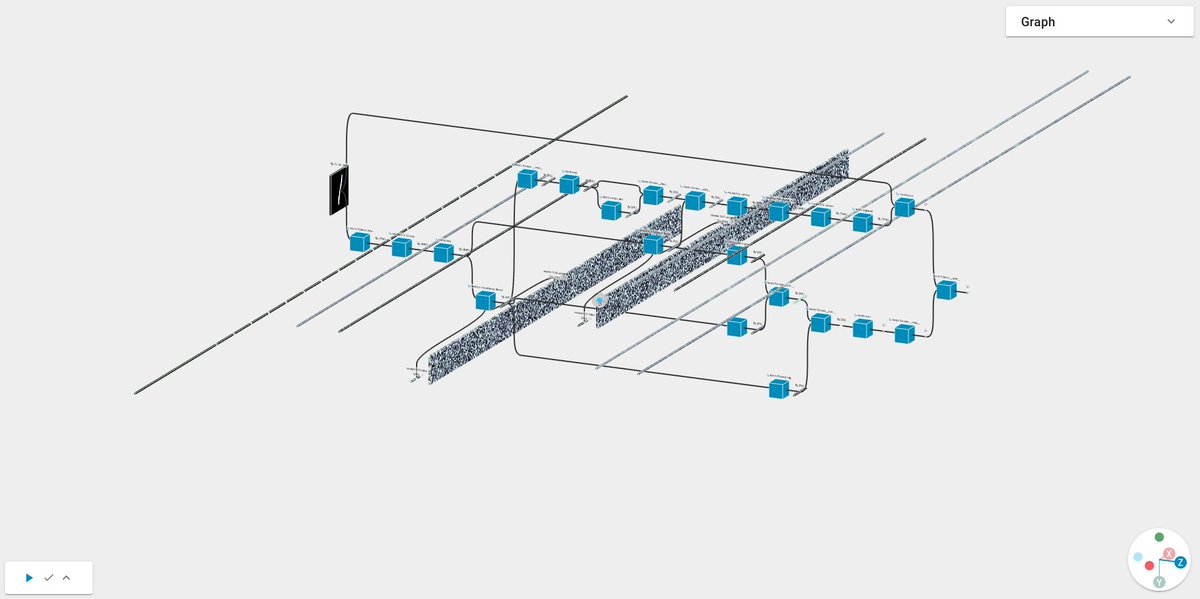
🔎 Even with large computational graphs, you can track how the gradients are flowing though the network. See how the DCGAN model by @AlecRad@Luke_Metz@soumithchintala propagates the gradients back to the Generator through the Discriminator model.
A comparison with some of the other tools for visualizing the computational graph in @PyTorch. It really does give you more insight in the model, intermediate values and loss computation.
https://t.co/C2nH5brFT8
#pytorch#DeepLearningTools#tensorboard
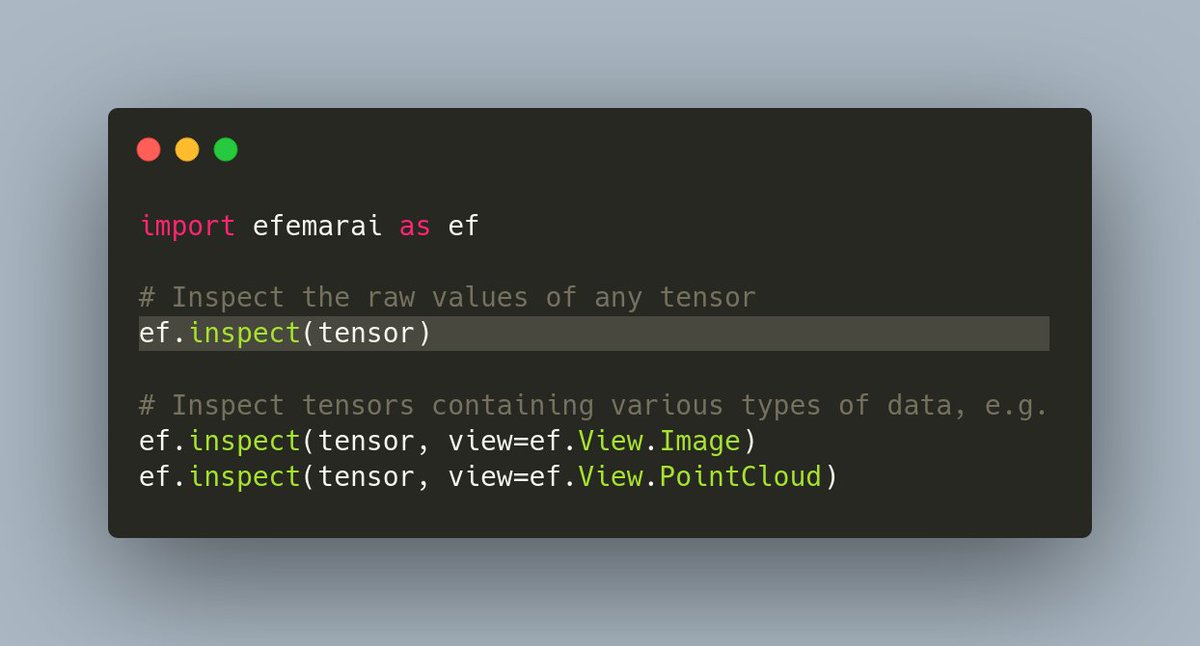
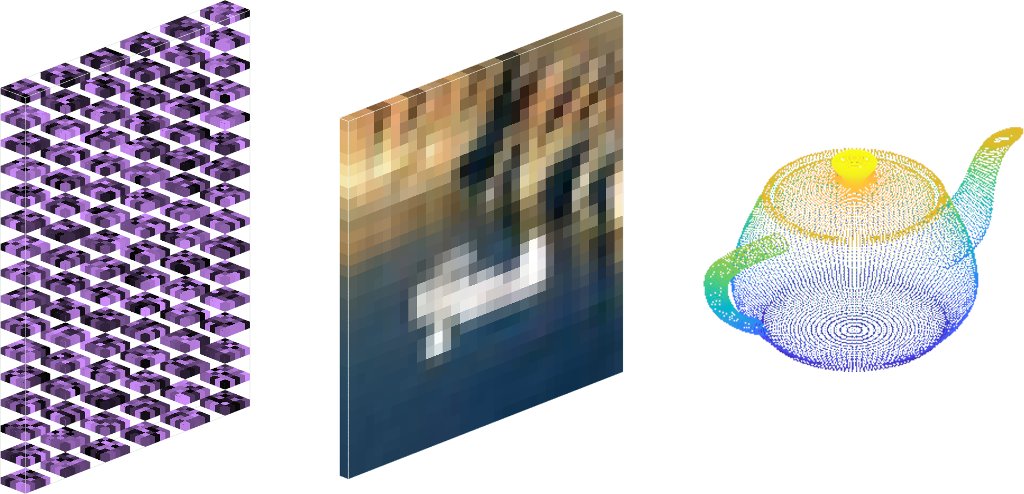
What's inside the random data you just loaded? Yeah, we were surprised as well. Avoid the surprises, inspect your data.
#machinelearning#datascience#mlops
@seanjtaylor You need just 2 lines of code with @efemarai to get a fully visualized neural network with all data, parameters and gradients ready for testing and debugging. Here is an example with a VAE
When you load your data and perform the input data transforms, do you check what the actual values are, is it unit variance? Remove the guessing game, inspect your data.
We've launched on @ProductHunt. It's the most intuitive debugger for your ML models! You will be blown by how easy it is to inspect and work with your data in 3D while building models. Can't wait to get your feedback!
https://t.co/WJRxY67E0U
#newproductlaunch#MachineLearning
1/ I've spent endless hours debugging ML code by staring at terminal printouts and loss plots while being extremely frustrated that I cannot simply *see* what's going on. That's why I created @efemarai - a 3D debugger for ML code!
3/ Core component of @efemarai is the Assertions Library - a collection of assertions that help you automatically detect (with a single line of code) all sorts of problems with your models such as vanishing gradients, exploding loss, NaNs and many others.