Story @TheAthleticFC
Copa America set to be hosted in US in 2028 - for 3rd time in 5 editions since 2016.
Talks first reported by @TheAthletic in 2025.
Means USMNT (pending qualification) will play in both Copa and Olympics in 2028 in the U.S.
https://t.co/lYeCTeLqMT
Seven-time Super Bowl champion quarterback Tom Brady has bought shares in Chelsea soccer club, sources confirmed to ESPN and NFL Network.
https://t.co/Q4Zm5daJhk
¡Hay Ríos para rato! 🇲🇽💙
🗞️ Le CF Montréal accorde une prolongation de contrat à l’attaquant Daniel Ríos >>> https://t.co/mVB9eoSUnX
🗞️ CF Montréal signs forward Daniel Ríos to contract extension >>> https://t.co/JNFmLPzBSy
#CFMTL
“We want an aligned player pathway that develops better players who eventually make their way onto first-team rosters. Hopefully, those players will one day compete and win the World Cup.”
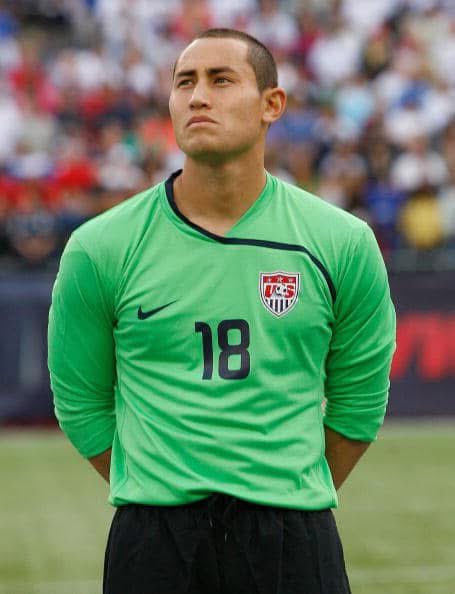
Former USMNT keeper Luis Robles, now VP of MLS NEXT, talks about youth development.
He was speaking with The Cooligans when he was asked about the work he’s doing with MLS NEXT, which is Major League Soccer’s youth development platform.
“Progress is being made and it’s only a matter of time,” Robles said.
“But you can’t speed up time. You have to remain committed to a process and find ways to accelerate progress.
“At the 2026 World Cup, we saw an enormous amount of potential.
“So when we look at these different obstacles, the question becomes: How do we develop better players? What can we do to develop better players?
“What are the principles of player development? You want to take a group of like-minded players and put them in a good environment. They need to be coached by a good coach, and they need to have good competition on the weekends.
“But even when you consider those four different variables, you still need time. And time might be the most important variable of all.
“There’s been a lot of excitement surrounding these young players who have come through MLS, but what we’re seeing today is the result of decades of work that came before MLS NEXT.
“The organization has only been around for six years, but people have been doing excellent work in this country for decades.
“What’s changed is that, in 2007, the U.S. Soccer Federation launched the Development Academy.
“The Development Academy was created with one goal in mind: developing better players. That system operated for 14 years.
“When the federation discontinued it during COVID, MLS saw an opportunity to take over that structure.
“And what it’s done is become a catalyst for players like Cavan Sullivan and Neil Pierre. It’s great that we now have a list of players rather than just one.
“Remember back in the day? It was Freddy Adu. If someone asked a trivia question about an American youth prospect, the answer was Freddy Adu.
“Now, there’s an actual list of players.
“What MLS NEXT did was take on the work that the federation had already been doing.
“The typical youth soccer experience used to be very different. What’s fundamentally different today compared to back then? MLS academies.
“Previously, everyone in the ecosystem went through a funnel, and eventually that group narrowed down to the players selected for the youth national teams.
“But now we have MLS academies, with approximately 30 different academies and multiple age groups.
“Instead of having just 30 players in the conversation, we’re talking about 3,000. That creates significantly more opportunities and places more players into those essential development environments.
“Those environments are also fully funded by MLS owners. That’s the cornerstone of MLS NEXT.
“What we do is bring those academies together in a competitive environment where they play against one another.
“Going back to the principles of development: when you bring together like-minded players, put them in a good environment with good coaching and provide quality competition, they’re going to improve.
“MLS NEXT accelerates progress through competition. MLS academies provide the environments. Academy coaches provide the coaching, and MLS NEXT Pro provides another level of exposure and opportunity for players aspiring to become professionals.
“The league invests a tremendous amount of money in establishing MLS NEXT and its academies. That investment easily exceeds $100 million.
“We want an aligned player pathway that develops better players who eventually make their way onto first-team rosters. Hopefully, those players will one day compete and win the World Cup.
“That would elevate MLS into one of the best leagues in the world, and ultimately transform soccer culture in this country.”
"For us it has always been about the community."
Chattanooga FC are the first independent club to win MLS NEXT PRO — 1-0 over LAFC 2, in front of a record 10,228. Owner Davis Grizzard and president Ali Curtis on what comes next.
Story for @Transfermarkt
https://t.co/24gSDiDKYm
#OTD in 1989: Paul Caligiuri delivered a "Shot Heard 'Round the World" to clinch our qualification into the FIFA World Cup for the first time in 40 years. 🌎
Mauricio Pochettino's 🇺🇸 legacy is complicated.
But his biggest impact, beyond the players or team, might be that he changed the USMNT job itself.
How Poch's tenure shaped what comes next — free to read @TheAthletic: https://t.co/Gt7eFCso9T
5 - At 18 years, 238 days old Tuesday, Julian Hall became the youngest player to score five goals for the #USMNT, 20 days younger than Christian Pulisic when he scored his fifth in 2017.
Wunderkinds.
Emma Hayes offered some comments today in regard to being involved in the search for former USMNT head coach Mauricio Pochettino's replacement. There are certainly few coaches more qualified to help with that task.
On the Guardian:
https://t.co/3YI6tfQVVu