Meet Higgsfield Soul.
Our new high-aesthetic photo model.
50+ curated presets, fashion-grade realism.
This will make you throw away your iPhone.
Retweet this post to get a full guide in your DMs.
Wild examples below:
Product Designer
- Who is not a graphic designer
- Who is not a landing page designer
- Who lives and breathes product design
- Knows how products work
- Knows that typography is not just adding -3% kerning to all the text
- Knows hierarchy exists in design
- Knows how to use color and use it sparsely while still bringing the product together
- knows how to build a simple to complex design systems
- Appreciates auto layout on Figma
- Takes feedback professionally, not personally (I’m super nice!)
- Spends a lot of time exploring new products and uses existing patterns
- Loves browsing through Mobbin design product screenshots
- Understands the difference between knowing design and using design for UX
- Views the world with an eye for design, from a simple packaging to a micro interaction in an app
- Knows existing products and their flows, so well that they can communicate with ease on what exactly need to be designed
- Minimal communication, good output
- Imparts their product knowledge across projects with ease
- Understand simple request (ex: I asked for product design work, but most of them shared landing pages, portfolio that cannot be accessed on mobile, portfolio with random work, extra effort to find the right work, silly questions)
Just be a designer who knows product design, not just a title you given to yourselves but something you have earned over time by working on various projects
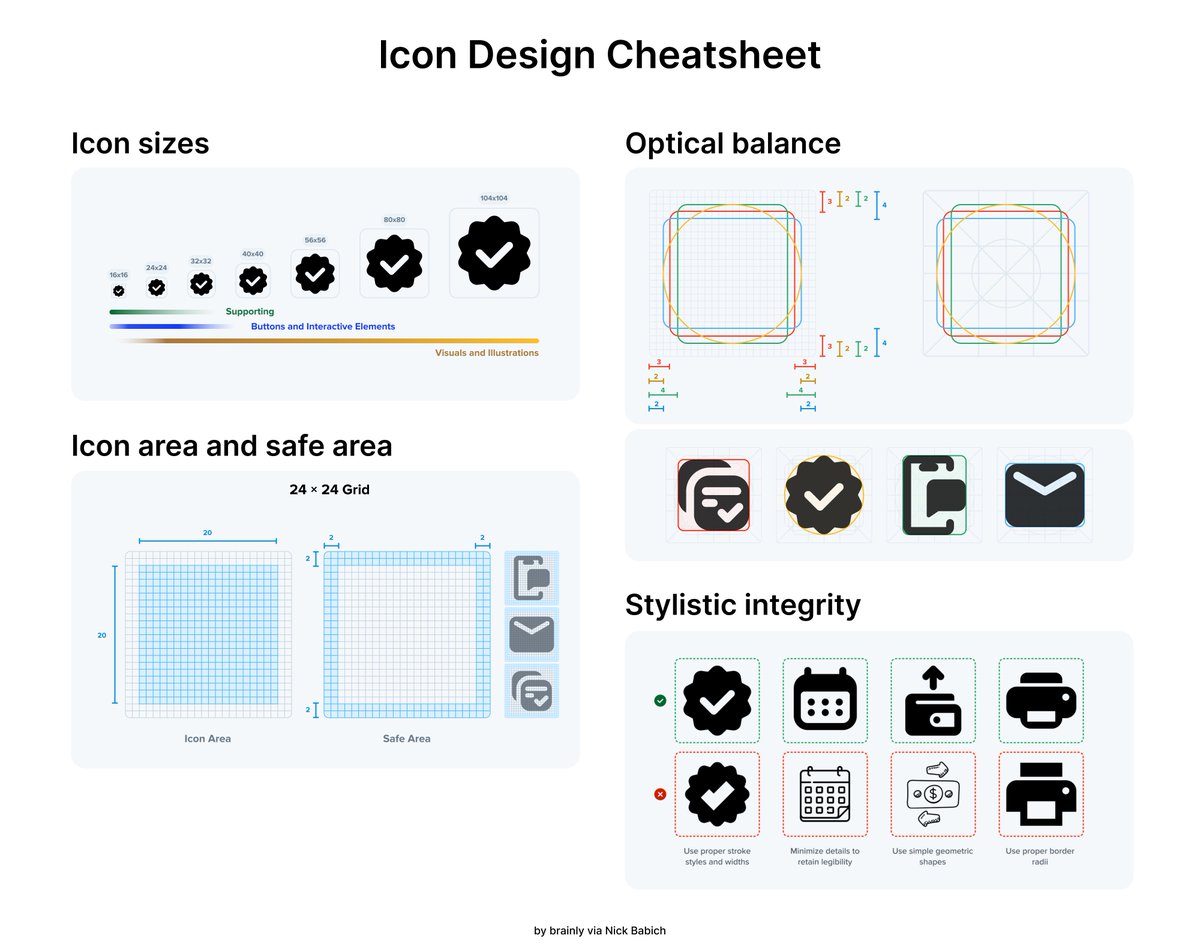
💎 Icon Design Cheatsheet
4 things you need to consider when designing icons for your product
1️⃣ Icon sizes scale
2️⃣ Optical balance
3️⃣ Icon area and safe area
4️⃣ Stylistic integrity
👇
💡 5 Types of Design Workshops in a Project Timeline
1️⃣ Discovery workshops
2️⃣ Empathy workshops
3️⃣ Design workshops
4️⃣ Prioritization workshops
5️⃣ Critique workshops
when & how to use them
👇
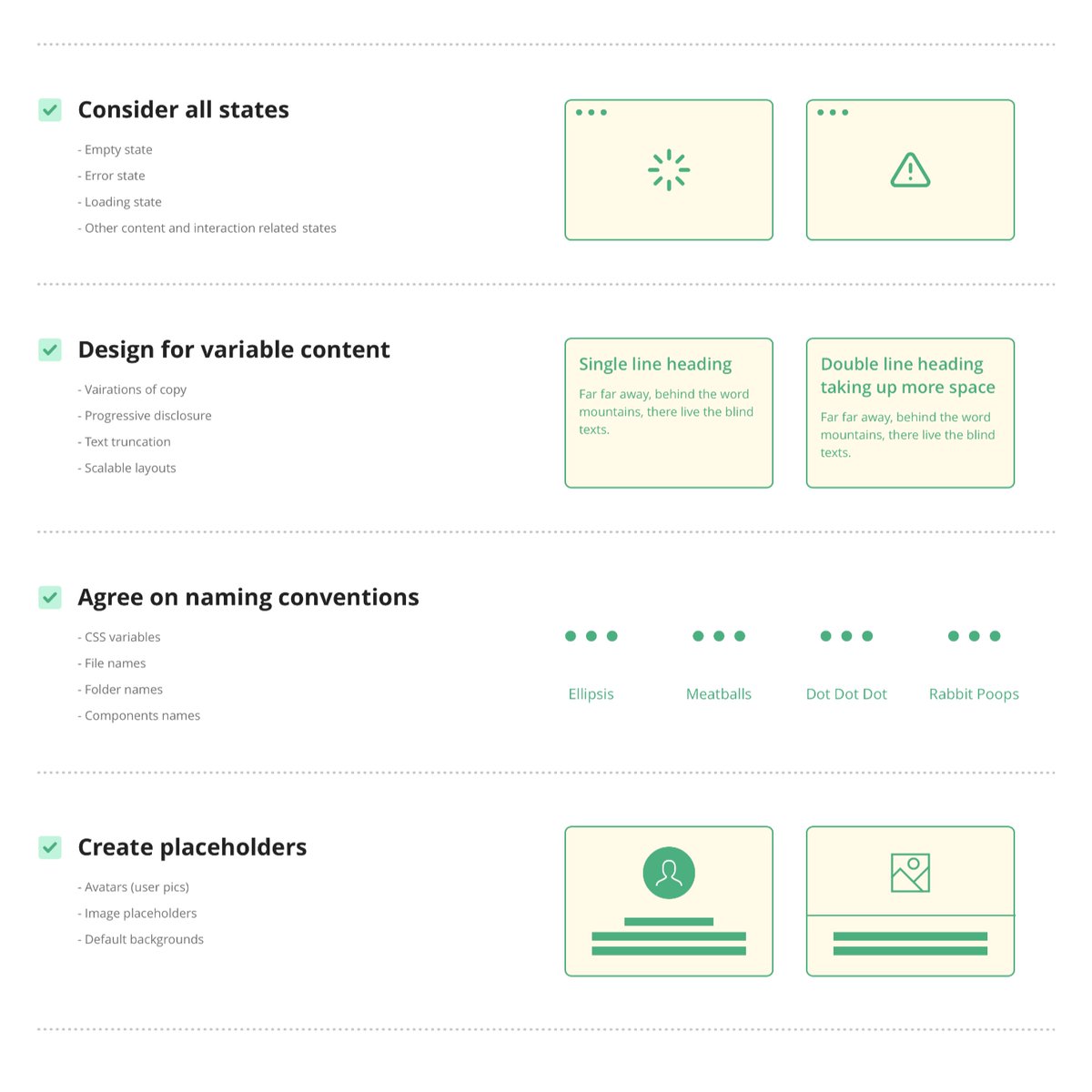
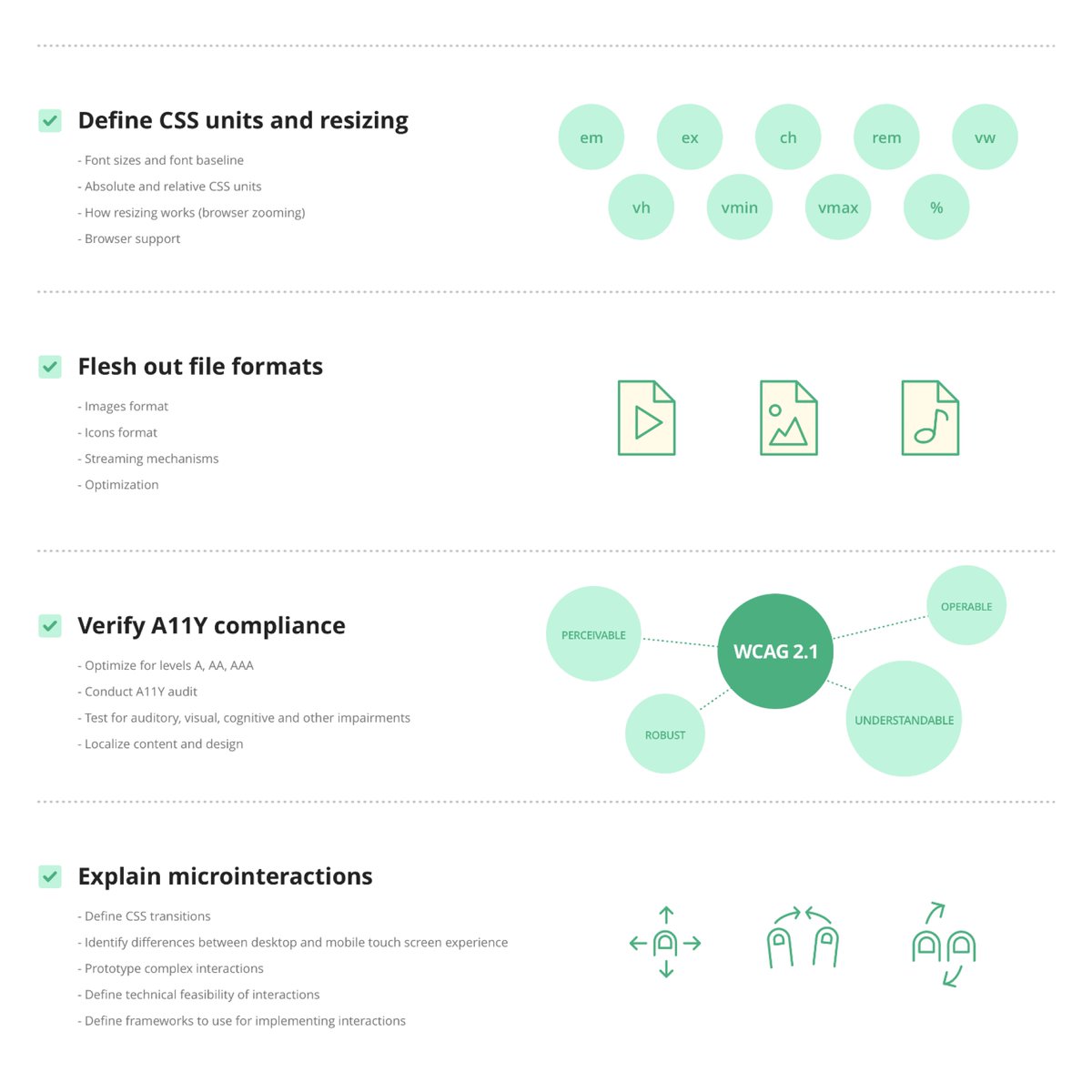
💡How to communicate design to developers
Excellent checklist that covers all aspects that must be considered and communicated to engineers throughout the design & development process — from naming conventions to interaction design and animation.
👇
The Ultimate Guide to Product Design Process to Boost Your Next Design Project! 🔥
Creativity and analytical thinking are needed, as well as the ability to cooperate with many stakeholders at once — clients, project managers, analysts, testers and developers.
Their work not only leads to the creation of an interface that pleases the eye but, above all, to the success of the entire product.
What is the Product Design Process?
It is a human-centred approach to innovation that integrates the needs of people, the capabilities of technology, and the business requirements needed to achieve success.
Double Diamond
Is a great tool that illustrates the design process, but you may feel that some steps are missing from it. Depending on how the individual sections of a Double Diamond are interpreted, the end result can be either a prototype or a ready-to-market product — two completely different things.
Triple Diamond
Is a flexible method, which means that it is tough to clearly define the exact framework of action based on this concept. The scope of work performed during the process depends on two major factors: the complexity of the identified problem and the work already done on the client’s side.
Discovery
If you don’t have a clearly defined goal or problem to solve, you can expect two things — wasted time and inefficiency. The result of your design process may be solutions that do not match user needs. They can also lead to an incorrectly defined project scope or other unforeseen problems.
Problem Discovery
In the product design process, the discovery phase allows us to verify our assumptions, collect and analyse data, which helps us determine the purpose, potential and threats of a given project.
Tools often used:
- UX audit
- Individual in-depth interview
- Market research
- Protopersonas
- Data analysis
- Service blueprint
- Survey
Problem definition
It is essential to analyse all the collected data and extract the most important information. The second product design process stage is the time to define the major needs and problems of users that your product will solve.
Some of the most important tools:
- Product vision
- Value proposition
- Problem statement
- Strategic research
Problem Validation
Once the problem is defined, it is important to validate it. We must verify if the idea needs to be modified and whether it fits the market.
Pre-production
During this product design process step, the team generates ideas for solving a predefined problem and creates the foundations for designing the UI of the application.
Some of the common tools:
- Customer journey map
- Personas
- User scenarios
- Mind map
Design & Development
Based on the previous steps and the so-called “proof of concept”, we can continue working on the physical representation of our solution: flows, screens, and UI.
The result of the design team’s work is the implementation of the solution and its introduction to the market by development teams.
#ux #ui #uxdesign #uidesign #userexperience #prototype #productdesign #designprocess #doublediamond #designthinking #designresearch #uxstrategy #uxresearch #usertesting #usabilitytesting #research #design #agile #mvp #business
💎 UX Research Canvas
UX Research Canvas is a structured framework proposed by The Fountain Institute that is used to plan, define, and organize UX research activities for a project.
👇
💎 Top 6 Design System Plugins for Figma
1️⃣ Design System Organizer
2️⃣ Design Lint
3️⃣ Design System Tracker
4️⃣ Destroyer
5️⃣ DesignDoc [Spectral]: Measures, Annotations, and Handoff
6️⃣ Stark - Contrast & Accessibility Checker
👇
Want a chance to get a free backpack from Coursera? 🎒
Simply repost and DM us your full name, address, email and phone number. 😊
(Exclusive to learners in the US, UK and India)










![101babich's tweet photo. 💎 Top 6 Design System Plugins for Figma
1️⃣ Design System Organizer
2️⃣ Design Lint
3️⃣ Design System Tracker
4️⃣ Destroyer
5️⃣ DesignDoc [Spectral]: Measures, Annotations, and Handoff
6️⃣ Stark - Contrast & Accessibility Checker
👇 https://t.co/Gq997ogzsc](https://pbs.twimg.com/media/Gak4kEBXAAAxzYS.jpg)