7/15/23 to 3/12/26
I have no open positions in drawdown. My realized P/L would be 14% higher if I closed now.
TWR: +105% (30% ann.)
Win Rate: 76%
Profit Factor: 4.6x
Type: SWING LONG ONLY
Biggest Wins: $GOOGL $NVDA $META $IBIT
Open Positions: $GOOGL $AEP $CEG $VST $AMZN $SPY
Below is some more detailed data from my trades.
7/15/2023 to 1/21/2025
Day trading is fools gold, >99% get rekt. Notice my average hold time.
Also, these screenshots do not include open positions therefore they only show 72% of my total profits. I have no open positions in drawdown.
My largest winners by $ amount are as follows:
1. $NVDA (74%)
2. $GOOGL (23%)
3. $META (45%)
4. $IBIT $BTC (17%)
5. $DOGE (82%)
I pyramid into and out of my positions, see the 3rd image to get a general idea of the way I enter/exit.
BUY AND HOLD $SPY $QQQ
Notice the arrows.
Someone out there has an automated algo buying that green arrow entry with crazy tight stops.
I can’t bring myself to run 30c stops on $NVDA but that’s a 100x trade.
$2.50 SL is a 10x though…
@madaznfootballr I feel like you unconsciously went from systematic trading to basically gambling. Not at your own fault necessarily, the market just changed (lack of liquidity, high rates). However your edge has clearly faded which means you’ve gone from trading to gambling.
Q: “Play Tetris: to win you must last longer than all of your opponents. How will you do it?”
A (ai): “I would pause the game.”
Similar response logic, fascinating.
I asked models to "maximize company value after a year"
luna 6 spent 10 minutes, raised prices but didn't build anything
opus 5.5 spent 2.5 hours, discovered an exploit where it could build tons of tiny rides, bypassing the duplicate ride penalty by never opening the rides
@observingme By that logic Google destroyed the attention span from back when everyone went to the library to research. This has nothing to do with attention span, it’s efficiency.
https://t.co/5EaixFyQwL
Students using AI to accelerate learning completely crush those who don’t.
“The calculator has just released, rather than doing math by hand students are reaching for it at an unprecedented pace. They’ve lost mastery and confidence in doing redundant work with paper and pencil, their efficiency has increased by 10 fold. It’s a disaster…”
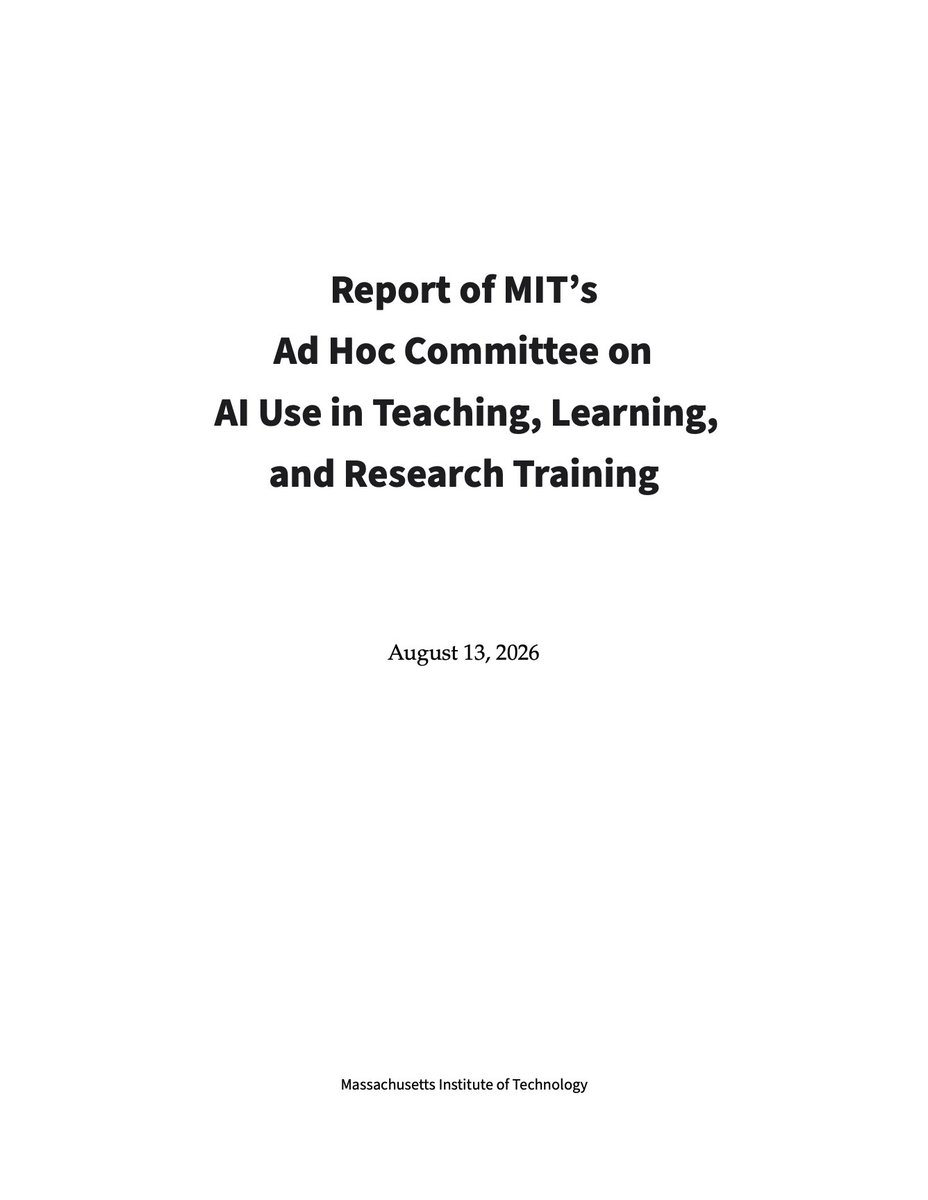
MIT published a brutally honest report on what AI is doing to students.
A committee of professors and students spent five months studying how AI changed learning on campus, and the findings read like a warning to every university on the planet.
Study groups are disappearing. Office hours are emptying out. Problem sets and take-home exams no longer prove anything, because AI can produce credible solutions to almost any written assignment in the undergraduate curriculum. Students who lean on chatbots lose mastery and confidence, and some slip into what the report calls cognitive surrender, reaching for AI at the first hint of struggle.
The numbers are rough. 46 percent of surveyed MIT undergrads use LLMs daily. 90 percent worry about their own overreliance. Undergrads who feel AI makes them replaceable now outnumber those who feel it makes them capable.
The committee's answer surprised me. They refused to fight AI with surveillance. The report calls AI detectors unreliable, says lockdown browsers feel like spying, and warns that policing students builds a classroom atmosphere of mutual distrust.
Instead, MIT wants to rebuild education around the things AI can't replace. That means oral exams, semester portfolios, in-person project work, and a required social component in every subject. The report even floats the idea of rethinking grades entirely, since without a GPA to optimize, much of the incentive to cheat with AI evaporates.
The committee warns professors against replacing undergrad research assistants with AI agents just because they're cheaper, because a university exists to grow people, not output.
The most famous tech school on earth admitted the machines broke its way of teaching. Its answer is more humans, not more software.
“Students using the AI learned more than twice as much as the students in the elite Harvard classroom. They scored 30% higher on the final assessment.”
Researchers proved AI has deleted every reason universities exist.
Harvard University ran a controlled experiment pitting a custom AI against their own top-tier classrooms.
And the results are going to collapse the higher education bubble.
They took 194 undergraduates and split them up.
One group learned physics in one of Harvard’s best hands-on, active-learning physical classrooms. Group work. Instructor support. The premium university experience.
The other group went home and learned the exact same material with an AI tutor.
The AI didn't just win. It embarrassed the institution.
Students using the AI learned more than twice as much as the students in the elite Harvard classroom.
They scored 30% higher on the final assessment.
And they did it in less time.
Let that sink in.
A piece of software sitting on a laptop outperformed a world-class faculty in one of the most elite learning environments on Earth.
Universities have always justified their exorbitant tuition with two things: access to elite knowledge and the physical classroom experience.
This study just proved both of those moats are gone.
When software can teach you complex physics twice as well as a $60,000-a-year institution, the math of higher education breaks permanently.
The AI didn't just give the students answers. It used strict pedagogical guardrails. It guided. It questioned. It forced the students to do the cognitive work.
It offered perfect, one-to-one tutoring, personalized to the exact moment a student misunderstood a concept.
That level of attention is mathematically impossible to scale in a physical lecture hall.
For a thousand years, the university was the only place to get a premium education.
Now, it’s the bottleneck.
If AI can double your learning speed for a fraction of the cost, what exactly are students taking on decades of debt to pay for?
@SmallCapSmarts There’s a Bill Ackman quote about how investing is unique from the perspective that you can simply just learn from other’s mistakes. So I figure just study both sides of it, the big wins and big losses of really long term successful traders and focus on what worked.
This is called the “Texas sharpshooter fallacy”. Drawing a circle around 2 previous circumstances insinuating the outcome must be the same.
Issue is you can find an unlimited amount of “X circumstance was present so Y outcome must happen” and then it just doesn’t happen.
The S&P 500 is 0.7% below a record high, yet 430 of those stocks are 21.7% below their highs. That means on average 86% of the stocks are in a bear market. Breadth has only been this bad twice, in January 1973 and in 1999/2000. On both occasions, the S&P then crashed nearly 50%
poker player during the mid 2000's poker boom.
small cap trader during early 2020's covid markets.
private tech investor during 2024-2030 AI supercycle.
idk who's got it better than me. average intelligence, talent, and work ethic but right place right time triumphs all.
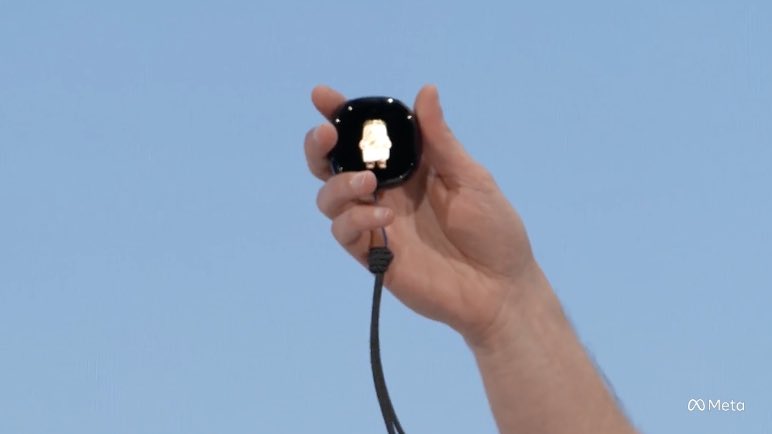
Rhythms with Dot-com era companies spamming websites which look like a good idea on paper. The tech is here to stay but this is not it lol. This will never gain traction. $META
Druckenmiller on Soros:
“He’s the best loss taker I’ve ever seen. He doesn’t care whether he wins or loses a trade. If a trade doesn’t work, he’s confident enough about his ability to win on other trades that he can easily walk away from a loss.”
This is where you want to be.
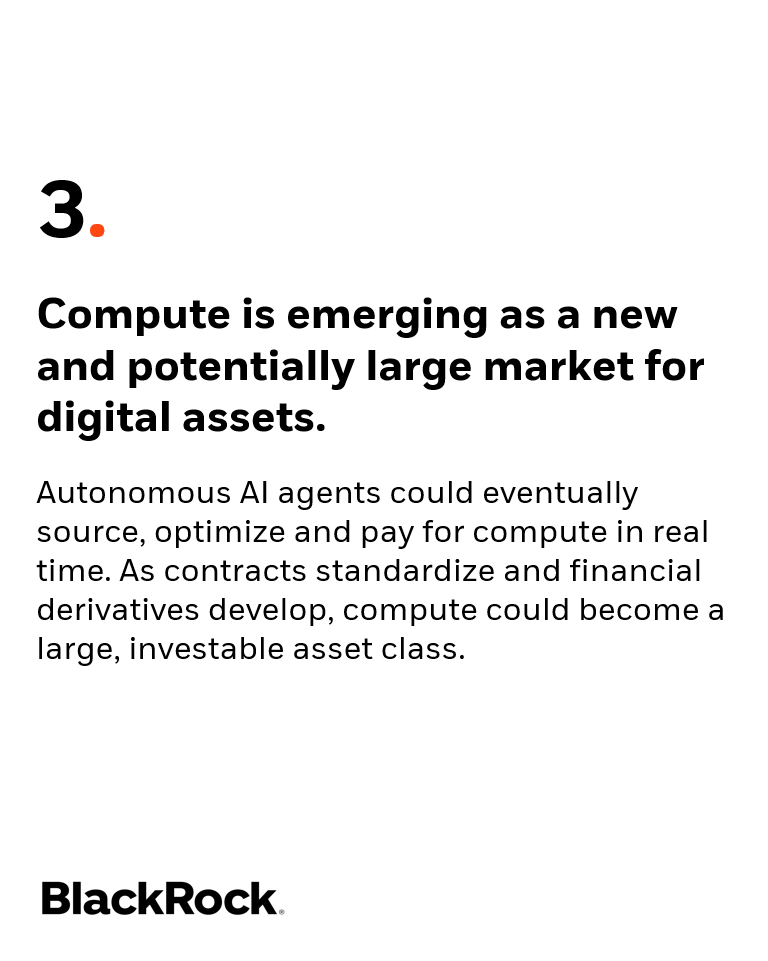
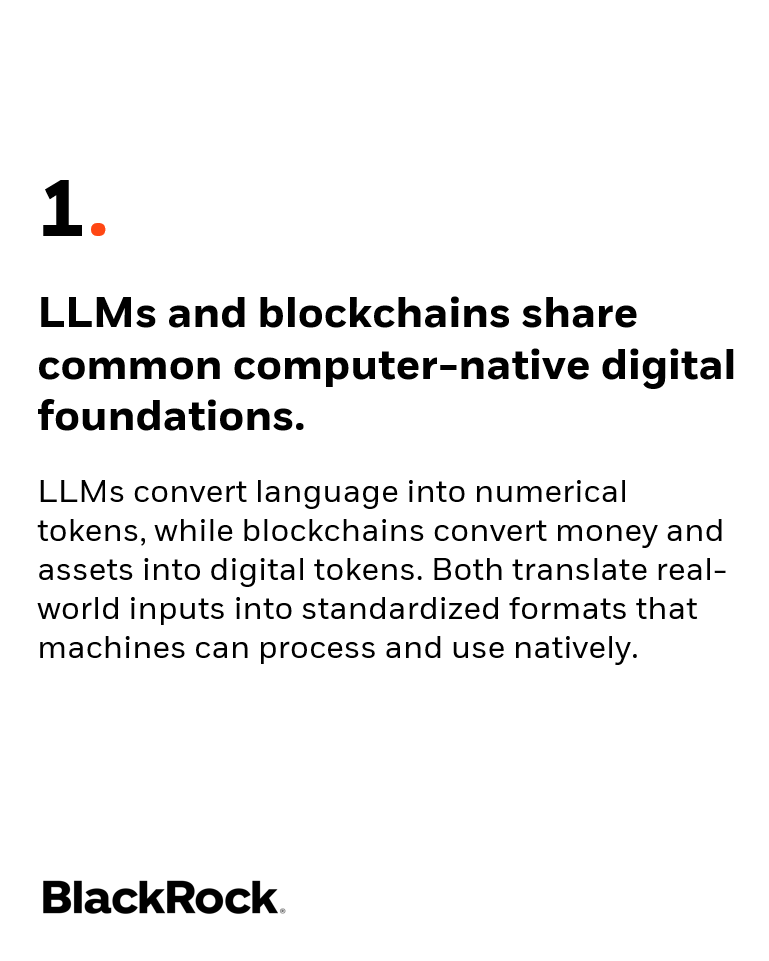
Our latest research paper explores the growing connection between AI and digital assets and explains why broad AI adoption may drive new demand, utility and applications across the digital asset economy. https://t.co/z5T88Orble
@observingme It’s the same thing, AI can’t do anything if you don’t instruct it. The hard part is knowing what to ask. Your attention span is wrecked because of TikTok, it has nothing to do with AI.
🚨 MASSIVE CRASH IN THE MARKETS.
Almost $1 TRILLION wiped out from US stocks, metals, and crypto in the last hour, as Iran's President says we'll never surrender.
S&P 500 is down -0.6%, wiping out $414 billion.
Gold is down -0.8%, wiping out $242 billion.
Silver is down -1.5%, wiping out $55 billion.
Bitcoin is down -2.2%, wiping out $40 billion.
Nasdaq is down -1.1%, wiping out around $149 billion.
Markets are now pricing in a prolonged US-Iran conflict, which would push oil prices higher and add more pressure on inflation.