Public Speaker| Passionate about presenting the true and peaceful image of Islam| Thankful to Allah ﷻ and beloved Prophet Muhammad ﷺ for the countless blessings
Bradford, UK: His Eminence Shaykh-ul-Islam Dr Muhammad Tahir-ul-Qadri Delivers Landmark Address on Language, Identity and the Future of Faith
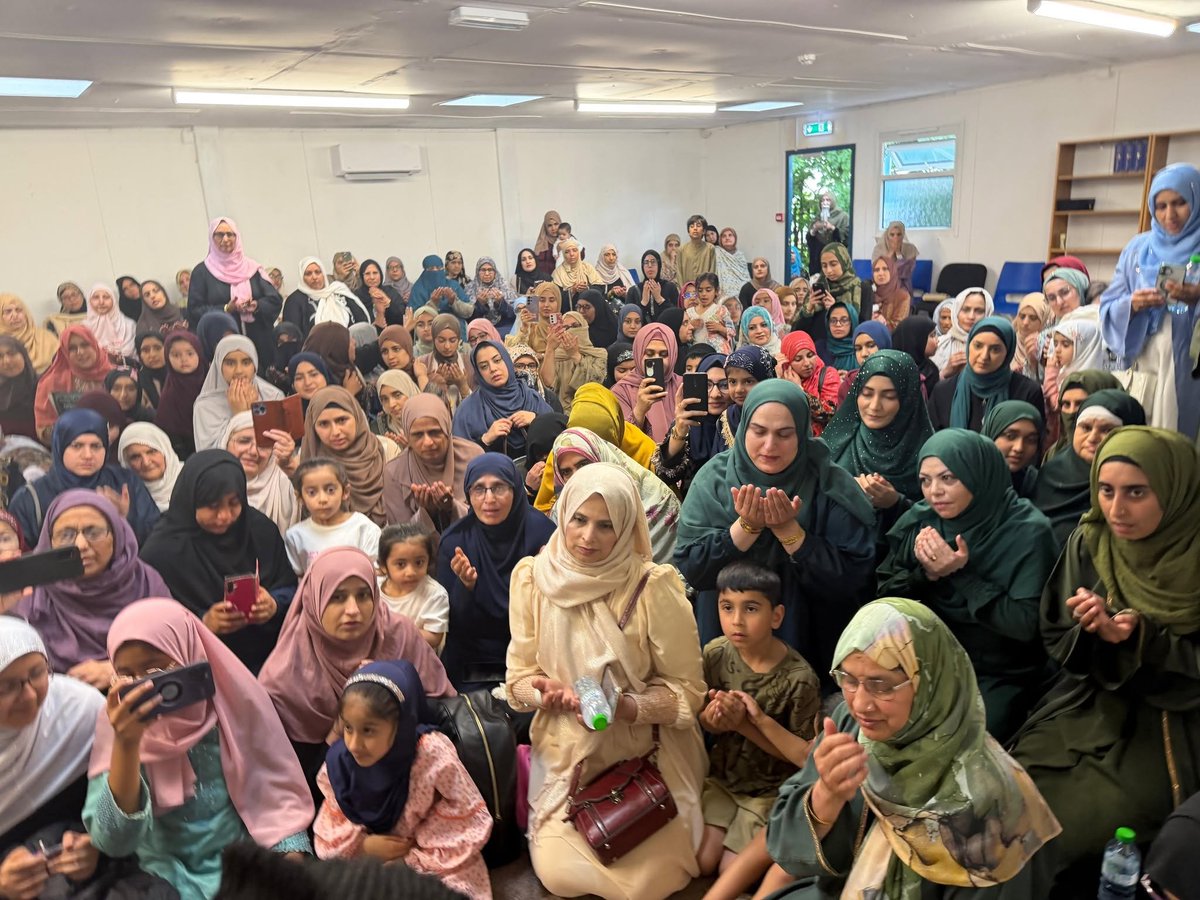
A special Suhbah gathering was held at Madinat al-Zahra, Bradford, where His Eminence Shaykh-ul-Islam Dr Muhammad Tahir-ul-Qadri delivered a profound and far-reaching address examining the relationship between language, faith, identity and religious continuity in the modern English-speaking world.
The lecture formed the third and concluding instalment of an international series addressing the challenges facing Muslim families raising children in Western societies. Drawing upon theology, sociology, history, linguistics and contemporary research, Shaykh-ul-Islam presented what he described as one of the most critical issues affecting future generations: the growing phenomenon of “English-only dependence” and its impact on the preservation of faith.
At the outset, Shaykh-ul-Islam congratulated the organisers and participants of the three-day educational campaign conducted by Minhaj-ul-Quran Australia, including the teams of Victoria, Queensland, Canberra and New South Wales, along with Minhaj Welfare Foundation Australia, Minhaj Women League Australia, Eagles Australia, Minhaj Youth League, guest speakers Junaid Khan and Quraat Hussain and campaign coordinator Syed Zameen Masood Shah. He also announced that the next phase of the series would continue at McMaster University in Canada later this year.
English is Not the Problem
A central theme of the address was the clarification that English itself is not a threat to Islam or Muslim identity.
Shaykh-ul-Islam stressed that English is indispensable for modern life. It is the language of education, professional development, public engagement, communication and intellectual discourse. Muslim youth must excel in English to succeed academically, participate confidently in society and articulate Islamic perspectives in response to contemporary challenges such as atheism, secularism and liberalism.
However, he argued that the real problem emerges when English becomes the only language through which a Muslim child understands religion, identity and meaning.
According to Shaykh-ul-Islam, when religious understanding becomes confined solely to English, children gradually lose access to the inherited reservoirs of Islamic knowledge, spirituality and culture that have historically sustained Muslim communities for centuries.
The Three-Language Model
To address this challenge, Shaykh-ul-Islam presented what he termed the “Three-Language Ideal Model” for Muslim families living in the West.
Under this framework:
* English serves as the language of survival, education, communication and engagement with the modern world.
* The heritage language (such as Urdu, Turkish, Persian or another inherited Muslim language) serves as the bridge to religious, spiritual and cultural inheritance.
* Arabic serves as the gateway to the original sacred sources of Islam, including the Qur’an, Hadith, Sunnah and classical scholarship.
He emphasised that the solution is not to sacrifice one language for another, but to ensure each language fulfils its proper role.
“Keep English strong, keep the heritage language alive and connect with Arabic” was presented as the complete model for preserving both faith and identity in future generations.
Language Shapes How We Think
One of the most striking themes of the lecture was the assertion that language does far more than facilitate communication.
Shaykh-ul-Islam explained that language shapes thought, perception and worldview. Children do not merely speak in a language; they think through it, interpret reality through it and develop moral and intellectual frameworks through it.
When Muslim children become exclusively dependent upon English, they inevitably begin to conceptualise religion through the assumptions and categories of the secular environment in which English functions.
As a result, their understanding of Islam can gradually become detached from the civilisational, spiritual and intellectual traditions that originally nurtured and transmitted the faith.
This, Shaykh-ul-Islam argued, contributes directly to the identity crises increasingly experienced by Muslim youth in Western societies.
Heritage Languages as Carriers of Islamic Legacy
Shaykh-ul-Islam highlighted the unique role played by heritage languages in preserving Islamic civilisation and transmitting religious knowledge across generations.
Using Urdu as a case study, he explained how the language emerged through centuries of interaction between Arabic, Persian and Turkish traditions, becoming a vehicle for Islamic scholarship, spirituality and culture.
He noted that heritage languages provide access not only to texts and knowledge but also to emotional memory, inherited values, manners, etiquette and religious vocabulary.
Words such as Insha’Allah, Masha’Allah, SubhanAllah, Tawakkul, Sabr and Shukr carry layers of spiritual meaning that become embedded within a child’s subconscious understanding of faith.
When these words disappear from everyday life, he argued, the concepts they embody gradually disappear as well.
Access to Islamic Knowledge
A significant portion of the lecture focused on the relationship between language and access to authentic Islamic scholarship.
Shaykh-ul-Islam explained that all original Islamic sources are preserved in Arabic. The Qur’an, Hadith literature, jurisprudence, theology, spirituality and classical scholarship remain rooted in the Arabic language.
He further argued that substantial portions of Islamic intellectual history were also preserved and transmitted through Turkish and Persian scholarly traditions, with Urdu serving as a major bridge connecting subsequent generations to that heritage.
Without access to these linguistic traditions, Muslim youth become increasingly dependent on translations and secondary interpretations, limiting their ability to engage deeply with the richness of Islamic knowledge.
He reiterated that translation can assist understanding but can never fully replace the original language of revelation.
The Rise of “Algorithmic Religion”
Perhaps the most memorable and contemporary concept introduced during the lecture was Shaykh-ul-Islam’s warning against what he termed “algorithmic religion.”
He observed that many young Muslims today no longer receive religious understanding primarily through scholars, books, families or established institutions.
Instead, they increasingly encounter religion through:
* TikTok
* YouTube
* Reddit
* Podcasts
* Social media influencers
* AI-generated responses
* Algorithm-driven content feeds
In this environment, children are exposed simultaneously to atheist critiques, secular liberal perspectives, hyper-literalist interpretations, ultra-modern ideologies, influencer-based religion and countless conflicting viewpoints.
Without grounding in authentic sources or inherited religious traditions, they often lack the tools necessary to distinguish between sound scholarship and misinformation.
Shaykh-ul-Islam described the result as “algorithmic religion” — a personalised version of faith assembled from random digital fragments selected by algorithms rather than guided by scholarship, tradition or religious authority.
He warned that this phenomenon contributes to:
* Religious confusion
* Broken continuity of faith
* Weakening family transmission
* Inconsistent religious practice
* Identity instability
* Spiritual uncertainty
Faith is Transmitted Through the Heart as Well as the Mind
Shaykh-ul-Islam repeatedly emphasised that faith is not transmitted solely through logic, argument and intellectual reasoning.
While rational understanding remains important, religion is also transmitted through love, belonging, emotional attachment, memory, spiritual experience and inherited tradition.
He explained that many aspects of Islamic life are sustained through sentimental and spiritual connections that exist beyond purely intellectual explanations.
This emotional continuity is often carried through language, family practices and cultural expressions that connect individuals to previous generations and ultimately to the Prophetic tradition itself.
Without these channels of transmission, future generations may retain information about religion whilst losing their deeper connection to it.
Culture as a System of Meaning
Challenging common assumptions, Shaykh-ul-Islam argued that culture should not be understood merely as local customs or ethnic traditions.
Instead, he defined culture as a “system of meaning” comprising values, beliefs, concepts, norms, habits, manners and traditions rooted in faith.
Islamic culture, therefore, is not confined to geography or ethnicity but emerges from the shared meanings transmitted through the Qur’an, Sunnah, scholarship and spiritual heritage.
Language plays a critical role in preserving and transmitting this system of meaning across generations.
Research Supporting Religious Transmission
To reinforce his arguments, Shaykh-ul-Islam referenced contemporary academic research examining the relationship between language, culture and faith transmission.
He cited studies indicating that heritage language retention strengthens religious continuity, supports family bonds and contributes to the preservation of belief among immigrant communities living in Western societies.
These findings, he noted, increasingly confirm what religious communities have intuitively understood for generations: that faith is sustained not only through doctrine but through family, culture, language and emotional belonging.
A Call to Muslim Families
Concluding the lecture, Shaykh-ul-Islam delivered a powerful appeal to Muslim parents, educators and community leaders.
He urged families not to frame language as a choice between modern success and religious commitment. Rather, they should ensure that future generations are equipped with all three dimensions necessary for success:
* Strong English for life in the modern world.
* Strong heritage language for continuity of identity and tradition.
* Strong Arabic connection for access to the original sources of Islam.
Shaykh-ul-Islam warned that if heritage transmission is neglected, future generations risk becoming disconnected from the religious, moral and spiritual foundations that sustain faith.
The lecture concluded with a reminder that the preservation of Islam is not merely an intellectual exercise but a holistic process involving knowledge, identity, family, culture, language and the heart.
For Muslim communities living in the English-speaking world, the challenge is not English itself, but ensuring that English does not become the only lens through which future generations encounter their faith.
Sheffield, UK: His Eminence Shaykh-ul-Islam Prof. Dr Muhammad Tahir-ul-Qadri addressed students of Al-Ma’rifa in a deeply spiritual and reflective session titled “The Unbroken Chain”.
Shaykh-ul-Islam spoke on the journey of ta‘allum, the receiving of sacred knowledge, and explained that the seeker of knowledge, the muta‘allim, must begin with the purification of intention. Learning is not merely an external act of study, reading or memorisation. It is an inner journey of turning towards Allah Almighty, standing in His court and entering a state of munajat, speaking to Allah with humility and sincerity.
Shaykh-ul-Islam reminded the students that every act of learning must carry a niyyah. The intention should be to receive ma‘rifa, to understand the commandments of Allah Almighty and the guidance of His Beloved Messenger ﷺ, and to become a humble servant of Allah. He explained that one cannot truly aspire to servanthood without first seeking to understand what Allah Almighty wants from His servant.
A central message of the session was humility. Shaykh-ul-Islam advised students never to become proud of what they have learnt, but to always consider themselves at the beginning of the journey. The seeker should continue to purify the self, strive sincerely and aspire only to become a true servant of Allah Almighty. When this path is followed with sincerity, blessings come as a matter of course.
Shaykh-ul-Islam gave the example of three types of trees: a large tree with no leaves that provides no shade, a tree with leaves that gives shade and a fruit-bearing tree. He explained that the branches of a fruit-bearing tree bend down with humility, while a tree without fruit remains straight, stiff and stubborn. In the same way, true knowledge makes a person humble, while knowledge without inner transformation leaves a person rigid and ignorant.
He explained that true ilm takes a person away from the world of “me, myself and I”. It removes selfishness and opens the heart towards selflessness, service and concern for others. Since ilm is an attribute granted by Allah Almighty, sincere pursuit of knowledge should begin to transform the character, conduct and attributes of the seeker for the better.
Shaykh-ul-Islam also warned that the interpretation and benefit of knowledge only enter the heart when the intention is pure. Without sincerity, knowledge may remain on the tongue or in the mind, but it does not illuminate the heart or transform the spiritual state of the seeker. True knowledge disciplines life, purifies the inner self and reforms behaviour.
He reminded the students that Allah Almighty, the angels and the possessors of knowledge bear witness to the oneness of Allah. Therefore, the true possessor of knowledge cannot be unjust. Even holding negative thoughts about others can be a form of injustice. Real knowledge removes injustice from the heart, mind and soul, and brings a person out of the narrow circle of “I, me and mine”.
The session concluded with Shaykh-ul-Islam praying for the students of Al-Ma’rifa and their noble effort to strive for ilm with sincerity, discipline and genuine spiritual purpose.
It was a powerful reminder that sacred knowledge is not only to be acquired, but to be lived, embodied and reflected through humility, service and transformation of the self.
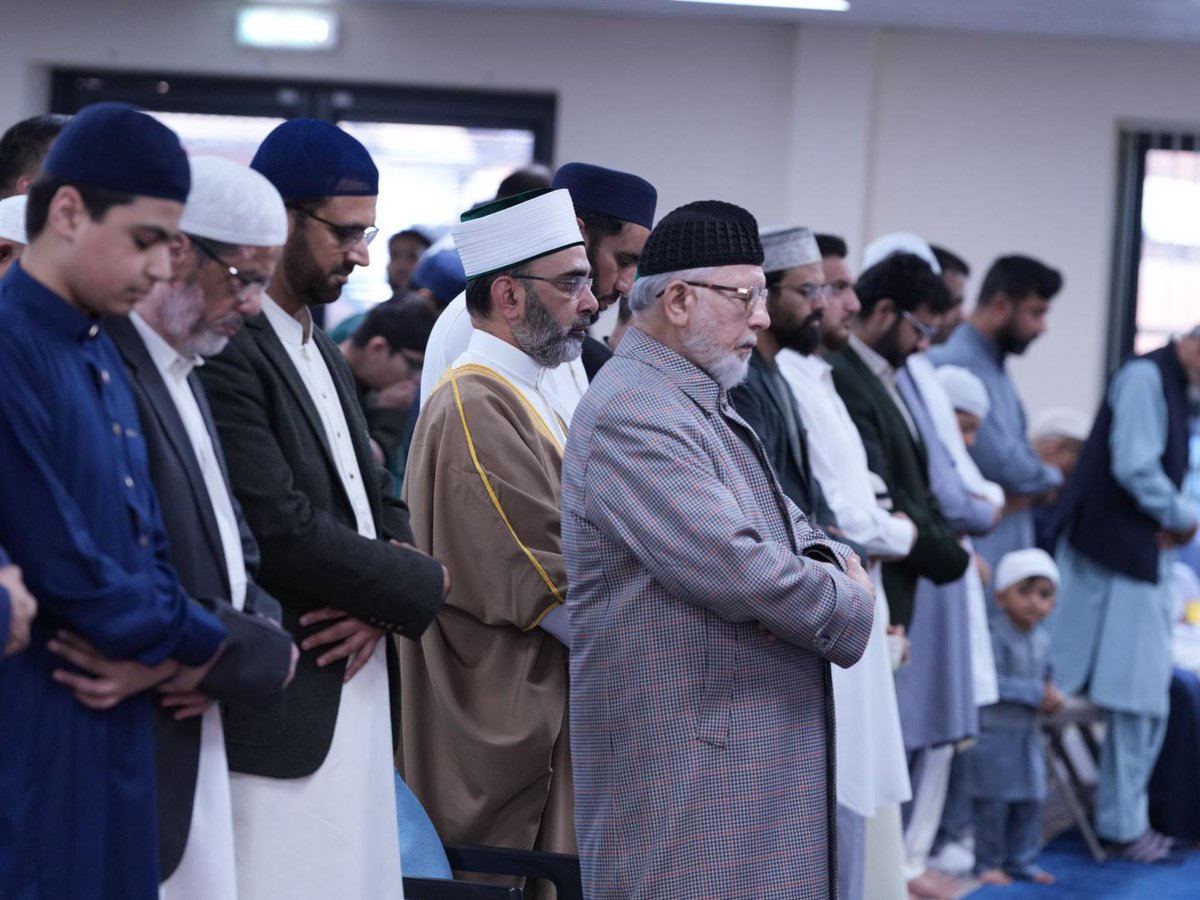
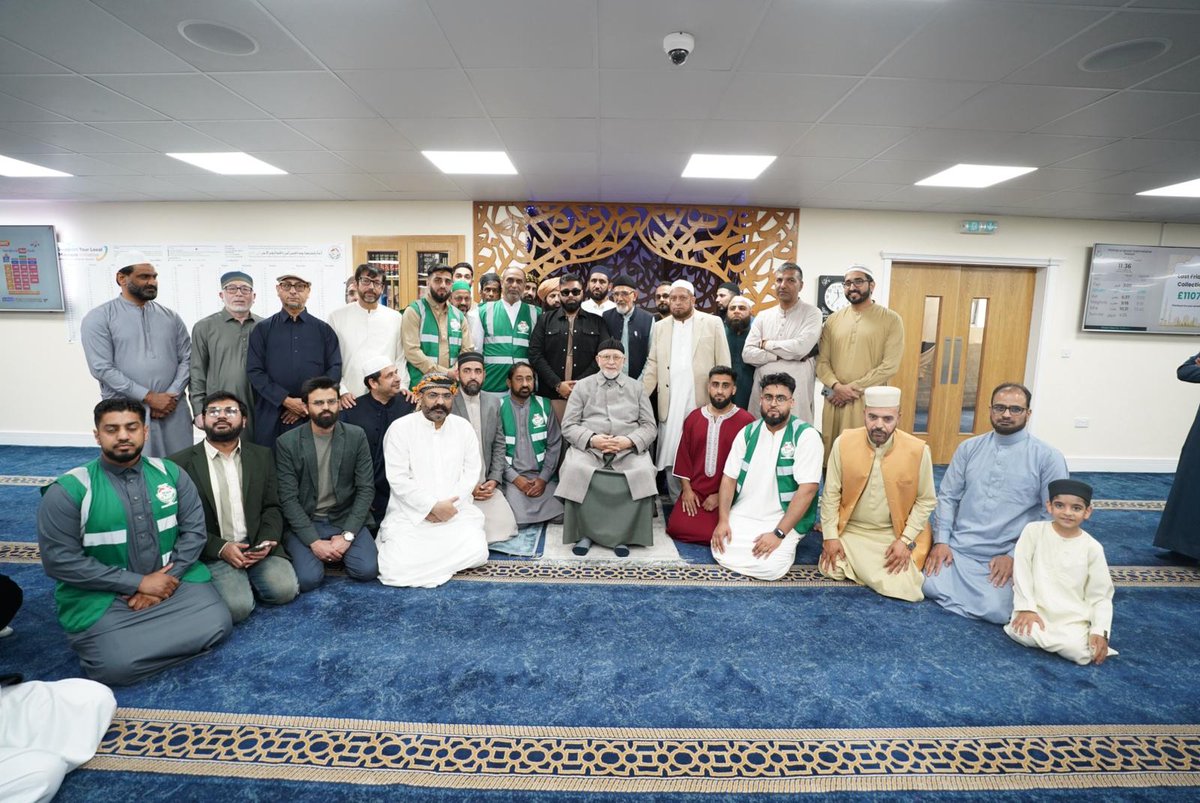
UK, Walsall: His Eminence Shaykh-ul-Islam Dr. Muhammad Tahir-ul-Qadri offered Eid al-Adha prayers at Minhaj-ul-Quran Islamic Centre, Walsall.
Shaykh-ul-Islam joined a large gathering of worshippers at MQI Walsall to offer the Eid prayer. Office-bearers and associates of Minhaj-ul-Quran International UK from across the Midlands, along with members of the wider Muslim community, also participated in the congregation. The midlands leadership Shaykh Abu Adam Al-Shiraazi (President Midlands Zone), Ghulam Murtaza (General Secretary Midlands Zone) welcomed His Eminence, and other MQI executives were also present, Allama Bilal Ashrafi, Dr Ali Akbar, Allama Tahir Mahmood Kiyani, Qari Muhammad Wajid, GM Malik sb, Sajid Mustafa, Farhan ul Sabah, Shaykh Bilal Hussain, Shaykh Qasim Farid along with Minhaj Women League, Minhaj Sisters and Minhaj Muslim Generations representations.
On this blessed occasion, Shaykh-ul-Islam extended heartfelt Eid greetings to the attendees and Muslims around the world. He stated that Eid al-Adha is a spiritually uplifting occasion that revives the timeless Sunnah of Prophet Ibrahim (AS). He emphasised that the true essence of the Sunnah of Ibrahim (AS) lies in sacrificing one’s ego and submitting wholeheartedly to the will and pleasure of Allah Almighty.
He further urged the Muslim Ummah to include relatives, neighbors, the needy, and underprivileged members of society in their celebrations, describing this spirit of sharing and compassion as the true reflection of Islamic brotherhood. He also prayed that Allah Almighty shower His special blessings and mercy upon the entire Muslim world.
Following the Eid prayer, members and associates of Minhaj-ul-Quran International, along with people from various walks of life within the Muslim community, met Shaykh-ul-Islam Dr. Muhammad Tahir-ul-Qadri and received Eid greetings and blessings from him.
#EidAlAdha #Eid2026 #Islam #Muslims #Unity #Peace
Are We Truly Living the Life of Loyalty?
A powerful reflection by Shaykh-ul-Islam Dr. Muhammad Tahir-ul-Qadri on sincerity, faithfulness, and remaining steadfast in our commitment to Allah and His beloved Messenger ﷺ.
Join the blessed company of Shaykh-ul-Islam Dr. Muhammad Tahir-ul-Qadri at Al-Hidayah 2026
📍 McMaster University, Hamilton, Ontario
📅 August 1–3, 2026
Register: https://t.co/282lYmpwOB
#AlHidayah2026 #Loyalty #Sincerity #SpiritualPath #MinhajulQuran
Minhaj-ul-Quran USA 🇺🇸 presents.
An exclusive online Meet & Greet session with Shaykh Hammad Mustafa al-Madani al-Qadri as he delivers a special session on:
“Why Join a Jamā’a (Organization) in the 21st Century”
📅 Sunday 17 May 2026
🇺🇸 12:00 PM CST | 1:00 PM EST
🇬🇧 6:00 PM GMT
🇵🇰 10:00 PM PST
Register here: https://t.co/loRWTPzqYX
#TheSirahAndModernTimes #IslamicEvent #MuslimCommunity #HMQ #ShaykhHammadQadri #MuslimYouth #IslamicEducation
Hi @SuellaBraverman ,
48 hours ago I asked you to substantiate or withdraw your claim that “250,000 foreign students took £4bn in UK loans.” That time has now passed. You have provided no evidence, no clarification, and no correction.
I have taken the time to examine the data myself.
I have reviewed materials from the Student Loans Company, the Department for Education, the House of Commons Library, the UK Statistics Authority, and reporting from Times Higher Education. Across these sources, one thing is clear. Your statement is presented in a way that gives the public a deeply misleading impression.
Let’s deal with this carefully.
The £4bn figure you reference relates to the total value of student loans issued to non UK nationals. It is not a direct cost to the taxpayer. These are loans. They are repaid over time based on income. Presenting that figure as if it were money handed out or lost is not an accurate reflection of how the system works.
Then there is your use of the phrase “foreign students.”
This is where the distortion becomes more serious.
The fact (which you know quite well) is those eligible for UK student finance are not newly arrived international students. They are people with settled status, indefinite leave to remain, refugee status, or long term lawful residence in the UK. They live here. They work here. They pay into the system. And under the law, they are entitled to access student finance.
Standard international students on student visas are generally not eligible for these loans.
By leaving out that distinction, you create a very different picture in the minds of the public. One where large numbers of people are arriving from abroad and immediately accessing public funds. That is not what the data shows.
You also cited a figure of 250,000 without pointing to a clearly published dataset or transparent methodology. Numbers like this carry weight. They should be used with care, not as loose estimates in politically charged statements.
I am not interested in party politics. But I am concerned about what this kind of messaging is doing to the country.
When lending is presented as spending, and long term residents are presented as outsiders, it fuels resentment. It deepens division. It creates tension where clarity is needed. And ordinary people end up carrying the consequences of that confusion. Like I was being racially attacked and profiled in my initial response to you in X by supporters of your party who were obviously misled and triggered by your misinformation.
I did consider legal action. But the reality is that the law is not designed to deal easily with this kind of broad public misrepresentation. You know that, which is why ignoring a challenge like mine carries little immediate consequence.
That does not make it acceptable.
I will be submitting a formal complaint to the Parliamentary Commissioner for Standards regarding your use of misleading statistical claims in public communication.
The public deserves accuracy. Not selective framing. Not distortion. And certainly not narratives that risk turning people against each other on the basis of incomplete facts.
Stephen Dada.
Minhaj-ul-Quran International UK 🇬🇧 invites you to a special Prophetic Sirah Conference 🌙
Join us as we reflect on the life and teachings of the Beloved Prophet ﷺ and reconnect with the values that strengthen our faith and communities 🤍
We are honoured to host His Eminence, Shaykh-ul-Islam Dr Muhammad Tahir-ul-Qadri for this inspiring gathering.
Open to the community, a family event.
Make time, bring others and benefit immensely from this gathering ✨
📅 Sunday 7th June
🕑 After Zuhr | 2:00pm
📍 Madina Masjid, Sheffield (S8 0ZU)
Italy Confers International “Sign of Peace” Award upon Prof Dr Hussain Mohi-ud-Din Qadri
Prof Dr Hussain Mohi-ud-Din Qadri, President of Minhaj-ul-Quran International and Deputy Chairman of the Board of Governors at Minhaj University Lahore, has been honoured with the international “Sign of Peace” award by Italy’s renowned institution, The Chair of Peace – Assisi.
This prestigious recognition has been awarded in acknowledgment of Dr Hussain Mohi-ud-Din Qadri’s continuous efforts for the promotion of peace. Through his initiatives and leadership, he has played a significant role at both national and international levels in fostering peace, tolerance, interfaith dialogue, social harmony and respect for humanity.
The international award serves as a clear recognition that Prof Dr Hussain Mohi-ud-Din Qadri’s remarkable contributions to peacebuilding are being valued not only in Pakistan but also globally for peacebuilding and intercultural harmony. His efforts towards advancing peace and academic cooperation across Europe and other parts of the world are receiving widespread appreciation.
Under the leadership of Prof Dr Hussain Mohi-ud-Din Qadri, Minhaj University Lahore has made remarkable strides in the fields of research, international collaboration, modern education, interfaith tolerance, religious education and intercultural engagement. In particular, after the establishment of the UNESCO Chair on Peace Education and Intercultural Dialogue, the university has emerged as an important hub of global intellectual and academic discourse, where continuous scholarly and research activities are being carried out to promote tolerance, moderation, human dignity, and sustainable peace among the younger generation.
The vision of Prof Dr Hussain Mohi-ud-Din Qadri is clearly reflected in his belief: “We can all become ambassadors of peace.”
He maintains that the effective solution to the global challenges of the modern era lies only in knowledge, dialogue, mutual respect and human compassion. The academic and social initiatives being carried forward under his leadership are regarded as a practical manifestation of this vision.
International organizations and diplomatic circles have described this honour as not only a recognition for Prof Dr Hussain Mohi-ud-Din Qadri but also a matter of pride and prestige for Pakistan on the global stage.
#SignOfPeace #DrHussainQadri #MinhajUniversityLahore #PeaceAndHarmony #InterfaithDialogue #GlobalRecognition #EducationForPeace #InternationalAward #PeaceLeadership #CulturalHarmony
Al-Rihla 2026 in the company of Shaykh Hammad Mustafa al-Madani al-Qadri.
Let’s journey into the blessed Sīra of the Holy Prophet ﷺ.
A 3-day spiritual retreat including
✨ Enlightening lectures
🎶 Nasheed nights
⚽ Sports & activities
🤝 Brotherhood & connection
�� Secure your place today at https://t.co/n24JUEis9U
🗓️ Saturday 29th August - Monday 31st August (Bank Holiday weekend).
📍University of Nottingham (Jubilee Campus).
📧 For queries, please visit our website https://t.co/n24JUEis9U or email [email protected]
#ShaykhHammadMustafa #HMQ #ShaykhHammadQadri #AlRihla2026 #AlRihla #SpiritualRetreat #IslamicRetreat #MinhajUK #MinhajulQuran #MQIUK
Delighted to welcome Field Marshal Munir to Iran.
Expressed gratitude for Pakistan's gracious hosting of dialogue, emphasizing that it reflects our deep and great bilateral relationship. Our commitment to promoting peace and stability in the region remains strong—and shared.
Netanyahu's criminal trial resumes on Sun. A region-wide ceasefire, incl in Lebanon, would hasten his jailing.
If the U S. wishes to crater its economy by letting Netanyahu kill diplomacy, that would ultimately be its choice. We think that would be dumb but are prepared for it.
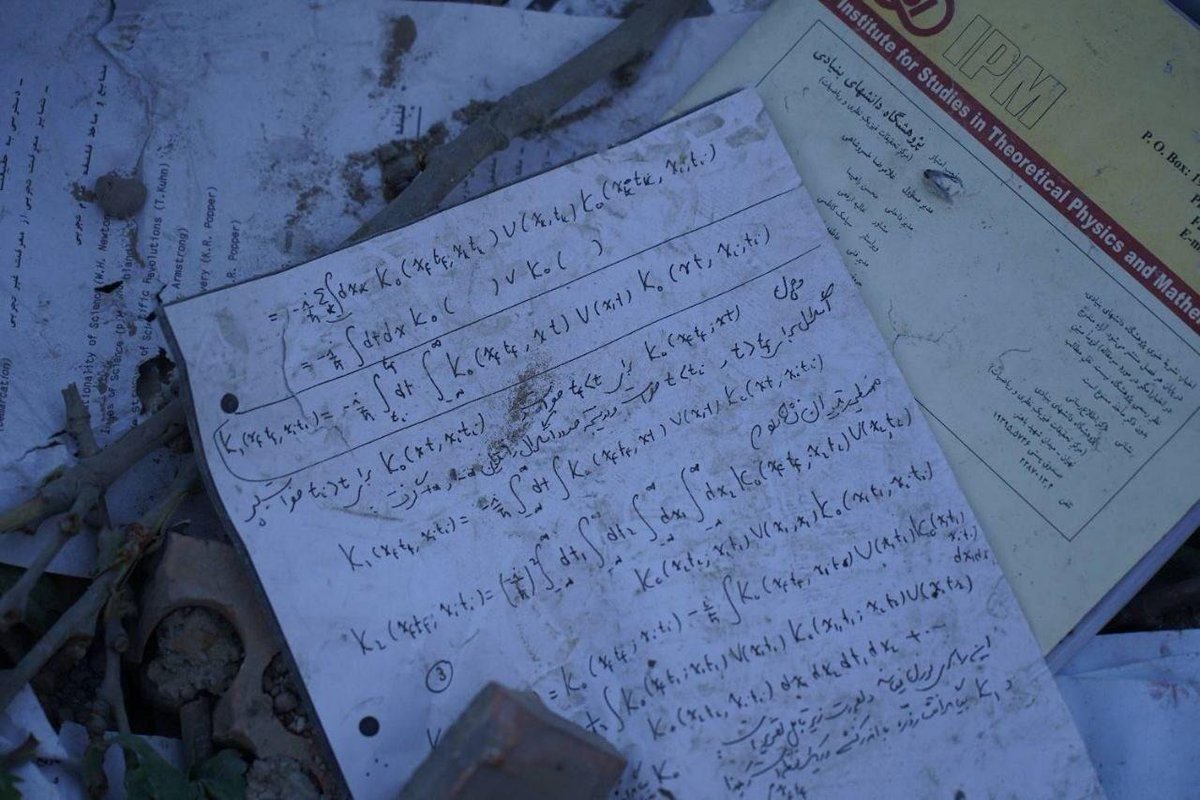
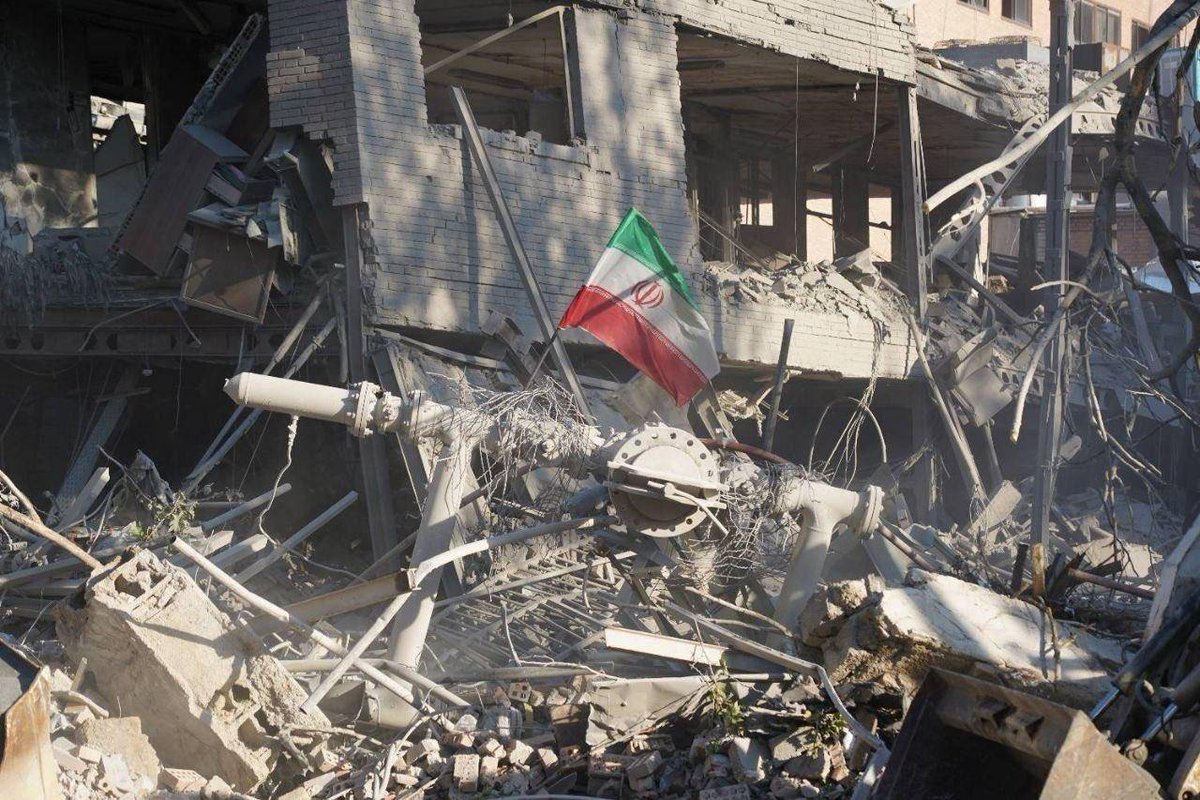
Israeli-U.S. aggressors have bombed the MIT of Iran. This follows attacks on other universities.
1,400 years ago, Prophet Muhammad (PBUH) said that even if knowledge was situated in the distant Pleiades, Iranians would be capable of attaining it.
Aggressors will see our might.
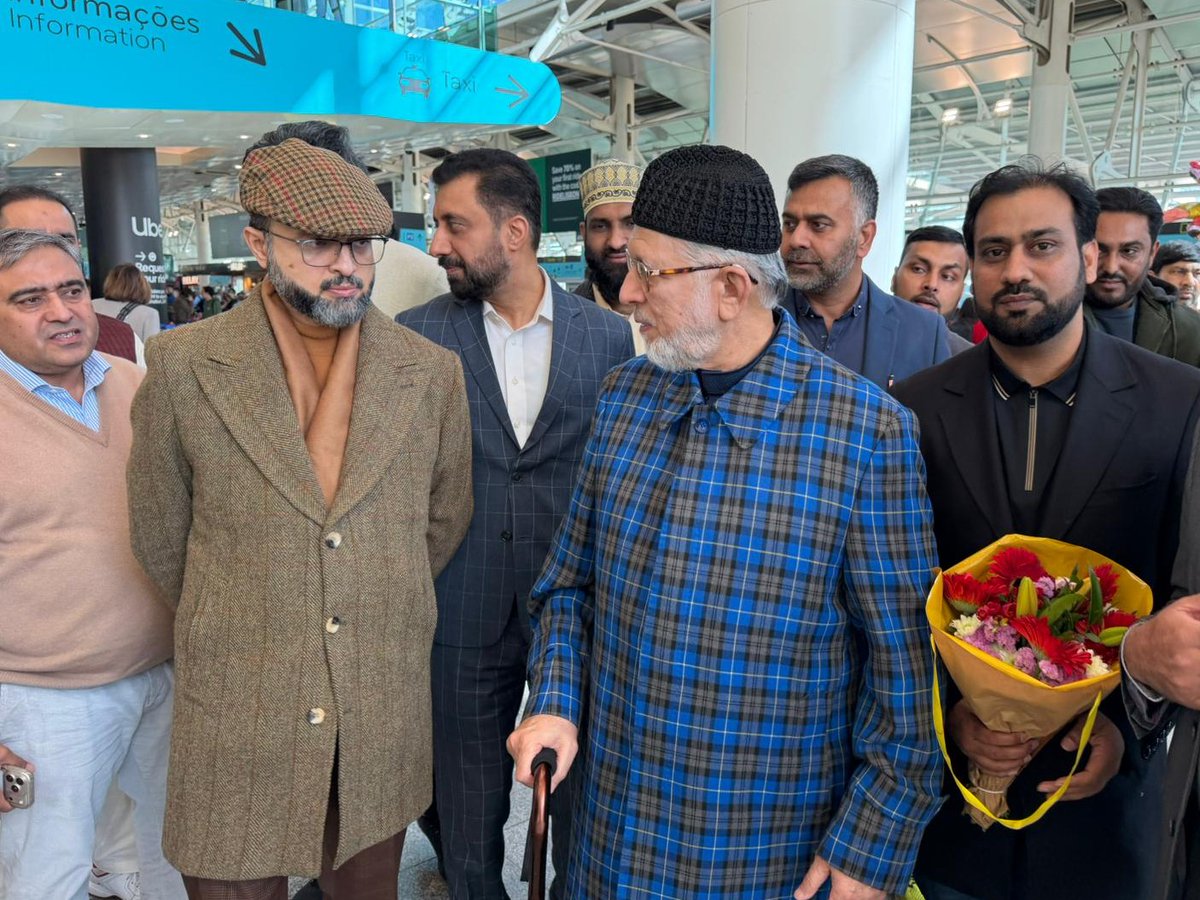
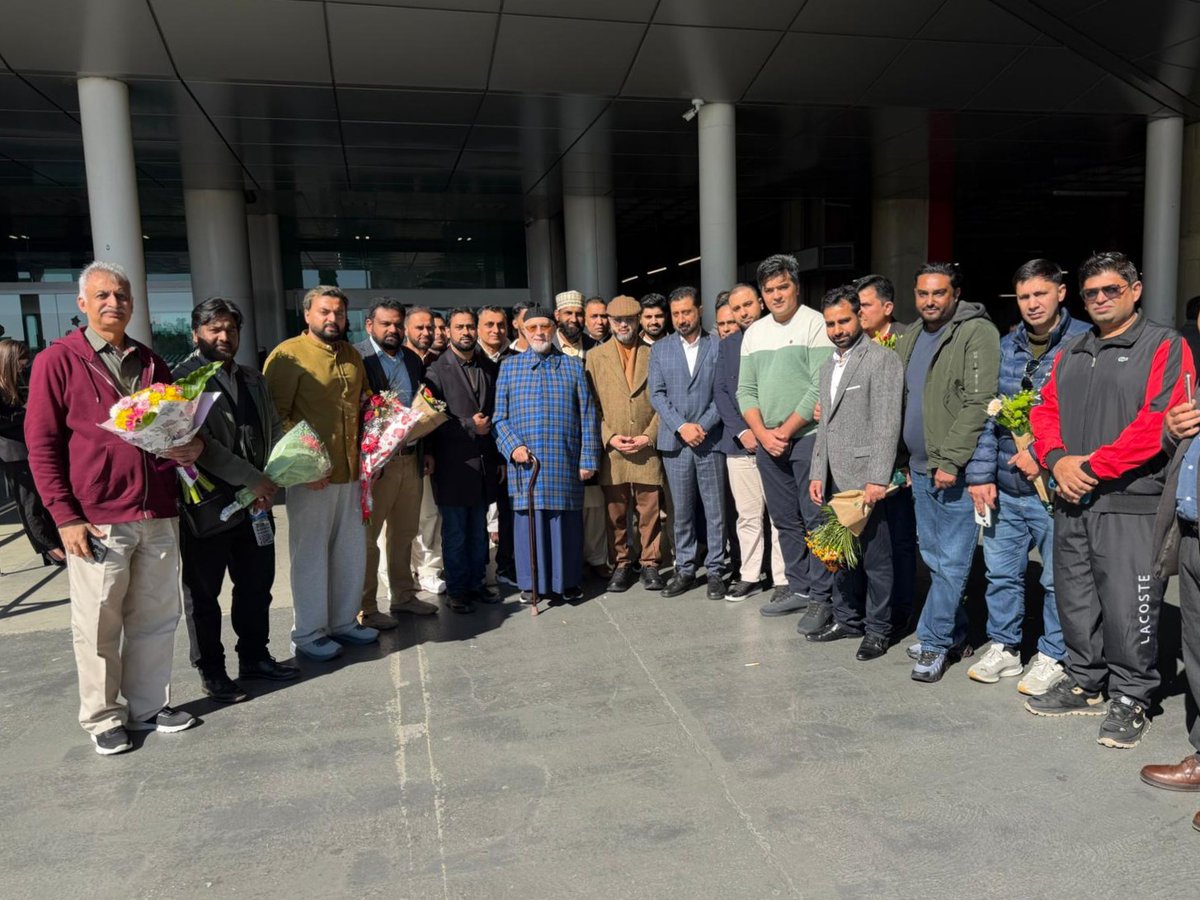
Lisbon, Portugal: His Eminence Shaykh-ul-Islam Dr. Muhammad Tahir-ul-Qadri arrived at Lisbon International Airport, where he was warmly welcomed by Chairman Supreme Council, Prof. Dr. Hassan Mohiuddin Qadri.
Upon his arrival, His Eminence Shaykh ul Islam received a heartfelt welcome filled with devotion and enthusiasm. Those present to greet him included Bilal Ashraf Uppal, Presidnet MEC; Hassan Bostan, General Secretary, MEC; Qaiser Najeeb, President MQI Denmark; Muhammad Sagheer, Patron of Minhaj-ul-Quran Portugal; Zill Hassan, President MQI Spain; Kashif Nazir, President of MQI Portugal; Azhar Awan, Vice President MQI Portugal; Muhammad Rizwan, Babar Nawaz, Hafiz Shoaib, Ghaznfar Nazir, Hafiz Shafqat, Qari Amjad, Hafiz Ghulam Dastagir, Ali Sagheer, Mirza Zahid, Sufyan Yousaf, Qasim Nazir, Muhammad Faheem-ur-Rehman, along with a large number of office-bearers and workers, were present. They accorded a warm and enthusiastic welcome to His Eminence Shaykh-ul-Islam upon his arrival at Lisbon Airport, showered rose petals, and expressed their profound love, devotion, and heartfelt respect.
It is noteworthy that the purpose of His Eminence Shaykh-ul-Islam’s visit to Portugal is to deliver a keynote address at the “Seerah-un-Nabi ﷺ and World Peace Conference,” as well as participate in various organisational meetings and seminars.
#MinhajulQuran #ShaykhulIslam #Peace #Minhaj #Lisbon #Portugal #LoveisLove #InterfaithHarmony #IslamicValues #DrTahirulQadri #ForYouPage
Israel and its partner-in-crime believe that knowledge can be bombed away.
It's reflected in the murders of Iran's scientists and attacks on Iran's nuclear sites, and now universities.
Reality check: your actions ooze of desperation and only inspire more pursuit of knowledge..
Israeli soldiers GANG RAPED a Palestinian captive ON CAMERA.
This then triggered pro-rape RIOTS in Israel. Literally!
This was one of the rare cases the IDF took up against their soldiers, clearly to deter the ICC from further arrest warrants.
It was never going to be pursued.
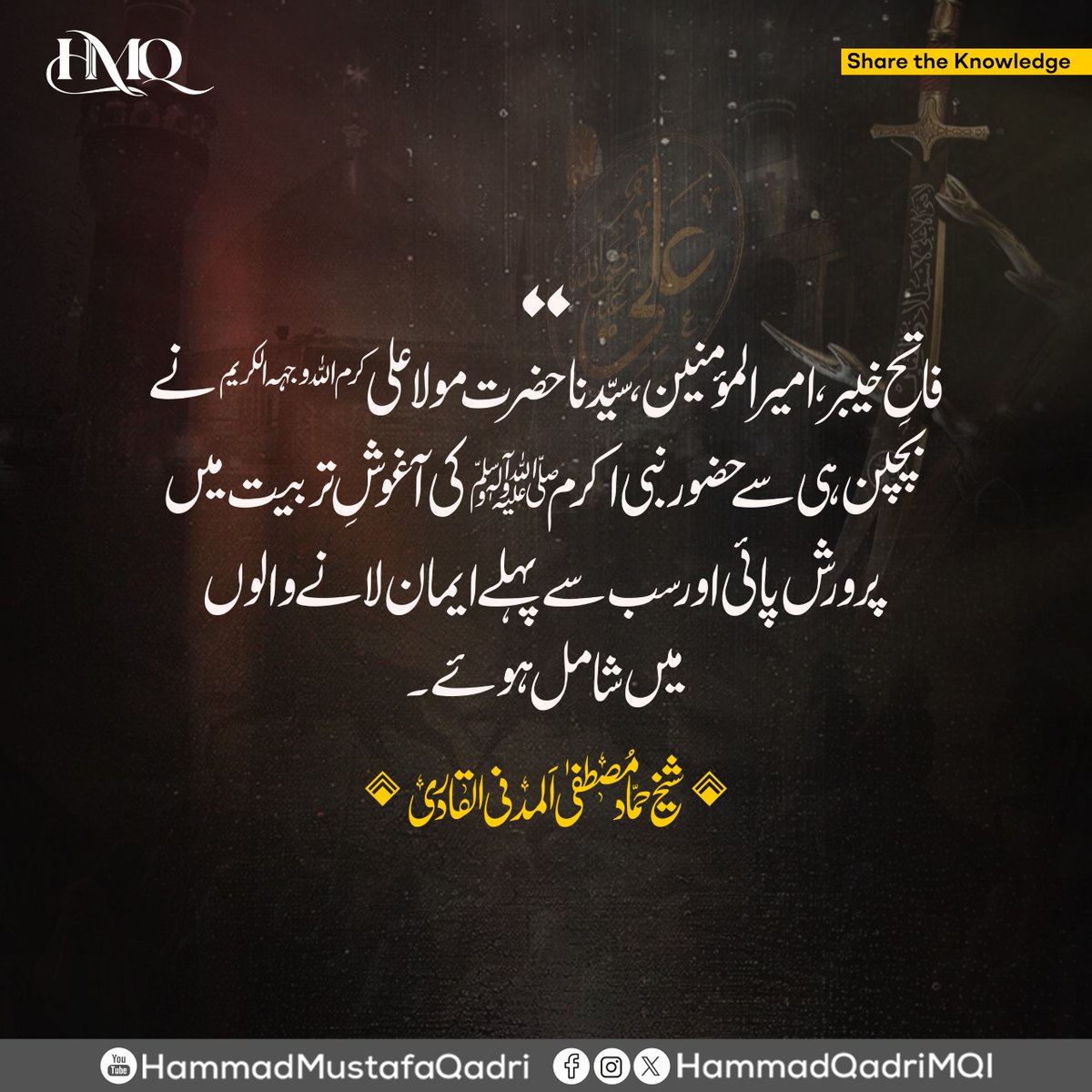
فاتحِ خیبر، امیرالمؤمنین، سیّدنا حضرت مولا علی کرم اللہ وجہہ الکریم نے بچپن ہی سے حضور نبی اکرم ﷺ کی آغوشِ تربیت میں پرورش پائی اور سب سے پہلے ایمان لانے والوں میں شامل ہوئے۔
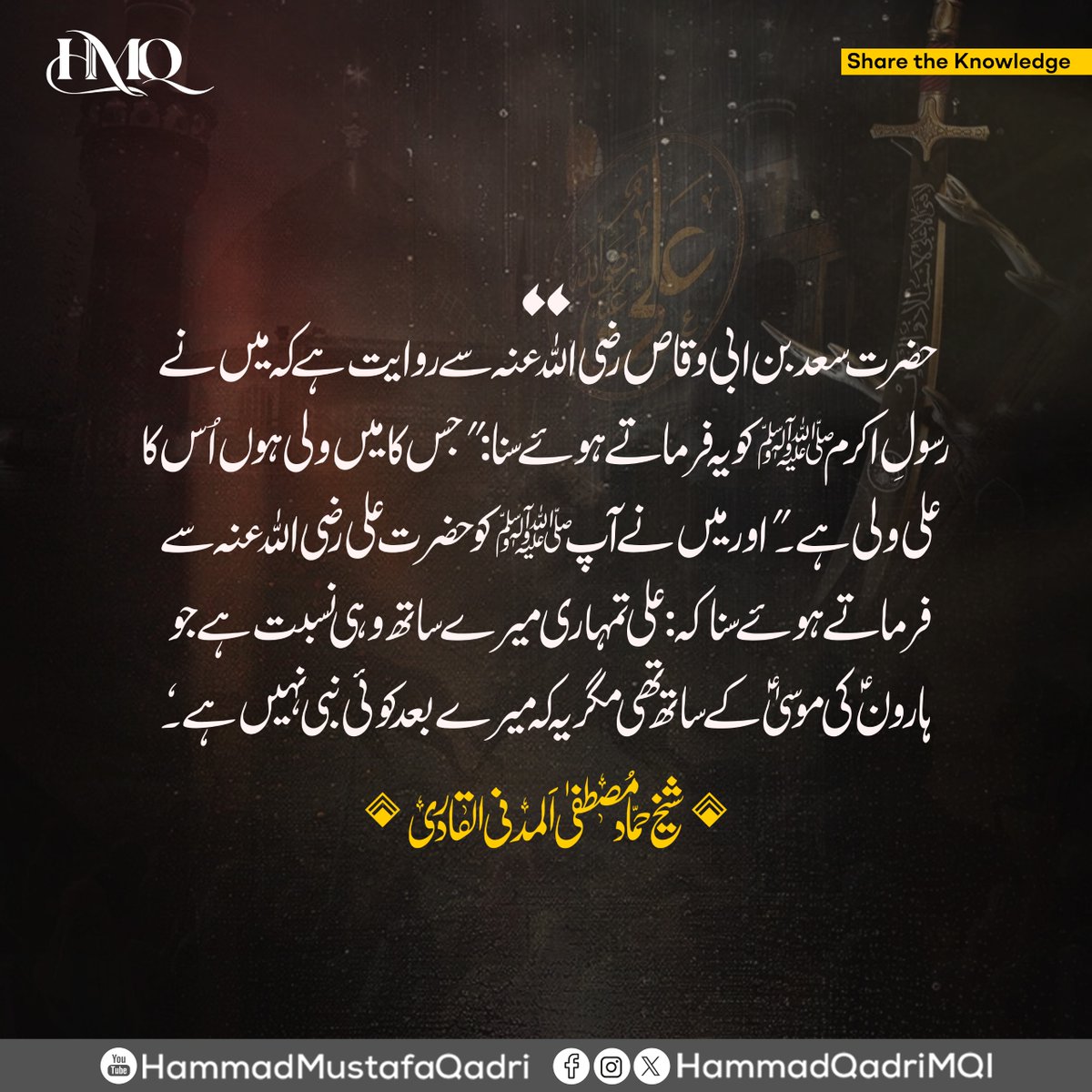
حضرت سعد بن ابی وقاص رضی اللہ عنہ سے روایت ہے کہ میں نے رسولِ اکرم ﷺ کو یہ فرماتے ہوئے سنا : " جس کا میں ولی ہوں اُس کا علی ولی ہے۔" اور میں نے آپ �� کو حضرت علی رضی اللہ عنہ سے فرماتے ہوئے سنا کہ: علی تمہاری میرے ساتھ وہی نسبت ہے جو ہارونؑ کی موسیٰؑ کے ساتھ تھی مگر یہ کہ میرے بعد کوئی نبی نہیں ہے۔‘
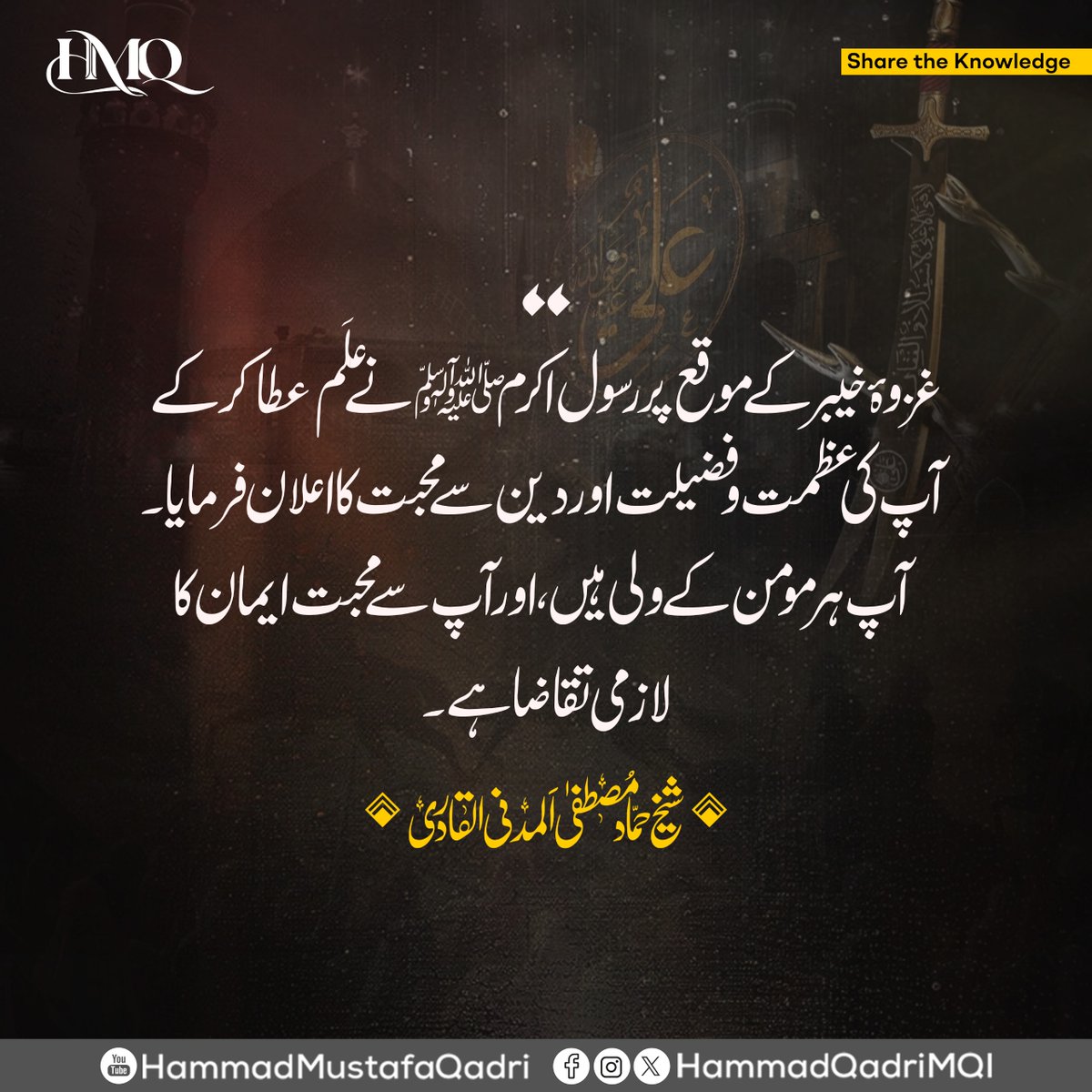
غزوۂ خیبر کے موقع پر رسول اکرم ﷺ نے عَلَم عطا کرکے ��پ کی عظمت و فضیلت اور دین سے محبت کا اعلان فرمایا۔ آپ ہر مومن کے ولی ہیں، اور آپ سے محبت ایمان کا لازمی تقاضا ہے۔
#ShaykhHammadMustafa #HMQ #ShaykhHammadQadri #hazratali #martyrdomofali
21st Ramadan
The Lion of God: A Lesson in Self-Restraint
Imām ʿAlī b. Abī Ṭālib is the Lion of Allāh and father of the Holy Prophet’s grandsons. He is the guiding light on the path of chivalry (futuwwa). His person was defined by deep knowledge, generosity, and unwavering loyalty.
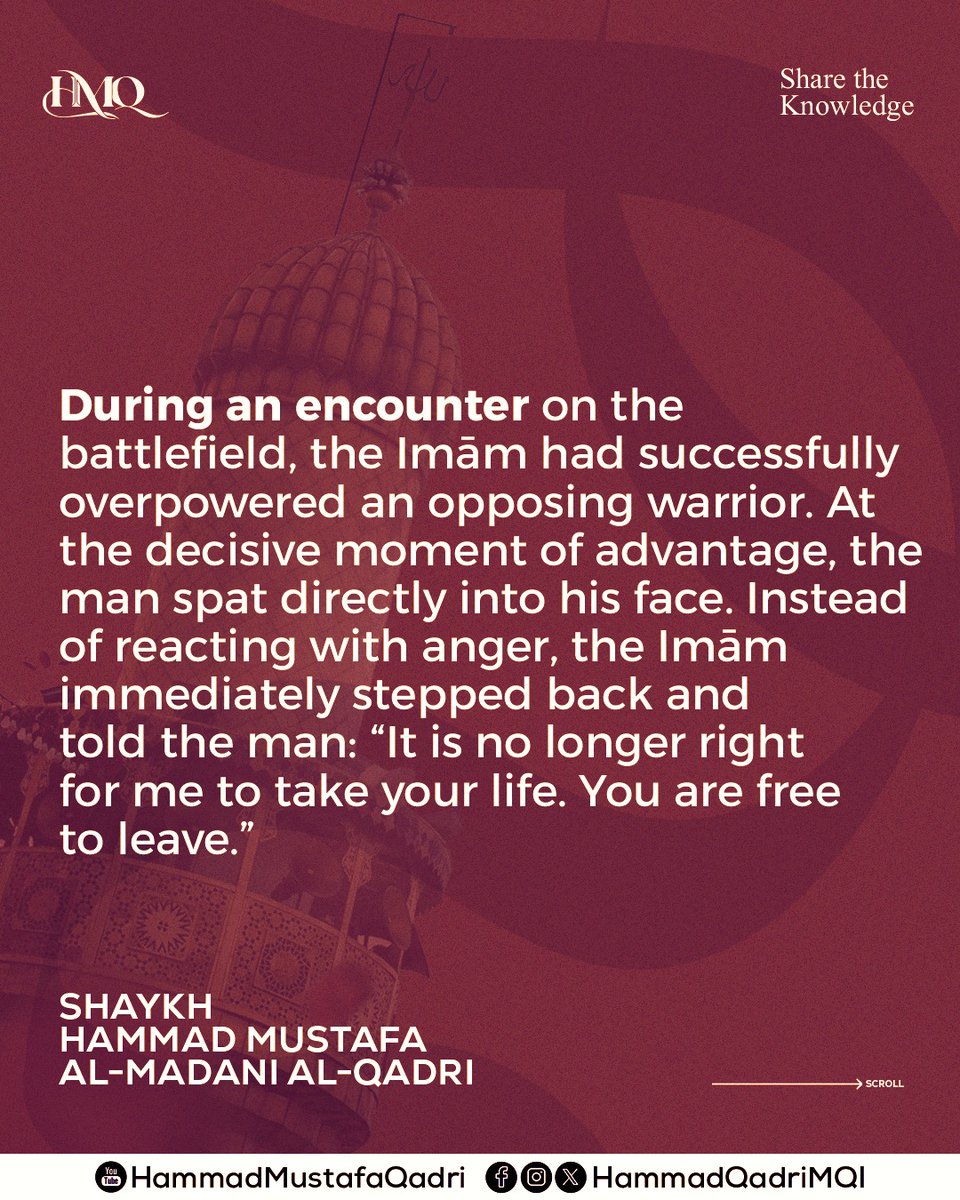
During an encounter on the battlefield, the Imām had successfully overpowered an opposing warrior. At the decisive moment of advantage, the man spat directly into his face. Instead of reacting with anger, the Imām immediately stepped back and told the man: “It is no longer right for me to take your life. You are free to leave.”
The warrior was stunned. “O, ʿAlī! I was at your mercy,” he said. “I insulted you, and yet you let me go. Why?” Imām ʿAlī’s response was clear: “When you spat on me, it provoked my ego. Had I ended your life then, it would have been for my own sake, not for attaining God’s pleasure. I would have become a murderer. You are free to go.”
Moved by this display of moral purity, the warrior was completely transformed. Witnessing a level of integrity that transcended the conflict itself, he embraced the faith on the spot. It remains a timeless reminder that true power is not found in subduing others, but in the conquest of oneself.
#ShaykhHammadMustafa #HMQ #ShaykhHammadQadri #hazratali #martyrdomofali
Victory Through Mercy
For thirteen years in Makkah, the Holy Prophet ﷺ and his followers endured relentless hardship and mistreatment. Despite their commitment to peaceful teaching, the hostility eventually forced them to leave their homeland. Even after this migration, their adversaries continued to pursue them, launching campaigns to dismantle their community and faith.
Eight years after their exodus, the Holy Prophet ﷺ returned to the gates of Makkah with a company of ten thousand. As they entered the city, the weight of years of suffering was palpable. One of his companions, caught up in the gravity of the moment, called out to the people: “Today is the day of retribution!”
When the Holy Prophet ﷺ heard this, he immediately corrected them and replaced the call for vengeance with a message of reconciliation. He ﷺ declared: “Today is the day of forgiveness.” In an extraordinary act of clemency, he moved past years of conflict to offer peace, teaching that the ultimate victory is found not in revenge, but in the strength to show mercy.
#ShaykhHammadQadri #HMQ #Forgiveness #Ramadan #ConquestOfMakkah #makkah_al_mukaaramah
Ramadan is not merely a month of fasting; it is a month for renewing one’s relationship with the Qur’an through recitation, reflection, and understanding its message. For this reason, it becomes a means of spiritual and intellectual growth for the believer.
#Ramadan#Quran #SpiritualGrowth