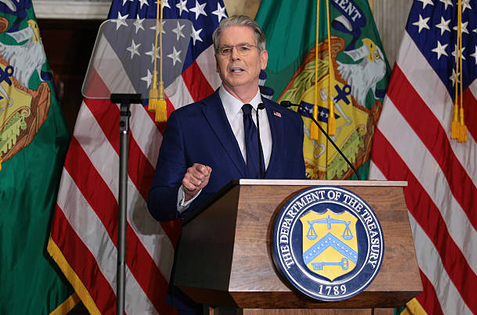
Treasury Secretary Scott Bessent recently moved out of his home and onto a military base after Iranian threats against his life, three people with knowledge told The New York Times. U.S. officials concluded in recent weeks that Iranian plotting against current and former American officials has reached a more advanced stage, based in part on intelligence about threats to Bessent, according to the report.
Bessent has led an economic pressure campaign, Operation Economic Outcast, against Iran since August aimed at cutting off money to the Islamic Revolutionary Guard Corps (IRGC), which the Times says made him one of the officials Iran most wants to harm. Secretary Bessent is the latest administration official to relocate to a military base due to security concerns.
I couldn’t resist translating Puma Shen’s closing remarks from the Taipei mayoral debate and adding English subtitles. They moved me deeply.
As an American citizen who escaped the CCP’s authoritarian rule as an adult, I’ve watched the free world grow increasingly divided, its politics ever more bitter and stripped of dignity.
Yet here I am, fortunate enough to call Taipei home.
As a foreign observer of this election, I’ve been repeatedly moved by Puma and his team. But these closing remarks went far beyond a mayoral debate.
They reminded me of what democratic politics can be—and what they should be.
At a time when political competition across the free world grows increasingly hostile, what I’ve witnessed in Taipei feels like a breath of fresh air—a reminder that democracy can still be practiced with grace, compassion, and dignity.
I wanted the world to hear this speech, especially the words Puma quoted from Taiwanese cultural figure Kevin Tsai:
“Don’t worry about which candidate wins. What matters is whether YOU win. When you cast your vote for the way of life you want, you’ve already won.”
And I’d like to add something of my own:
When a warm current of hope flows through your hometown, reaching beyond its own people to touch the hearts of strangers—when it makes those who have wandered far from home feel they can finally put down roots—then it isn’t just you who have won.
Your hometown has won. Your country has won.
May this speech carry a little of that warmth to you, wherever you are, and rekindle the light of hope in your eyes.
Because isn’t that what politics should be about?
#洋流
Sevgili Tayvanlılar, Hongkonglular, Tibetliler, Japonlar ve Koreliler, şimdiye kadar neler yaşadığınızı farkedemediğim için özür dilerim. Bundan sonra yalnız değilsiniz. Çinlilerle muhattap olduktan sonra, ne ile karşı karşıya olduğunuzu çok daha iyi anladım.
As I was writing this column, I kept coming back to what Taiwan itself felt like. I spent time there this summer, and what stayed with me wasn’t the politics but the texture of ordinary life. It’s a free, unshowy democracy holding to what it values.
https://t.co/hRkYqDVlOb
Taiwan just launched its own international alliance, and Beijing hasn't figured out how to stop it yet.
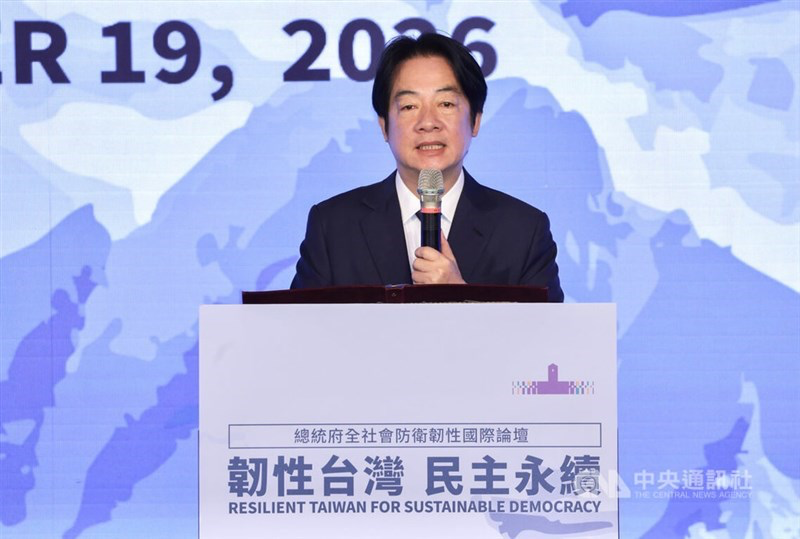
President Lai formally established the World Alliance for Disaster Management on September 19, calling it Taiwan's biggest advance in international organization-building in over half a century. Thirteen founding members signed on, including Taiwan's diplomatic allies and Somaliland. The US, Japan, UK, and Germany joined as observers or partners, bringing total participation to over 40 countries and entities.
The framing is deliberate. Disaster cooperation is harder for Beijing to block than a security pact. Countries can join a typhoon and earthquake training network without formally recognizing Taiwan as a state, keeping the political cost low enough that even major powers are comfortable participating.
The operational backbone is Asia's largest fire and rescue training center in Nantou County, running roughly 300,000 person-days of training annually across simulated earthquakes, aviation disasters, hazmat incidents, and drone response.
China hasn't publicly responded. There's no clean way to object to disaster preparedness without looking like you're against helping people after earthquakes.
Now is a great time to rewatch my interview with Taiwan’s Vice President @Bikhim.
Xi Jinping frames the Taiwan question as some inevitable “reunification.” It’s not. Taiwan is the centerpiece of a modern imperial project enforced through economic blackmail, military intimidation, and decades of Western elites convincing themselves the CCP would liberalize if we just handed Beijing more factories, more capital, more technology, and more leverage over our economy.
That delusion already hollowed out America’s manufacturing base and shipped our industrial power overseas. President Trump should make clear Taiwan is an American red line, and that the same failed bipartisan consensus that sold out American workers will not be allowed to hand the CCP geopolitical dominance in Asia too.