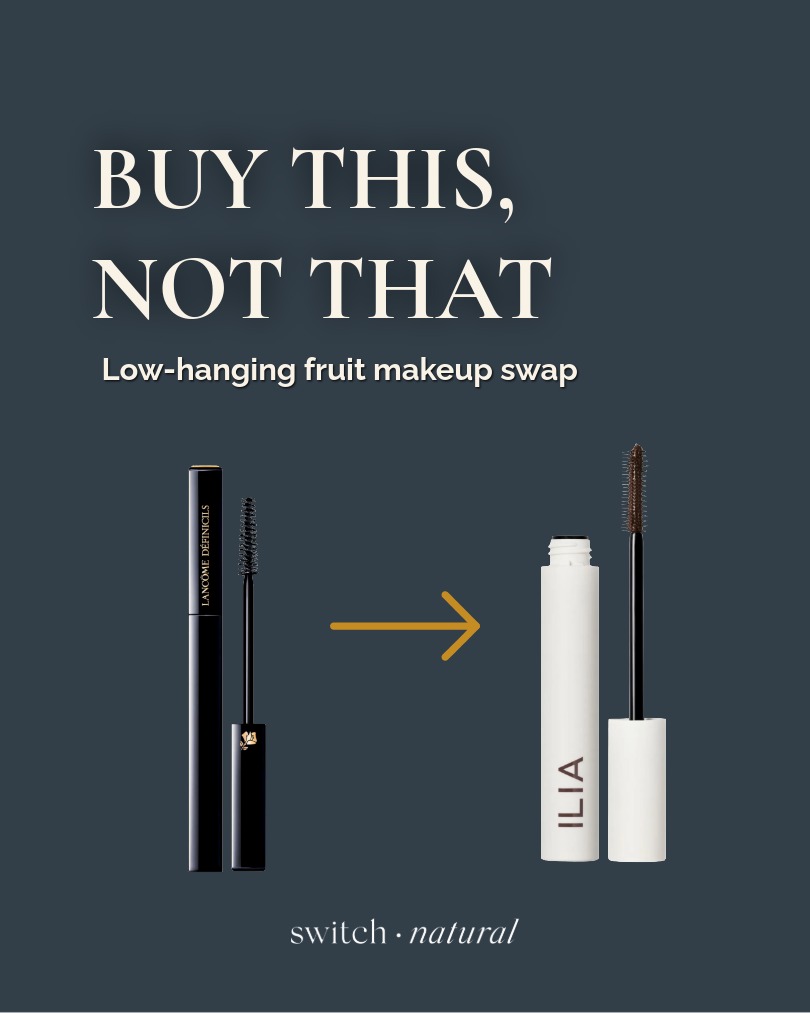
Why do we want our products sitting in aluminum? We don't, and neither do the brands. That's why aluminum packaging is lined with a thin layer of plastic, so the aluminum doesn't corrode and leach into your product.
I can't find one good reason to buy a mascara with a formaldehyde releaser, endocrine disrupting preservatives, and chemicals that can have carcinogenic contaminants.
Beauty products truly are the low hanging fruit when it comes to health conscious decisions.
With the performance of clean options these days, it's easy if you know what to look out for.
A known carcinogen is legally added to makeup, to give it a longer shelf life, even though safer options exist. Look out for formaldehyde releasers that slowly release formaldehyde over time.
I sigh in disappointment every time I see a newly launched beauty product with ingredients we've long known are harmful. It's like, why?
Talc, formaldehyde releasers, and PFAS have no business in beauty.
I built my app to find these for you.
The L'Oréal hair relaxer suit names carcinogens and endocrine disruptors that are also used in many other cosmetics, not just relaxers.
It's why I flag these ingredients in my product scanning app, Switch Natural.
The suit alleges L'Oréal knew about the cancer research and kept marketing the relaxers as safe, including a line made for children. Not ok.
@JaiAshar Hi. It shows the list of potentially harmful ingredients. When you tap the ingredient it gives you a description as to why it’s flagged, with clickable links to the relevant sources or peer reviewed research. Sounds like just what you are looking for.
I built a scanning app that purposely doesn't score products.
A health app should help you make a better choice, not hand you an answer to blindly abide by.
Arizona just sued L'Oréal over its chemical hair relaxers, citing studies over more than a decade that link frequent use to a higher risk of certain cancers.
https://t.co/lLCBMmIUaY
If your lash serum lists bimatoprost, isopropyl cloprostenate, dehydrolatanoprost, or ethylcloprostenolamide, that's a prostaglandin, a drug in the same class used to treat glaucoma.
Beware companies are not disclosing the drug warnings, and it's not worth the risks.
The latest lash growth serum lawsuit isn't a one-off: Rodan + Fields settled for $38 million, GrandeLash for $6.25 million, RevitaLash for $4.17 million, and Babe Lash for $2.3 million.
And this August, a new suit was filed against LiLash.
Popular lash growth serums keep getting sued, and the risks are real - eye discoloration, loss of fat around the eyes, irritation, and they're not recommended in pregnancy.
Reduce your exposure to forever chemicals by simply , steering clear of waterproof claims. And always avoid products with intentionally added PFAS on the label.