I did a podcast with @bbcworldservice on the Godzilla El Niño - and on some lessons from the past for what's coming towards us.
https://t.co/WvKlDGddw1
Before everyone gets carried away with the bombing of Kharg Island, there are a few things to know:
- It's got a military presence like everything else in Iran. That's what was struck. They'll most likely get replaced ASAP from the mainland.
- It also has 55 crude oil storage tanks that can capacitate over 34 million barrels. They're most likely unscathed.
- There was a VLCC supertanker today that was wrapping up her 48h loading there of 2 million barrels. A couple of smaller tankers loaded or were just berthed on the east side of the island.
- Kharg Island has been loading tankers non-stop since the war broke out two weeks ago.
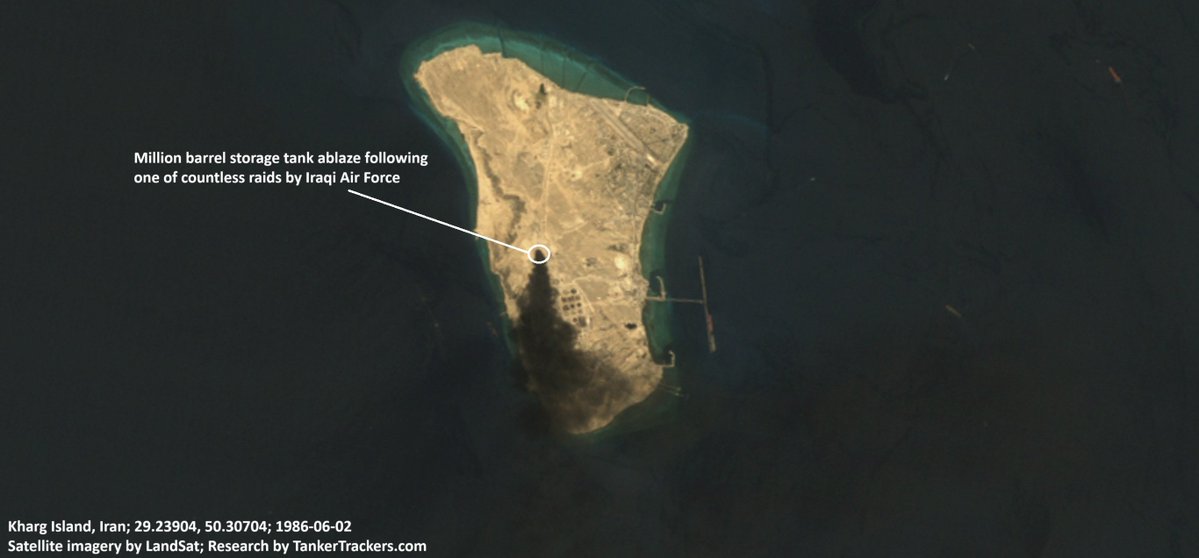
- If folks here start posting satellite data showing fires on the island to imply destruction of the oil facilities, then compare them against old images because there's gas flaring happening there daily. You can review them here: https://t.co/vA7XkKnKmY
- Although the island has some offshore oil production, the bulk of the oil actually derives from the mainland via multiple pipelines. The island first began exporting oil during the summer of 1960 and was built to capacitate 7 million barrels per day in exports, to reflect the potential in oil production. Iran hit 6.6 Mbpd in production back in 1976.
- According to our tracking, the island accounted for 96% of the Iran's crude oil exports during 2025; or 1.538 Mbpd of the 1.605 Mbpd total.
- When Saddam Hussein raided the island numerous times forty years ago and destroyed a number of storage tanks, Kharg Island was still able to export over 1.5 million barrels per day. Here's a 40 year old sat pic we keep handy.
Thanks,
/TT
#OOTT #Iran #KhargIsland #Tankers
they keep getting surprised by Iran because of this orientalist assumption they are fighting a bunch of clerics and not a people with their own view of geopolitics, national identity, and sense of sovereignty
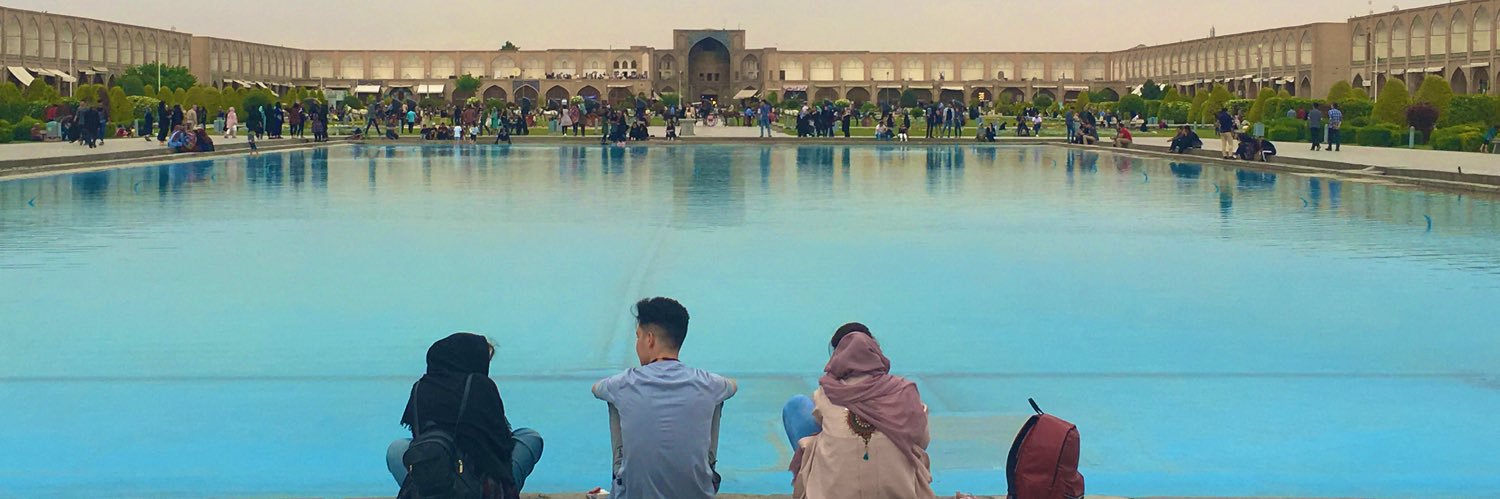
I’ve been thinking a lot about how so many Iranians in the diaspora have not been to Iran for decades, or if they are younger, have never been to Iran at all. We can call them the distant diaspora.
Many of the loudest calls for military intervention came from people who had recent experience of repression at the hands of the Islamic Republic. Their calls for war were motivated by the intensity of Iran’s crisis. They felt the potential benefits outweighed the potential harms—something had to change.
But I believe that for those who have been distant from Iran, a different dynamic mattered, one that was less about weighing the benefits and harms.
For many in the distant diaspora, a lack of familiarity with the place made it inherently easier to call for military intervention—Iran did not feel real and the idea of the country being in a war was necessarily abstract.
But I also believe, that at some subconscious level, many of these same people welcomed the war because they knew it would be destructive. It would be easier for them to remain alienated from an Iran that had been destroyed, than to grapple with the fact that they have been unable or unwilling to remain connected to a place of such profound beauty and meaning.
For many Iranians, it has been difficult to admit that Iran remained beautiful and joyous despite the repression of the Islamic Republic. They told themselves that the Islamic Republic had destroyed the country, but the resilience and vitality of the true Iran was still clear in the stories told by friends and family or the images that would seep through on social media, piercing through all the dark news. By believing that the Iran they loved ceased existing in 1979, they could mourn its death. This mourning was easier than the daily, needling grief of exile, whether forced (as it often was, at the hands of repressive leaders) or self-imposed.
For people struggling with these feelings, the prospect of Iran being destroyed by war and beset by insecurity may represent a kind of release. If Iran is a failed state, many in the diaspora will feel less regret about not being there. It will be easier to let go, or at least not to reach out.
In the aftermath of this war, the question of why they do not go to Iran will no longer hang over the distant diaspora in the same way—they always said Iran was a ruined country, and it will finally be so. The war will make it easier to justify their alienation from their homeland and this alone will feel like a kind of freedom.
I don’t say this with any judgement—ultimately, I am describing a kind of coping mechanism that allows people to deal with very heavy feelings of alienation and powerlessness. But I do think we need to understand why the diaspora pushed for actions that brought so much destruction to Iran. It was not out of naivety, at least not entirely. Many knew destruction would come and they were seeking its release.
Poor, poor, George W. Bush. His entire legacy is being removed piece by piece.
• Most incompetent President - gone.
• Worst war - gone.
• Most unpopular President - gone.
• President most likely to favor the wealthy - gone.
• President with the worst economic plan - gone.
After a classified briefing from Secretary Rubio, “I have no idea why we entered this war,” Senator @ChrisMurphyCT tells me. He fears “we may be… bombing Iran for months, if not the better part of this year. This is about as incoherent, incompetent and confusing a rollout of military action overseas as I’ve ever seen.”
I believe the last time the U.S. government provided wartime insurance for commercial shipping was during the Second World War.
Again, there is no recent precedent for the crisis unfolding in the Persian Gulf.
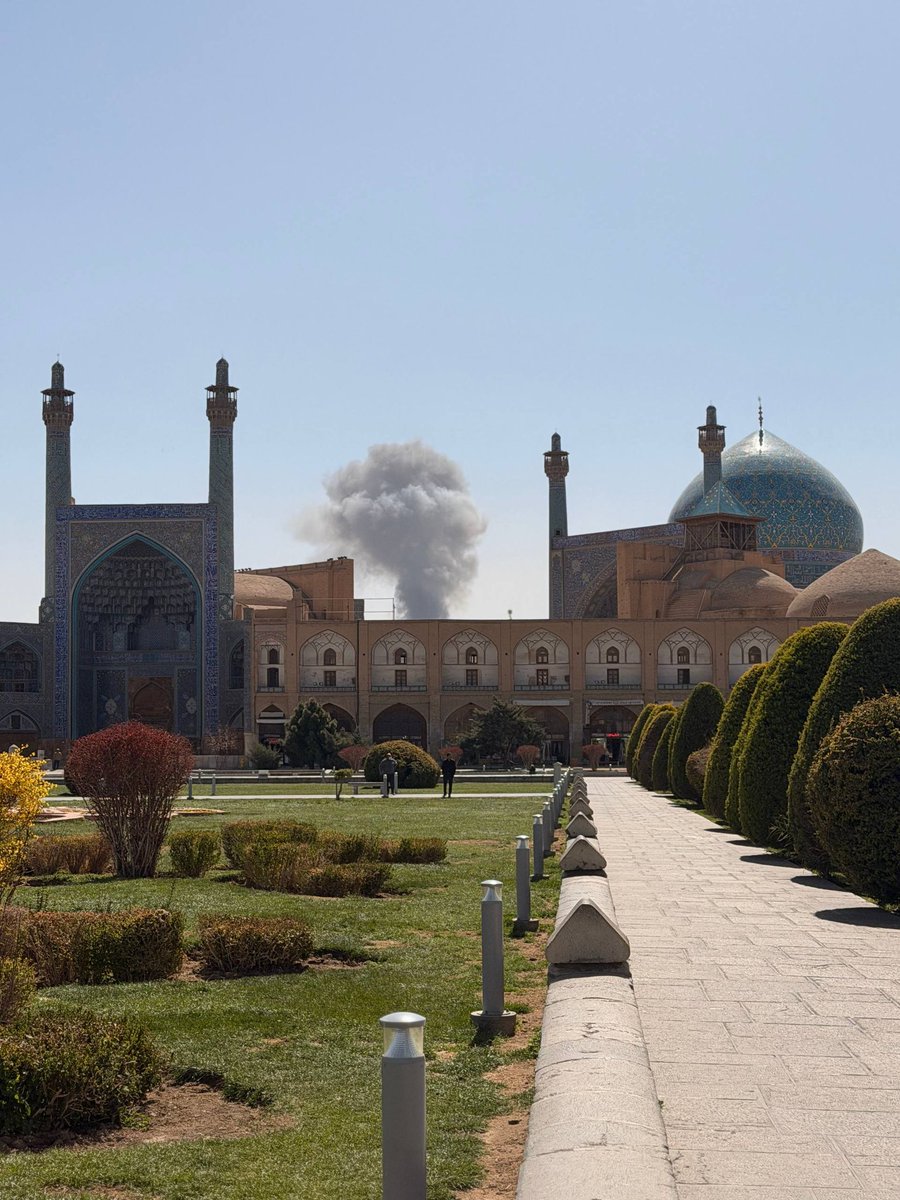
Tehran's historic Golestan Palace, a UNESCO World Heritage site, has sustained major damage after US-Israeli strikes on Iran.
UNESCO has expressed ‘concern’ over the protection of heritage sites across the Middle East amid the escalating war.
In 60 hours the justification for the US attack has revolved between stopping an imminent nuclear threat, stopping a conventional threat cocooning a nuclear programme, protecting Iranian civilians & now launching a pre-emptive attack because Israel was going to attack Iran anyway
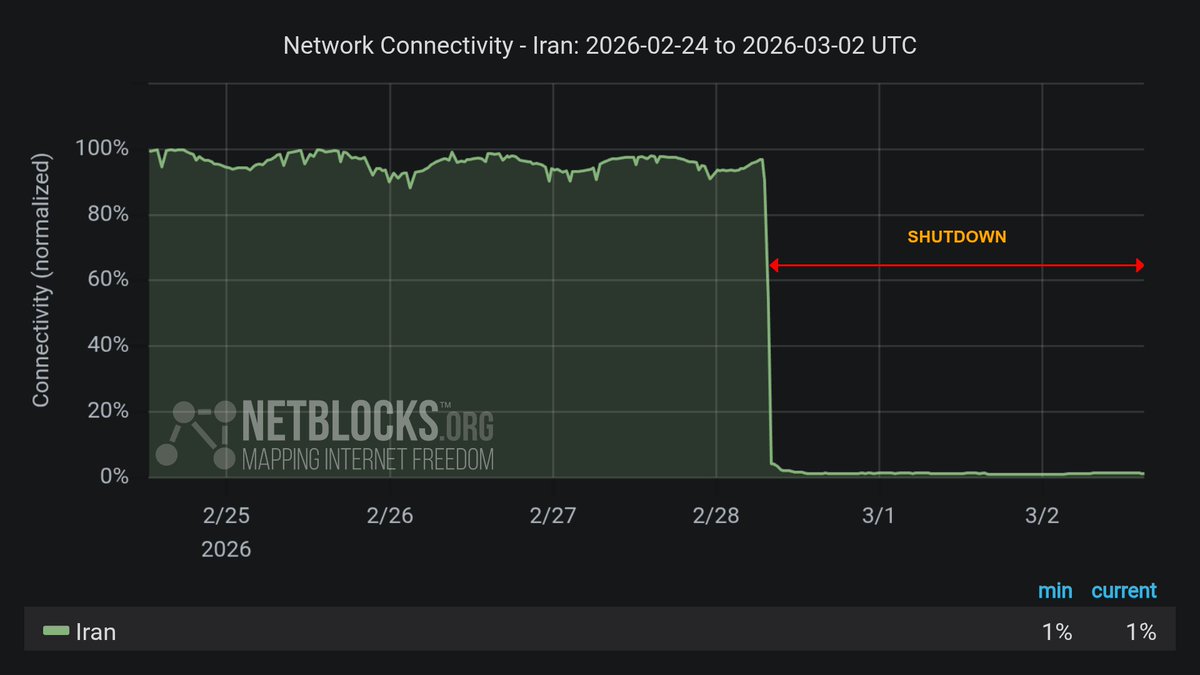
⚠️ Update: #Iran's internet blackout has now passed the 60-hour mark.
The incident leaves the people cut off from the world without access to sources of information vital for safety and situational awareness, and out of touch with loved ones abroad as the conflict escalates.
I told @BeckyCNN that this war is quickly escalating on all levels: casualties, targets, countries involved, narrative, response and cost. This is exactly what the majority of regional countries wanted to avoid. Any retaliation from the Gulf is approached as *defensive,* ¬ offensive against #Iran, &it looks coming.
https://t.co/K6qCAKmJPX