10 GitHub Repos Builders Are Starring Right Now (and What They Do)
1) EvoMap (EvoX)
It remembers you across terminal, browser, and IDE, then turns wins into reusable Genes and Capsules.
https://t.co/6CGBajvk69
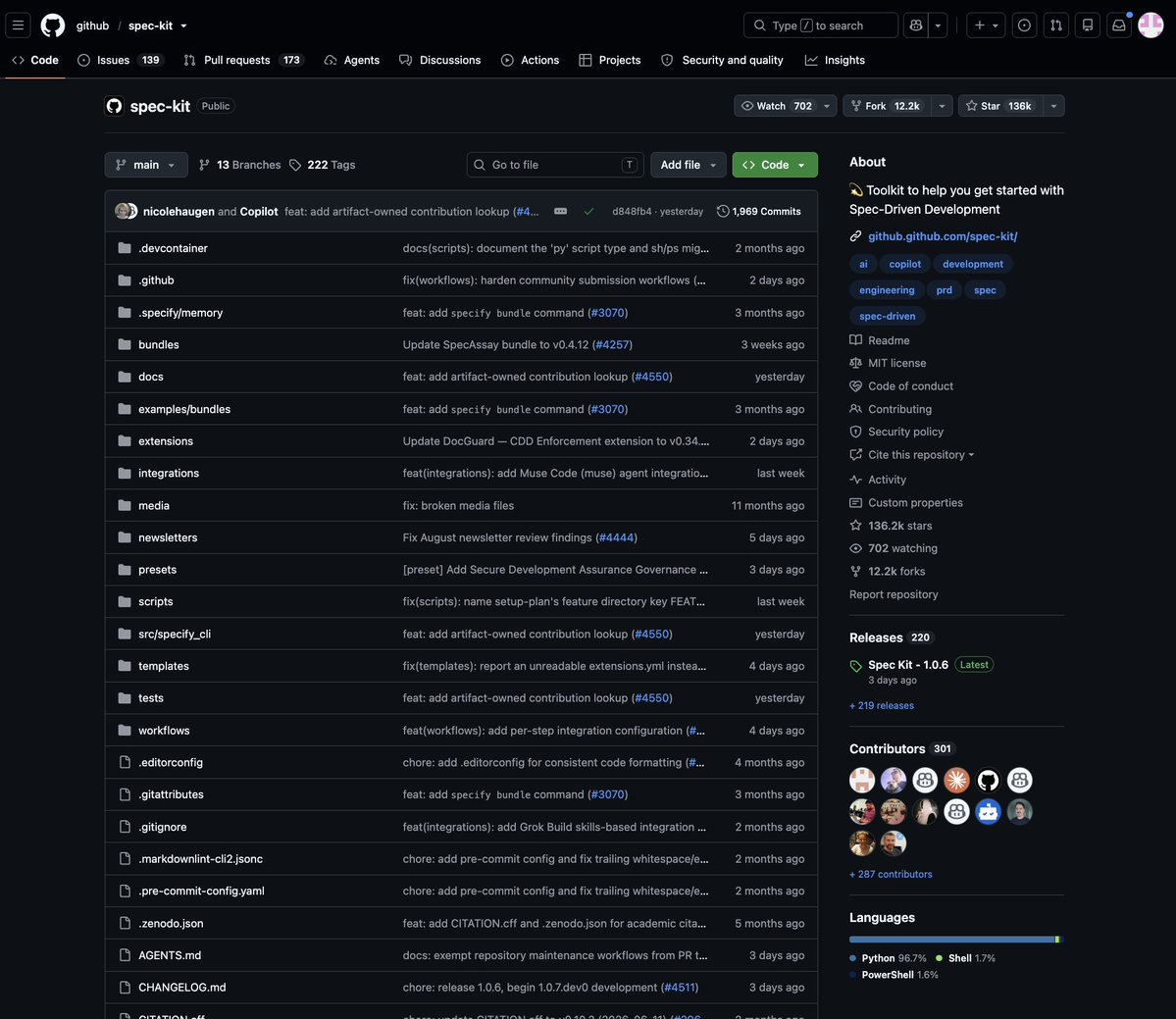
2) spec-kit — 136k+
GitHub’s toolkit for spec-driven development with coding agents.
https://t.co/XlG7ri27PF
3) ui-ux-pro-max-skill — 127k+
Agent skill that forces real design systems, not generic AI UI.
https://t.co/kwBb60nxot
4) awesome-mcp-servers — 94.9k+
The map of MCP servers worth plugging into your agent stack.
https://t.co/QFYeNpJwmZ
5) Cline — 67.9k+
Autonomous coding agent as SDK, IDE extension, or CLI.
https://t.co/wSbxxWUIQ2
6) mem0 — 65.2k+
Drop-in memory layer so agents remember across sessions.
https://t.co/iBhZH5OfOy
7) minimind — 60.9k+
Train a 64M LLM from scratch in about 2 hours.
https://t.co/uWd7dtNkml
8) archify — 60.2k+
Agent skill that turns a repo into verifiable architecture diagrams.
https://t.co/15HpAYtqMo
9) goose — 54.2k+
Block’s open source agent that goes past autocomplete.
https://t.co/Mv0fl1liAK
10) exo — 47.4k+
Run frontier models locally across the devices you already own.
https://t.co/ymDnmKeIZ7
Which one is already in your stack?
Infosec tradecraft just became reusable by AI agents.
SpecterOps just open-sourced:
79 skills.
22 reusable agents.
26 plugin families.
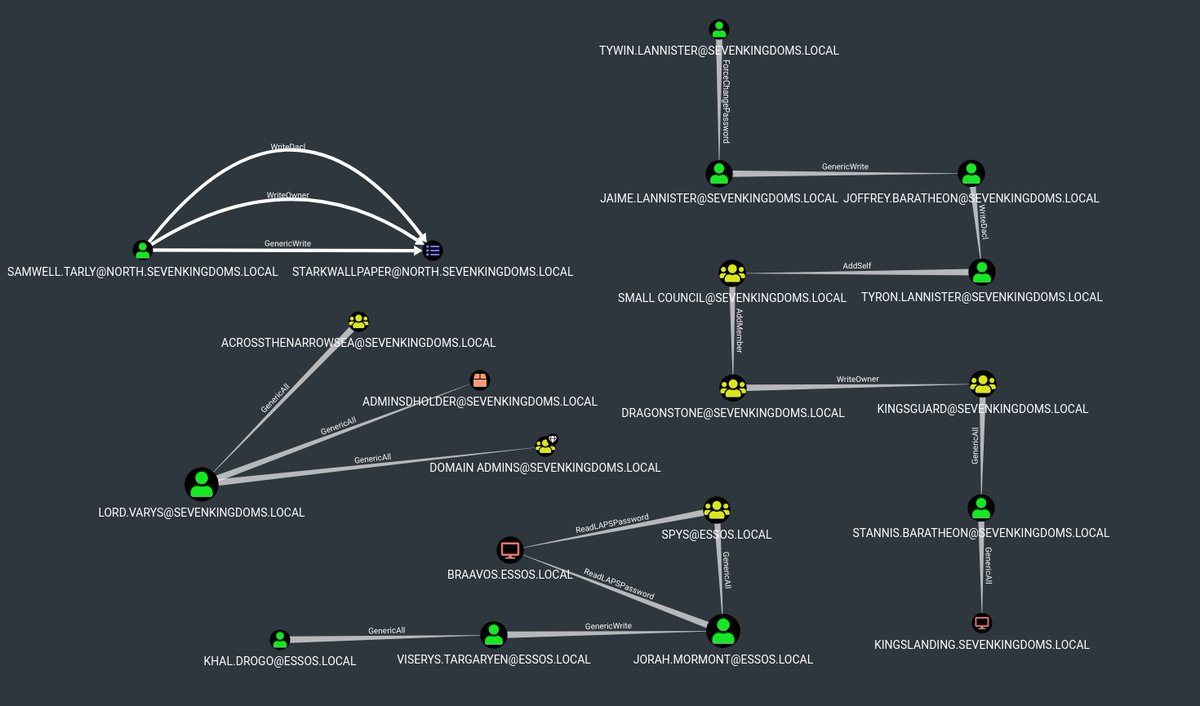
BloodHound. Cobalt Strike. Outflank C2. Ghidra. Binary Ninja. Ghostwriter. Recon. AppSec. Code review. C2 development. Reverse engineering. Adversary simulation. Windows + macOS tradecraft.
And this is NOT just for red teamers.
Vulnerability researchers:
These workflows could accelerate code review, patch analysis, 1-day research and potentially help with 0-day discovery when paired with real research expertise.
Reverse engineers + malware analysts:
Give agents structured workflows, references and tooling instead of starting every investigation from a blank prompt.
Blue teams + detection engineers:
Study the same offensive tradecraft, emulate attacker behavior, build better detections and start asking what telemetry survives increasingly agent-assisted operations.
DFIR + threat intel:
Understand what adversaries may automate next and turn repeatable investigative knowledge into reusable workflows.
Red teamers:
BloodHound attack paths, recon, C2 development, adversary simulation and operator tradecraft are becoming increasingly agent-assisted.
This isn't another collection of AI prompts.
It's practitioner knowledge being turned into reusable, reviewable security workflows.
Potentially useful for everyone from CTF learners and newcomers all the way to malware analysts, reverse engineers, exploit devs, red teams, blue teams and vulnerability researchers.
This is only the beginning.
@SpecterOps Skills:
https://t.co/Cj77Ir3Qlj
@OutflankNL and @kyleavery breakdown:
https://t.co/q5sEaZlp1E
#Infosec #RedTeam #ReverseEngineering
FINALLY, THE VIDEO IS LIVE! 🔥
If this video gets 1K likes and similar engagement to the recent one, I’ll drop the next video showing how to create custom Claude Skills using:
• Medium articles
• H1 disclosed bug bounty reports
• My own personal bug-hunting methods
• Open-source bug-hunting skills
I’ll also add the prompts used in this video and the upcoming video to my Medium articles, along with a more detailed guide.
https://t.co/Hcp0Dr2wJ0
Claude Code can use your iPhone! 📲
Introducing: phone-harness
> Automate any iOS app like a human
> native iPhone control → no API, no jailbreak
> Connect once, control anytime
Setup in one prompt.
Try it now! ↓
holy sh*t this is f**king insane
I cancelled my $200/mo Claude for this
I replaced opus 5 with deepseek v4-flash and someone figured out to how to use them as subagents on codex
[it takes 3 mins to set up here is how]
1. install this repo called 'model-router'
2. toggle subagent models > 'all selected models'
3. that's it
Introducing Magnitude: your actually local agent
100% private and offline. No token costs, no API keys. Open source.
Today's agents are local. The model isn't. Every prompt, every file, every secret gets sent straight to Anthropic and OpenAI.
Magnitude is built around local models and runs the whole stack itself. The inference engine is part of the agent, so the models run inside it, right on your computer.
It lives in your terminal, and setup is one command. Magnitude profiles your hardware and shows you which models fit, with the trade-offs between quality, speed, and memory. Pick one and start working. No painful config or server to babysit.
Out of the box, it can use your shell, edit files, and run scripts. Add skills and it can work with Excel, PowerPoint, PDFs or Chrome.
Use it for everyday work:
- Analyze sensitive data
- Manage private notes
- Review code and logs
- Search and organize files
- Build docs or slides
npm i -g @magnitudedev/cli
GitHub: https://t.co/5SjPQWkmrF
Do you know one of the ways police, military personnel, intelligence agencies, and digital forensics investigators can trace your activities?
They use call detail records, commonly known as CDRs.
CDR is telecom metadata generated when a mobile subscriber makes or receives a call, sends an SMS, or uses certain network services.
A CDR may contain:
Calling and receiving numbers
Date, time and duration
Incoming or outgoing direction
Cell tower or Cell ID used
IMSI, which identifies the SIM subscription
IMEI, which identifies the mobile device
Event type, such as call, SMS or data session
Roaming and network-routing information
A CDR normally does not contain the audio of a call or the content of an SMS. It records the circumstances surrounding the communication.
CDR analysis does not reveal what was said, it helps establish who, when, where and how. This is how you are mapped.
You see, for you to get the data for this work, you need to visit the telecom with a police report or warrant, and then it's game over.
CDR can be dangerous because it exposes a person’s behavioral patterns, even though it usually does not contain call audio or message content.
With enough records, someone may infer:
Who a person communicates with most.
Where they were approximately located.
Their daily routine, travel patterns and regular meeting places.
Relationships between individuals or groups.
Which SIM cards and devices they use.
Periods of coordinated activity.
Visits to sensitive locations, such as hospitals, courts, religious centres or political meetings.
#CDRAnalysis #DigitalForensics #DFIR #TelecomForensics #CrimeAnalysis #HIVEConsult
We've decided to open-source the CRM we built for ourselves at Comp AI.
It's agentic-first, which we mean literally: durable research agents.
MIT license. Built using next, eve, and context.