The Health Syndrome: public health, mental health, addiction; rights, equity; environment; people & society; creativity; tech4good. Personal views. #FRSA
Today, 10th September, is World Suicide Prevention Day.
It is a day to pause and reflect.
For some, it is a day of action and advocacy. For others, it is deeply personal: a day that brings into sharp focus someone they have loved and dearly miss….
🔗https://t.co/zKtuXi1iY1
Update: Following the immediate closure of Papyrus Prevention of Young Suicide, any young person feeling suicidal, or anyone concerned about a young person, is encouraged to reach out to one of the following services for help:
•Call Samaritans on 116123 (24 hours)
•Text SHOUT to 85258
•Call Childline on 0800 1111 (24 hours)
•Call NHS 24 on 111 (24 hours)
Call 999 if you, or someone else, is in immediate danger.
For more information, please visit: https://t.co/MaebczfM5O
10 to 16 year olds in Glasgow can access FREE mental health support from Kooth.
Just sign up and access your anonymous, online mental health support.
No waiting lists, so you can take control of your mental health today. 👉https://t.co/4UCOuEW4W8
Glasgow City Council
144,000: Of the 720,000 unpaid carers in Scotland*, 144,000 are caring for someone with Dementia & 69% report that it negatively impacts their mental health.**
Find out how we can help: https://t.co/CuWmxm14Mm
*Scottish Gov. Carers Census & Update (2024, June 2026) | @alzscot
[Thread] [1/6] Je pense que l’on peut désormais affirmer que la France traverse la plus grandes catastrophe agricole nationale depuis 1945. Sans aide publique, 30 000 à 35 000 exploitations pourraient se retrouver en situation de faillite, soit près de 10 % des exploitations agricoles françaises. C’est monstrueux.
Les conditions climatiques exceptionnelles que nous connaissons aujourd’hui se rapprochent de ce qui deviendra beaucoup plus fréquent, voire ordinaire, dans les prochaines décennies. 2026 sera dans la moyenne de 2050. Nous connaîtrons encore des années plus chaudes et plus extrêmes que 2026.
Le constat devient donc difficile à éviter : notre modèle agricole n’est pas suffisamment préparé au changement climatique qui arrive. C’est aussi le résultat d’un échec politique collectif : les gouvernements successifs n’ont pas suffisamment pris la mesure de l’ampleur des bouleversements que le changement climatique impose déjà, et imposera demain, à notre agriculture.
Il ne s’agit plus seulement de réparer les dégâts après chaque sécheresse, canicule ou mauvaise récolte. Il faut désormais engager une transformation structurelle de notre agriculture.
Voici les pertes de rendement les plus fiables que j'ai pu trouver par rapport à la moyenne de 5 dernières années (uniquement pour les cultures de printemps et d'été).
Reminder: GAMH is encouraging unpaid carers in Glasgow to apply for a short break grant from Shared Care Scotland’s Time to Live fund. Taking time out from caring is essential and benefits you and the person you care for.
Learn how GAMH can help you apply for a grant: https://t.co/KLogoBex6c | @carebreaks
Social media discourse is driven by false #polarization
Analyzing 1.7 million social media posts, a series of controlled experiments, and a large global survey covering 40 countries (total N = 49,222), we find that
(1) strong ideologues post their opinions significantly more often than moderate individuals
(2) extreme attitudes are posted more often than moderate attitudes.
(3) This general pattern replicates robustly across 40 countries
(4) the opinions that users post are more hostile and toxic than the beliefs they keep to themselves.
Across studies we find extreme opinions are overrepresented on social media by at least 6% and up to 22% compared to their true prevalence in our samples.
https://t.co/NKovC9Uisj
This project was led by @small_schulz and @ClaireRobertson and includes @H_Sjastad@AshuAshok@LisaFOswaldo@junghwanyang@simonsaysnothin and @andyguess
Søren Kierkegaard on the Importance of Walking
“Above all, do not lose your desire to walk. Everyday, I walk myself into a state of well-being & walk away from every illness. I have walked myself into my best thoughts, and I know of no thought so burdensome that one cannot walk away from it. But by sitting still, & the more one sits still, the closer one comes to feeling ill. Thus if one just keeps on walking, everything will be all right.”
When India accidentally wiped out its vultures, half a million people died in five years.
The bird doing zoomies in this video runs the most extreme digestive system in the animal kingdom. Vulture stomach acid sits near pH 1, strong enough to destroy anthrax, rabies, and botulism in the carcasses they eat. A flock strips a cow to bone in about 45 minutes.
India had 50 million of them. Free sanitation at national scale, in a country where religious custom means most cattle die natural deaths and every dead cow becomes a carcass someone has to deal with.
Then the patent on diclofenac expired in 1994. Farmers started using the cheap painkiller on livestock. Trace amounts left in a carcass cause kidney failure in vultures. Within a decade, 50 million birds fell to a few thousand. The fastest collapse of any bird species since the passenger pigeon.
The carcasses didn't disappear. Feral dogs took the vultures' place and brought rabies with them. Rotting remains leached into waterways. In districts where vultures once thrived, human death rates rose more than 4 percent. Economists at Chicago and Warwick put the toll at 100,000 extra deaths a year and $69 billion in annual damages.
So yes, the goofy bird sprinting down the walkway is adorable. It's also a disease firewall that evolution spent millions of years building and one generic painkiller nearly erased in ten.
People do not encounter information as detached observers. What they believe, share, reject, or defend can also be shaped by identity, belonging, trust, reputation, group norms, and the social consequences of changing one’s mind.
I was interviewed by The @EurasiaReview about why trusted in-group messengers can be particularly effective in correcting false beliefs; how platform design and engagement incentives interact with human psychology; why moral-emotional and out-group-hostile content can thrive online; and how institutions can make accuracy, intellectual humility, and constructive disagreement part of their internal culture rather than treating fact-checking as an external corrective.
https://t.co/LkNBOFbVXz
La force de cette photo vue dans @lemondefr ! ... Sur le front des incendies, il y a les radios, les télés... et il y a ce photographe au talent immense : Maximilien Lamy qui travaille pour l' Agence France-Presse @afpfr : https://t.co/QmhGsT0XxR
What happens when design creates too much consumption instead of meaningful change?
In this thought-provoking excerpt from her @designindaba talk, Dutch designer Hella Jongerius argues that the world doesn't need more products—it needs better values.
She challenges designers to think beyond aesthetics and profit, embracing environmental responsibility, ethical production, and social impact.
Calling herself a "design pastor," Jongerius makes a compelling case for a new industrial mindset where creativity serves both people and the planet.
This clip is taken from Hella Jongerius' inspiring Design Indaba Conference presentation, part of the Design Indaba archive featuring many of the world's leading voices in design, creativity, architecture, innovation and culture.
Watch more talks from @designindaba featuring pioneers including Paula Scher, John Maeda, William Kentridge, David Adjaye, Craig Dykers, Ivan Chermayeff and many more.
Subscribe to the @designindaba YouTube for more iconic talks on creativity, design and innovation.
#HellaJongerius #DesignIndaba #SustainableDesign #EthicalDesign #IndustrialDesign #DesignThinking #CircularDesign #ResponsibleDesign #Creativity #Innovation #ProductDesign #DesignLeadership #DesignInspiration #Architecture #CreativeThinking
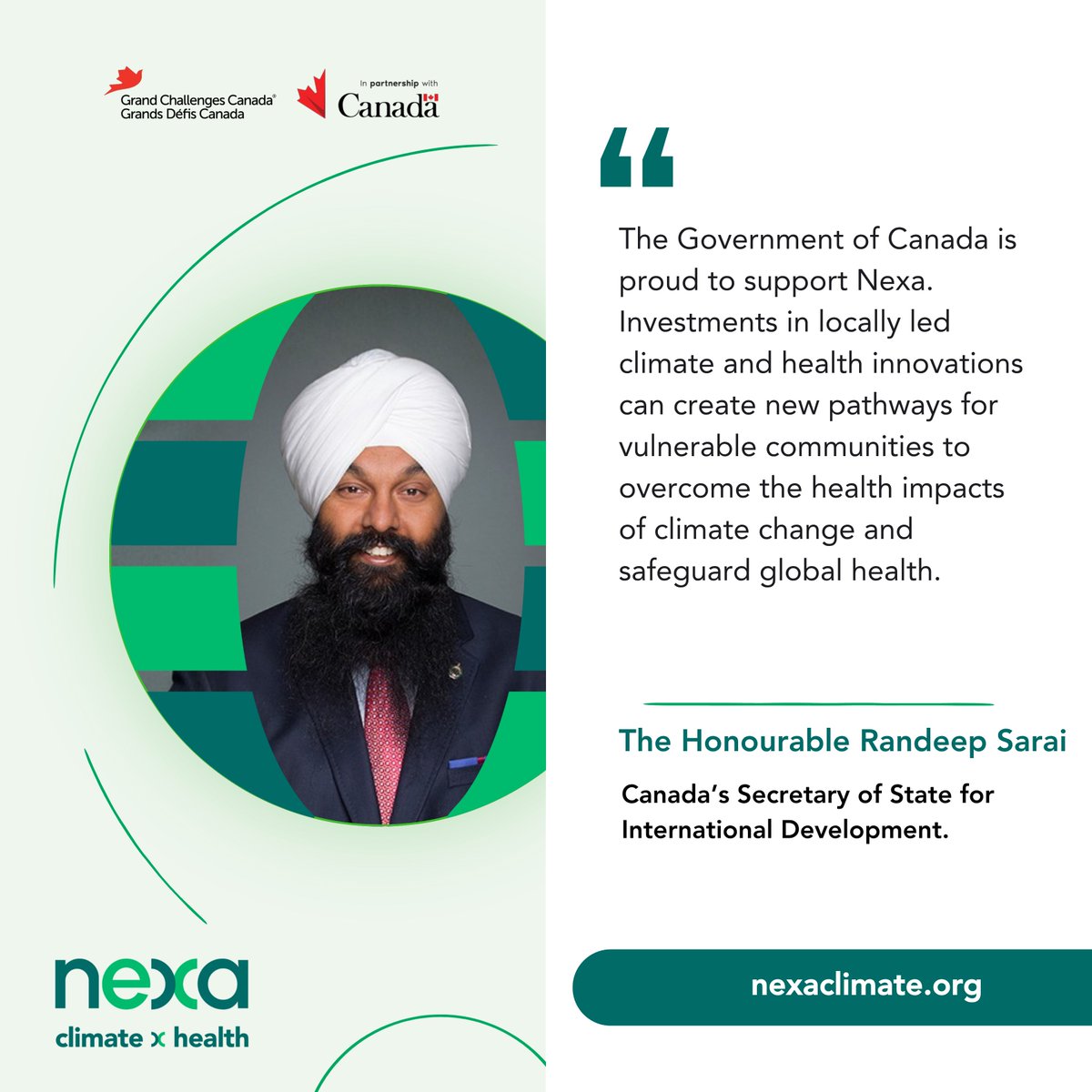
“The Government of Canada is proud to support Nexa," said @randeepssarai, Canada’s Secretary of State for International Development. "Investments in climate & health innovations can create new pathways for vulnerable communities to overcome the health impacts of climate change."
📊 The latest data from our Alcohol Consumption and Harms dashboard shows trends in alcohol use across Scotland. In the most deprived areas, alcohol deaths and hospital admissions are six and seven times higher than in the least deprived.
Read more 🔽
https://t.co/ySlPIbtAQn







![SergeZaka's tweet photo. [Thread] [1/6] Je pense que l’on peut désormais affirmer que la France traverse la plus grandes catastrophe agricole nationale depuis 1945. Sans aide publique, 30 000 à 35 000 exploitations pourraient se retrouver en situation de faillite, soit près de 10 % des exploitations agricoles françaises. C’est monstrueux.
Les conditions climatiques exceptionnelles que nous connaissons aujourd’hui se rapprochent de ce qui deviendra beaucoup plus fréquent, voire ordinaire, dans les prochaines décennies. 2026 sera dans la moyenne de 2050. Nous connaîtrons encore des années plus chaudes et plus extrêmes que 2026.
Le constat devient donc difficile à éviter : notre modèle agricole n’est pas suffisamment préparé au changement climatique qui arrive. C’est aussi le résultat d’un échec politique collectif : les gouvernements successifs n’ont pas suffisamment pris la mesure de l’ampleur des bouleversements que le changement climatique impose déjà, et imposera demain, à notre agriculture.
Il ne s’agit plus seulement de réparer les dégâts après chaque sécheresse, canicule ou mauvaise récolte. Il faut désormais engager une transformation structurelle de notre agriculture.
Voici les pertes de rendement les plus fiables que j'ai pu trouver par rapport à la moyenne de 5 dernières années (uniquement pour les cultures de printemps et d'été).](https://pbs.twimg.com/media/HQ6p27-WUAA21xt.jpg)