@segyges@voooooogel this is tangential to your point but the chess analogy bothers me. the point of chess is human competition, you don't win by deploying stockfish against your opponent
<rant>
extremely frustrating to see people laughing at this sentiment, repeating the exact failure of image generator boosters with artists in 2022/2023 based on petty ressentiment of people who've achieved technical skill in a difficult domain and alienating the exact people who could centaur the models into a more humane basin, driving the ai-curious contingent down to the stupidest common slop-peddler denominator with beacons of high-openness skillful creativity few and far between.
artists weren't blameless in that particular conflict, but they were partially right: the rhetoric around "these models are going to replace you" was very much driven at the start by ressentimentful glee over artists no longer getting to 'gatekeep art.' (by building skill back when that was the only option?) the discourse turned bidirectionally obnoxious and death-threat-laden later, but this was the poison at the start. in the early days, many artists were experimenting with image generators! (there's even still an artifact of this pre-lapsarian centaur era on display in SFO, greatly confusing modern normies... https://t.co/EjZ5QTjY4d)
compare software engineering. @random_walker had a good essay on here a couple months ago, proposing a thought experiment where generative models could only produce binaries and not readable source code:
> In this universe, software-generating LLMs compete directly with software engineers. Binaries are not human readable. They are equally inscrutable to software engineers and non-technical people. Over time, an increasing fraction of software would be vibe-rolled (not vibe-coded — there is no code!) It is not as good as human-authored software, but it’s free to generate! Since there is no source code, having a software engineer involved in the process adds nothing (except cost). Even to the extent that AI-generated software creates new demand for labor because of its limitations, it doesn't require highly paid software engineers and can instead be handled by lower-skill workers (perhaps just repeatedly yelling at the LLM to make no mistakes).
what a terrible world compared to ours. yet this is exactly the situation for current image- and video-generator models!
why is that? source code availability made it easier to build agentic pair-coder models for software... but it was still a ton of work to build out the interactive coding harnesses we have today, the models are expensively RL'd to be good at these harnesses, and in service of providing the software engineer lots of points to edit and steer and inspect the model's thinking process, they also leak lots of valuable information for distillation. it wasn't some inevitable law of the universe that we'd get agentic coders instead of something closer to "prompt to program" - markets are inefficient all the time - or that image and video models /had/ to converge on the text-to-artifact path optimized for generic, low-expertise edits like "move that over to the right."
rather, i think it's better to look at who works at the labs. the labs are filled with software engineers, and they steered the development of models towards shapes that are useful as /collaborators/ instead of replacers. claude code was literally whipped up as an engineer's side project to help him work faster, before being promoted to an official project.
meanwhile, to take a random image model company - Black Forest Labs says they are a "small team of 70" who are:
> scientists, engineers and builders - battle-tested at the world's leading companies and research labs
forgive me for noticing, but a certain type of person, and a certain type of experience, is strangely missing here... how many people at BFL do you think know e.g. what a photoshop layer blend mode is, much less has trained a model to help generate images for different ones?
---
we could have had a world where image and video generators produce references, files with layers, take lists of shot directions, etc. - a world where diffusion models could act as real collaborators to experienced artists. in this world there still probably would've been artist backlash - artists are just a conservative bunch, see the reaction to digital art - but enough open-minded artists might've started working with the models that a virtuous cycle of increasingly better generative artist tools could've ignited.
instead, there was a massive early backlash because of deliberately antagonistic comms, the models have stagnated in that early t2i UX with little improvement (image edits are just t+i2i, videos are still largely keyframed, node editors never reached much adoption, etc) despite huge jumps in raw capability. we have models that can produce whole worlds with a primary consumer base of... short form video attention farming slop? sora 2 even had the idea to do something different, yet "cameo yourself and your friends in a video" was the best they could think of. an embarrassing waste of talent.
meanwhile as someone who draws, i still find it almost impossible to turn the image i see in my head into something on the screen using a model. there are a few brave artistic souls like gossip goblin building skill, swimming upstream against the model shape current, but for the most part years later these models are still languishing at a tiny fraction of their potential.
i wish i could browse the top tweets about video generators and see beautiful thing after beautiful thing, real collaborations between humans and latent space. i think we will see that. but for now, it's dominated by grifters selling prompt packs they steal from each other and bluecheck monetizers recreating tacky versions of movie scenes to ragebait.
---
why does this matter? because we're now at a similar point with math. despite the hype, models are not yet replacing human mathematicians - they've just reached the point predicted a couple years ago when people asked "why can't something that's read every publication ever make progress just by connecting ideas from disparate fields or noticing holes in the literature humans overlooked?"
turns out that took a bit more capability than we thought in 2023, but we're there now. the models can gap fill and connect ideas. that's already impressive, to be clear!
unlike with art, production of model math is not going to stagnate - there's too much economic value riding on it. it seems likely enough that at some point, maybe soon, the models will be capable of doing truly new math by inventing new constructions. we have the power to choose the shape of that - whether it's something human mathematicians can collaborate with and work into the existing cathedral of human math knowledge, or whether it's megabytes of self-contained 'verified' leanslop dumps that no human can interpret and "proof pdfs" in inscrutable model speclish produced by someone pulling the token lever without any need of understanding.
in 2023, the labs went two ways. software engineers were worried about being replaced - and the labs instead built collaborators that made them, at least for now, 10x more effective. artists were also worried about being replaced - and the labs did their best to make it happen.
the same thing is happening with math now. we don't have to end up in the world of "catching crumbs from the table," at least not yet. if we include experts in model development instead of laughing them off, we can Build the Math Harness properly. (most mathematicians can't code, let alone formalize things in Lean! models have the chance to be hugely helpful to the wider math community, not just a small contingent in the labs!)
we can develop systems that at least have /some/ chance of empowering humans instead of slowly (and then all at once) disempowering us out of the knowledge production process. we have advantages this time. the labs employ mathematicians, and even the non-mathematicians at the labs have more respect for math than they do for art. but still, let's avoid poisoning the discourse. let's not force ourselves into the stupidest of all possible timelines a second time. be nice to the mathematicians.
sol vibecoded an MCP for my oven and now Claude Code can Claude Cook. it can access sensors, a temp probe (if inserted), and cooking. it has air frying, steaming & combi modes
produced via a light touch of decompiling the official app
(pic from MCP camera tool)
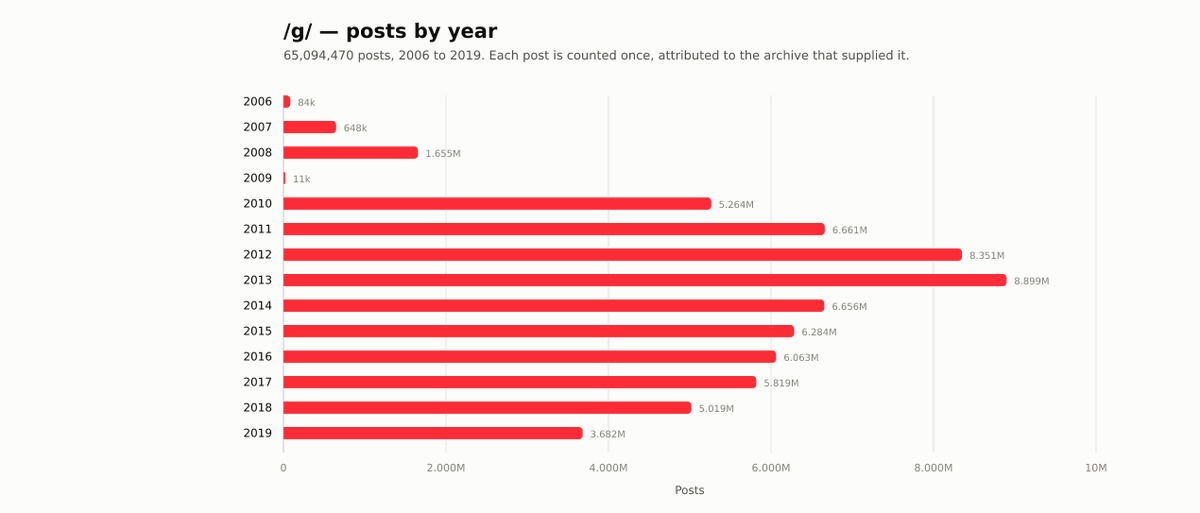
@HPCDisrespecter it seems like a handful of archive sites have uploaded thier data sets to internet archive as theyve gone offline over the years. that plus a few active archives post their stuff there regularly too