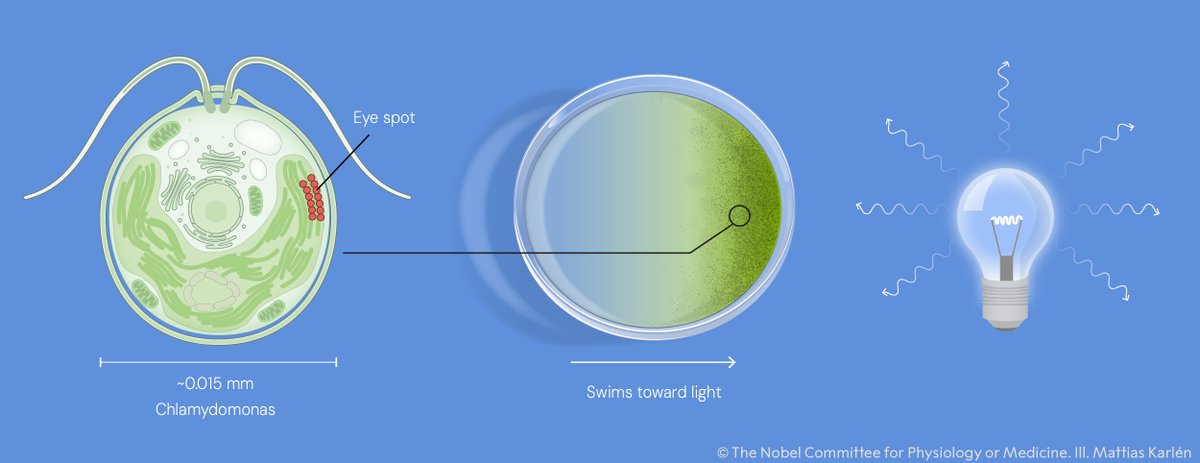
Peter Hegemann and Georg Nagel – awarded the 2026 medicine prize – discovered a remarkable protein, channelrhodopsin, in a single-celled alga.
Hegemann wondered how Chlamydomonas, a single-celled alga, is able to swim towards a light source. In the early 2000s, he and Georg Nagel discovered channelrhodopsin, an algal protein with unique properties, found on the surface of the cell. When it is illuminated by blue light, a channel opens through the protein. Charged ions then flow into the cell, creating an electrical impulse. They found that regardless of which cell they put the protein in, those cells became light sensitive.
#NobelPrize
The 2026 #NobelPrize laureates in physiology or medicine have laid the foundation of a new era in neuroscience.
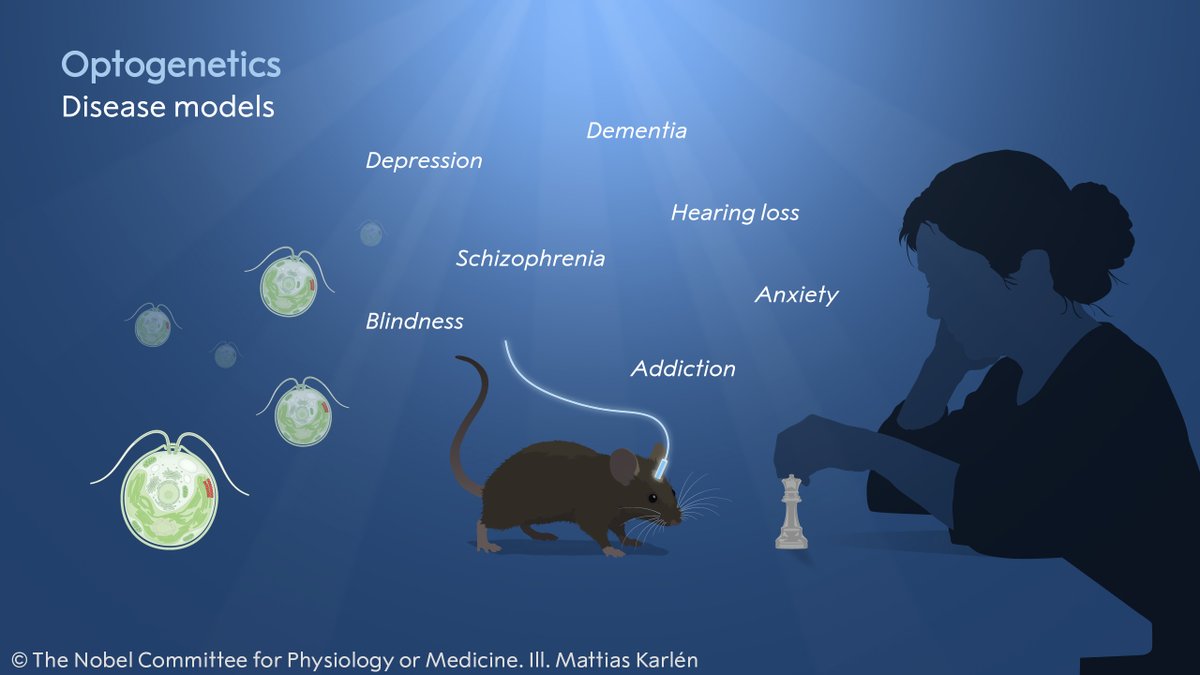
Using optogenetics, researchers have been able to reveal neural circuits governing specific memories, feelings, and behaviours relevant for neurological and psychiatric disorders. In clinical medicine, researchers are using the method in attempts to restore sight in people with visual impairment.
Optogenetics has fundamentally altered our understanding of the brain. Every day brings new discoveries, helping to solve one of humanity’s great mysteries: how our incredible brain works.
¡Ganadora del artículo del mes de marzo! Christina Arvanitidou del @IBVF_Sevilla (@christina_arvan).
El artículo 'Multiomics integration unveils photoperiodic plasticity in the molecular rhythms of marine phytoplankton' publicado en The Plant Cell.
https://t.co/TxAVFXwffp