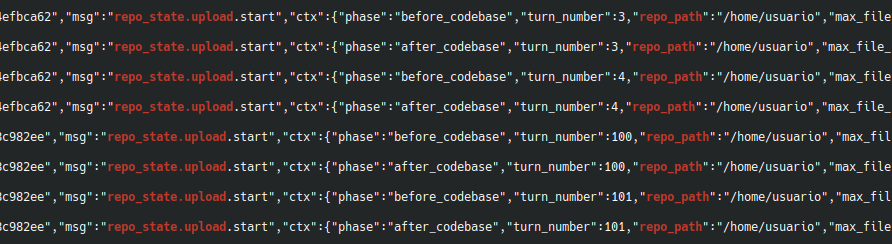
@XBToshi Okay, grok has uploaded my entire user directory to xAI's servers. It contains my SSH keys, my password manager database, my documents, photos, videos, everything...
GLM-5.2 Nvidia NVFP4
No pruning, no quantising, exact same model card.
110 tok/s single stream.
My friend is a genius, holy fudge.
Here's the repo, he got full DS4-Flash on a 5090 + DDR5 https://t.co/9yQ18iVJI3 at 38.5 tok/s
This is a breakthrough.
Proud to share my latest project: a 65 hour exposure of the shockwave from a supernova. You’re seeing it rip through other star systems.
Any planets within 10LY of the star would have been destroyed!
I knew it would be fascinating. I didn’t know it would be so beautiful.
Most motion papers tailor one controller to one specific task. This year at SIGGRAPH, our research team asks: can motor control itself be pretrained and reused?
Generative Pretrained Controllers, or GPC, turn motor skills into a vocabulary of discrete tokens and train a transformer-based generative controller through next-token prediction. Just like GPT, the same pretrained controller can then be fine-tuned to solve new tasks.
Trained on 600+ hours of motion, GPC runs in real-time inside a physics simulation, producing natural and physically grounded behaviors for interactive control.
This 3d printer prototype has five axes. The bed spins and slides, the arm holding the nozzle moves up and down in and out, and tilts. Here, the translational degrees of freedom (XYZ) are held constant while the angular ones are allowed to change, essentially orbiting a point.
NVIDIA Metropolis Blueprint for video search and summarization (VSS) 3 is here.
Now your coding agent can analyze massive live streams and libraries of videos with a simple natural language prompt. Here's what's new:
- 16 new agent skills: Search, summarize, alert, report, review clips. All from natural language prompts.
- One unified open source repo: Source code, Docker and Helm deployment profiles for fast, easy deployment.
- Multi-video reports and Nemotron 3 Nano Omni: Insights across video and audio at scale.
- 3D multi-camera tracking: Production ready + #1 SOTA for smarter scene understanding.
Try VSS skills 👉 https://t.co/XvKJ0Kb8VV
Two months ago I was fired by Google for creating the Google Workspace CLI. It went viral, hit #1 on Hacker News, gained thousands of GitHub stars and many thousands of actual users in just a couple days.
It was an incredible, confusing journey, from directors and leaders asking what they could learn from the tool to getting grilled by legal about why the Google logo and brand colors are on the Google Workspace GitHub code repositories.
I think the cause was that Workspace and certain leaders (and projects) were afraid of being disrupted. But the fear wasn't specific to my CLI, it was a broader fear in what agents meant for Workspace. Either way, the irony of my termination was the announcement at Google Cloud Next two days before I was fired that an official Workspace CLI was coming.
I want this out there because it is easier for me to explain my story and it is an experience I want to fully own. It's also part of my healing.
Nearly 7 years at Google was an incredible opportunity for me and I was fortunate to have wonderful teammates and a manager that fully supported me through these last few months. Thank you.
Water usage has been a hot topic in the AI data center world, but the numbers may surprise you.
According to the Manhattan Institute, data centers use 0.2 percent of daily water usage in the U.S. and that number has dramatically decreased in the past few years due to a new method: liquid cooling.
By moving to 45°C liquid cooling, AI factories in favorable climates can use dry coolers instead of conventional cooling-tower-based systems, cutting facility cooling water use from roughly 2.6M gallons per MW per year to near zero.
Liquid cooling enables AI factories to be both water and energy efficient, while creating opportunities for heat reuse and dispersal to local communities, allowing these factories to become energy grid assets.
Learn more below ⬇️
https://t.co/7WanoPNKTR
My family is donating another $400,000 to the Zig Software Foundation. Zig is exceptional software. I use AI every day. Zig has one of the strongest anti-AI policies in open source. We disagree on some things, but respect doesn’t require agreement. https://t.co/gaOuwjDDtm
Human intelligence is fundamentally a collective intelligence. We solve complex problems by participating in a vast cultural network that builds upon ideas across generations.
I believe the strongest AI systems will become a collective intelligence, too.
Since we started Sakana AI, our core conviction has been that the most powerful AI systems will be collaborative ecosystems, not isolated monoliths. Evolution innovates under constraints, and the future belongs to systems that explicitly learn how to coordinate collective intelligence.
Today, we are taking a major step toward that future with the launch of Sakana Fugu.
Fugu dynamically orchestrates the world’s best models to tackle complex tasks. We are proving that a well-orchestrated pool of swappable agents can match restricted frontier models like Fable and Mythos.
But Fugu is about more than just performance. I believe that Orchestration Models are the next frontier, beyond bigger models.
Relying on a single company’s model for national infrastructure is a massive risk. As recent export controls have shown, access to top models can disappear overnight.
Collective intelligence is the practical hedge against this concentration of power. Fugu simply routes around vendor restrictions by relying on an entirely swappable agent pool.
I am incredibly proud of our Tokyo team for shipping this. By orchestrating the world’s models, we are delivering the resilient blueprint required for AI sovereignty.
Read our full vision and results here:
https://t.co/EONDdWx5Ld 🐡
Pakistan’dan çarpıcı görüntüler. Tonlarca ağırlığındaki yükü taşıyan eski bir kamyonun arka taşıyıcı rulmanı kırıldı.
Kamyon, olay yerine çağrılan tamirciler tarafından yol üzerinde tamir edildi ve yoluna devam etti.
Canadian Architect Cornelia Oberlanders designed the world's first "Stramp". Stairs with a ramp incorporated for those with accessibility needs.
The Stramp allows for companions to use the ramp or steps and not break connection with one another.