After 20 years writing code, I’ve never seen a more critical time for junior devs than right now.
The market isn’t just tough. It’s fundamentally changing. Companies are cutting big teams and keeping only the ones who deliver a lot of results with very little effort.
My direct advice to those just starting:
Stop chasing every new framework every week. Focus on understanding systems, architecture, and solving real problems.
Master agents and AI right now. Use them as your main tool every single day. People who know how to use them well already deliver way more than those still doing everything manually.
Ship things to production as fast as you can. Having real code running in prod is worth way more than just another repo on GitHub.
Always think about impact. In the future what will matter is the results you generate, not how many hours you sat in front of the computer.
And never stop learning. The next few years will clearly separate those who adapted from those who didn’t.
This isn’t to scare anyone. It’s to wake you up. Whoever catches this mindset now will be way ahead in just a couple of years.
The future doesn’t belong to those who know more languages. It belongs to those who deliver more value, faster.
Good luck out there.
A guy with 20 years on the road.
AI is no longer just a battle between OpenAI, Google, Anthropic, and Meta. It has now become a matter of state policy. Whoever controls the infrastructure, chips, models, and rules will have a huge advantage in the coming years
@rovnni O mundo não eh justo.
Esqueça a falácia quem planta, colhe.
Tem muito pilantra se dando bem.
Seja honesto por questão de princípios, mas não espere um retorno divino por isso.
O problema nunca foi da IA, ela vai fazer exatamente o que vc mandar.
Se vc esquecer ou nao ter nocao de segurança, ela subentende que vc nao precisa disso.
A diferenca do software de um leigo e de um arquiteto de software está no prompt, ele vai saber direcionar as tecnologias a serem utilizadas e as medidas de segurança adequadas, o leigo vai apenas mandar construir, mas de fato ambos conseguirão fazer algo…manter é outra história
OpenAI Codex Sites has just launched and the hype is already insane.
Yeah, it’s pretty damn impressive. You type a prompt and a few minutes later you have a working interactive app with a live URL. It can be super useful for quick internal dashboards, simple landing pages, or throwing together fast tools for the team.
But let’s be real about the problems:
• The generated code is still a black box and usually pretty messy. Maintaining or scaling that later? Good luck.
• Fine control over UI/UX, performance, and edge cases is still weak. Classic AI move……speed over quality.
• Security, proper auth, and compliance? Everything depends way too much on how good your prompt is. That’s scary in any serious enterprise setup.
• Most importantly, it doesn’t solve the real hard part: actually understanding the business and making smart architecture decisions.
Bottom line: Great for mockups and throwaway MVPs.
Pretty dangerous if people start treating it as a replacement for real engineering.
This will definitely speed things up, but it’s also going to create a ton of poorly built apps that someone will have to clean up later.
What do you guys think? Is this actually going to change how you work, or is it just another flashy tool that’ll lose steam?
Building apps has never been easier.
With Sites, Codex can turn your work, ideas, and plans into an interactive website or app your team can explore, use, and share with a URL.
Rolling out to Business and Enterprise plans, before expanding more broadly.
Hey devs, let me explain RAG in a really simple way and why everyone is using it these days.
Imagine you have a powerful LLM like GPT, Claude or Grok. It’s really smart, but it has two big problems. It can make stuff up and its knowledge has a cutoff date, so it doesn’t know anything that happened after it was trained.
RAG solves that.
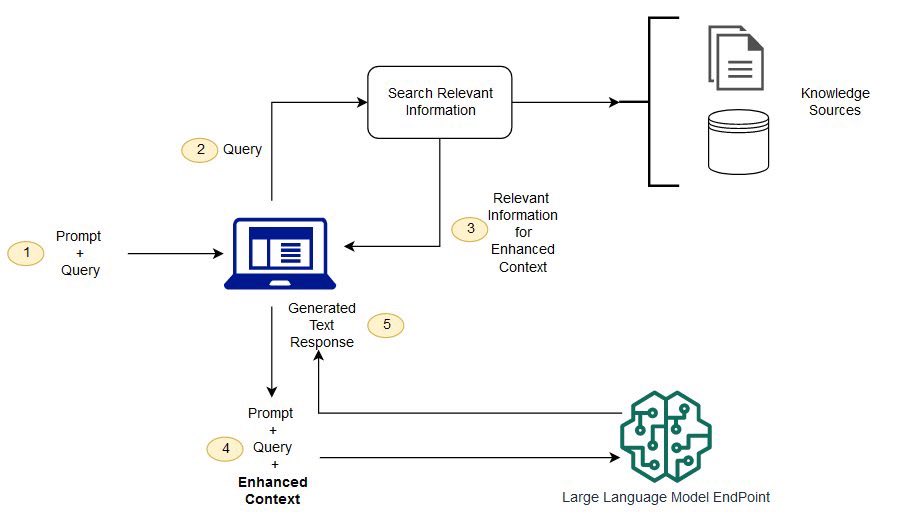
RAG means Retrieval-Augmented Generation. In plain terms, it’s generation with search support.
It works like this:
You keep your own knowledge base with company documents, manuals, code, PDFs, old tickets, all that stuff.
When someone asks a question, the system automatically searches and grabs the most relevant parts from your base.
Those parts get added to the prompt along with the question.
Then the model gives an answer using both what it already knows and your fresh information.
It’s basically giving the model extra context so it doesn’t need to guess.
Real example: Instead of asking ChatGPT how our payment system works, RAG pulls the actual internal documentation and feeds it to the model. You get a precise and up-to-date answer instead of something invented.
Right now it’s one of the cheapest and most effective ways to build serious AI applications.