Buying TAO, not Alpha. It would take a huge shift for me to buy Alpha again. The volatility is too extreme. Grow my TAO stack, early subnet investing feels far too risky right now. Not just because of the wider market either. The model might reward being early, but also means taking the full hit before a subnet has proven itself. For me, I’d rather let subnets show consistency, real demand, stable emissions and actual product market fit before risking TAO again. In fact, I’d nearly argue that holding TAO on a reputable exchange and earning a consistent 8%+ for the next 10 years may be less volatile than trying to chase Alpha, even allowing for the obvious custody risk.Root may be boring, but boring beats becoming someone else’s exit liquidity.
I pulled all of my TAO out of subnets.
Not because I don't believe in Bittensor. Quite the opposite. I think it's one of the most interesting ecosystems in crypto.
But after months of watching emissions, alpha prices, validator performance and sentiment, I've come to one conclusion:
Consistency matters more than excitement.
The reality is that many newer investors aren't experiencing the "100x subnet gains" people talk about. They're experiencing:
• Emissions dropping to zero overnight
• Alpha prices falling while they wait for emissions to return
• Constant monitoring of positions
• Difficult decisions on whether to hold and bleed or sell at a loss
I feel like there isn't enough discussion about the TAO lost along the way.
Templar alone cost me more TAO than I could realistically buy back in a year. That's not FUD, it's simply my experience.
So I've moved back to Root.
Lower returns? Probably.
Less exciting? Definitely.
But I can sleep at night knowing my TAO isn't being repriced every time a subnet moves up or down the rankings.
Genuine question to the community:
How many of you have actually increased your TAO stack through subnet investing over the last 6 months, and how many have quietly lost TAO despite picking what seemed like good projects?
I'm curious whether I'm the exception or whether more people are having this conversation privately than publicly.
#Bittensor #TAO #DeAI
@Jelsol_Art@Jon1997Miller@blockdagnetwork Jesus id love to see what this is in 12 months time, this is either pure crap scam or genius sales / selling to dummies..ffs
Love this project because I actually understand what it’s trying to do. People slagging it because it didn’t magically go to $10 on launch are missing the point completely. Real infrastructure projects take years, not weeks. I’m happy to sit back, watch the updates and see where this is by 2035. Gensyn is a builder’s project, not a meme casino. Most of the loud negativity comes from people chasing instant candles, not long-term utility. The AI compute sector is only getting started and if the team keeps building and adoption comes, today’s comments will look very small in hindsight.
@MutuumFinance Don't mind waiting, love the project but would like to see the Team now. Projects like #Gensyn and even #ozakai all have team out front plus podcasts etc. Its time guys..
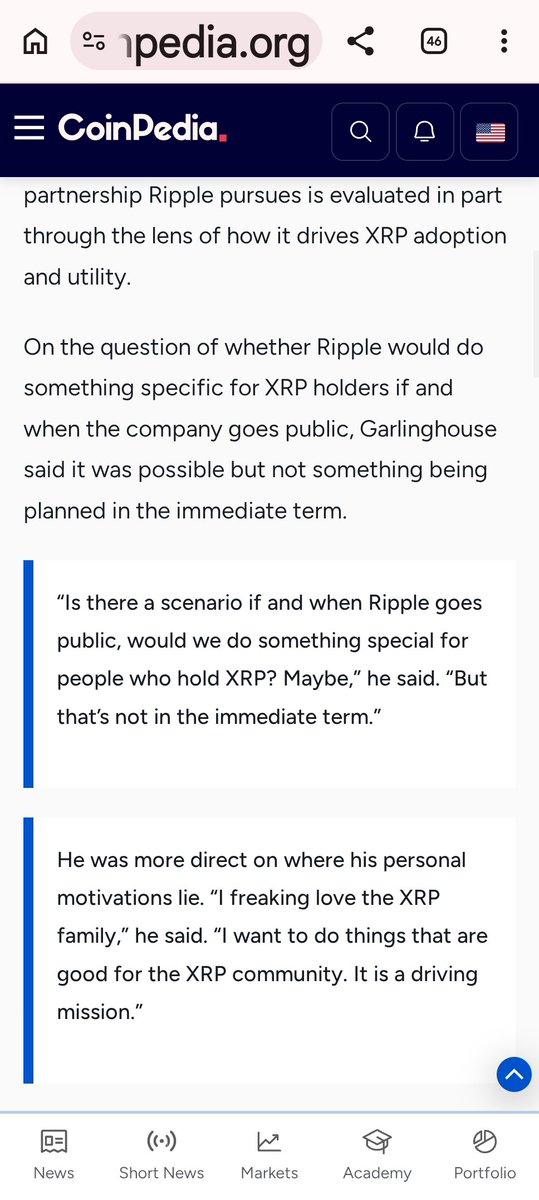
I still think XRP can have strong upside over time. But the social media narrative around it has drifted far beyond reality. When every cycle becomes: “banks are loading, “reset incoming, “four digit XRP,” or vague promises about rewarding holders someday you start wondering whether retail is being kept hopeful indefinitely while expectations become mathematically impossible. The truth is this: A person holding 1,000 XRP is probably not becoming ultra wealthy from XRP unless the entire global financial system reprices in ways we’ve never seen before. That’s just scale and liquidity reality. The danger now is not XRP the danger is the fantasy ecosystem built around it. The utility can be real without the price fantasies.
@ariful_1995@gensynai@benfielding So what? Hope it goes down more. What's the problem, I bought for 2035 returns, don't tell me you bought to flip in few weeks. You bought the wrong token for that. This stuff is not now, its 10 years time. Stake forget for at least 2031.
Honestly, after taking some serious hits in the Templar+ saga, I’ve become a lot more cautious about how I approach subnets now. Painful lessons, but they forced me to actually learn the system properly instead of just chasing emissions.
Over the last while I’ve spent a lot of time watching your TaoFlows updates, plus TaoStats, TauFlute, TaoMarketCap, TaoRadar and other analytics platforms, trying to understand what’s really happening underneath the surface.
Whale concentration, miner activity, burn rates, emissions stability, validator behaviour, capital flows ffs, all of it matters now.
What I’ve realised is that most subnets should probably be treated more like immature startups than mature businesses. Some teams are brilliant technically, but many still don’t seem to fully understand traditional business fundamentals, communication, investor confidence or long-term trust. That combination matters when my capital is involved.
Because of that I’ve moved roughly 70% back into root, earning hardly anything, and only about 30% is spread across subnets. Even then, it’s active daily management and hard to keep on top of.
It’s not really “stake and forget” anymore unless you’re willing to accept serious losses.
I run my own business outside crypto, and honestly, subnets have become almost a full-time job if you want to protect your capital properly. You can’t disappear for a week and expect it to be fine.
Emissions rotate mad overnight, liquidity shifts, miners vanish, unlocks happen, sentiment changes really fast.
Affine was a good example for me recently. I liked the project, saw emissions improving around the 1%+ mark, moved in, woke up the following morning and emissions had collapsed back to zero.
That’s the reality right now.
At the same time, there are subnets I still believe in long term. I like Score, Targon, Resi, Lium Gradients plus few more , but Jesus, you have to watch them all the time. Targon went from almost 5% emissions to 0% overnight.
What really opened my eyes was seeing discussions around some subnets burning 100% of alpha and others potentially heading toward deregistration, despite looking strong from the outside.That tells you how unstable this entire ecosystem still is.
I still have belief in Bittensor long term but it may be buy and hold for awhile. But I think retail needs to understand this isn’t simply “buy TAO and pick a subnet you like.”
There’s a huge amount going on under the bonnet, and if people don’t understand the mechanics, they can get cleaned out very quickly. That’s kind of where my head is at this week anyway.
Well, you did ask @TAOFlows 😏 keep up the good work #Bittensor #TAO #DeAI #Subnets #dTAO #TAOFlows
code is law in crypto, and as a consequence there was >$700m of exploits in the last couple of months. much of these stemmed from under (or un)audited smart contract code - particularly in relation to off-chain systems (1/3)
What can a 27B dense model actually do in 2026?
Qwen3.6-27B TEE on Chutes. Apache 2.0. Multimodal. 262K context, extensible to 1M.
The benchmarks against Qwen's own previous flagship (397B MoE):
SWE-Bench Verified 77.2 vs 70.4
SWE-Bench Pro 53.5 vs 48.4
GPQA Diamond 87.8 vs 84.1
A 27B dense model beating a 397B MoE on every coding eval the vendor publishes.
$0.50 in / $2.00 out. Inside a TEE.
Run 5M in + 5M out per day on Chutes for just $12.50.
What workloads are you still running on bigger models out of habit?
https://t.co/zV64IkT1pP