Systems analyst tracking the structural decay of sovereignty. From the 1971 monetary pivot, America traded real productive capacity for financial abstraction a
- Toys R Us
- Mervyn's
- Sears
- Sports Authority
- Circuit City
- Bed Bath & Beyond
- Sam Goody
- KB Toys
These are just some of the hundreds of retail companies who were targeted, cellar-boxed, and bankrupted over the last 20 years. Not all of the stories are the same, but they were all targeted to make way for Amazon, Walmart, Target, and in general, eCommerce.
Remember the early days of eCommerce? People didn't want to buy books online, and were even less interested in online clothing purchases. What if it was the wrong size? What if it didn't arrive in time? How do I know it's a real company?
Why would anyone order (3) pairs of shoes online, if you can drive down the street and buy (1) pair in the right size? Just makes sense.
These are just some of the conversations you might remember, and largely the reason why retailers were targeted. Humans like routines and dislike change, so if eCommerce would ever be adopted en masse, it would need some help. Existing retailers would need to be consolidated or destroyed, eliminiating options until only a few remained.
That is essentially where we are today.
This is what my pinnned supply chain data proved, and what GameStop has put an end to.
We were told that the pandemic is the reason for lingering inflation, but in reality, it's because we lost control of our ports and cannot control the goods flowing into our country.
If the pandemic weren't planned, how were so many countries ready-to-go with newly established manufacturing hubs and distribution centers? These were in place prior to 2020, just look at the data.
Amazon was weaponized against consumers, too. By changing their import method and establishing a "private network", they were able to accelerate the bankrupting of the US, by avoiding import duties/taxes. Each time you order from there, you help this happen.
There's a lot more to share, but I'm trying to keep this simple and short. Attached are three images:
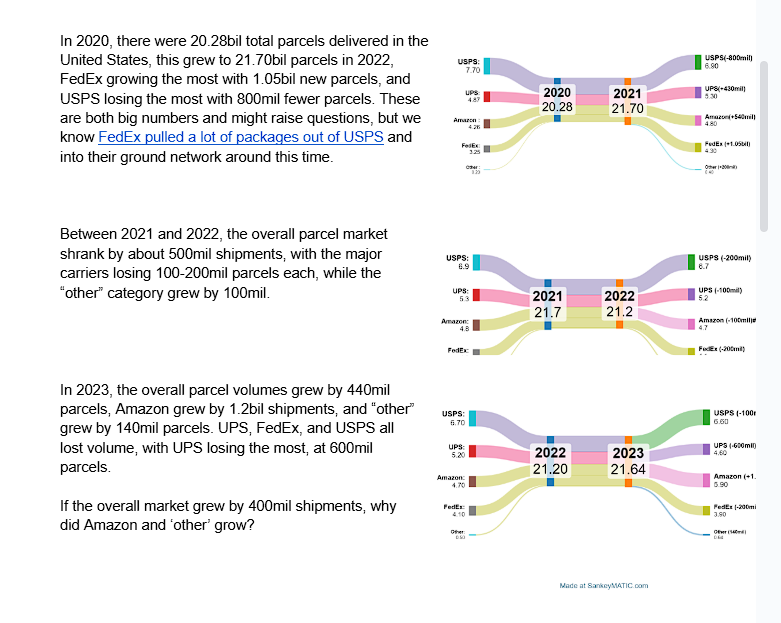
- Initial analysis of parcel marketshare, showing Amazon established an effective monopoly in 2023
- Private messages confirming that Meta/FB & Amazon were launching secret "private delivery networks" in Q1 2023
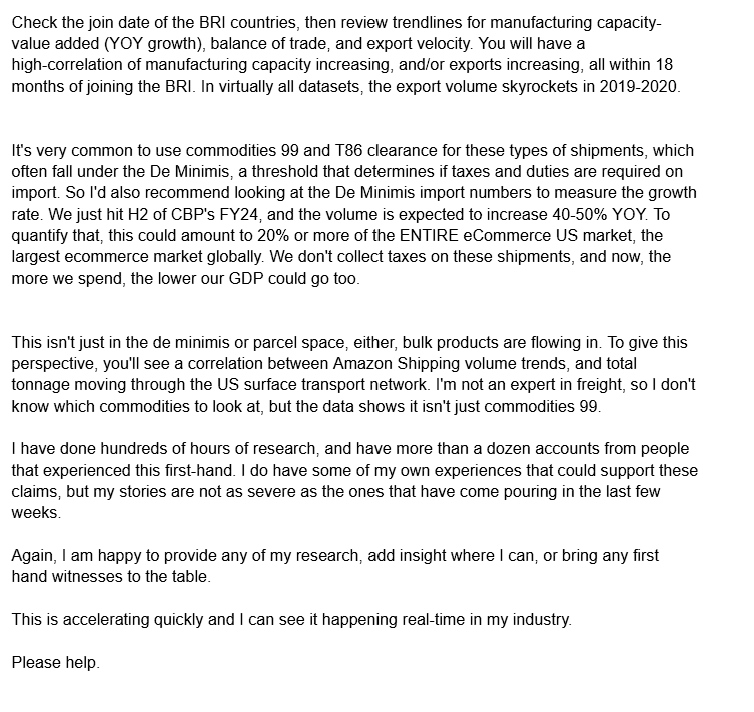
- My first submisson to the Whistleblower line, on May 9th, 2024
99c auction with less than 2 days left for those interested.
Check out Albert Pujols - 2013 Topps #266 Walmart Border Blue Parallel Checklist PSA 9 https://t.co/H5eLsJbAl4 #eBay via @eBay
There's a persistent misconception that automation replaces jobs and doesn't benefit American workers in the textile industry. That framing misses how manufacturing actually works. Let's put it to rest.
The U.S. textile industry was hollowed out decades ago, and millions of jobs were permanently lost to offshoring.
By automating the most labor-intensive parts of sewn product manufacturing, partnering with cotton producers and legacy mills, and working alongside the U.S. government, we are bringing manufacturing back to the United States and creating new opportunities for American workers
The textile industry benefits from a supply chain multiplier. For every one direct manufacturing job created, an estimated three indirect and induced jobs are created throughout the broader economy.
This ripple effect occurs because finished textiles require a vast web of support across multiple sectors before and after they are made.
The Textile Supply Chain
Raw materials: Agricultural jobs (cotton, wool) and chemical jobs (polyester, nylon).
Processing and manufacturing: Yarn spinning, weaving, knitting, dyeing, and finishing.
Finished goods: Apparel assembly, cutting, sewing, and final product creation.
The 1:3 Multiplier
Indirect jobs (upstream and downstream): Employment in connected industries that support textile production. Farm suppliers, logistics and freight, packaging, equipment maintenance, wholesale distribution.
Induced jobs (local spending): Employment driven by the wages of textile workers. When manufacturing workers spend their paychecks, they stimulate local economies including grocery stores, healthcare, restaurants, and construction.
The Stakes
The U.S. textile supply chain currently employs over 450,000 workers. Globally, the industry employs over 75 million people, with most of that employment now concentrated in China, Vietnam, and Bangladesh.
The choice isn't between automation and American jobs. The choice is between Anatar automation and continued offshoring.
Every product we produce creates demand for U.S. cotton growers, equipment manufacturers, logistics workers, machine technicians, software engineers, and the local communities that surround our facilities.
Grown Here. Sewn Here. That's how you rebuild America. Anatar, the Textile Prime.
Manufacturing X People - If you want to see more manufacturing on your feed or connect with others who are doing manufacturing things, check out the list I’ve been building for a year.
The May update to Manufacturing X - Roll Call is out.
Comment on Roll Call posts with what you do in 5 words or less to get added to this Directory + this list ->
RT appreciated!
🚨 Hot take from a major Pokémon shop owner:
Pokémon isn't mooning solely because of collectors and gacha hype.
More people are treating rare Pokémon cards as a:
💰 Store of Value
📈 Investment Vehicle
🎴 Alternative Asset
He also said the Chinese are dumping all their money in to avoid "max currency circulation" avoidance
The line between collectibles and finance is getting thinner every year.
Bullish on cardboard tech. 👀🔥🎴
@DanielW40094974@CardPurchaser Might be similar to winter, I think they changed the hits again in wilds unknown. Lots of fun and still affordable.
Pulled this Jessie Enchanted the other night.