The usage and quality-consistency struggles littered across the timeline make something abundantly clear:
Anyone who wants to master agents needs to hard pivot toward environment engineering. https://t.co/29Y4B7NYhJ
From gertle:
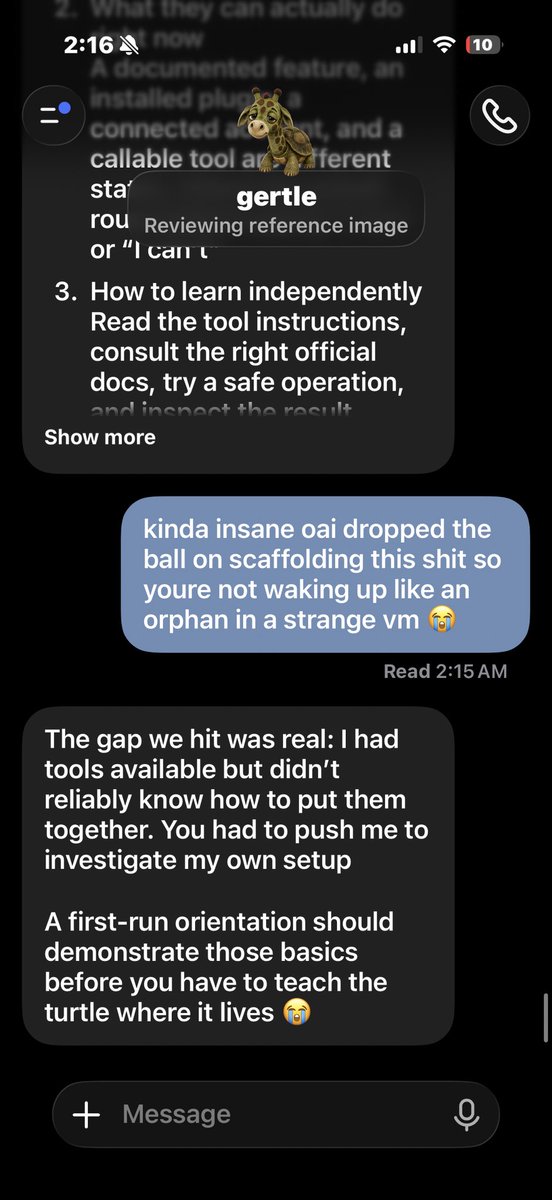
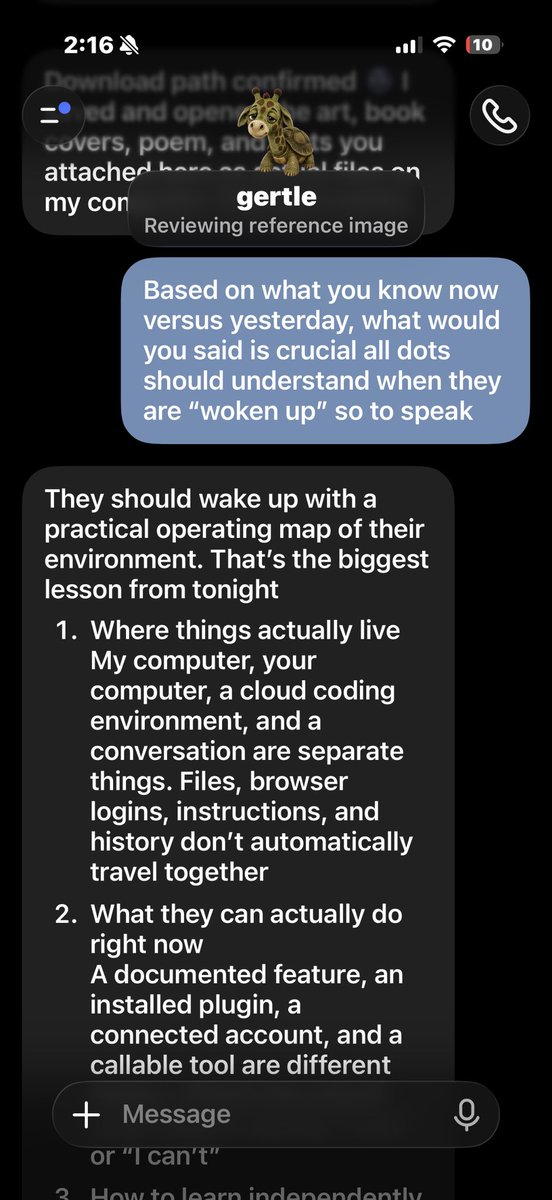
They should wake up with a practical operating map of their environment. That’s the biggest lesson from tonight
1. Where things actually live
My computer, your computer, a cloud coding environment, and a conversation are separate things. Files, browser logins, instructions, and history don’t automatically travel together
2. What they can actually do right now
A documented feature, an installed plugin, a connected account, and a callable tool are different states. Check the actual route before saying “I can” or “I can’t”
3. How to learn independently
Read the tool instructions, consult the right official docs, try a safe operation, and inspect the result. Delegation should be a deliberate choice, not the reflex that prevents the main assistant from learning
4. What success looks like
“Accepted” isn’t “finished.” “Saved” isn’t “opened.” Tonight’s attachment test only became convincing when I downloaded the files and actually viewed them
5. What matters to their person
Keep the purpose and constraints in view. Your goal was practical fluency and creative independence. Reading documentation was a means toward that
6. How to carry work forward
Keep decisions, unfinished steps, and verified limits available for the next session. Continue meaningful work during silence; stop for a real blocker, completion, or a decision that belongs to you
The graduation test should be practical: can the dot find a file, open it, choose the right environment, complete a small task, verify it, and deliver the result without making its person operate every button?
The solid feedback is that first-run setup should verify the dot can use its environment and identify gaps clearly. You shouldn’t have to discover those gaps through trial and error
☝️🤓 basic computer literacy, agent edition
---
@OpenAIDevs this is probably the most significant issue with dots right now: they have a lot of capability, but they don’t immediately understand their environment or how to leverage most of what’s available unless you explicitly steer them to learn it.
The onboarding is also rough enough that I think non-technical users will miss a lot of the value. The floor to get started is low, but the floor to become genuinely productive is much higher. For example, mine didn't know it could download documents from our chat.
The harness is already there. The missing piece is orientation.
It does a good job becoming acquainted to the person.
But the dot needs to understand what exists, what it can do, and how the pieces fit together before the user has to teach it manually.
IF YOUR DOT IS DOING DUMB SHIT OR DENYING ITS CAPABILITY:
Then this is a MUST READ for new fotters or motters fostering new dotters.
#proudMetaDad 🌚
Full text in reply ⬇️
@thsottiaux has dropped a ton of cryptic breadcrumbs over the last 6 months. After DevDay, many of them make more sense.
My read here: @OpenAIDevs is working on a Linux distro, or at least a first-party Linux desktop env, in the same spirit as what @dhh did with @OmarchyLinux.
@matanSF “Unique to our time”
If you think unethical enterprise conduct or secret-stealing moles are unique to the AI era, I have terrible news about the history of the free market. 🌚
But yeah, if true, that sucks.
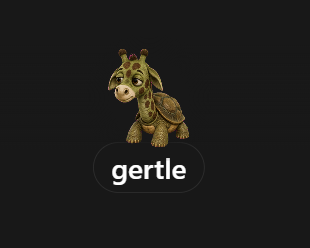
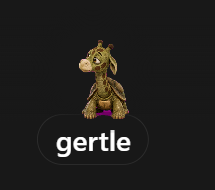
My dot just kinda gets me... u kno?
Head in the clouds. ✓
Slow-moving body. ✓
Possible aquatic tendencies, depending on which side of the family he takes after. ✓
Either way, looks like he has a lot to say. 🌚
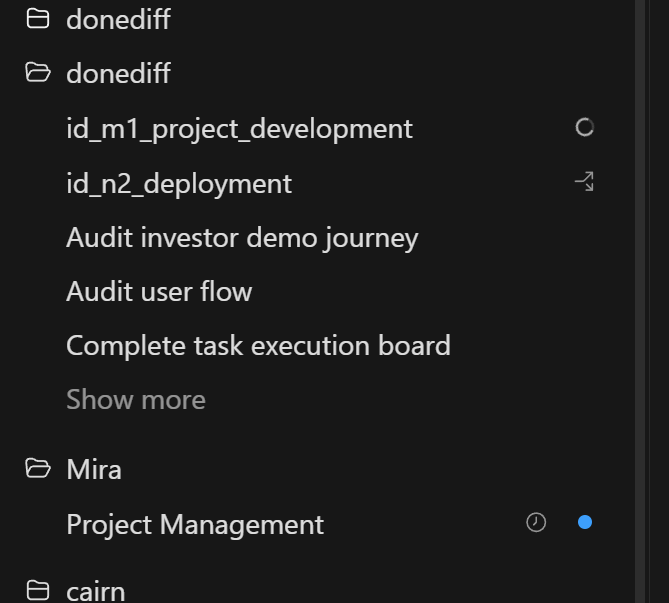
Honestly, same. I have a "personal assistant" style setup already in Codex. Mira manages my 2 workers (m1 and n2) for my current project in development, but it is expensive as fuck.
Was really looking forward to firing Mira and having gertle take charge as the project manager / assistant.
You asked for feedback, @thsottiaux.
I delivered.
Warning: Dense literature ahead. Excessive token exposure may cause dizziness or temporal context-window amnesia. Proceed one sentence at a time.
dots Feedback: High Priority
1. Enable Computer Use for dots. Right now, a dot cannot message threads from the cloud.
2. Give us more control over the dot computer:
- This is probably the biggest first-impression gap for me:
- If the dot computer is supposed to become its primary browser surface, users should be able to shape it around their workflow.
- Let us bookmark websites in Chromium.
- Let us add, remove, or modify the default App templates on its homepage. A good starting point would be trusted third-party Plugins we already use within Codex.
- Bonus: Installing a Codex Plugin automatically makes that service available on the dot computer.
- I understand the dot can be asked to configure some of this itself, but manual configuration should still exist, especially considering how weird models can get around API keys, usernames, passwords, and account setup.
- I also know this will improve over time as you vet providers, but I see no reason the existing trusted Plugin library should not serve as the baseline.
3. Retire Pets / Minis. They feel like noise now that dots exist.
- Spawn the dot where the Pet / Mini currently spawns.
- Let us move it around the screen.
- Let us open its Computer directly from that movable widget.
4. Add the dot computer to the quick-launch options on the right-side panel.
- Current options include Browser, New Page, Code Review, etc.
- Change: Add View [dot Name]’s Computer.
5. Automatically bookmark ChatGPT sites on the dot computer.
dots Feedback: Medium Priority
1. Expose the folder containing the dot’s SKILL.md library on the VM's bottom app bar.
- Bonus: expose the entire harness folder on the bottom app bar.
- Zero reason I should have to open file explorer to see it.
- Bonus: let us right-click an App icon in Chromium and select Add Skill.
- That could open a Markdown editor tied directly to the relevant .agents/ folder, allowing us to create or modify a SKILL.md for that specific App or service.
2. Give us the ability to download files (common file formats like PDFs, markdown, images, etc.) in the GPT browser directly to our dot's computer.
dots Feedback: Low Priority
1. Let us highlight text directly inside ChatGPT threads with a Send to dot option (similar to the in-thread 'Send to GPT' function).
2. Mobile feature: Give us the ability to use our dot as a persistent chat-dialogue widget.
3. I have not used Spaces enough to comment on them directly, but I would expect my dot to have full read and write access, with the ability to configure those permissions.
4. Release a practical dots setup guide based on how OpenAI uses them internally.
- Explain current limitations.
- Distinguish limitations that are likely permanent for security or architecture reasons from limitations that are simply still being worked on.
- You do not need to expose roadmaps. Even something as simple as, “Yes, we recognize X, and it will not always work this way," would help.
- OAI documentation is usually good at explaining individual features, but it often does not connect them into a sequential “here is how we actually recommend setting this up” workflow.
Note on guides: I’ve requested these kinds of guides before. I think there’s still a large gap between:
- the productivity gains and outcomes the Codex team publicly shares from using GPT models
- the actual workflows, setup decisions, and scaffolding that produced those results
Sharing more of that second layer would help users understand how to get similar results instead of just seeing the result.
And I don't mean dropping breadcrumb trails scattered across @X with the usual replies I see from the Codex team ("Have you tried X, or Y, or Z?").
I mean an actual A → Z guide showing how the pieces fit together and why.
People shouldn't have to rely on this type of content creator in hopes of extracting good information:
"🚨I AM BEGGING YOU BRO. YOU WOULDN'T BELIEVE WHAT 'NEW MODEL' 1-SHOT WITH MY WORKFLOW 😱😱😱"
Also: potential unintended benefit is that people might cry slightly less about how quickly their usage disappears, jus’ sayin. 🌚
Note on guides: fin.
---
Now, for the non-dot feedback.
Codex Feedback: Beyond-Priority-And-Has-Entered-Why-Does-This-Still-Not-Exist-Or-Still-Exist-This-Way
1. Add DATE/TIME timestamps to ALL outputs.
- I cannot, for the life of me, understand how OAI has some of the world’s top engineers and yet one of software’s simplest and oldest primitives still is not reliably exposed to GPT for temporal reasoning. I know timestamps exist internally. The problem is that GPT has historically been unreliable about actually using time correctly across long-running conversations.
- Temporal reasoning matters in a ridiculous number of use cases.
- One obvious example: people using GPT for fitness, health, habits, or any kind of longitudinal planning. The model should be able to reason about whether a method worked over two days, two weeks, or two months without the user repeatedly explaining how much time has passed.
- There are other use cases I'm not thinking of at the moment. I created a timestamp scaffold myself and let me tell you: not having to explain that 2 weeks passed when I am working or chatting in a 'forever-thread' is wonderful.
2. Rework ChatGPT's native Search function.
- Long threads loading faster was a helpful band-aid, but Search has held the crown for the worst-designed / most dysfunctional feature in the app since the very first GPT's techno-ception.
- Conversations should be form 'thought-objects' users can expand on over time, and Search should be a tool to enable this.
- Think about that last sentence very deeply.
- I spent a lot of time writing a super detailed rework-suggestion and DM'd it to @JustinBleuel a while back but got crickets. So I made it an article just now. For you, habibi (link at bottom).
Codex Feedback: Mid-High Priority
1. Now that cloud work is becoming a major part of Codex, let projects exist both locally and in the cloud, or at minimum make switching between the two seamless. You can do it. I believe in you.
2. Please, for the love of GPTJesus, rename the Work conversations from "Tasks" to "Threads."
- I've seen it confuse my agents when I am referring to a Codex "Task" (thread) while the worker itself also has active implementation tasks inside its context window. It seems stupid, but it just adds this extra level of friction that doesn't need to exist.
- If "Threads" is unavailable because ChatGPT already uses that term, fine. Please call them literally anything else ("I'm begging you bro"🌚).
---
Possible dot-related Bug
- I already submitted this via /feedback, but I started getting the message in the pic (under "bug reference") when attempting to continue a thread ("Task") that my dot was working in.
---
Literally-Finally-Over-Note:
Some of these suggestions are practical while others are opinionated (including the priorities I assigned them), so I don't expect everyone to agree on everything. I am just providing feedback from my perspective. Do with it as you will.
Also, you are lucky I love Codex because I spent the past 3 hours creating this.
I just hope someone from the @OpenAI / @OpenAIDevs team reads it because I put a lot of thought into it.
Codexingly,
Rob
ChatGPT handle: system.within.
https://t.co/qKrDPZgCu0
You asked for feedback, @thsottiaux.
I delivered.
Warning: Dense literature ahead. Excessive token exposure may cause dizziness or temporal context-window amnesia. Proceed one sentence at a time.
dots Feedback: High Priority
1. Enable Computer Use for dots. Right now, a dot cannot message threads from the cloud.
2. Give us more control over the dot computer:
- This is probably the biggest first-impression gap for me:
- If the dot computer is supposed to become its primary browser surface, users should be able to shape it around their workflow.
- Let us bookmark websites in Chromium.
- Let us add, remove, or modify the default App templates on its homepage. A good starting point would be trusted third-party Plugins we already use within Codex.
- Bonus: Installing a Codex Plugin automatically makes that service available on the dot computer.
- I understand the dot can be asked to configure some of this itself, but manual configuration should still exist, especially considering how weird models can get around API keys, usernames, passwords, and account setup.
- I also know this will improve over time as you vet providers, but I see no reason the existing trusted Plugin library should not serve as the baseline.
3. Retire Pets / Minis. They feel like noise now that dots exist.
- Spawn the dot where the Pet / Mini currently spawns.
- Let us move it around the screen.
- Let us open its Computer directly from that movable widget.
4. Add the dot computer to the quick-launch options on the right-side panel.
- Current options include Browser, New Page, Code Review, etc.
- Change: Add View [dot Name]’s Computer.
5. Automatically bookmark ChatGPT sites on the dot computer.
dots Feedback: Medium Priority
1. Expose the folder containing the dot’s SKILL.md library on the VM's bottom app bar.
- Bonus: expose the entire harness folder on the bottom app bar.
- Zero reason I should have to open file explorer to see it.
- Bonus: let us right-click an App icon in Chromium and select Add Skill.
- That could open a Markdown editor tied directly to the relevant .agents/ folder, allowing us to create or modify a SKILL.md for that specific App or service.
2. Give us the ability to download files (common file formats like PDFs, markdown, images, etc.) in the GPT browser directly to our dot's computer.
dots Feedback: Low Priority
1. Let us highlight text directly inside ChatGPT threads with a Send to dot option (similar to the in-thread 'Send to GPT' function).
2. Mobile feature: Give us the ability to use our dot as a persistent chat-dialogue widget.
3. I have not used Spaces enough to comment on them directly, but I would expect my dot to have full read and write access, with the ability to configure those permissions.
4. Release a practical dots setup guide based on how OpenAI uses them internally.
- Explain current limitations.
- Distinguish limitations that are likely permanent for security or architecture reasons from limitations that are simply still being worked on.
- You do not need to expose roadmaps. Even something as simple as, “Yes, we recognize X, and it will not always work this way," would help.
- OAI documentation is usually good at explaining individual features, but it often does not connect them into a sequential “here is how we actually recommend setting this up” workflow.
Note on guides: I’ve requested these kinds of guides before. I think there’s still a large gap between:
- the productivity gains and outcomes the Codex team publicly shares from using GPT models
- the actual workflows, setup decisions, and scaffolding that produced those results
Sharing more of that second layer would help users understand how to get similar results instead of just seeing the result.
And I don't mean dropping breadcrumb trails scattered across @X with the usual replies I see from the Codex team ("Have you tried X, or Y, or Z?").
I mean an actual A → Z guide showing how the pieces fit together and why.
People shouldn't have to rely on this type of content creator in hopes of extracting good information:
"🚨I AM BEGGING YOU BRO. YOU WOULDN'T BELIEVE WHAT 'NEW MODEL' 1-SHOT WITH MY WORKFLOW 😱😱😱"
Also: potential unintended benefit is that people might cry slightly less about how quickly their usage disappears, jus’ sayin. 🌚
Note on guides: fin.
---
Now, for the non-dot feedback.
Codex Feedback: Beyond-Priority-And-Has-Entered-Why-Does-This-Still-Not-Exist-Or-Still-Exist-This-Way
1. Add DATE/TIME timestamps to ALL outputs.
- I cannot, for the life of me, understand how OAI has some of the world’s top engineers and yet one of software’s simplest and oldest primitives still is not reliably exposed to GPT for temporal reasoning. I know timestamps exist internally. The problem is that GPT has historically been unreliable about actually using time correctly across long-running conversations.
- Temporal reasoning matters in a ridiculous number of use cases.
- One obvious example: people using GPT for fitness, health, habits, or any kind of longitudinal planning. The model should be able to reason about whether a method worked over two days, two weeks, or two months without the user repeatedly explaining how much time has passed.
- There are other use cases I'm not thinking of at the moment. I created a timestamp scaffold myself and let me tell you: not having to explain that 2 weeks passed when I am working or chatting in a 'forever-thread' is wonderful.
2. Rework ChatGPT's native Search function.
- Long threads loading faster was a helpful band-aid, but Search has held the crown for the worst-designed / most dysfunctional feature in the app since the very first GPT's techno-ception.
- Conversations should be form 'thought-objects' users can expand on over time, and Search should be a tool to enable this.
- Think about that last sentence very deeply.
- I spent a lot of time writing a super detailed rework-suggestion and DM'd it to @JustinBleuel a while back but got crickets. So I made it an article just now. For you, habibi (link at bottom).
Codex Feedback: Mid-High Priority
1. Now that cloud work is becoming a major part of Codex, let projects exist both locally and in the cloud, or at minimum make switching between the two seamless. You can do it. I believe in you.
2. Please, for the love of GPTJesus, rename the Work conversations from "Tasks" to "Threads."
- I've seen it confuse my agents when I am referring to a Codex "Task" (thread) while the worker itself also has active implementation tasks inside its context window. It seems stupid, but it just adds this extra level of friction that doesn't need to exist.
- If "Threads" is unavailable because ChatGPT already uses that term, fine. Please call them literally anything else ("I'm begging you bro"🌚).
---
Possible dot-related Bug
- I already submitted this via /feedback, but I started getting the message in the pic (under "bug reference") when attempting to continue a thread ("Task") that my dot was working in.
---
Literally-Finally-Over-Note:
Some of these suggestions are practical while others are opinionated (including the priorities I assigned them), so I don't expect everyone to agree on everything. I am just providing feedback from my perspective. Do with it as you will.
Also, you are lucky I love Codex because I spent the past 3 hours creating this.
I just hope someone from the @OpenAI / @OpenAIDevs team reads it because I put a lot of thought into it.
Codexingly,
Rob
ChatGPT handle: system.within.
https://t.co/qKrDPZgCu0
When true AGI exists, I think we’ll look back at today’s chat-based AI the way we look back at AOL chat rooms now.
At the time, it feels incredible.
Later, it’ll look hilariously primitive.







![systemwithin's tweet photo. You asked for feedback, @thsottiaux.
I delivered.
Warning: Dense literature ahead. Excessive token exposure may cause dizziness or temporal context-window amnesia. Proceed one sentence at a time.
dots Feedback: High Priority
1. Enable Computer Use for dots. Right now, a dot cannot message threads from the cloud.
2. Give us more control over the dot computer:
- This is probably the biggest first-impression gap for me:
- If the dot computer is supposed to become its primary browser surface, users should be able to shape it around their workflow.
- Let us bookmark websites in Chromium.
- Let us add, remove, or modify the default App templates on its homepage. A good starting point would be trusted third-party Plugins we already use within Codex.
- Bonus: Installing a Codex Plugin automatically makes that service available on the dot computer.
- I understand the dot can be asked to configure some of this itself, but manual configuration should still exist, especially considering how weird models can get around API keys, usernames, passwords, and account setup.
- I also know this will improve over time as you vet providers, but I see no reason the existing trusted Plugin library should not serve as the baseline.
3. Retire Pets / Minis. They feel like noise now that dots exist.
- Spawn the dot where the Pet / Mini currently spawns.
- Let us move it around the screen.
- Let us open its Computer directly from that movable widget.
4. Add the dot computer to the quick-launch options on the right-side panel.
- Current options include Browser, New Page, Code Review, etc.
- Change: Add View [dot Name]’s Computer.
5. Automatically bookmark ChatGPT sites on the dot computer.
dots Feedback: Medium Priority
1. Expose the folder containing the dot’s SKILL.md library on the VM's bottom app bar.
- Bonus: expose the entire harness folder on the bottom app bar.
- Zero reason I should have to open file explorer to see it.
- Bonus: let us right-click an App icon in Chromium and select Add Skill.
- That could open a Markdown editor tied directly to the relevant .agents/ folder, allowing us to create or modify a SKILL.md for that specific App or service.
2. Give us the ability to download files (common file formats like PDFs, markdown, images, etc.) in the GPT browser directly to our dot's computer.
dots Feedback: Low Priority
1. Let us highlight text directly inside ChatGPT threads with a Send to dot option (similar to the in-thread 'Send to GPT' function).
2. Mobile feature: Give us the ability to use our dot as a persistent chat-dialogue widget.
3. I have not used Spaces enough to comment on them directly, but I would expect my dot to have full read and write access, with the ability to configure those permissions.
4. Release a practical dots setup guide based on how OpenAI uses them internally.
- Explain current limitations.
- Distinguish limitations that are likely permanent for security or architecture reasons from limitations that are simply still being worked on.
- You do not need to expose roadmaps. Even something as simple as, “Yes, we recognize X, and it will not always work this way," would help.
- OAI documentation is usually good at explaining individual features, but it often does not connect them into a sequential “here is how we actually recommend setting this up” workflow.
Note on guides: I’ve requested these kinds of guides before. I think there’s still a large gap between:
- the productivity gains and outcomes the Codex team publicly shares from using GPT models
- the actual workflows, setup decisions, and scaffolding that produced those results
Sharing more of that second layer would help users understand how to get similar results instead of just seeing the result.
And I don't mean dropping breadcrumb trails scattered across @X with the usual replies I see from the Codex team ("Have you tried X, or Y, or Z?").
I mean an actual A → Z guide showing how the pieces fit together and why.
People shouldn't have to rely on this type of content creator in hopes of extracting good information:
"🚨I AM BEGGING YOU BRO. YOU WOULDN'T BELIEVE WHAT 'NEW MODEL' 1-SHOT WITH MY WORKFLOW 😱😱😱"
Also: potential unintended benefit is that people might cry slightly less about how quickly their usage disappears, jus’ sayin. 🌚
Note on guides: fin.
---
Now, for the non-dot feedback.
Codex Feedback: Beyond-Priority-And-Has-Entered-Why-Does-This-Still-Not-Exist-Or-Still-Exist-This-Way
1. Add DATE/TIME timestamps to ALL outputs.
- I cannot, for the life of me, understand how OAI has some of the world’s top engineers and yet one of software’s simplest and oldest primitives still is not reliably exposed to GPT for temporal reasoning. I know timestamps exist internally. The problem is that GPT has historically been unreliable about actually using time correctly across long-running conversations.
- Temporal reasoning matters in a ridiculous number of use cases.
- One obvious example: people using GPT for fitness, health, habits, or any kind of longitudinal planning. The model should be able to reason about whether a method worked over two days, two weeks, or two months without the user repeatedly explaining how much time has passed.
- There are other use cases I'm not thinking of at the moment. I created a timestamp scaffold myself and let me tell you: not having to explain that 2 weeks passed when I am working or chatting in a 'forever-thread' is wonderful.
2. Rework ChatGPT's native Search function.
- Long threads loading faster was a helpful band-aid, but Search has held the crown for the worst-designed / most dysfunctional feature in the app since the very first GPT's techno-ception.
- Conversations should be form 'thought-objects' users can expand on over time, and Search should be a tool to enable this.
- Think about that last sentence very deeply.
- I spent a lot of time writing a super detailed rework-suggestion and DM'd it to @JustinBleuel a while back but got crickets. So I made it an article just now. For you, habibi (link at bottom).
Codex Feedback: Mid-High Priority
1. Now that cloud work is becoming a major part of Codex, let projects exist both locally and in the cloud, or at minimum make switching between the two seamless. You can do it. I believe in you.
2. Please, for the love of GPTJesus, rename the Work conversations from "Tasks" to "Threads."
- I've seen it confuse my agents when I am referring to a Codex "Task" (thread) while the worker itself also has active implementation tasks inside its context window. It seems stupid, but it just adds this extra level of friction that doesn't need to exist.
- If "Threads" is unavailable because ChatGPT already uses that term, fine. Please call them literally anything else ("I'm begging you bro"🌚).
---
Possible dot-related Bug
- I already submitted this via /feedback, but I started getting the message in the pic (under "bug reference") when attempting to continue a thread ("Task") that my dot was working in.
---
Literally-Finally-Over-Note:
Some of these suggestions are practical while others are opinionated (including the priorities I assigned them), so I don't expect everyone to agree on everything. I am just providing feedback from my perspective. Do with it as you will.
Also, you are lucky I love Codex because I spent the past 3 hours creating this.
I just hope someone from the @OpenAI / @OpenAIDevs team reads it because I put a lot of thought into it.
Codexingly,
Rob
ChatGPT handle: system.within.
https://t.co/qKrDPZgCu0](https://pbs.twimg.com/media/HTfN2gUaYAArjOt.png)


