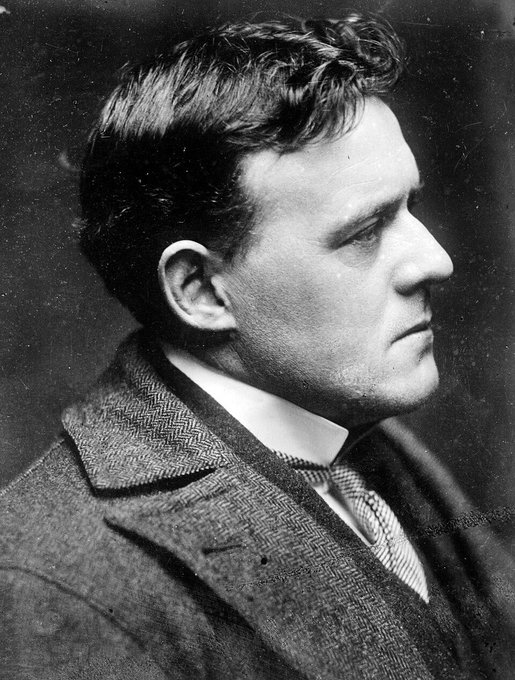
This speech goes so hard:
“Gentlemen, I am a Catholic. As far as possible, I go to Mass every day. This is a rosary. As far as possible, I kneel down and tell these beads every day. If you reject me on account of my religion, I shall thank God that He has spared me the indignity of being your representative.”
— Hilaire Belloc responding to his anti-Catholic opponent for MP
@austeni respect -- as well as others.
Many criticisms of Pope Leo are simply wrong-headed and moreover are done with an undue hostility.
Feser is in no way being hypocritical here.
@austeni No, the revision of the catechism on the death penalty was a genuinely scandalous event and just one example of Pope Francis's damage to the credulity of the faith and of the papal office itself.
Feser was right to criticize Pope Francis on that decision -- something he did with
What a farce. Naturally, a “new and separate” life sentence is meaningless to an offender who is already serving a life sentence. Hence, without capital punishment as a deterrent, those already imprisoned for life have much less incentive not to murder fellow prisoners. Some will point out that the victim in this case, who was himself a murderer, deserved death. But that is not relevant, because private individuals have no authority to inflict that punishment, under either natural law or human law. Only the state does.
Anyway, while opponents of capital punishment wrongly suppose that the dignity of offenders somehow entails that they should never be executed, why does this concern for their dignity not lead these opponents to do what is necessary to protect offenders from other prisoners – namely, keeping capital punishment on the books as a deterrent? This doesn’t entail applying the death penalty in every single case where it might be in theory justifiable, contrary to the stupid and tiresome accusation that defenders of capital punishment are bloodthirsty and looking for excuses to kill people. It just means keeping it in the prosecutorial toolkit for cases where society cannot plausibly otherwise be protected.
Cases like the one reported here are among those that give the lie to the claim, routinely parroted in Catholic circles, that the death penalty is never needed today in order to protect others. That is not a doctrinal claim but a prudential judgment. And not only is there no good reason to believe it, but cases like this one provide strong empirical refutation of it. As far as I can recall, Joseph Bessette and I have never heard a response to this point from the critics of our book on Catholicism and capital punishment. Just crickets.