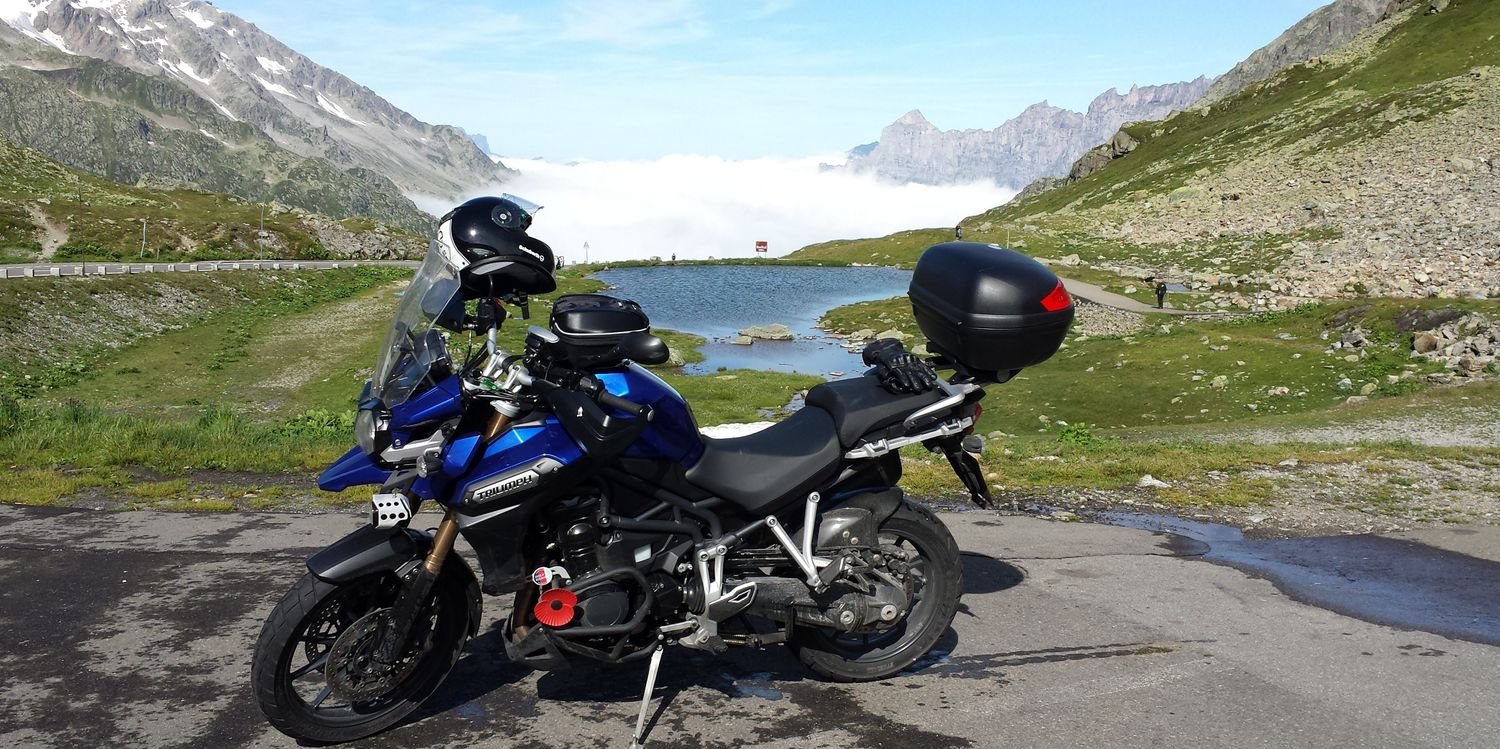
'A guard of honour by more than 100 bikers for a new memorial.'
GB News National Reporter @_Jack_Carson reports as the new Elysium Memorial travels to the National Memorial Arboretum, honouring serving personnel and veterans who have died by suicide.
Evening @Jimmyocx3 found a copy of your book in a second hand shop, signed as well!
Such an incredible read, the detail, the raw brutality of hand to hand combat, grit, determination and heroism. An honour to all those who never came back and to those still in the fight.
RIP 🇬🇧
@mcfc_lads Walking into the ground before the UCL game against R Madrid, when we "ambushed them", that night, you could sense the electric atmosphere, still gives me goosebumps thinking about it!!!
UTFB 💙👊🏻
Former #ManCity staff member on the 2018 Premier League title win: “Even though Pep wanted all these records we’d still go out. He’d be like ‘Right, Sunday, we’ve got a game but Monday, Tuesday we’ll go out’. It was every week. By the time we got to the actual parade my missus was like: ‘You can’t go out again, it’s getting beyond a joke! You’re out all the time.’ I’m like: ‘But Pep’s asking me to’.
"Anyway, we’re in the canteen having a few beers before we got on the parade bus and Pep says ‘Are you out tonight?’ I say: ‘I can’t. I think I’ll be left homeless if I go.’ So Pep goes: ‘Well, stay at my apartment if you want.’
'I can’t Pep, it’s my missus.’
‘You want me to ring her? Come on, ring your missus.’
"Everyone was around us. My missus answered. ‘Hello, this is Pep.’ She says: ‘Who?’ ‘It’s Pep Guardiola.’ She’s gone: ‘All right, yeah, go on?’ ‘Listen, I know we’ve been out a lot recently but we’ve just won the Premier League. I’ll have him home by 2AM.’ My missus just replies, ‘One’ and hits the red button. Everyone’s there howling..."
The real Pep Guardiola: Untold stories from a decade with City’s Pied Piper. Read @TelegraphDucker's full report on @TeleFootball. ⤵️
https://t.co/8RFRGvPHTD
Someone mentioned this on the Mancunian Way space earlier. It is beautifully done.
Just when I thought I was done with weeping for the day, ah well, it is what it is.
Today, the people of the Falkland Islands commemorate Landing Day.
Marking the date when British forces landed at San Carlos Water, East Falkland - we remember all those who served and all those who made the ultimate sacrifice.
From the Sea, Freedom 🇫🇰🇬🇧
#Falklands44
The obsession with being a “big club” or having more fans, stems from online supporters who don’t go to games and want bragging rights from their bedroom.
I don’t know one proper City fan who wants to be considered a massive club, or cares about the amount of fans.
We won the lottery, we have memories 99.9% of football fans can only dream of.
These e-fans arguing about parades, celebrations, big clubs, are NEVER the proper match going fans.
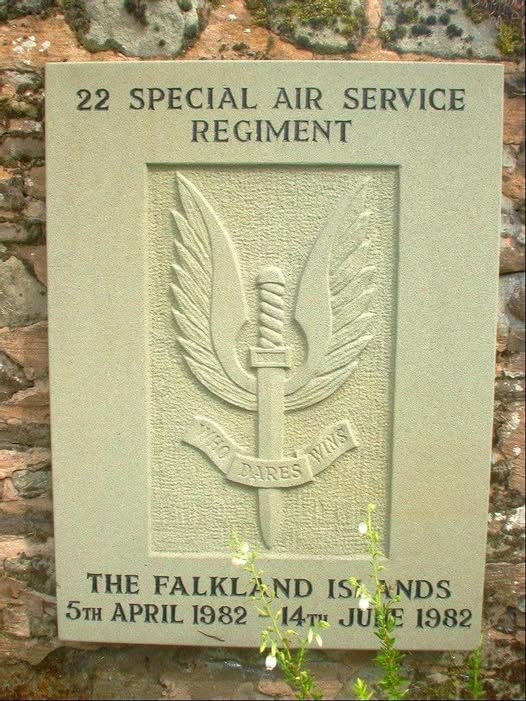
On the 19th May 1982, during the Falklands War, a Royal Navy Westland Sea King HC4 (ZA294) of 846 Naval Air Squadron crashed in the South Atlantic while cross-decking troops from HMS Hermes to HMS Intrepid.
This remains the single greatest loss of life for the SAS in one incident since the Second World War. The helicopter carried approximately 30–31 personnel (including aircrew). It took off at dusk, slightly overloaded but with reduced fuel for the short flight. At around 300 feet during its approach to Intrepid, those aboard heard thumps from the engine/rotor area. The aircraft dipped, then dived, striking the water violently within seconds. It rolled over and sank rapidly.
Nine men escaped through the open side door and survived (including some SAS personnel like survivors Mark "Splash" Aston and Mick Williams). The rest perished, some killed on impact, others from the sinking in freezing waters. Rescuers later found bird feathers on the surface, strongly suggesting a bird strike (possibly a Black-browed Albatross with its large wingspan) damaged the main rotor or engine. While this was the prevailing theory at the time and remains widely accepted, some later accounts note it was never definitively proven with wreckage evidence.
Casualties: 22 fatalities
18 SAS personnel (primarily from D and G Squadrons, many veterans of the recent Pebble Island raid).
Other personnel: 1 Royal Marines aircrewman (Cpl Michael David "Doc" Love DSM, posthumously awarded for prior special forces support), 1 Royal Signals, and 1 RAF (the only RAF fatality of the entire conflict).
Roll of Honour:
A/Cpl Raymond Ernest Armstrong
A/Sgt John Leslie Arthy
A/WO1 Malcolm Atkinson
A/Cpl William John Begley
A/Sgt Paul Alan Bunker
A/Cpl Robert Allan Burns
Sgt Philip Preston Currass QGM
A/Sgt Sidney Albert Ivor Davidson
WO2 Lawrence Gallagher BEM
A/Sgt William Clark Hatton QGM
A/Sgt William John Hughes
A/Sgt Philip Jones ("Taff")
L/Cpl Paul Neville Lightfoot
A/Cpl Michael Vincent McHugh
A/Cpl John Newton
A/WO2 Patrick O'Connor
Cpl Stephen John Sykes
Cpl Edward Thomas Walpole
Cpl Michael David Love DSM (Royal Marines / 846 NAS aircrewman)
Cpl Douglas Frank McCormack (Royal Signals)
Flt Lt Garth Walter Hawkins (RAF)
We Will Remember Them. "Greater love hath no man than this, that a man lay down his life for his friends." (John 15:13)
#WeWillRememberThem #LestWeForget #Falklands #SAS #RoyalNavy #BritishArmedForces #Remembrance
This event underscores the risks of even routine operations in wartime conditions. The men lost had already contributed significantly to early special forces successes in the campaign. Their legacy endures through memorials, survivor testimonies, and ongoing remembrance. 🫡
Strap in: Follow one of our paratroopers from @16AirAssltBCT jumping in to Tristan da Cunha – one of the world’s most remote communities – to deliver vital medical support 🪂
If you are old enough to remember driving in Britain in the 1980s, you will remember the windscreen.
You could not see through it by July. A journey from Leeds to London in August ended with a front bumper that looked like it had been through a war and a windscreen that needed a proper scrubbing with a sponge at the services. Insects on the headlights. Insects in the wing mirrors. Insects packed into the radiator grille so densely that mechanics had to fish them out. This was simply the weather of the British summer, the cost of moving through a country that was still, in living memory, full of flying things.
Get in a car now. Drive the same route. Stop at the services.
The windscreen is clean.
The Bugs Matter survey, run by Kent Wildlife Trust and Buglife since 2004, has been measuring exactly this. Volunteers clean their numberplate, drive a journey, count the splats on a grid. Between 2004 and 2021, the UK average fell by roughly 59 per cent. England alone: 65. Kent: over 70. The 2024 update found a further 63 per cent drop on top of that.
The windscreen phenomenon has the data to back it up now.
And not just the insects. Between 1970 and 2024, the UK Farmland Bird Index fell by 62 per cent. Turtle doves down 99. Grey partridge down 94. Tree sparrow down 90. A generation of British children has grown up without ever hearing a turtle dove call, because there are, in functional terms, no turtle doves left to call.
Defra's own bulletin lists the causes without embarrassment. Loss of mixed farming. The switch from spring to autumn sowing, which took away the winter stubble the small birds had been feeding on since the Neolithic. The grubbing up of hedgerows to make fields bigger for bigger machines. Increased fertiliser. Increased pesticide.
Specifically, the pesticides. Neonicotinoids on oilseed rape. Glyphosate sprayed as a pre-harvest desiccant on wheat and barley. Chemicals applied in combinations and volumes that would have seemed psychotic to a farmer in 1950, applied to grow the crops that feed directly into the plant-based shakes marketed to people who believe they are helping the environment.
The insects died in the fields where the crops were grown. The birds that used to eat the insects, starved. The windscreen, accordingly, is clean.
None of this happened on the permanent pasture that cattle graze. A herb-rich meadow grazed by cattle has more pollinators, more ground-nesting birds, more beetles, more everything per hectare than the arable field next door. The South Downs and the Welsh uplands and the Cotswold commons where sheep and cattle have been grazing for a thousand years are the places British biodiversity is still, just, holding on.
The countryside did not empty because of the cow.
It emptied because we replaced the cow with the combine harvester, the meadow with the oilseed rape, and the hedgerow with another half-acre of monoculture that needed spraying fourteen times a season to keep it alive.
When someone tells you eating a steak is destroying British wildlife, ask them what was on the field before it became the soy farm, the rape farm, the wheat farm that produced the oat milk in their fridge.
It was grass.
And on the grass, there were cattle.
And when the cattle were there, the windscreen needed cleaning.