Technological innovation and knowledge networks: a multidisciplinary approach to Greco-Roman stone vases/Technet is a MSCA funded project. PI: Dr S Perna-ICAC💙
#FrescoFriday#FindsFriday
One of those unforgettable days in the #finds room at MOLA, in (yikes!) March 2007....
Heaps of fantastic #frescos like these came in from Lime St site in the City, just to east of #Roman forum basilica.
A poison-testing crystal spoon fit for an emperor? This unique Roman rock crystal and silver spoon was found in Rome with an elegant pyxis container. One intriguing possibility is that the spoon was used to test items for poisons, as rock crystal was believed to possess magical properties capable of identifying and neutralising deadly substances. 1st century AD, Metropolitan Museum of Art.
Another spectacular fresco emerging from the pumice in Region IX, #Pompeii.
An apt and timely rich banquet of food being prepared for an extravagant Roman feast: seafood, venison, fish, cockerels, wild boar, and birds. The detail is simply astounding.
Merry Christmas, everyone!
Gold diadem with beads shaped like rods and discs and a central Heracles knot, flanked by chain pendants. Found in Taranto, Italy, 1927, dated end 4th C to beginning 3rd C BCE.
#FindsFriday#Archaeology
📸 my own
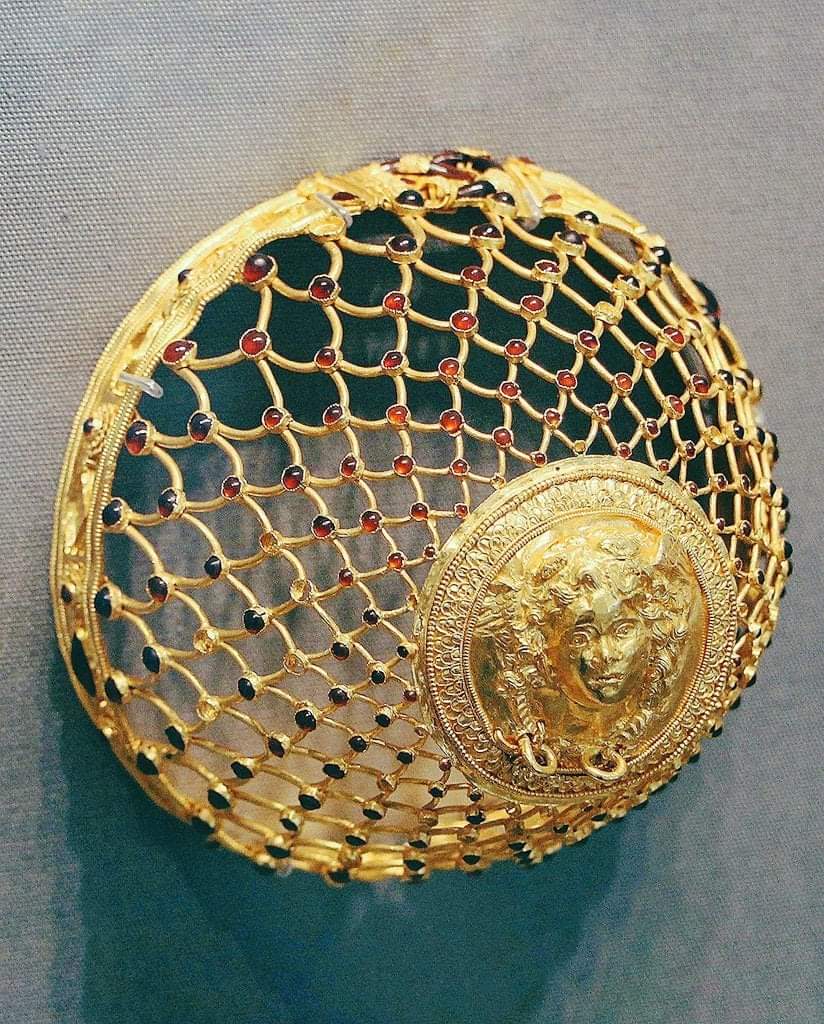
#FindsFriday#Gold hairnet from the later 3rd C BC the Greek city of Taras, (Taranto, South Italy). It is made entirely of gold in a netting pattern with cabochon garnets at the intersections and a large bas-relief image of Medusa at the top.#Archaeology#jewellery#History#art
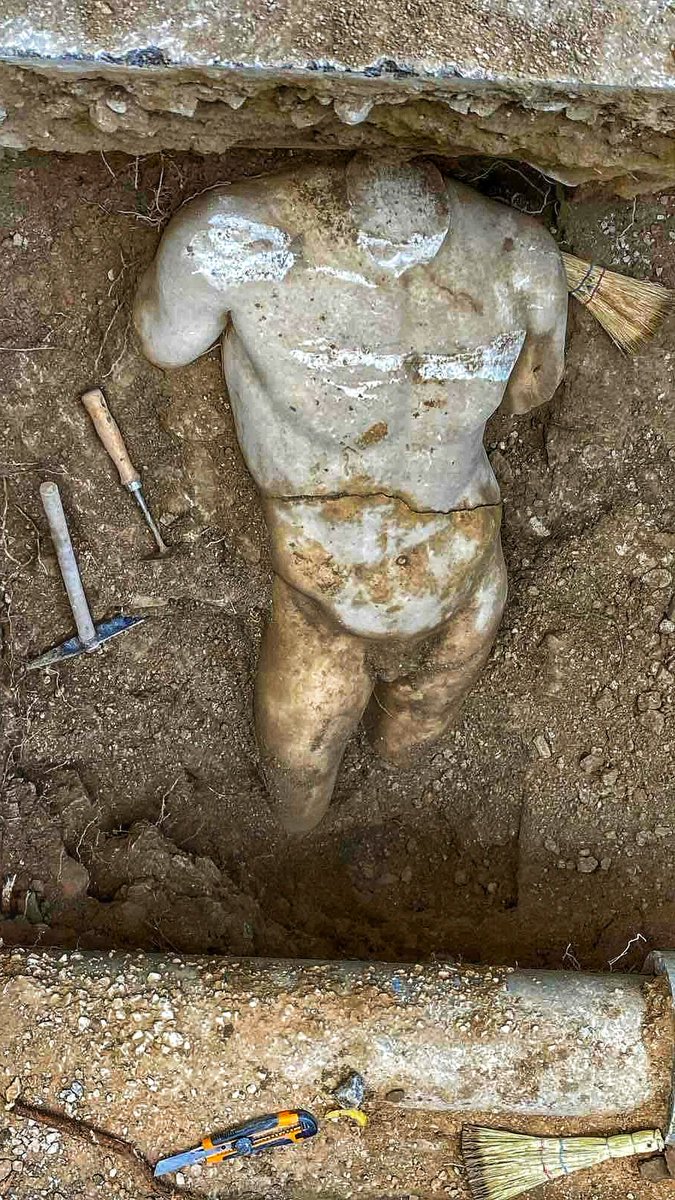
New discovery: A marble statue of a nude male was discovered during the supervision of a gas network installation, in downtown Athens.
In this area, during the imperial period (1st–5th c. AD), some of the most magnificent villas of the city were located.
Hellenistic bronze head found in the old Palaestra (school of wrestling) on the Greek island of Delos. Dated ca. 100 BCE. National Archaeological Museum of Athens, Greece. 📷 My own.
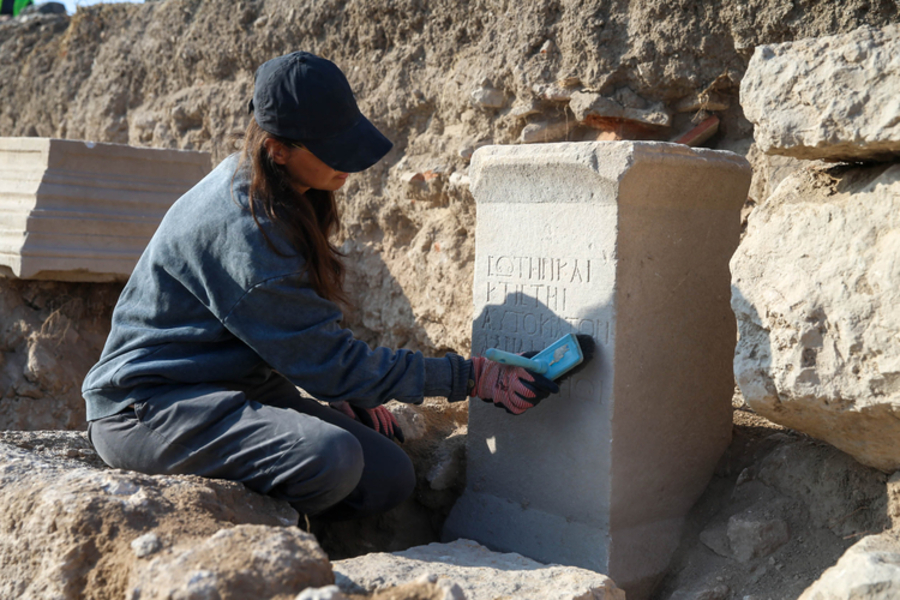
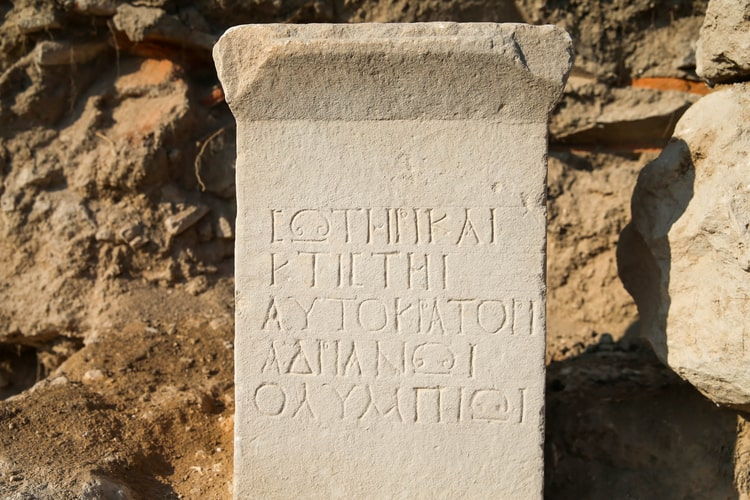
NEWS! An inscription dedicated to Hadrian Olympios was found during the ongoing excavations at the ancient city of Blaundus, located within the borders of the city of Uşak in western Turkey. Dated AD 128-132.
σωτῆρι καὶ
κτίστηι
Αὐτοκρ��τορι
Ἁδριανῷ
Ὀλυμπίῳ
To the Saviour and Founder Emperor Hadrian, the Olympian.
https://t.co/2HIXkeRjcb
An unbroken Roman glass bottle of olive oil from Pompeii with its original cork stopper. Though solidified after being buried since 79 AD, the contents still smell strongly of olive oil.
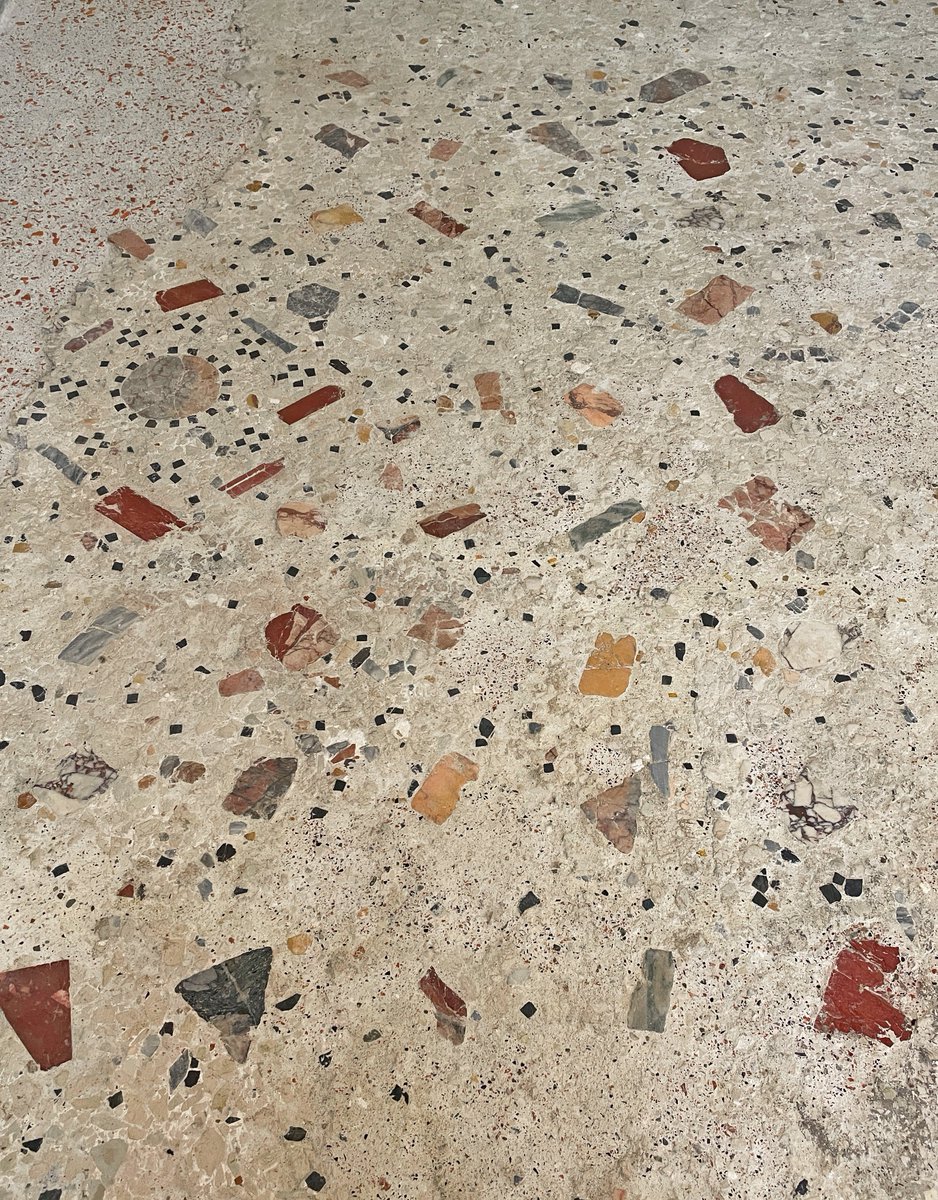
A lovely example of what I call 'Tutti Frutti' mosaic, a style of floor popular during the Roman Republic. Offcuts of colourful exotic marbles are embedded in a cement floor and accented with black tessera. Economic and easy to make but no less delightful! 1st century BC, Milan
The Unfinished Goddess. A rare example of a Greek marble portrait abandoned partway through its sculpting, offering an evocative insight into the ancient artistic process. From Athens, c.4th century BC, ArtAncient Frieze Masters.
▶️ La setmana que ve fa 90 anys del descobriment de la Venus, tota una icona de #Badalona, i s'han descobert noves dades sobre el seu origen: el seu marbre podria ser de Turquia.
🔗 Aquí més @MuseuBdn@ICAC_cat@bdncom 👉🏿 https://t.co/NUIcJJuB8K
La Dra. Isabel Rodà #ArPA_LIRA@ICAC_cat participarà en unes Jornades dedicades al bronçe romà
al @MusArqCordoba
📅7-8 de novembre
📍Teatro Cómico Principal #Cordóba
Més informació 👇
A joy and privilege of my work is to be there at the time of discovery and in this case, witness a new fresco emerge from the pumice.
Hippolytus’ gesture appear to show the moment he spurns Phaedra’s advances while an attendant seems to be begging him to reconsider
#FrescoFriday
Aquests dies (14-20 OCT) s’està celebrant als 🇺🇸EEUU la 12a edició #ArkhaiosFilmFestival FREE Virtual Edition. El nostre equip #ArPA_LIRA hi participa 👏👏 amb el documental 📹“El ciclo productivo del marmor”, dir: Virginia García-Entero
@UNEDprehistoria@ICAC_cat
📅Els dies 17-19 d’octubre tindrà lloc la "XI Reunión de Escultura Romana en Hispania" a # Pamplona @unav amb una rica participació de membres #ArPA_LIRA@ICAC_cat ☺️👏👏👏👏
@iCERCA#somCERCA
A colourful reimagining of an early 3rd century altar to the goddess Minerva which was set up by the tribune, Flavius Severinus. Found at High Rochester Roman Fort, the altar is now part of the collections @GNM_Hancock 📸 My own. #EpigraphyTuesday#RomanBritain