"How could I become the ancestor of my future happiness today? What could I do today that my future self would come back and thank me for?"
-David Whyte
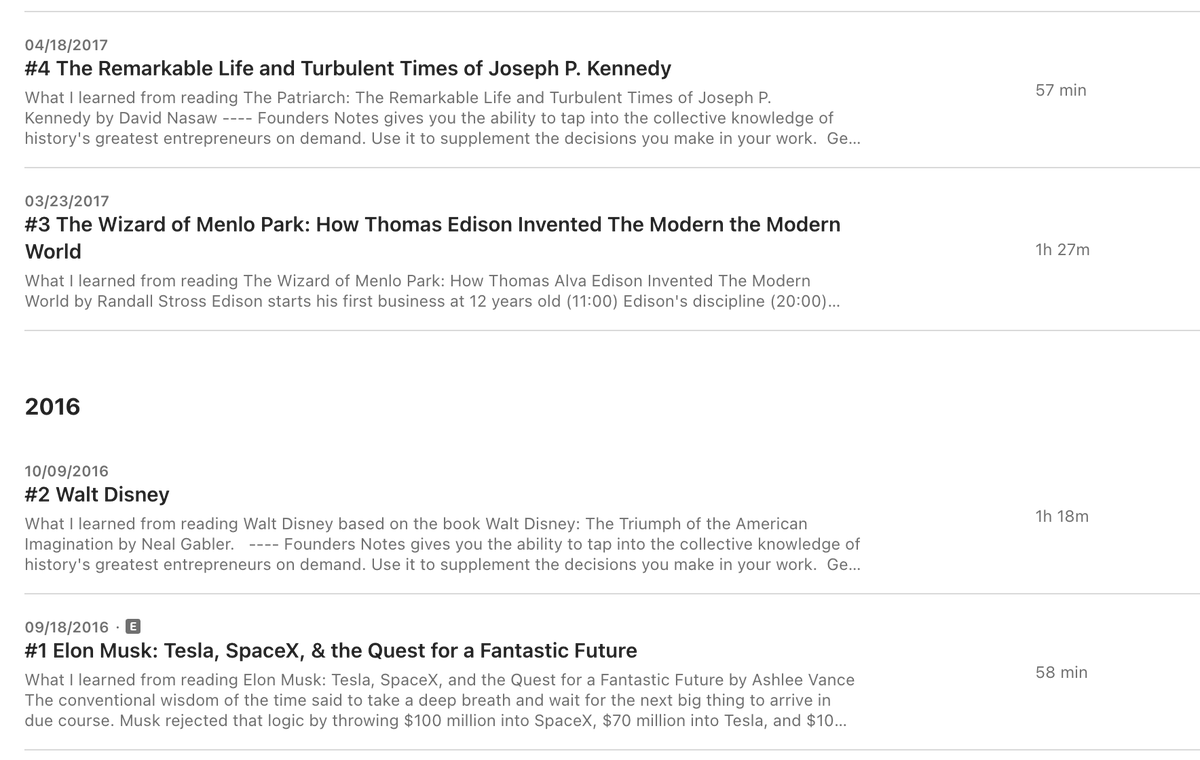
Founders Podcast is one of those exceptional examples of "take a simple idea and take it seriously."
David Senra has published 444 episodes over almost 10 years; on average one episode every 6-8 days... for a decade.
313 biographies, 111 autobiographies, 12 interviews, etc.
"You’re not talking to someone who woke up a loser” - Jensen Huang
Jensen nearly lost his composure during a heated debate about selling chips to China, despite showing tremendous patience in response to the pushback.
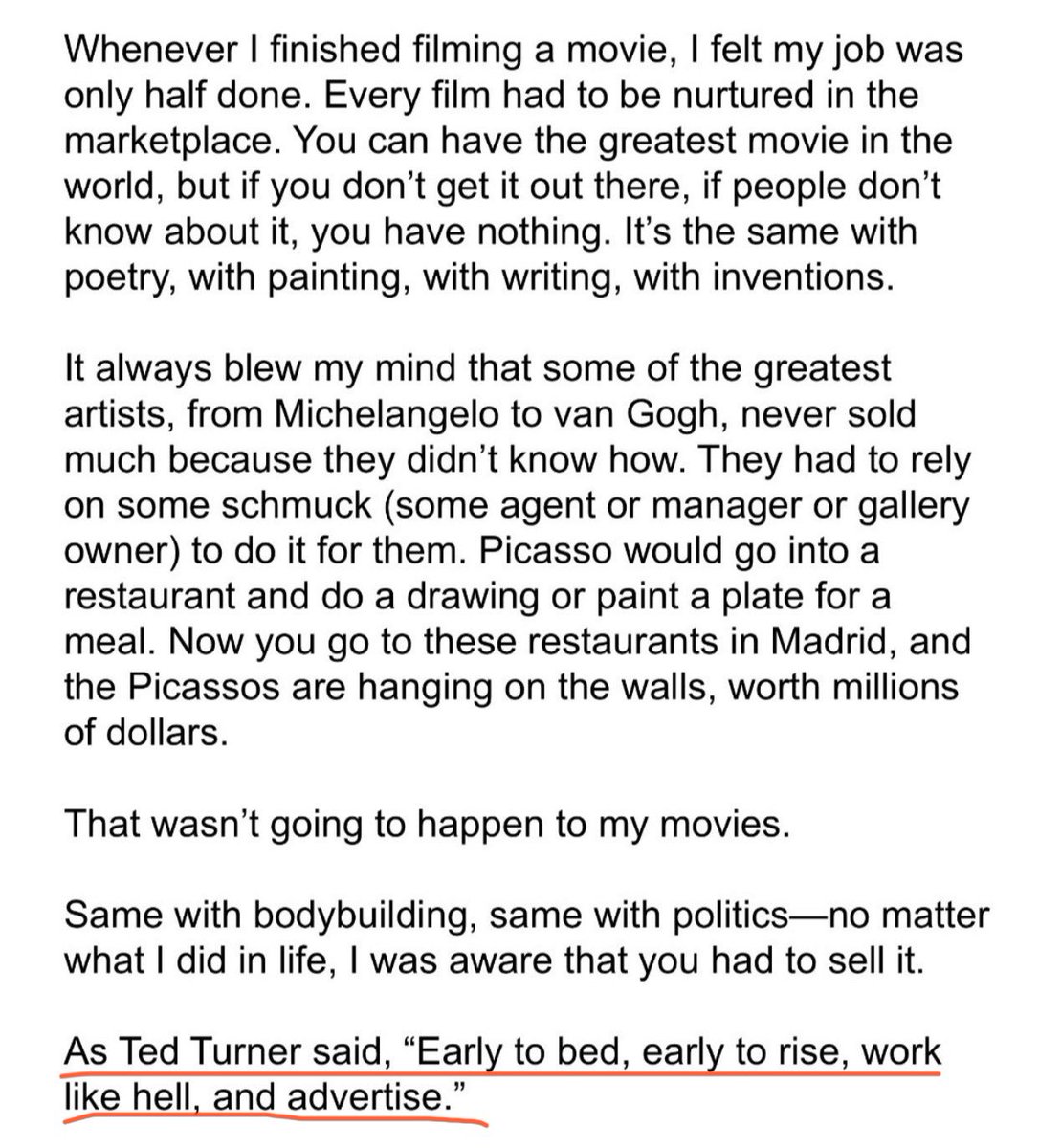
Arnold Schwarzenegger’s bio has great section on why he thought marketing a product was as important as making the product.
He ends it with a classic Ted Turner (RIP) he often cites: “Early to bed, early to rise. Work like hell, and advertise.”
Chris Williamson dropped a brutal truth on Rogan:
Most people only tinker — new haircut, lose five pounds, switch jobs.
But real transformation? Rewiring your body, your country, your entire worldview? That’s unicorn-rare.
And here’s what almost nobody says out loud: the hardest part isn’t the work.
It’s the loneliness that hits when you start moving at a different velocity.
You become the weirdo training six nights a week, eating differently, journaling at dawn, chasing something you can’t fully explain. Your self-belief doesn’t stay Hollywood-strong — it flickers hard. You’re scrabbling in uncertainty, wondering if any of this is even working.
The old crew doesn’t get it. The pull back to “normal” is magnetic. You might lose entire friend groups… sometimes more than once.
That isolation isn’t a glitch. It’s the feature. The price of refusing average.
In a world built for comfort and sameness, choosing the uncertain climb is one of the last truly rebellious moves left. It forges depth most people will never touch.
I’ve lived those lonely chapters chasing my own new start. The doubt is heavy. The freedom on the other side is heavier.
What’s the biggest change you made that left you out of sync with your old circle — and did you ever find your new one?
“Greatness does not come out of intelligence, it comes from character.
Character is not formed out of smart people: it is formed out of people who have suffered.”
— Nvidia CEO, Jensen Huang
Builders build. Then they ship. Then they solve what breaks.
Launch isn’t the finish line. It’s where reality starts. Great products aren’t defined at launch...they’re defined by how they perform in the real world.
With the #iPod it took us a few generations to truly get it right. We built and shipped the first version of the iPod in 9 months- greenlit in March 2001, announced that October and began shipping in November. Then we fixed, iterated, and produced a product that lasted many years, and ultimately paved the way for the #iPhone. Many of us still love our iPods!
That’s what happens when you stay with the product.
Trust comes from what happens after release and from doing the hard parts: scaling, supporting, improving.
Focus on what’s real: working product, real customers, real outcomes.
That’s the difference between hype and something that lasts.
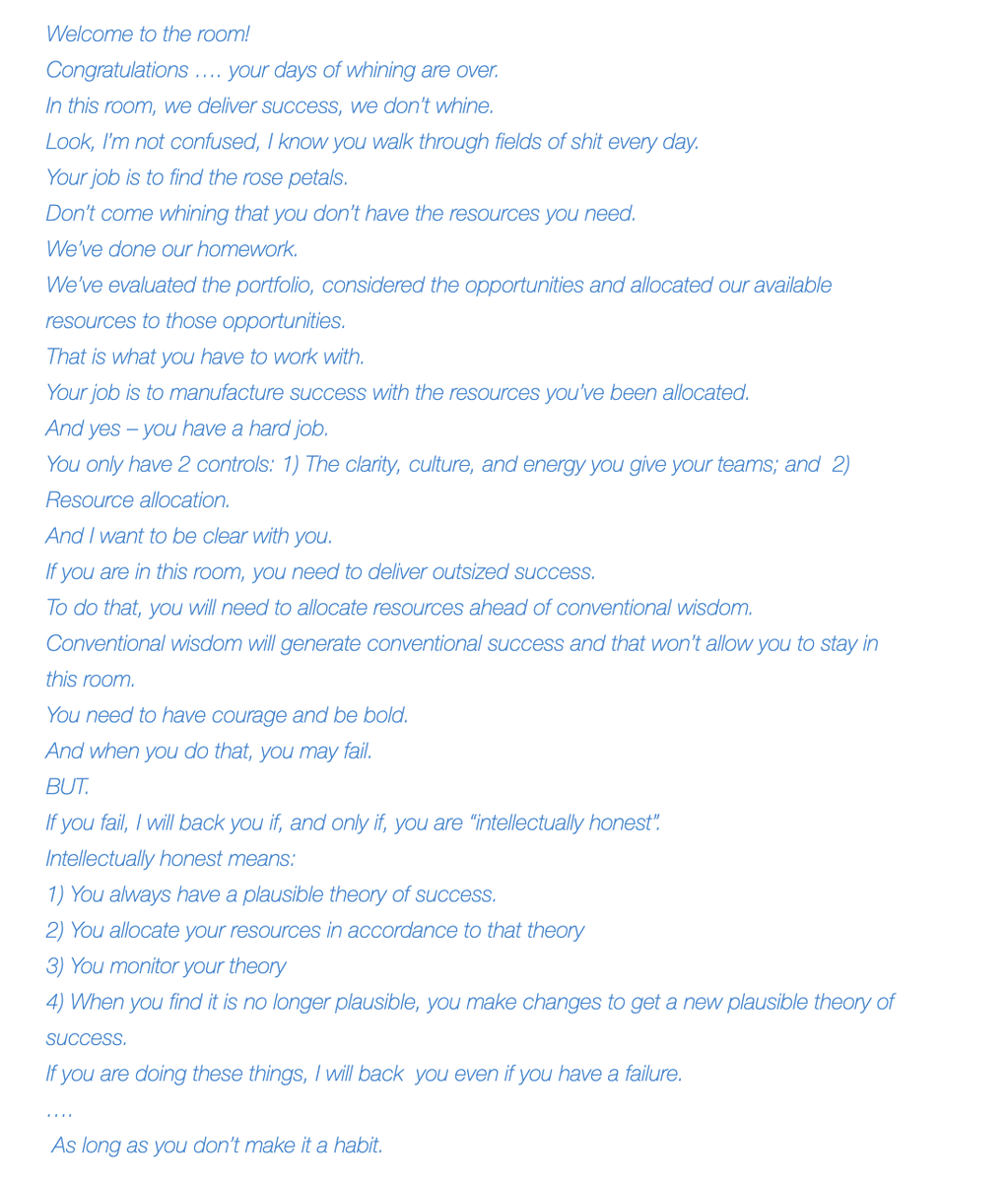
This is how Satya Nadella expects his senior executives to perform
It is similar to what I describe as "being demanding and supportive" which is my favorite way to operate
"The central theme of the book is the contrast between the Hobbits (or "the Shire") and the appalling destiny to which some of them are called, the terrifying discovery that the humdrum happiness of the Shire, which they had taken for granted as something normal, is in reality a sort of local and temporary accident, that its existence depends on being protected by powers which Hobbits forget, against powers which Hobbits dare not imagine."
-CS Lewis, close friend of JRR Tolkien
The father of seven has not finished a thought in four years. he is just moving. feeding. driving. wiping. his brain is soup and his back is finished and he has no opinions about civilization he is too tired for opinions. and meanwhile civilization is growing out of him like he is dirt and he doesnt even notice because there is milk on the floor again. the childfree man has read eleven books this year about the decline of the west and he is the decline and the books are the evidence and he will understand this at fifty eight in a room that is very clean and very quiet
Rick Rubin on submerging yourself in great works:
"Consider submerging yourself in the canon of great works. Read the finest literature, watch the masterpieces of cinema, get up close to the most influential paintings, visit architectural landmarks.
Exposure to great art provides an invitation. It draws us forward, and opens doors of possibility.
If you make the choice of reading classic literature every day for a year, rather than reading the news, by the end of that time period you’ll have a more honed sensitivity for recognizing greatness from the books than from the media.
This applies to every choice we make. Not just with art, but with the friends we choose, the conversations we have, even the thoughts we reflect on.
All of these aspects affect our ability to distinguish good from very good, very good from great.
They help us determine what’s worthy of our time and attention.
Because there’s an endless amount of data available to us and we have a limited bandwidth to conserve, we might consider carefully curating the quality of what we allow in.
The objective is not to learn to mimic greatness, but to calibrate our internal meter for greatness. So we can better make the thousands of choices that might ultimately lead to our own great work."
Ben Horowitz explains why courage is the most important trait for startup founders
“Does the founder have the courage to build the company?… Aristotle said courage is the first virtue, and it’s really important in leadership. Integrity, honesty, and so forth - everybody has them in certain situations. But that’s not the question. The question is if it’s going to cost you your company, do you have your integrity? If it’s going to cost you your job, are you honest? If it’s going to completely embarrass you in front of everybody, do you have it then? The only way you have it then is if you have courage.”
Ben continues:
“Courage ends up being the foundation for a lot of what we need in an entrepreneur. I always say you need two things. You need great intelligence and great courage. And I always found as an entrepreneur my courage was tested far more than my intelligence. And I think that’s pretty universal.”
Video source: @kevinrose (2012)
"Passion" comes from the Latin “passio” which means "suffering" and "endurance."
So people think that following your passion means doing something you love, when it really means finding something that you are willing to suffer for.
"At school or university, the thing is to be brilliant and to get the answer right first time. And there are brilliant people who can do that, but for the rest of us, we're not brilliant. And to get there, we have to strive and we have to go through failure. And we realize that you don't get it right first time, you don't get it right second time.
In my case, and I counted it, it's 5,127 times.
One of the things I always want to say is that sounds like a struggle. It was a struggle, but actually it was a hugely enjoyable struggle. The debt was mounting and I had three children, a wife and a home, and then a mortgage to pay, like everybody else. But I had a real point in life, I had a real aim and I had to get there. And the failures were interesting because I'd learned from every single one of them."
"People calling you 'lucky' is one of the ultimate forms of flattery. It means you have so much momentum, people can't comprehend the amount of volume and work you've done - so they write it off as luck." - @Jayyanginspires
Be "lucky."
Blow their minds.
Naval Ravikant's test to determine if you have a high-functioning team:
"When you’re recruiting a new person, you should be able to say to them, “Walk into that room where the rest of the team is sitting. Take anyone you want—pick them at random—pull them aside for 30 minutes, and interview them. And if you aren’t impressed by them, don’t join.”"